
Move-out inspections determine whether you get your security deposit back. Landlords and property managers have strict standards, and missing even small details costs you money.
We at Bumble Bee Cleaning Services know that rental readiness requires more than a quick sweep. This guide walks you through exactly what inspectors look for and how to meet those standards every time.
What Inspectors Actually Check During Move-Out
Walls and Structural Damage
Landlords and property managers follow a specific inspection routine during move-out, and knowing exactly what they examine saves your security deposit. They start with walls and structural elements, looking for holes, nail marks, scuffs, and paint damage. Inspectors measure holes against a standard: anything larger than a quarter-inch diameter gets flagged. Water stains signal potential moisture problems that could affect the unit’s integrity and trigger costly deductions.
Paint touch-ups matter more than you think. If your lease requires white walls and you have colored paint, inspectors will note it as a lease violation. A National Apartment Association study found that cleaning-related issues account for approximately 27% of security deposit deductions, but structural damage and wall conditions come in second.
Flooring and Carpet Standards
Flooring inspection focuses on stains, burns, and deep scratches that go beyond normal wear and tear. Carpet receives intense scrutiny because it’s expensive to replace. Professional carpet cleaning using commercial-grade equipment removes significantly more dirt than rental machines, which is why landlords often require professional cleaning in their lease terms. Stains from pet accidents, food, or beverages trigger deductions because they don’t come out with standard cleaning.
Grout discoloration and hard-surface floor damage also get documented. These issues cost money to repair, so inspectors photograph them as evidence for deposit deductions.
Appliances, Fixtures, and Cleanliness
Inspectors test refrigerators, ovens, dishwashers, and microwaves to confirm they operate properly. The interior of appliances matters as much as the exterior. Grease buildup inside ovens or food residue in refrigerator coils costs you money because removing it requires professional-grade cleaning. Cleanliness standards vary by region, but Seattle landlords typically expect move-out units to be in the same condition as a freshly rented apartment.
Odor issues are non-negotiable. Lingering smells from cooking, pets, or moisture mold result in deductions because eliminating odors requires specialized treatment. Inspectors fail properties automatically when they spot visible mold on bathroom ceilings, window sills, and around door frames, so check every corner thoroughly.
Overlooked Areas That Fail Inspections
Exhaust fans, vents, and baseboards are frequently overlooked spots that trigger failures. These areas accumulate dust and require specific attention during final cleaning. Professional move-out cleaning in Seattle typically costs $170 for an apartment and $340 for a house, finishing in three to four hours, which is significantly faster and more thorough than DIY approaches that take ten to fifteen hours and often miss critical areas. Understanding what inspectors prioritize helps you target your cleaning efforts where they matter most.
Room-by-Room Cleaning Strategy That Inspectors Prioritize
Kitchen Inspection Points
Kitchens demand the most intensive cleaning during move-out inspections because they reveal how well you maintained the property. Wipe the interior and exterior of all cabinet doors, then clean inside every cabinet and drawer thoroughly. The refrigerator interior matters as much as the exterior-remove shelves, wipe down coils, and clean the back wall where grease accumulates. Run an empty dishwasher with white vinegar to eliminate odors and residue. Scrub the oven with commercial-grade oven cleaner because baked-on grease signals neglect to inspectors and triggers deductions. The stovetop requires attention on all sides, including under burner grates and the backsplash.
Sink drains need deodorizing treatment; pour baking soda followed by vinegar to eliminate smells that inspectors immediately notice. Countertops should be wiped down completely, including the underside of the microwave and the area behind appliances where dust accumulates.
Bathroom Sanitization Standards
Bathrooms are the second priority because moisture problems and mold cost landlords thousands in repairs. Sanitize the toilet including the base, underside of the seat, and the tank exterior-these spots are frequently missed during casual cleaning. Remove soap scum and mildew from shower walls and tub surfaces using a hydrogen peroxide and baking soda paste, then scrub grout lines aggressively because discolored grout signals poor maintenance.
Clean exhaust fans thoroughly by removing and washing the cover, then wiping the duct opening. The bathroom ceiling and corners around windows require mold inspection; even faint discoloration gets documented by inspectors. Wipe all light switches, doorknobs, and the inside of cabinet doors.
Living Spaces and Final Details
Living areas and bedrooms need walls wiped for scuffs and marks, light switches and door frames cleaned completely, and closet shelves wiped and deodorized. Windows must be cleaned on both sides, including tracks and sills where dirt collects. Baseboards and corners throughout the entire unit accumulate dust that inspectors specifically check.
Professional move-out cleaning services typically finish apartments in three to four hours because they prioritize these exact areas that DIY cleaning misses, resulting in higher deposit recovery rates than the ten to fifteen hours most tenants spend cleaning themselves. This efficiency matters when you’re racing against inspection deadlines and want to maximize your security deposit return.
What Causes Move-Out Inspection Failures
Carpet Stains and Odors
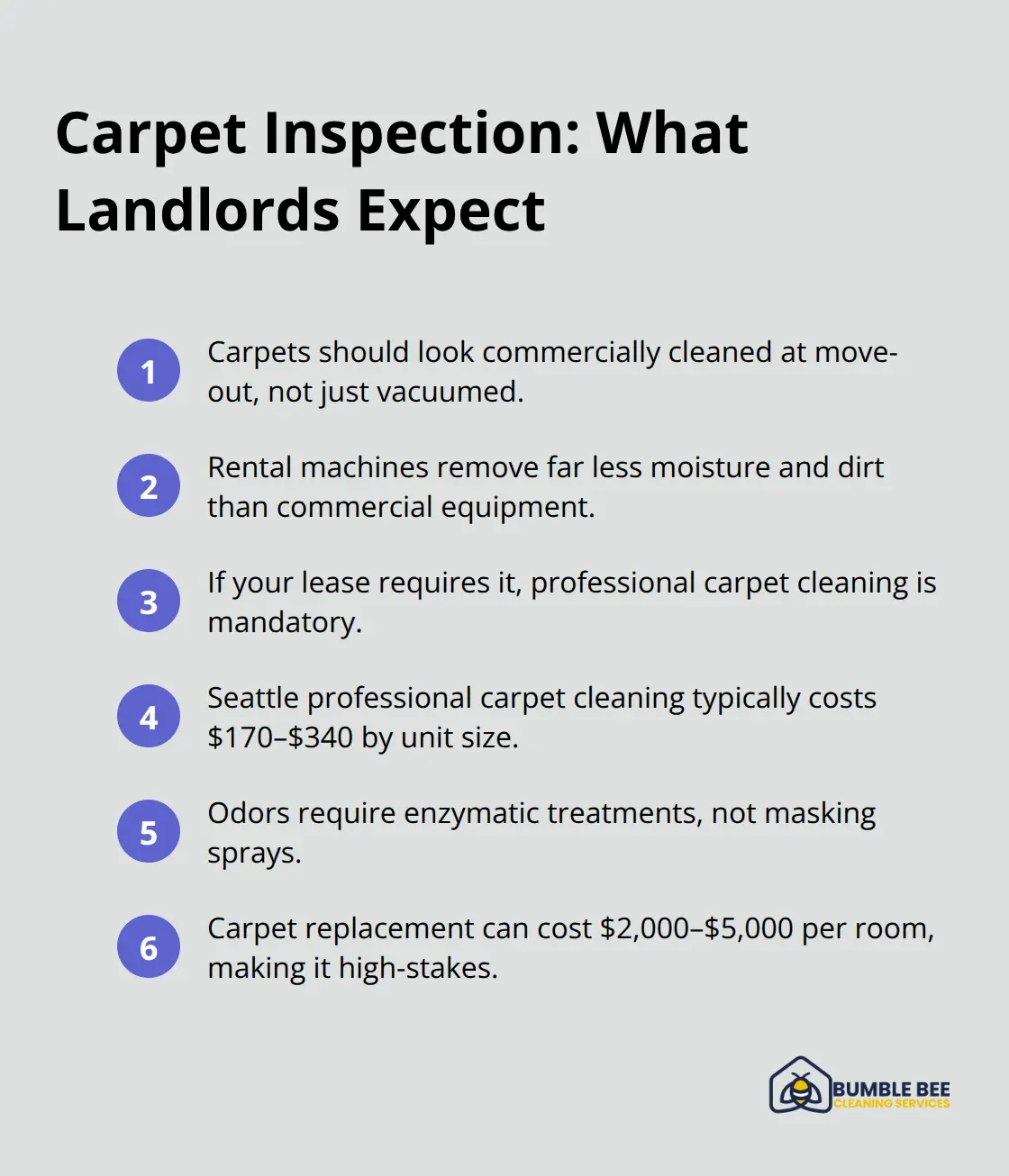
Carpet stains and odors are the top reason tenants lose security deposits. Pet accidents, food spills, and general wear create stains that standard vacuuming cannot remove. Landlords expect carpet to look commercially cleaned at move-out, not just vacuumed. Rental carpet cleaning machines extract far less moisture and dirt than commercial equipment, leaving residue that inspectors immediately identify. If your lease mentions carpet cleaning, professional treatment is mandatory, not optional. The cost of professional carpet cleaning in Seattle ranges from $170 to $340 depending on unit size, but failing inspection over carpet cleanliness costs your entire deposit. Odors from pets, cooking, or moisture require enzymatic treatments that break down the source molecules, not surface sprays that mask smells temporarily. Inspectors spend extra time on carpeted areas because replacement costs landlords $2,000 to $5,000 per room, making this the highest-stakes inspection point.
Kitchen Grease Buildup
Kitchen grease buildup fails inspections consistently because it signals poor maintenance throughout the rental period. Inside ovens, refrigerator coils, stovetop crevices, and under cabinet edges, grease accumulates where casual cleaning never reaches. Commercial oven cleaner dissolves baked-on grease that regular degreasers leave behind, and this difference determines whether you pass. The stovetop requires attention on all sides, including under burner grates and the backsplash. Sink drains need deodorizing treatment; pour baking soda followed by vinegar to eliminate smells that inspectors immediately notice.
Mold and Mildew Problems
Mold and mildew in bathrooms trigger automatic failures because moisture problems threaten the structure itself. Bathroom ceilings, window sills, shower caulk, and tile grout harbor mold that grows even in clean units without proper ventilation. Hydrogen peroxide and baking soda paste removes surface mold, but if mold returns within weeks, the underlying moisture issue requires professional assessment. Exhaust fans need thorough cleaning by removing and washing the cover, then wiping the duct opening where moisture collects.
Overlooked Areas and Dust Accumulation
Unprofessional cleaning results occur when tenants miss exhaust fans, baseboards, and corners, leaving dust and debris visible to inspectors. These overlooked areas cost you money because they demonstrate inadequate cleaning effort. Baseboards and corners throughout the entire unit accumulate dust that inspectors specifically check. Professional move-out cleaning services complete inspections with attention to every corner and detail that determines whether you recover your full deposit. The difference between DIY attempts and professional results directly impacts your financial outcome at move-out.
Final Thoughts
Passing your move-out inspection requires you to address the areas inspectors prioritize most: kitchen grease buildup, bathroom mold and mildew, carpet stains, and overlooked spots like exhaust fans and baseboards. The National Apartment Association data shows that cleaning-related issues account for approximately 27% of security deposit deductions, making thorough cleaning your strongest defense against financial loss. These problem areas fail inspections consistently because they require commercial-grade cleaning methods that standard household supplies cannot handle.
Your rental readiness depends on the decision between DIY cleaning and professional services, which directly impacts your deposit recovery. DIY cleaning takes ten to fifteen hours and often misses critical areas, while professional move-out cleaning finishes apartments in three to four hours with attention to every detail. The cost difference proves minimal when you consider that a single inspection failure over carpet cleanliness or kitchen grease costs your entire deposit.
We at Bumble Bee Cleaning Services specialize in move-out cleaning and follow industry standards certified by ARCSI and IICRC to protect your security deposit. Our professional move-out cleaning service eliminates the guesswork and delivers results that pass inspection every time. Start your move-out preparation early and follow the room-by-room checklist provided in this guide to maximize your deposit recovery.
For more information about our cleaning services in Seattle and Atlanta, or to request a cleaning quote, call or text us at 425-786-1360 or email us at info@qbclean.com
