
Your home’s air quality directly affects how easily you breathe. Deep cleaning removes dust, pet dander, and other particles that trigger allergies and respiratory discomfort.
We at Bumble Bee Cleaning Services know that allergen management through professional deep cleaning creates noticeable improvements within days. This guide shows you what to expect and how to maintain those benefits long-term.
What Happens to Your Air During a Professional Deep Clean
How Deep Cleaning Removes Allergens
Deep cleaning physically removes the particles that make breathing difficult. Dust mites produce droppings that accumulate in carpets, bedding, and upholstery. Dust mite allergens are a major source of indoor allergens. Pet dander embeds itself in fibers and circulates through your home’s air. Professional-grade HEPA-filter vacuums capture 99.97% of particles 0.3 microns and larger, which means they trap the smallest allergens that standard household vacuums recirculate back into your breathing space.
The Role of Ventilation During Cleaning
The EPA confirms that ventilation during and after the cleaning process dilutes residual dust and chemical odors. Opening opposite windows for 15 to 30 minutes creates cross-ventilation that pushes contaminated air outside while bringing in fresh air. This matters because deep cleaning can temporarily stir up particles, so proper airflow prevents them from settling back into your living spaces.
When You’ll Notice Breathing Improvements
Most people experience noticeable breathing improvements within 24 to 48 hours after a professional deep clean. Your nasal passages feel clearer because fewer allergens trigger inflammation. If you have dust mite allergies, the Mayo Clinic notes that reducing mite exposure significantly decreases allergic reactions-and a deep clean removes the primary habitat where these mites thrive.
Accelerating Your Results
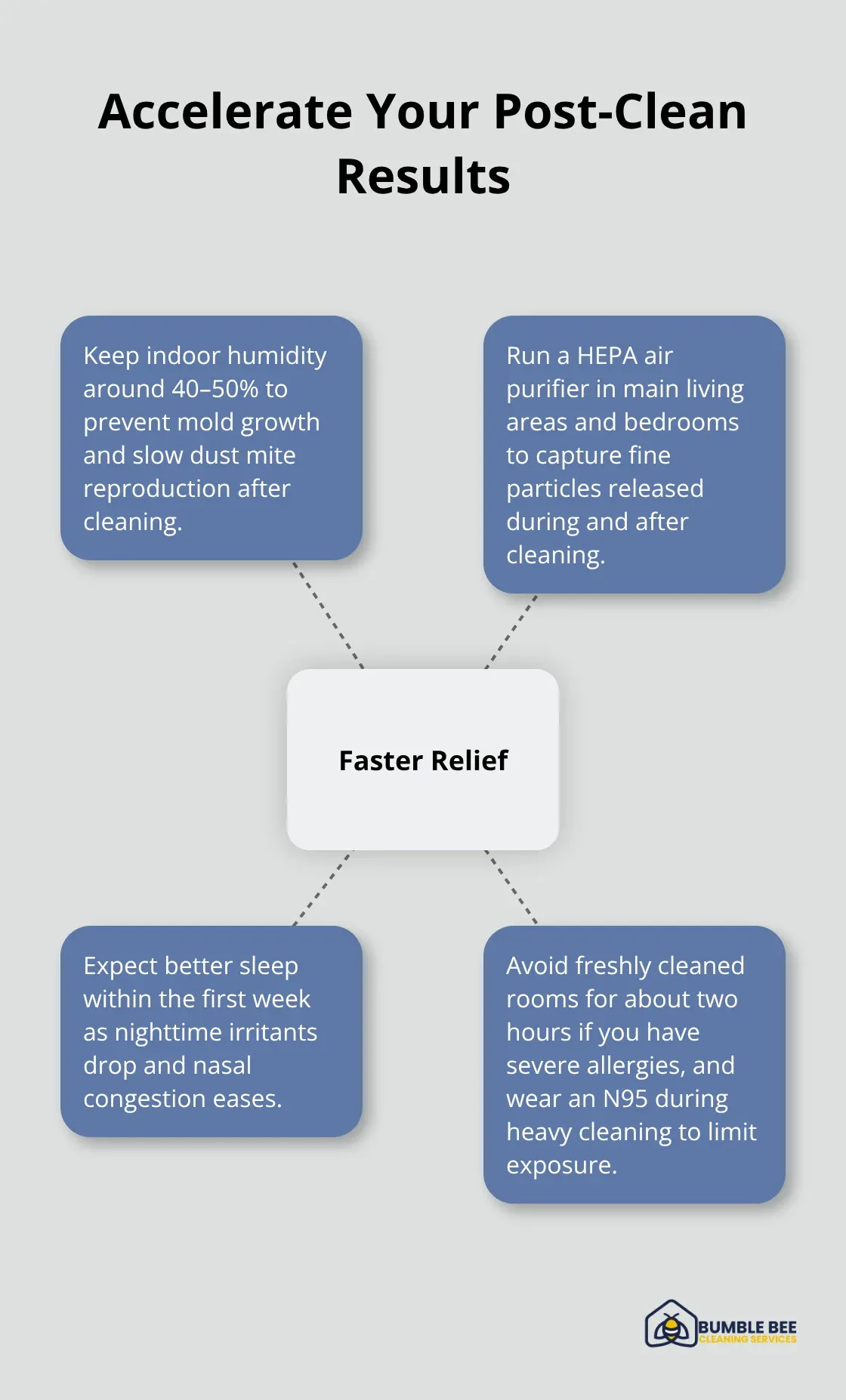
Running a HEPA-filter air purifier in main living areas during and after cleaning captures fine particles that the cleaning process releases. Humidity control matters too: maintaining indoor humidity around 40 to 50% after cleaning prevents mold growth and limits dust mite reproduction, slowing allergen accumulation before your next scheduled cleaning. Sleep quality often improves within the first week because you inhale fewer irritants during the night when dust mite exposure peaks. Some people with severe allergies should stay out of freshly cleaned rooms for approximately two hours afterward and wear an N95 mask during heavy cleaning to limit inhalation of dust and fumes, according to CDC and NIOSH guidance.
These immediate improvements set the foundation for sustained breathing benefits, but maintaining that cleaner air requires consistent effort between professional deep cleans.
How to Keep Air Clean Between Professional Deep Cleans
Schedule deep cleaning every three to six months to prevent allergen buildup from reversing your breathing improvements. The EPA emphasizes that source control reduces indoor air pollutants cost-effectively between professional cleans. Dust mites reproduce continuously, so the gap between cleanings determines how many allergens accumulate in your carpets and bedding. Wash bedding weekly in hot water at 130 degrees Fahrenheit or higher to kill dust mites and remove their droppings, which Mayo Clinic identifies as the primary trigger for dust mite allergies. A HEPA-filter air purifier running in your bedroom during sleep hours captures particles that would otherwise trigger nighttime congestion and poor sleep quality.
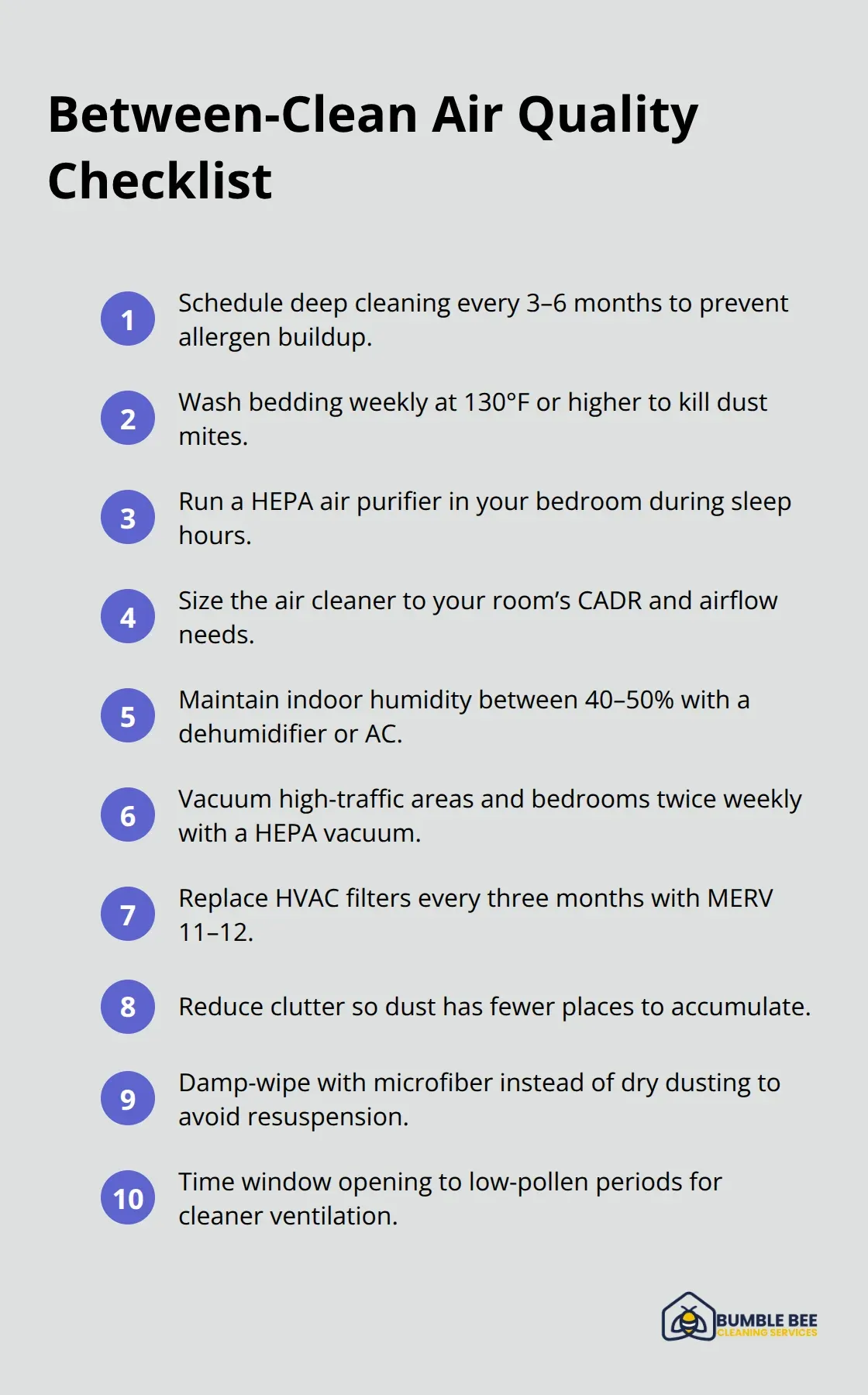
The EPA notes that air cleaner performance depends on collection efficiency and airflow rate, so select a model rated for your room size rather than an undersized unit that underperforms. Maintain indoor humidity between 40 and 50 percent with a dehumidifier or air conditioner to prevent dust mites from thriving in the months after your deep clean. Vacuum with a HEPA-filter vacuum at least twice weekly in high-traffic areas and bedrooms, since standard vacuums recirculate fine particles back into your air. Replace your furnace and air conditioning filters every three months with a MERV 11 or 12 efficiency rating to sustain whole-house filtration without compromising airflow.
Eliminate Dust Without Resuspending Particles
Damp-wipe surfaces with microfiber cloths instead of dry dusting to prevent particles from becoming airborne and resettling elsewhere in your home. Clean baseboards and corners monthly with damp cloths because settled dust in these areas becomes resuspended during normal household activity. Reduce clutter and dust-collecting items in bedrooms to limit the surfaces where allergens accumulate between cleanings. If you have pets, wash pet bedding weekly in hot water since pet dander embeds deeply in fabrics and contributes significantly to indoor allergen levels.
Control Outdoor Air Quality When Opening Windows
Open windows on low-pollen days for 15 to 20 minutes to bring fresh outdoor air indoors without introducing seasonal allergens that would counteract your deep cleaning benefits. Check local pollen forecasts through AirNow before opening windows, especially during spring and fall when outdoor air quality drops. This strategic approach to ventilation (timing windows around favorable outdoor conditions) protects the air quality improvements you’ve already achieved while still benefiting from natural fresh air circulation.
These maintenance habits sustain your breathing improvements, but the long-term health gains extend far beyond immediate air quality-they reshape your overall wellness in ways that compound over months and years.
How Deep Cleaning Compounds Your Health Over Time
Your Body’s Baseline Resets When Allergens Drop
Regular deep cleaning resets your body’s baseline for how much irritation you tolerate. When dust mites and allergens accumulate gradually between cleanings, your respiratory system stays inflamed even when you stop noticing it. The Mayo Clinic confirms that reducing dust mite exposure significantly decreases allergic reactions, and consistent deep cleaning prevents that slow creep of allergen buildup that makes breathing feel normal again only after professional intervention.
Respiratory Recovery Happens Over Months
People with dust mite allergies who deep clean every three to six months report clearer nasal passages within days, but the real benefit emerges over months when they stop experiencing the congestion that previously felt inevitable. Your lungs actually recover from chronic low-level irritation once allergens drop and stay down. Sleep quality improves within the first week after a deep clean, but the deeper benefit appears after three to four months of maintenance-you wake fewer times at night, spend more time in deep sleep stages, and feel genuinely rested instead of perpetually tired from nighttime breathing disruptions. This matters because poor sleep from indoor air quality doesn’t announce itself loudly; you simply accept waking up groggy as your normal state until the irritant gets removed.
Prevention Costs Far Less Than Reactive Treatment
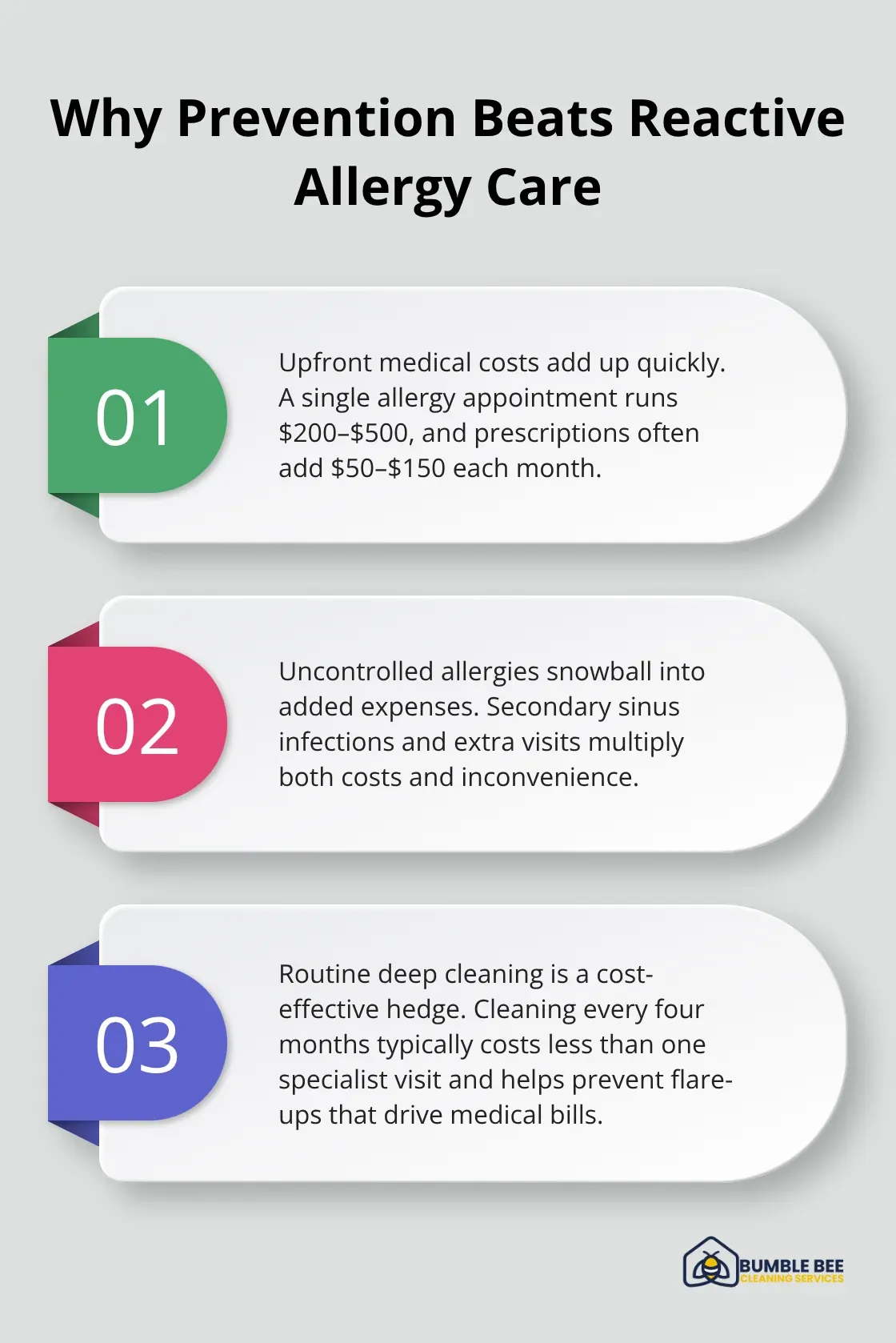
A single allergy appointment with testing costs between $200 and $500, and ongoing prescriptions for antihistamines, nasal sprays, or leukotriene modifiers like montelukast average $50 to $150 monthly (depending on whether you choose generic or brand options). Uncontrolled allergies can lead to secondary sinus infections requiring antibiotics and additional medical visits, multiplying costs quickly. Deep cleaning every four months costs significantly less than one allergy specialist visit, yet prevents the cascade of infections and worsening symptoms that trigger those expensive appointments.
Immune System Strength Improves With Consistent Cleaning
People who maintain consistent deep cleaning intervals report fewer respiratory infections overall because their immune systems aren’t constantly battling indoor allergen exposure-they have actual capacity to fight off seasonal colds and flu instead of already being inflamed from dust mites and pet dander. The financial protection extends beyond doctor visits: reduced sick days from work, fewer missed school days for children, and eliminated costs for emergency urgent care visits for asthma exacerbations or severe allergic reactions. Over a year, the difference between reactive allergy management and preventive deep cleaning can easily reach $1,000 to $2,000 in avoided medical expenses alone, not counting lost income from illness.
Final Thoughts
Professional deep cleaning transforms your Seattle home’s air quality within days, but the real value emerges when you maintain that improvement consistently. Breathing improvements appear within 24 to 48 hours, sleep quality jumps within the first week, and long-term health gains compound over months as your body’s baseline resets to what healthy breathing actually feels like. The challenge isn’t achieving better air quality once-it’s keeping it, since Seattle’s moisture and indoor living patterns create ideal conditions for dust mites and allergen accumulation.
Scheduling deep cleaning every three to six months prevents that slow creep of particles that makes poor breathing feel normal again. One allergy specialist visit costs $200 to $500, and monthly prescriptions for antihistamines or nasal sprays run $50 to $150 (secondary infections from uncontrolled allergies multiply those costs quickly). Deep cleaning every four months costs far less than a single allergy appointment, yet prevents the cascade of medical expenses and lost productivity that reactive allergy management creates.
We at Bumble Bee Cleaning Services specialize in allergen management through deep cleaning that removes the particles triggering your breathing problems. Our team handles the expertise and reliable scheduling that consistent air quality improvements require, so you maintain the benefits your lungs deserve. Contact us today to schedule your deep clean and start breathing better.
For more information about our cleaning services in Seattle and Atlanta, or to request a cleaning quote, call or text us at 425-786-1360 or email us at info@qbclean.com
