
Landlords conduct property inspections with a checklist that’s far stricter than most tenants expect. Missed spots, stains, and worn surfaces cost thousands in deposit deductions every year across Seattle.
We at Bumble Bee Cleaning Services have helped countless renters recover their full deposits by meeting the exact standards landlords demand. This guide shows you exactly what inspectors look for and how professional cleaning gets you there.
What Landlords Actually Inspect
Landlords in Seattle use standardized inspection checklists that go far beyond surface-level cleanliness. According to the Rental Registration & Inspection Ordinance, properties must meet specific health and safety standards, and move-out inspections compare directly against your move-in inspection photos. This means landlords aren’t looking for perfection-they’re looking for consistency. If your move-in inspection showed baseboards with dust, landlords won’t penalize you for the same condition on move-out. However, if your move-in was pristine, that’s the standard you’ll be held to.
The Deductions That Hit Hardest
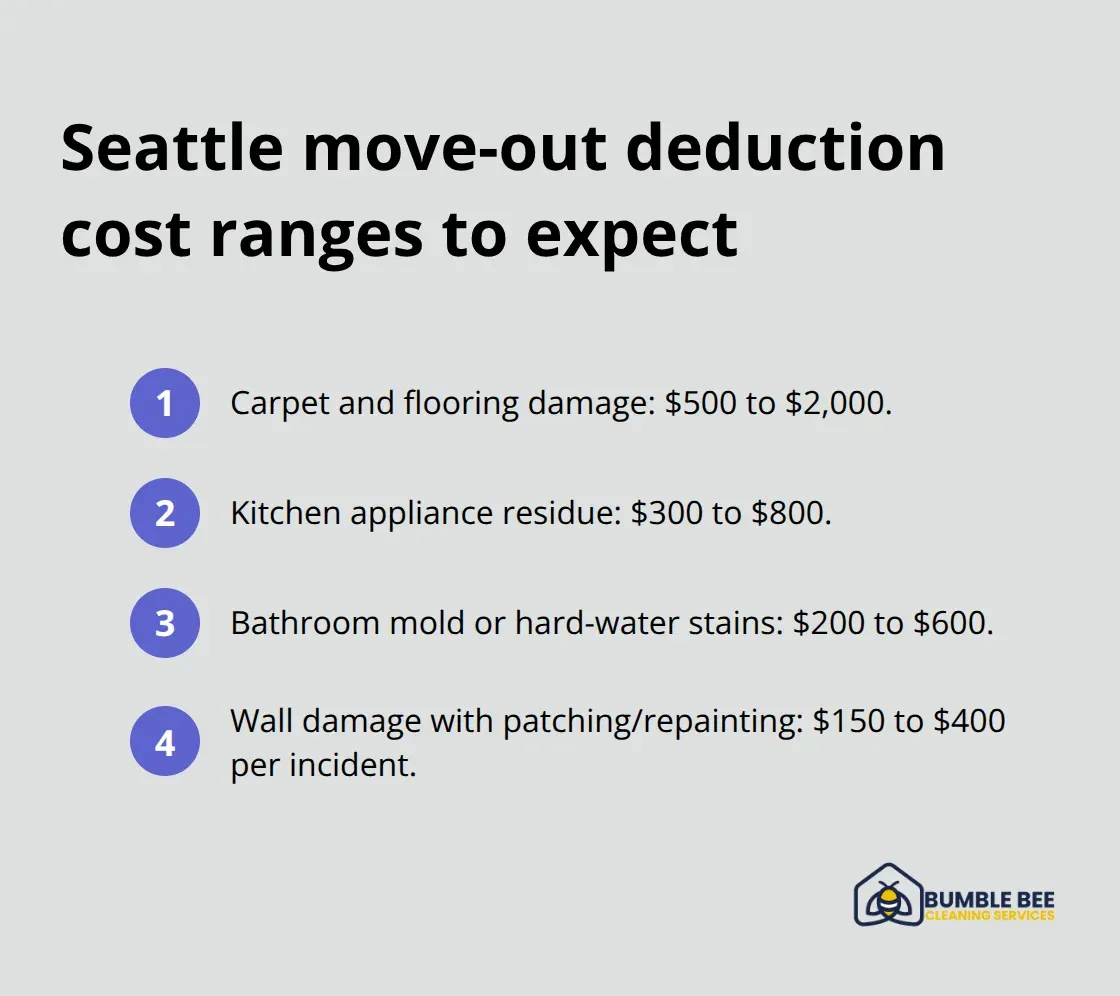
The highest-cost deductions typically come from four categories. Carpet and flooring damage runs $500 to $2,000, kitchen appliance residue costs $300 to $800, and bathroom mold or hard-water stains reach $200 to $600. Wall damage ranks fourth, with holes larger than nail holes averaging $150 to $400 per incident when patching and repainting are required.
Professional move-out cleaning services eliminate these common failures by applying industry standards like ISSA’s Cleaning Industry Management Standard, which provides detailed protocols for each room type and surface material.
Kitchen and Bathroom Areas Demand the Most Attention
Kitchen appliances demand the most scrutiny because they’re expensive to replace and heavily used. Landlords open refrigerators, ovens, and dishwashers to inspect interior surfaces, racks, and seals. Food residue inside the fridge, grease buildup on oven walls, and mineral deposits on dishwasher racks trigger deductions immediately. Bathrooms come second because mold and hard-water stains signal maintenance problems.
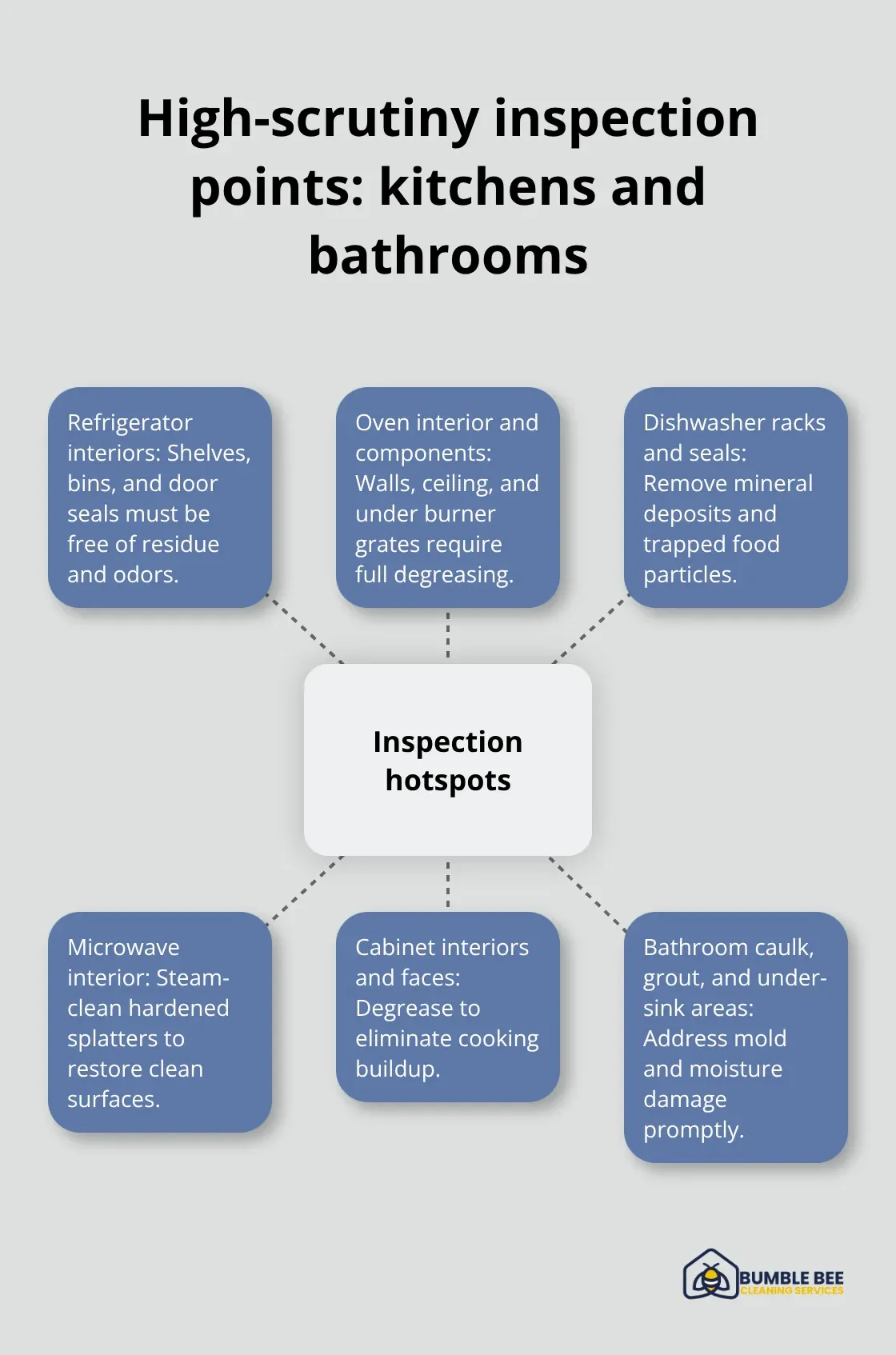
Landlords examine caulking around tubs, tile grout, and under-sink areas for moisture damage.
Flooring, Walls, and Mechanical Systems
Flooring ranks third-landlords walk every room looking for stains, burns, and pet damage. Carpet requires professional cleaning with stain treatment, especially for pet odors; if flea control is needed, that cost falls to you. Walls and baseboards often cause disputes because they’re subjective. Large holes, scuffs, and heavy marks photograph poorly and support deduction claims. Landlords also inspect mechanical systems: HVAC filters, water heater condition, and smoke detectors. A clogged filter suggests neglect and can justify additional charges.
Documentation Creates Your Best Defense
Landlords photograph everything during final inspections and compare images to your move-in record. This means your best defense is professional documentation before you leave. Request a copy of your move-in inspection report and photos, then schedule your professional cleaning to address exactly those standards. Landlords must itemize deductions with written notice and typically have 30 days to issue your deposit disposition under Washington state law. If they claim damage you didn’t cause, your move-out photos become your evidence. Take photos immediately after professional cleaning is complete, with timestamps and wide-angle shots showing room corners and ceiling areas.
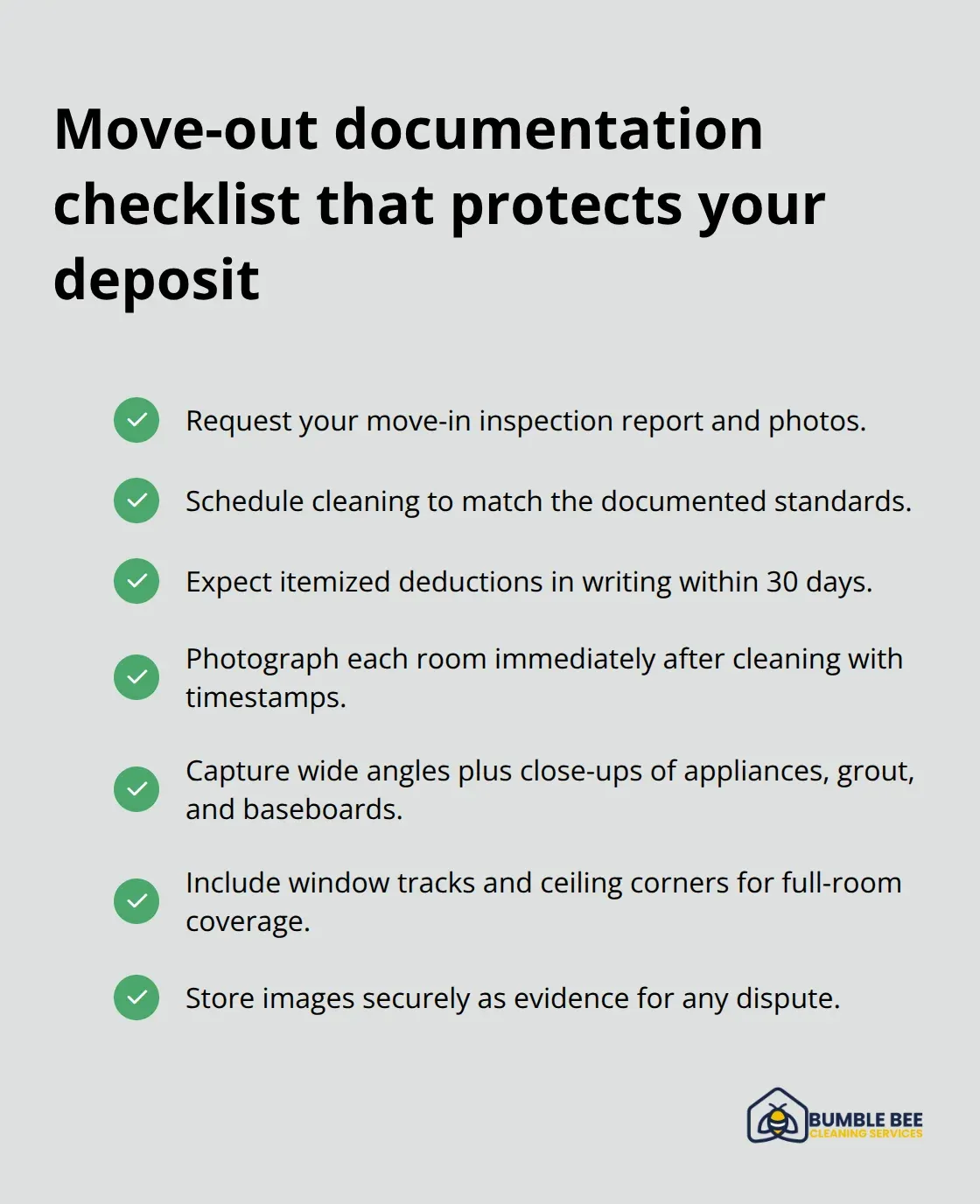
Include close-ups of appliance interiors, grout lines, and baseboards. This creates an undisputable record of condition. When disputes arise, landlords review these photos first-clear evidence of professional-grade cleanliness shifts burden back onto them to prove damage occurred after your departure. With documentation in place, you’re ready to understand what professional cleaning standards actually look like and how they differ from regular tidying.
What Professional Move-Out Cleaning Actually Requires
Professional move-out cleaning operates under industry standards that go far beyond regular tidying. Protocols aligned with ISSA’s Cleaning Industry Management Standard establish specific depth requirements for each surface type and room category. The difference between tenant cleaning and professional move-out cleaning comes down to access and tools. When you clean while moving, you work around boxes and furniture, rush against a timeline, and use consumer-grade products. Professional cleaners arrive to an empty unit with industrial equipment, specialized solutions, and time allocated for detailed work on every surface. This matters because landlords inspect appliance interiors, baseboards, window tracks, and ceiling corners that most people miss entirely.
Floors and Carpets Require Specific Treatment Protocols
Carpet cleaning stands as the single most-inspected flooring element in Seattle rentals, and it’s where tenants lose deposits most frequently. Professional move-out cleaning includes hot-water extraction for carpets, which removes deep-seated dirt, stains, and allergens from carpet fibers. For pet odors, landlords expect flea control treatment if the unit housed animals, and this must be completed before move-out to avoid additional charges. Hard floors demand different attention: vinyl, laminate, and tile require specific cleaners matched to material type. Laminate floors cannot tolerate excess water, so professional cleaners use microfiber mop systems with controlled moisture. Tile grout accumulates mineral deposits and mold, especially in bathrooms, and requires scrubbing with appropriate grout brushes rather than mopping. Stains on any flooring surface photograph clearly during inspection, so professionals apply stain-specific treatments: enzyme-based solutions for organic stains, oxidizing cleaners for rust or mineral marks, and solvent-based products for tar or adhesive residue.
Kitchen Appliances Trigger the Highest Deduction Rates
Kitchen appliances trigger the highest deduction rates because landlords open every door and drawer. The refrigerator interior must be spotless, including the top surface of the fridge where condensation collects dust and grime. Oven interiors require complete degreasing, not just wiping the stovetop; landlords inspect oven walls, the ceiling, and underneath the burner grates. Dishwasher racks need cleaning because mineral deposits and food particles accumulate there during normal use. Microwave interiors collect splatters that harden and require steam cleaning or enzymatic solutions to dissolve. Cabinet interiors often show grease buildup from cooking, and professional cleaners address this with appropriate degreasers.
Bathrooms Present Different Challenges
Bathrooms demand attention to areas that standard cleaning misses. Caulking around tubs harbors mold that requires specialized mold-removal products, not bleach solutions that can damage grout. Tile grout needs scrubbing with stiff brushes because mold stains and hard-water deposits embed into porous grout lines. Under-sink areas accumulate water damage and mold, requiring inspection and treatment. Bathroom exhaust fans collect dust that restricts airflow, and professionals clean fan covers and vents to restore function. These standards reflect what professional property managers expect across the industry, and landlords use them to determine whether a unit is rent-ready for the next tenant. Understanding these specific requirements shows why professional cleaning differs so dramatically from what most tenants attempt on their own-and why the investment protects your deposit when you prepare your home before the final walkthrough.
How to Prepare Your Home Before the Final Walkthrough
Start scheduling professional move-out cleaning at least three weeks before your lease end date, especially during Seattle’s peak moving season from May through August when availability tightens considerably. This timeline creates space to address repairs that professional cleaners cannot handle, complete those repairs before the cleaners arrive, and still have the unit inspection-ready by your move-out deadline. Landlords in Seattle require at least 20 days written notice before you vacate, so coordinate your cleaning schedule backward from that date rather than forward from today. If you move during summer months, book even earlier because professional cleaning slots fill quickly and you cannot afford to miss your preferred date.
Tackle Repairs Before Professional Cleaners Arrive
The order matters tremendously: repairs first, then professional cleaning, then your final documentation walk-through. This sequence prevents cleaners from working around damaged areas and ensures the unit reaches inspection standards in a single pass. Repairs that fall on you include broken blinds, damaged screens, doors off their tracks, and holes larger than standard nail holes in walls. Do not attempt to spackle small nail holes yourself because landlords expect minor wear and tear there, but large holes require professional patching and painting that most tenants cannot execute to inspection standard.
Carpet stains that do not respond to professional extraction, pet damage requiring subfloor replacement, and broken appliance components must be handled before move-out because landlords will deduct these costs from your deposit if you leave them unresolved. Contact your property manager in writing about damage you cannot repair yourself and request clarification on what counts as your responsibility versus landlord maintenance obligations, because this prevents disputes later. Once repairs are complete, professional cleaners can focus entirely on deep cleaning rather than working around incomplete work.
Schedule Cleaning After You Vacate Completely
Schedule your professional cleaning for the day after you move out completely, when the unit is empty and cleaners have full access to every surface, appliance interior, and floor area. This eliminates the overlap problem where you still pack while professionals work, which compromises both the moving process and cleaning quality. Professional teams arrive with industrial equipment and specialized solutions that require unobstructed access to deliver the results landlords expect.
Document Everything With Photos and Timestamps
After professional cleaning finishes, photograph every room with timestamps and wide angles showing corners and ceiling areas, then take close-ups of appliance interiors, grout lines, and baseboards within 24 hours. These photos become your evidence if disputes arise later, and they prove the unit met inspection standards at the moment you departed. Wide-angle shots capture overall room condition while close-ups document the specific surfaces landlords scrutinize most closely (kitchen appliances, bathroom fixtures, and wall conditions). Timestamp each photo so landlords cannot claim damage occurred after your departure.
Final Thoughts
Professional move-out cleaning protects your deposit by meeting the exact standards landlords enforce during property inspections. The difference between losing $500 to $2,000 in deductions and recovering your full deposit comes down to whether you address kitchen appliances, bathroom fixtures, carpet stains, and wall marks to inspection-ready standards. Landlords compare your move-out condition directly to your move-in photos, and professional cleaning eliminates the common failures that trigger the highest deduction rates.
The math is straightforward: professional move-out cleaning costs between $400 and $800 depending on unit size and condition, while carpet deductions alone run $500 to $2,000, kitchen appliance residue costs $300 to $800, and bathroom mold or hard-water stains reach $200 to $600. A single missed area during property inspections can exceed your entire professional cleaning investment. Professional cleaning also eliminates the stress of wondering whether you’ve met landlord standards and provides documented results with photos and timestamps that serve as your evidence if disputes arise later.
Bumble Bee Cleaning Services specializes in move-out cleaning that meets these exact standards and handles the deep cleaning requirements that landlords scrutinize most closely-appliance interiors, grout lines, carpet extraction with stain treatment, and baseboards. Contact us today to schedule your professional move-out cleaning at least three weeks before your lease end date and protect your deposit with professionals who understand exactly what Seattle landlords demand.
For more information about our cleaning services in Seattle and Atlanta, or to request a cleaning quote, call or text us at 425-786-1360 or email us at info@qbclean.com
