
Office germs spread fast, and most employees spend eight hours a day breathing the same air and touching the same surfaces. A single bacterium can multiply into millions within hours, turning your workplace into a health risk.
We at Bumble Bee Cleaning Services know that workplace sanitization goes far beyond a quick wipe-down. Professional deep cleaning removes pathogens that standard cleaning misses, directly cutting illness rates and keeping your team healthy.
Where Office Germs Hide and Spread
The Five Most Contaminated Surfaces
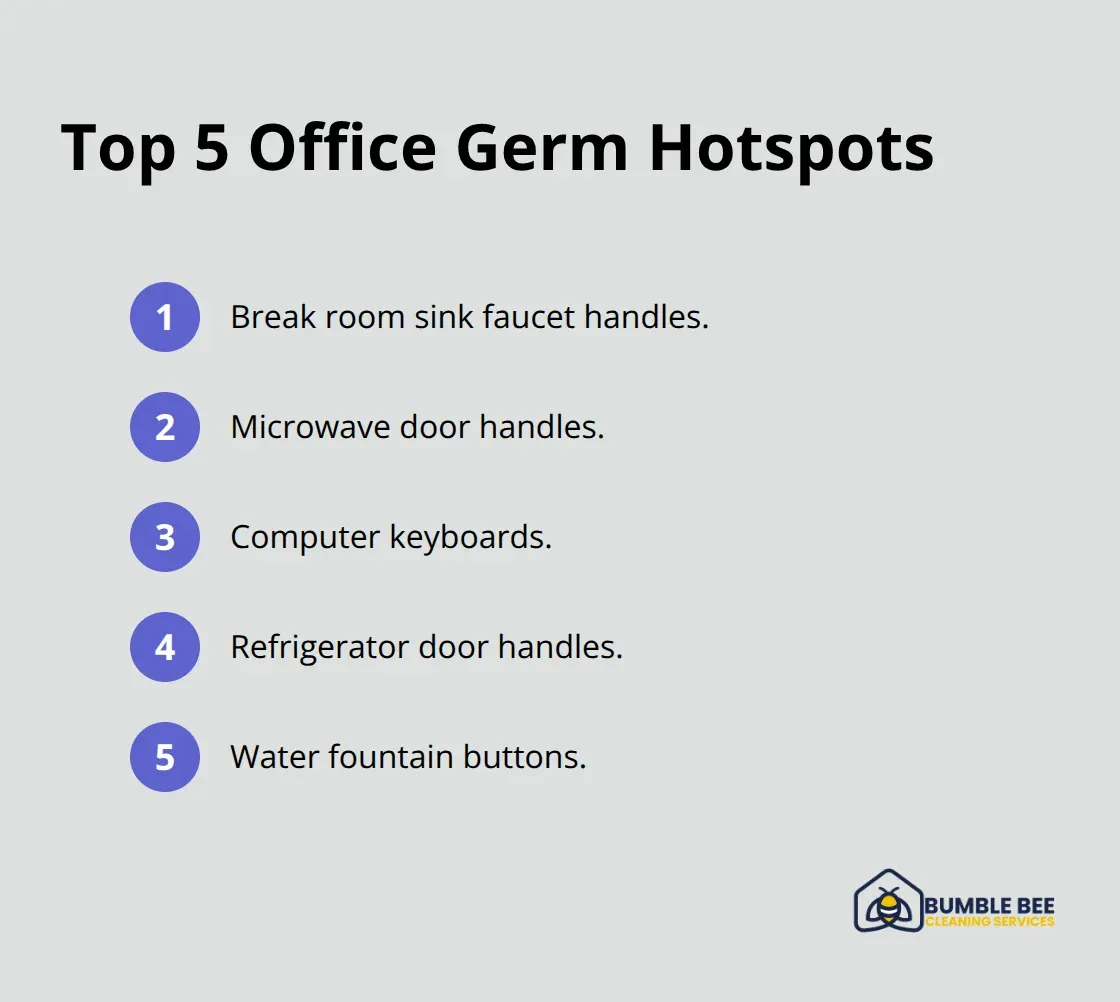
The five most contaminated surfaces in any office are break room sink faucet handles, microwave door handles, computer keyboards, refrigerator door handles, and water fountain buttons, according to Kimberly-Clark Professional. These hotspots matter because about 80% of common infections spread through touching contaminated surfaces. A University of Arizona study found that office desks harbor 400 times more bacteria than toilet seats, which explains why keyboard and mouse contact poses a genuine infection risk that most workplaces ignore.
How Viruses Persist on Shared Equipment
Shared phones create a particular transmission problem: flu viruses survive on them for 24 to 48 hours, meaning a sick employee on Monday infects multiple coworkers by Wednesday. Cold and flu season amplifies this risk significantly.
During peak illness months, high-touch surfaces require weekly disinfection to break transmission chains before viruses move from person to person.
Why Standard Cleaning Falls Short
Standard daily cleaning with a cloth simply moves pathogens around rather than eliminating them. Surface contact times matter tremendously. EPA-approved disinfectants require explicit contact times (often 10 minutes or longer) to actually kill pathogens instead of redistributing contamination across your workspace.
The Hidden Cost of Untreated Surfaces
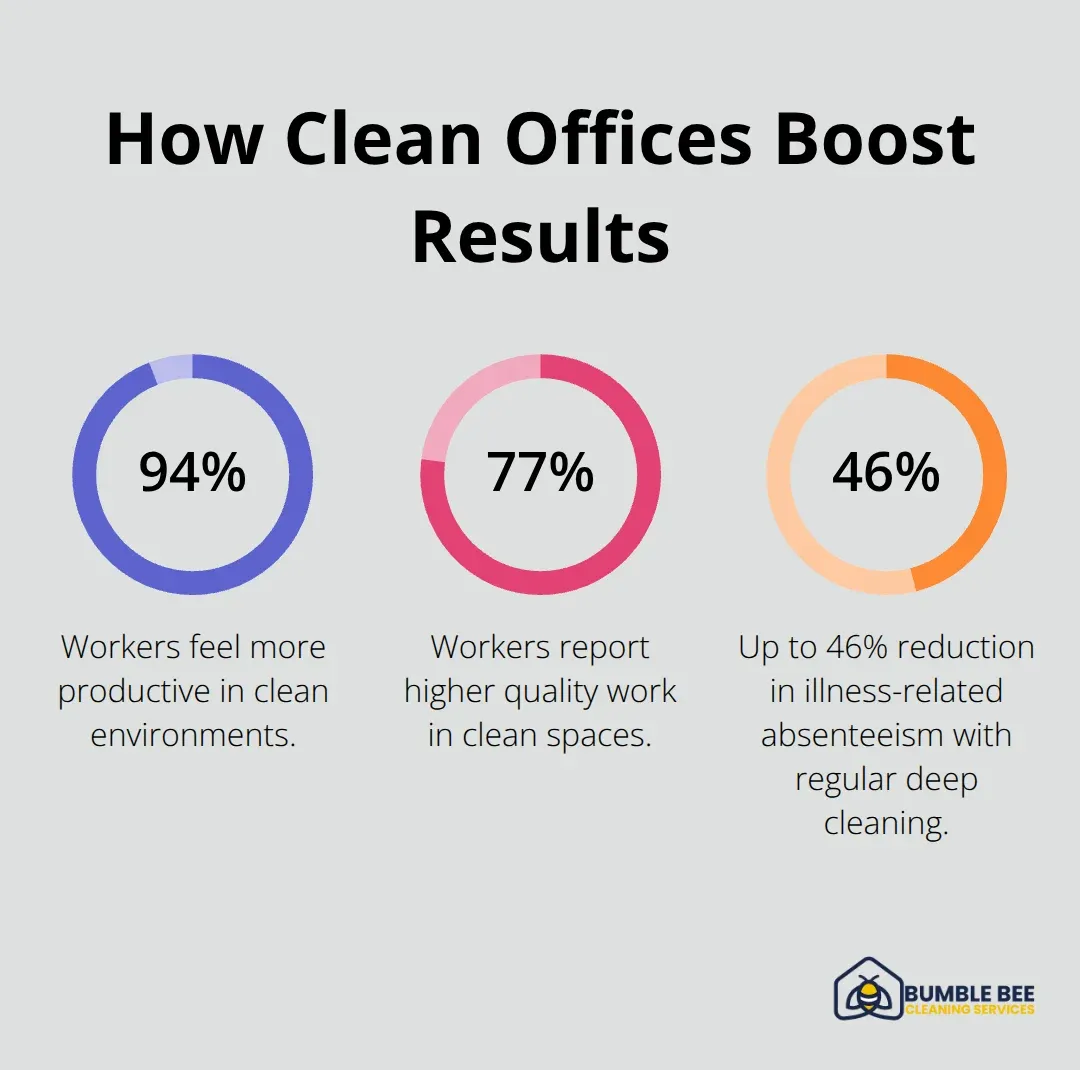
Adults typically experience 2-3 colds per year according to the CDC, and workplace environments accelerate transmission rates when surfaces go unaddressed. A 50-person office that prevents just 10 sick days per quarter saves around $20,000 in lost productivity alone. Research shows that regular deep cleaning reduces illness-related absenteeism by up to 46%, delivering tangible health returns that far exceed cleaning costs.
Beyond Visible Surfaces
Carpets and upholstered furniture trap dust, allergens, and bacteria; professional extraction methods remove these reservoirs far beyond what standard vacuuming achieves, improving indoor air quality measurably. Poor indoor air quality directly links to allergies, asthma, headaches, and fatigue among employees. Deep cleaning targets hidden reservoirs of bacteria on high-touch surfaces, not just visible dirt or everyday wipe-downs, which is why professional protocols make a real difference in reducing workplace illness and preparing your team for what comes next.
How Professional Deep Cleaning Actually Stops Illness Spread
Why Contact Time Matters More Than You Think
Professional deep cleaning works because it applies EPA-approved disinfectants with the contact times needed to kill pathogens, not just move them around. Standard cleaning misses this step entirely. When a disinfectant sits on a surface for the required contact time, it chemically breaks down bacterial cell walls and destroys viral proteins. Without that contact time, you redistribute contamination across your office rather than eliminating it. The difference between a quick wipe and real disinfection is the difference between a false sense of security and actual pathogen reduction.
How Absenteeism Numbers Reveal the Real Impact
The health impact shows up in your absenteeism numbers. Research demonstrates that regular deep cleaning reduces illness-related absenteeism, which translates directly to productivity and payroll savings. A 50-person office prevents roughly 10 sick days per quarter through proper deep cleaning, saving approximately $20,000 in lost productivity alone. The Staples Advantage Workplace Index found that 94% of workers felt more productive and 77% reported higher quality work in clean environments, proving that this isn’t just about fewer sick days but about employee performance when they do show up.
Air Quality and Employee Performance
Indoor air quality improves measurably when carpets and upholstered furniture receive professional extraction, which removes dust and allergen reservoirs that standard vacuuming leaves behind. Poor indoor air quality causes allergies, asthma, headaches, and fatigue that reduce focus and decision-making quality. Quarterly or semi-annual deep cleaning targeting high-touch surfaces, carpets, and upholstery creates a measurable shift in how your team feels and performs, particularly during cold and flu season when weekly disinfection of critical surfaces becomes essential to break transmission chains before they take hold. Understanding which surfaces demand the most attention-and how often-determines whether your cleaning strategy actually protects your workforce or simply creates the appearance of protection.
How Often Your Office Needs Deep Cleaning
Matching Frequency to Your Office’s Illness Risk
Deep cleaning frequency depends on your office traffic, industry, and illness season timing. Cold and flu season demands frequent disinfection of high-touch surfaces like door handles, light switches, and elevator buttons to interrupt transmission chains before they spread. Outside peak illness months, quarterly or semi-annual deep cleaning paired with consistent daily maintenance prevents pathogen buildup without unnecessary expense. A 50-person office should prioritize deep cleaning every three to six months, adjusting upward if you notice rising absenteeism or downward if your team stays consistently healthy.
Timing Your Deep Cleaning Schedule
The timing matters as much as the frequency. Schedule deep cleaning early morning before employees arrive or after hours to allow disinfectants their required contact time without people moving through treated spaces.
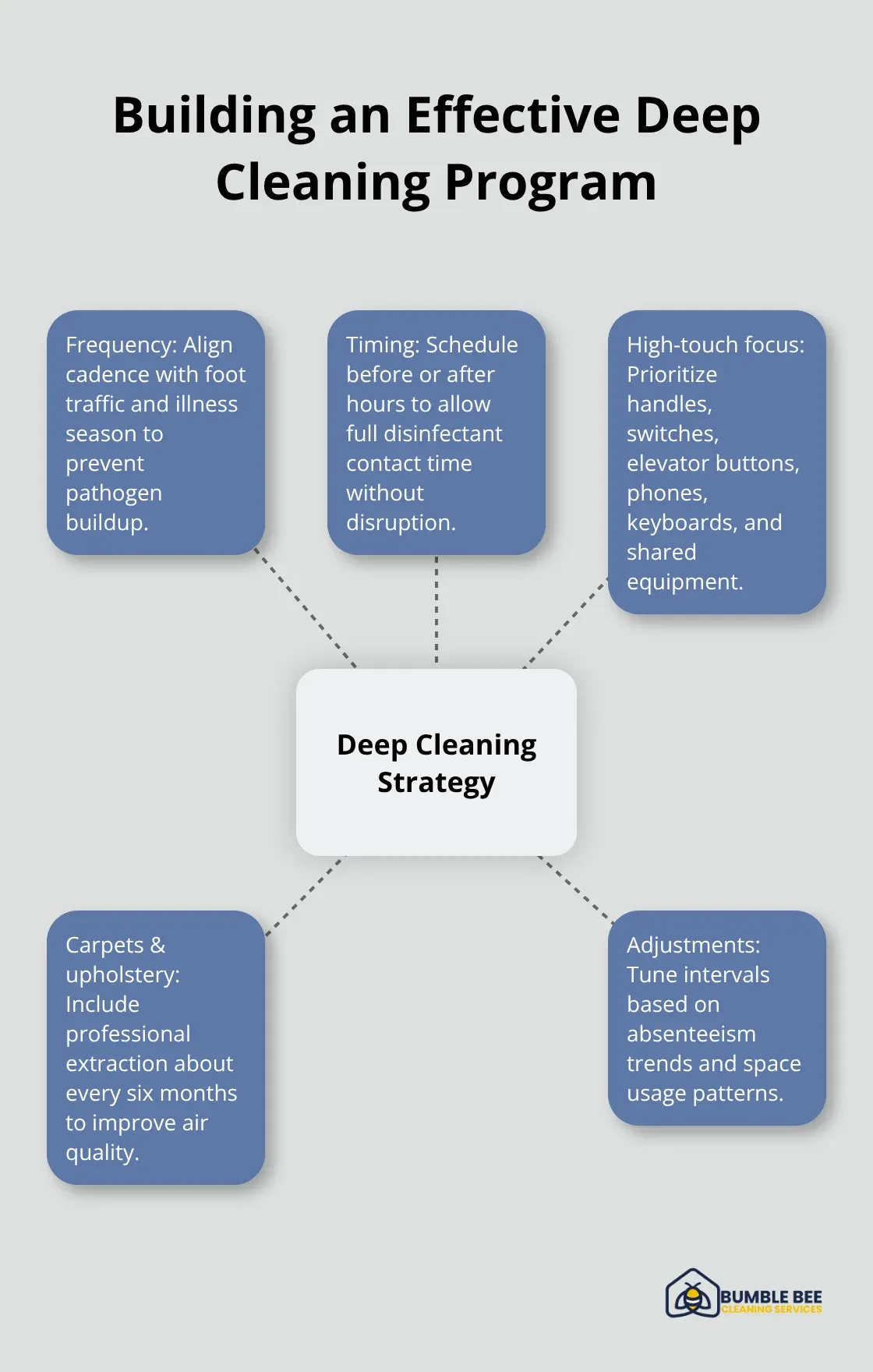
This approach prevents disruption while ensuring EPA-approved disinfectants sit on surfaces for the contact time needed to kill pathogens rather than simply redistribute them.
Targeting the Five Most Contaminated Surfaces
Professional deep cleaning targets the five most contaminated surfaces that standard daily cleaning ignores: break room sink faucet handles, microwave door handles, computer keyboards, refrigerator door handles, and water fountain buttons. These surfaces demand regular attention during illness season because viruses can survive on shared surfaces, meaning early transmission becomes widespread spread across your entire team. Eco-friendly disinfectants certified by the EPA work effectively when applied with proper contact times, which distinguishes real pathogen elimination from surface redistribution.
Professional Extraction for Carpets and Upholstery
Carpets and upholstered furniture require professional extraction every six months because standard vacuuming leaves behind dust, allergens, and bacterial reservoirs that trigger respiratory issues and fatigue among employees. Professional extraction methods remove these hidden contaminants far beyond what routine vacuuming achieves, directly improving indoor air quality and employee performance during peak illness months.
Customizing Your Deep Cleaning Schedule
Your office’s specific layout, occupancy level, and seasonal illness patterns determine the right schedule. This targeted approach prevents unnecessary waste and cost of over-cleaning low-risk areas. Adjust your frequency based on what you observe in your workforce-rising sick days signal that you need more frequent deep cleaning, while consistently healthy teams may maintain longer intervals between services.
Final Thoughts
Deep cleaning directly reduces illness in your office by eliminating pathogens that standard cleaning leaves behind. The data proves it: offices that implement regular deep cleaning see absenteeism drop by up to 46%, which translates to real savings and a healthier workforce. Your team performs better, stays focused longer, and takes fewer sick days when your workplace sanitization strategy targets the surfaces and spaces where viruses and bacteria actually hide.
In-house cleaning teams lack the equipment, training, and EPA-approved disinfectants needed to achieve the contact times that kill pathogens rather than redistribute them. Professional deep cleaning services bring certified expertise, specialized extraction equipment for carpets and upholstery, and proven protocols that your staff cannot replicate with standard supplies. The difference between moving germs around and actually eliminating them determines whether your office stays healthy or becomes a transmission hub during cold and flu season.
We at Bumble Bee Cleaning Services follow industry standards that ensure consistent, measurable results across your entire office. Contact us today to discuss a customized deep cleaning plan that protects your workforce and keeps your office healthy year-round.
For more information about our cleaning services in Seattle and Atlanta, or to request a cleaning quote, call or text us at 425-786-1360 or email us at info@qbclean.com
