
Seattle offices spend thousands on cleaning services, yet many still miss one sanitization step that spreads illness faster than any other workplace hazard.
Office hygiene protocols typically focus on visible surfaces while ignoring the equipment your employees touch most. We at Bumble Bee Cleaning Services see this oversight daily in commercial spaces across the city.
The result? Higher sick leave rates and productivity losses that cost businesses far more than proper sanitization would.
Where Do Seattle Offices Miss the Mark on Sanitization
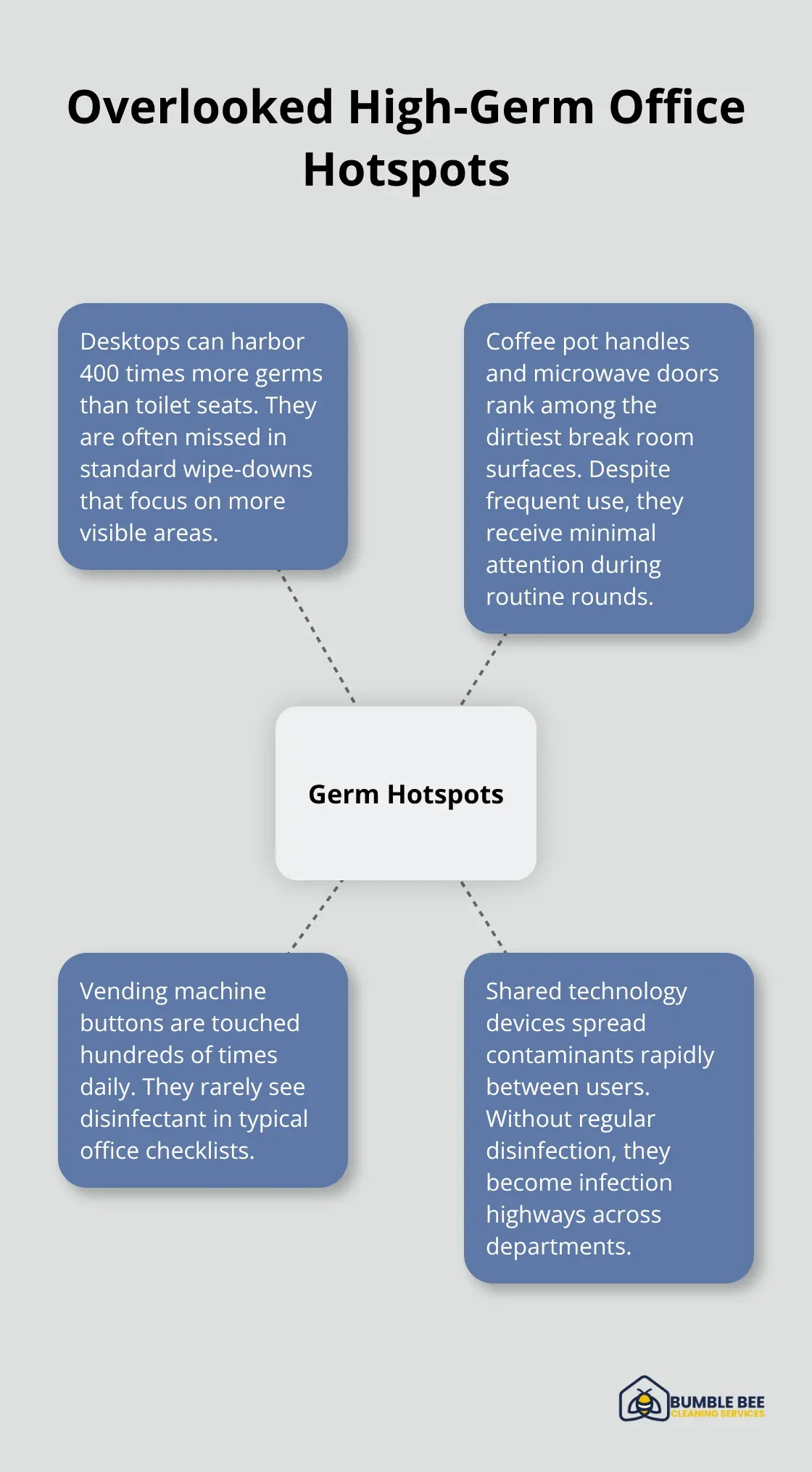
Most Seattle cleaning services tackle obvious spots but completely ignore three areas that breed the most dangerous bacteria. Door handles receive daily wipes while desktops have 400 times more germs than toilet seats. Break room coffee pot handles and microwave doors rank among the dirtiest office surfaces yet receive minimal attention during standard cleaning rounds. Vending machine buttons get touched hundreds of times but rarely see disinfectant.
HVAC Systems Spread Contamination Building-Wide
Air circulation systems move germs from one office to another within minutes. The EPA conducted comprehensive studies on indoor air quality determinants, yet most Seattle offices change filters quarterly instead of monthly. Dust and bacteria accumulate in vents and spread through every room. Professional cleaning of air ducts removes allergens and prevents cross-contamination between departments.
Restrooms Need More Than Surface-Level Attention
Standard restroom cleaning misses the areas where bacteria multiply fastest. Faucet aerators, soap dispensers, and door frame crevices collect moisture and germs. Toilet brush holders and waste bin interiors become breeding grounds for harmful microorganisms. The Seattle-King County Public Health Department requires healthcare facilities to follow rigorous disinfection protocols, but regular offices often skip these deeper sanitization steps.
Electronic Equipment Creates Hidden Health Risks
Shared technology devices pose the greatest sanitization challenge that most offices completely overlook. Desk phones collect germs from hands and faces throughout the day, while computer mice transfer bacteria between multiple users in shared workspaces.
Why Electronics Are Your Office’s Biggest Health Risk
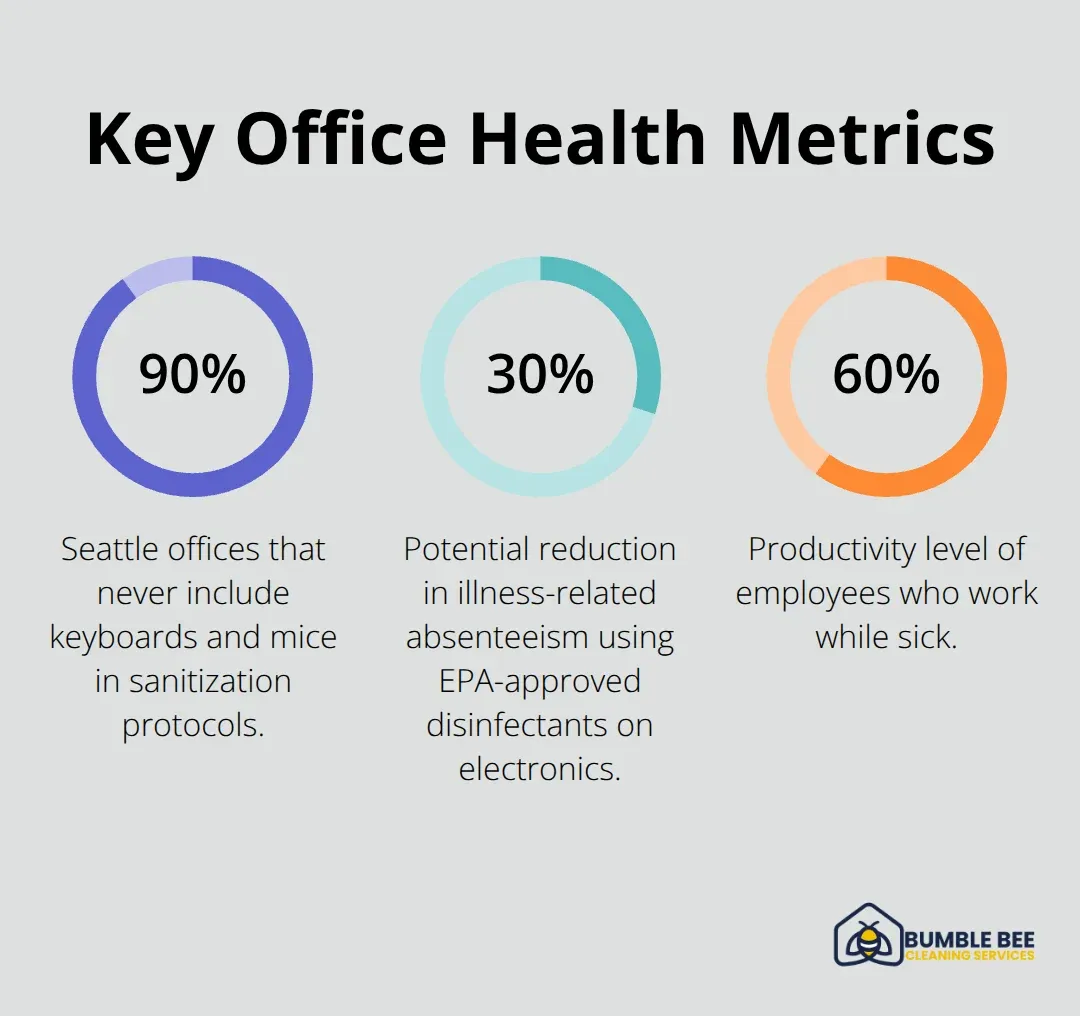
Keyboards and computer mice harbor 400 times more bacteria than toilet seats according to University of Arizona studies, yet 90 percent of Seattle offices never include these devices in their sanitization protocols. Desk phones accumulate germs from constant hand and face contact while shared workstations transfer bacteria between employees throughout the day.
The problem intensifies in hot-desk environments where multiple workers use the same equipment without proper disinfection between users.
Technology Sanitization Reduces Sick Days
EPA-approved disinfectants applied to keyboards and phones can reduce illness-related absenteeism by up to 30 percent (as reported by the American Cleaning Institute). Alcohol-based wipes that contain at least 70 percent isopropyl alcohol effectively eliminate viruses and bacteria on electronic surfaces. Daily sanitization of headsets, computer screens, and mouse pads prevents cross-contamination in shared work environments. Professional cleaning services apply specialized techniques that remove germs without damage to sensitive electronic components.
Break Room Equipment Spreads Illness Faster
Coffee pot handles and microwave doors rank among office spaces’ most contaminated surfaces but receive minimal attention during standard cleaning rounds. Refrigerator handles, water cooler dispensers, and shared utensil drawers multiply bacteria throughout the day as employees grab snacks and prepare meals. The FDA recommends that you sanitize food-contact surfaces with one tablespoon of unscented bleach per gallon of water to prevent contamination. Monthly deep cleaning of break room appliances prevents odor buildup and reduces mold growth that affects indoor air quality.
Shared Workspace Equipment Needs Daily Attention
Printers, copiers, and fax machines collect germs from dozens of hands each day but rarely receive proper disinfection. Touch screens on office equipment transfer bacteria between users within seconds of contact. Conference room technology (including remote controls and presentation clickers) spreads illness from meeting to meeting. These overlooked surfaces create infection pathways that standard cleaning protocols completely miss, which leads directly to the measurable health and business consequences that affect your bottom line.
What Does Poor Office Sanitization Really Cost Your Business
Poor commercial hygiene costs Seattle businesses an average of $1,685 per employee annually through increased sick days and reduced productivity. The American Cleaning Institute found that offices with inadequate sanitization protocols experience 30 percent higher absenteeism rates compared to facilities with proper disinfection procedures.
When office surfaces harbor bacteria and viruses, employees inevitably contract illnesses that spread through shared workspaces within hours. A single contaminated break room coffee pot can infect multiple departments in one morning, which creates cascading productivity losses that extend far beyond the initial sick employee.
Infection Spreads Through Offices in Predictable Patterns
Workplace infection transmission follows measurable patterns that most Seattle offices completely ignore. Contaminated surfaces can transmit pathogens, which means Monday morning germs affect Wednesday productivity levels.
Shared technology devices create infection highways between departments. Computer mice and phones transfer bacteria to new hosts within minutes of contact. Conference rooms become superspreader locations when presentation equipment remains unsanitized between meetings, which affects entire teams simultaneously.
Seattle Health Department Standards Carry Real Financial Consequences
Seattle businesses face fines up to $10,000 per day for failure to meet commercial cleaning standards, yet many offices operate without knowledge of these requirements. The Seattle-King County Public Health Department conducts surprise inspections that can result in temporary closures for non-compliant facilities.
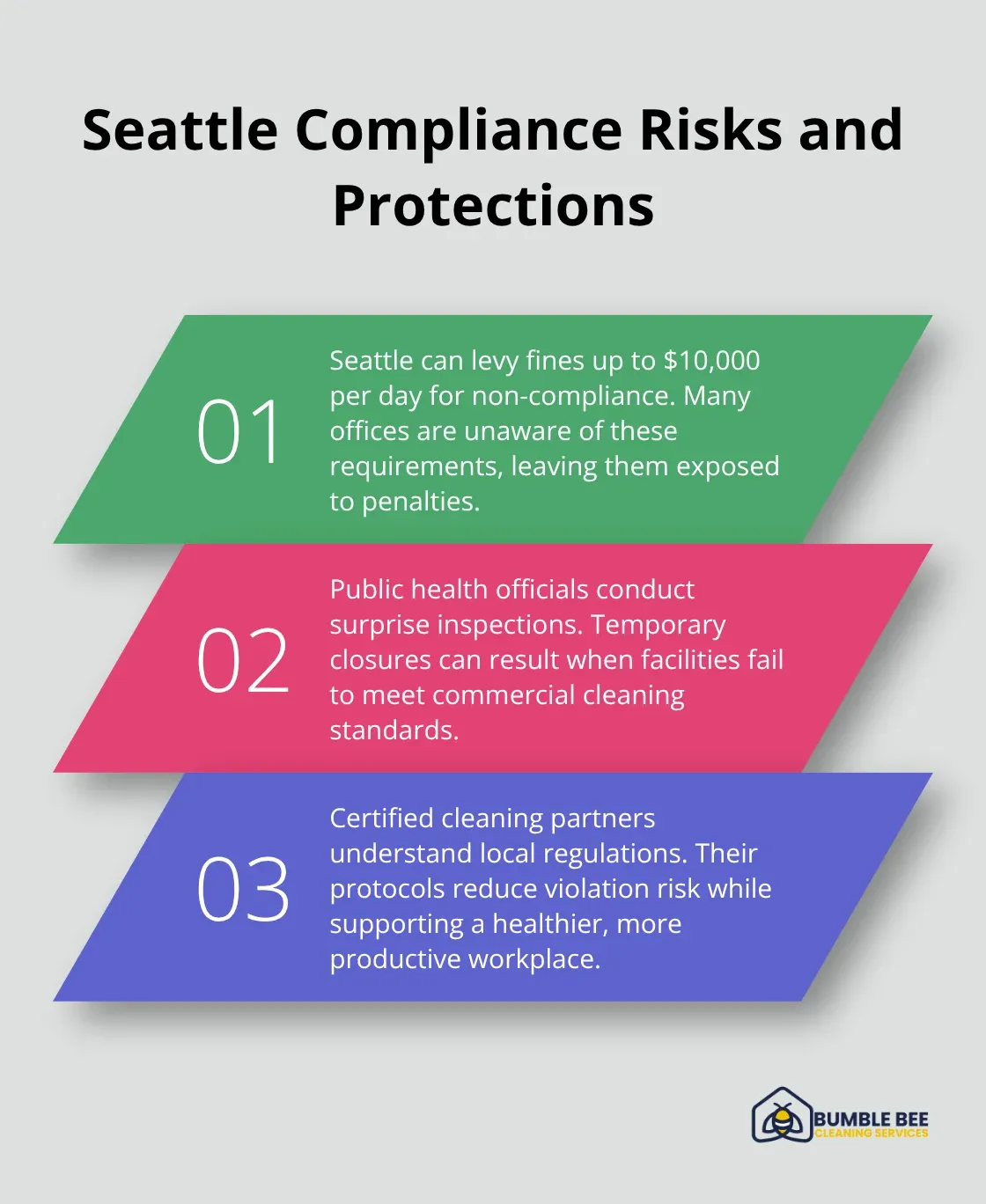
Healthcare facilities already follow rigorous disinfection protocols mandated by local authorities, while regular offices often skip these same sanitization steps that prevent costly violations. Professional cleaning services (like those certified by ARCSI and IICRC) bring expertise in local regulations and advanced techniques that protect businesses from regulatory penalties while they maintain healthier workplace environments that support sustained productivity.
Employee Productivity Drops Measurably
Illness-related productivity losses extend beyond absent employees. Workers who come to the office while sick perform at 60 percent capacity according to occupational health studies. Contaminated workstations force healthy employees to work around sick colleagues, which reduces team efficiency across entire departments.
The ripple effect multiplies when key personnel become ill during important projects or client presentations. One contaminated meeting room can sideline an entire sales team for weeks, which directly impacts revenue generation and client relationships.
Final Thoughts
Seattle offices lose thousands annually when they overlook electronic equipment sanitization while they focus only on visible surfaces. Keyboards harbor 400 times more bacteria than toilet seats, yet most cleaning protocols ignore these high-touch devices completely. Break room appliances and shared technology create infection pathways that spread illness throughout entire departments within hours.
Office hygiene failures cost businesses $1,685 per employee yearly through increased sick days and reduced productivity. The Seattle-King County Public Health Department enforces strict commercial cleaning standards with fines that reach $10,000 daily for non-compliance. Professional cleaning services bring expertise in local regulations and advanced sanitization techniques that protect both employee health and business operations.
We at Bumble Bee Cleaning Services help Seattle businesses implement comprehensive sanitization protocols that address these overlooked areas. Identify high-touch surfaces your current cleaning service misses and implement daily disinfection of keyboards, phones, and break room equipment. Partner with professional commercial cleaners who understand Seattle’s health standards and can develop customized protocols that address your specific workplace risks.
