
Childcare sanitization isn’t just about cleanliness-it’s about keeping your kids healthy and giving you peace of mind while you work. Seattle childcare centers face real challenges with germs spreading quickly through shared spaces, toys, and high-touch surfaces.
We at Bumble Bee Cleaning Services know that parents deserve to trust their childcare environment is truly safe. This guide walks you through what actually works and what mistakes to avoid.
Why Childcare Sanitization Actually Protects Your Family
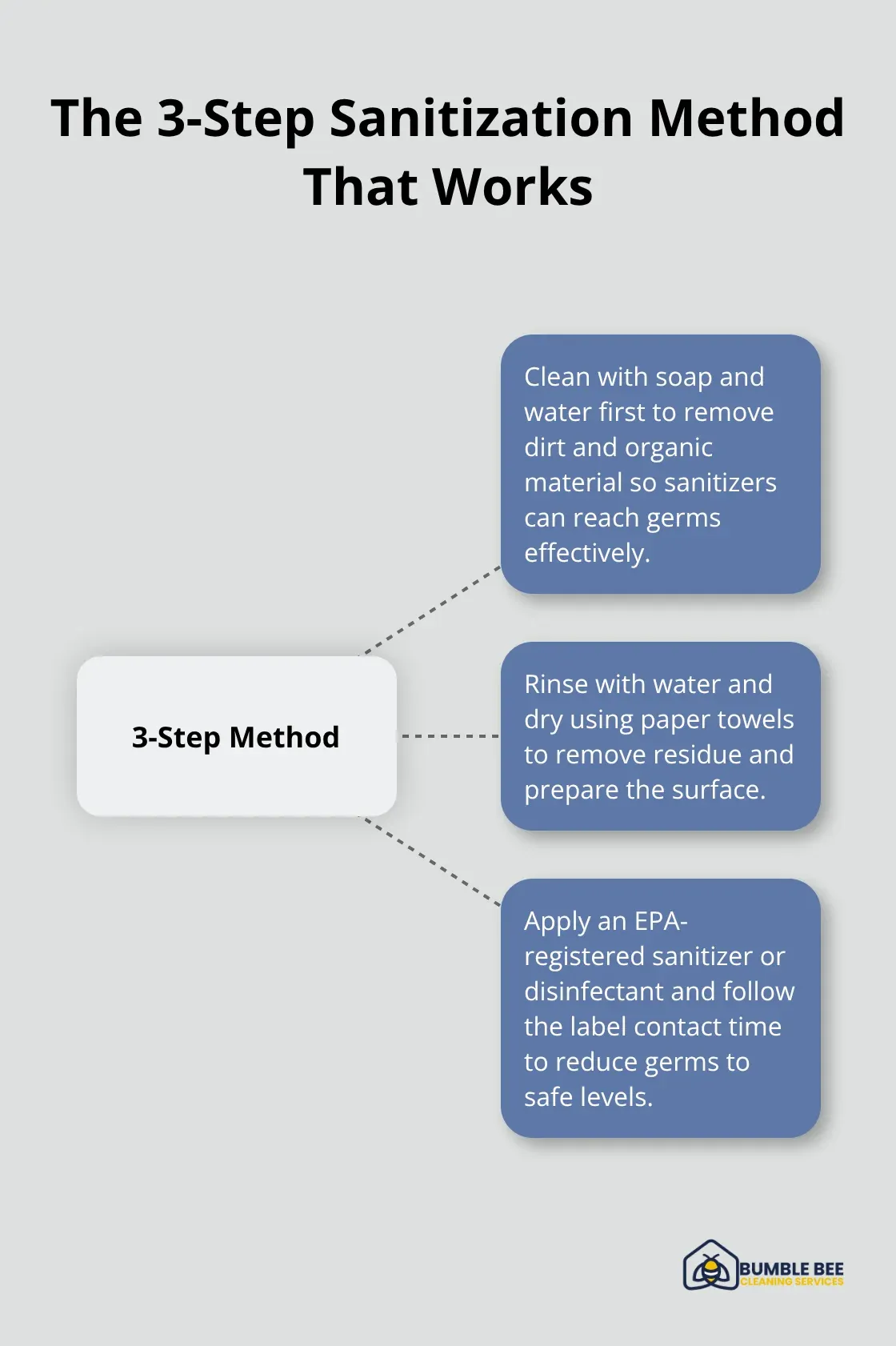
Germs spread fast in childcare settings, and the numbers prove it. Children in group care get sick more often than those at home-studies show respiratory infections per year in childcare settings are significantly higher than for children in home settings. This isn’t just inconvenient; it costs Seattle families real money in missed work days. When your child gets sick, one parent typically stays home, disrupting schedules and paychecks. Proper sanitization directly cuts down on these illnesses. King County’s Child Care Health Program emphasizes that effective cleaning stops germs before they spread. The 3-step method they recommend-cleaning with soap and water, rinsing, then applying an EPA-registered sanitizer-actually works because it removes dirt that sanitizers can’t penetrate on their own. Without that first step, you’re just moving germs around. Childcare centers that follow this protocol see measurable reductions in illness transmission within weeks.
Your child benefits immediately when a facility takes sanitization seriously.
Specific Threats in Seattle Childcare Environments
Enterovirus D68 has circulated more frequently in recent years, and infants, children, and teenagers face the highest infection risk. There’s no vaccine for enteroviruses, which means hand hygiene and environmental cleaning are your only real defenses. High-touch surfaces like doorknobs, toy handles, and diaper-changing tables harbor viruses for hours. A single contaminated toy can infect multiple children in one day. Seattle Children’s and the CDC both stress that regular sanitization of toys after each use prevents this spread. Facilities that sanitize toys daily rather than weekly see significantly lower illness rates among their students. Your peace of mind matters too. Knowing that your child’s childcare center cleans eating areas before and after meals, sanitizes high-chair trays, and properly disinfects diaper-changing tables means you’re not sending your child into an environment where preventable illnesses thrive.
What Happens When Sanitization Lapses
Inconsistent cleaning schedules create dangerous gaps. When a childcare center cleans toys only twice a week instead of daily, they allow pathogens to accumulate and spread. Working parents shouldn’t have to worry about whether their childcare center follows basic health standards. You deserve a facility that prioritizes your child’s safety as much as you do. Professional cleaning support helps childcare centers maintain the rigorous schedules that actually protect children. When facilities have reliable cleaning partners, they eliminate the guesswork and staffing pressures that lead to shortcuts in sanitization protocols. This foundation of consistent, expert cleaning sets the stage for understanding what best practices actually look like in action.
What Actually Works in Childcare Sanitization
The difference between childcare centers that stay on top of illness and those that don’t comes down to execution, not intention. A three-step method that works because it addresses how germs actually behave on surfaces involves cleaning with soap and water first to physically remove dirt and organic material that sanitizers cannot penetrate. Then rinse with water and dry with paper towels. Finally, apply an EPA-registered disinfecting product, which reduces germs to safe levels on food-contact and non-food surfaces alike. This order matters completely. Many facilities skip step one or rush through it, then wonder why their sanitizer isn’t working. Sanitizers applied to dirty surfaces fail because they cannot reach the pathogens underneath the grime.
Daily Protocols for High-Touch Surfaces
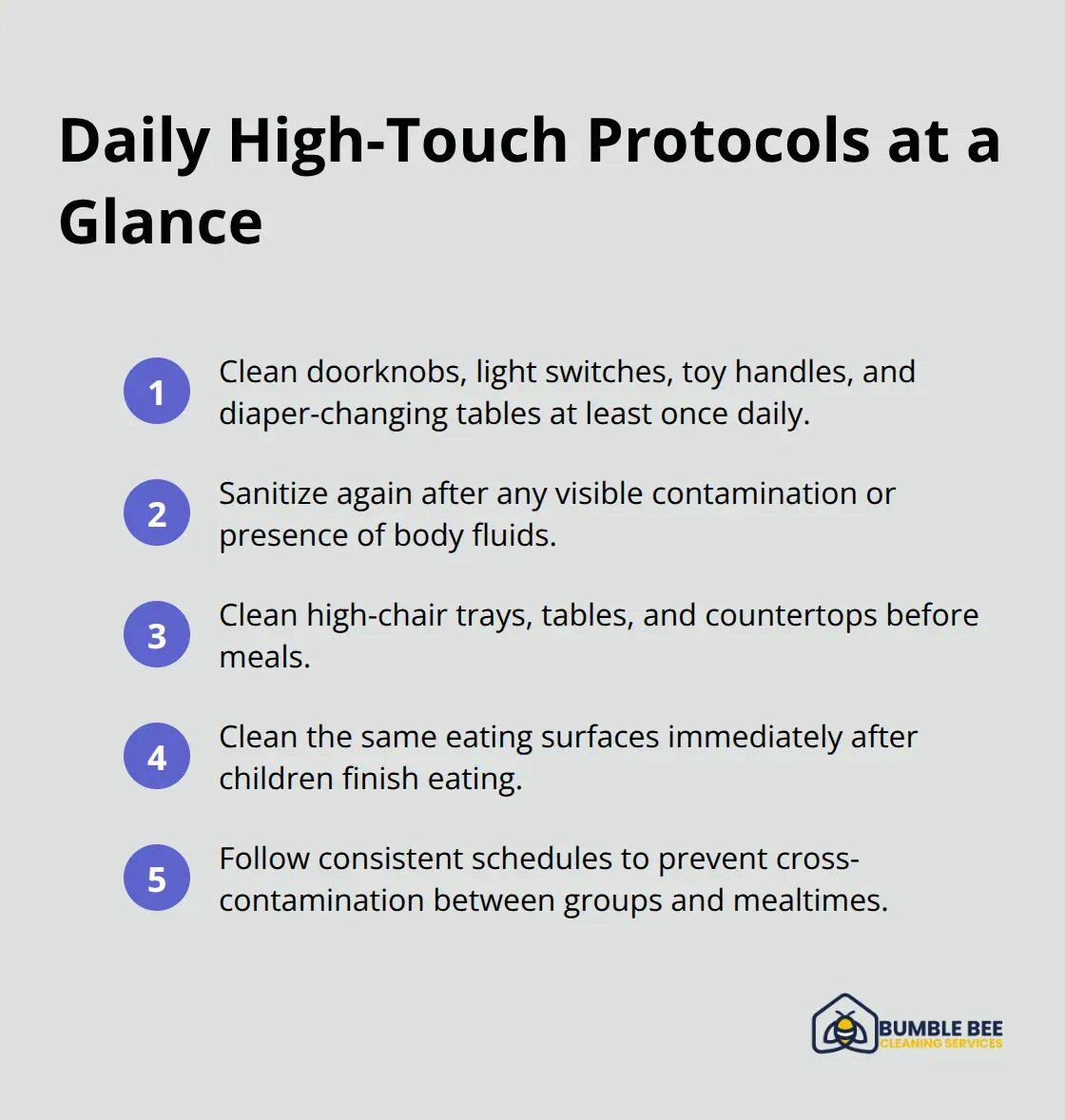
High-touch surfaces demand attention on a daily schedule, not weekly. Doorknobs, light switches, toy handles, and diaper-changing tables require cleaning and sanitization at minimum once per day, with additional sanitization after visible contamination or when body fluids are present. Eating areas present their own challenge. High-chair trays, tables, and countertops must be cleaned before meals and immediately after children finish eating. The CDC emphasizes that this timing prevents cross-contamination between different age groups or meal times. Staff who maintain these schedules consistently see measurable reductions in illness transmission within weeks.
Sanitizing Toys and Play Equipment
For toys, the standard is straightforward: sanitize daily for items that infants and toddlers use, since these age groups put objects directly in their mouths. Nonporous toys respond well to a weakened bleach solution (one tablespoon of unscented bleach per gallon of water). Items must be submerged completely for at least two minutes without rinsing afterward, then placed on clean paper towels to air dry completely before storage or reuse. This approach eliminates pathogens without harsh chemicals that irritate young skin.
The Handwashing Standard That Actually Stops Spread
Handwashing remains the single most effective tool in childcare sanitization, yet most facilities execute it poorly. The standard is specific: twenty seconds of scrubbing with soap and warm water. To time this correctly, children should sing the alphabet twice while washing. Staff must actively supervise children during handwashing and wash their own hands before preparing food, after diaper changes, and after handling any bodily fluids. Alcohol-based hand sanitizers may supplement handwashing for people over twenty-four months old, but they cannot replace it. Sanitizers work best on visibly clean hands and fail entirely when hands contain dirt or food residue. Many childcare centers rely too heavily on hand sanitizer and neglect proper handwashing, which defeats the purpose. Facilities that enforce rigorous handwashing protocols see measurable reductions in respiratory infections and gastrointestinal illness within weeks.
Why Execution Separates Safe Centers from the Rest
The investment in teaching children proper technique and maintaining staff compliance pays off immediately in fewer sick days for families. Yet many Seattle childcare centers struggle to maintain these standards without dedicated support. Staffing pressures, competing priorities, and the complexity of managing multiple cleaning tasks create gaps that put children at risk. This is where professional cleaning partners step in to help childcare facilities maintain the rigorous protocols that actually protect children.
Mistakes That Turn Childcare Centers Into Germ Hotspots
Seattle childcare centers often fail at sanitization not because they lack good intentions, but because they struggle to maintain consistent execution under real operational pressure. The most dangerous mistake is the sporadic cleaning schedule. When a facility sanitizes toys on Monday and Thursday but leaves them untouched for five days in between, pathogens multiply exponentially on surfaces children touch dozens of times daily. King County’s Child Care Health Program emphasizes that daily sanitization of high-touch surfaces in childcare facilities must happen for items infants and toddlers use, yet many centers stretch these intervals to weekly or even longer due to staffing constraints. A single toy contaminated with enterovirus D68 can infect multiple children within hours if it sits unclean.
Inconsistent Schedules Create Dangerous Gaps
High-touch surfaces like doorknobs and diaper-changing tables require sanitization at minimum once per day, and more frequently when body fluids are present, but understaffed centers often skip afternoon rounds entirely. This gap allows pathogens to accumulate and spread unchecked. The difference between a safe facility and a germ hotspot often comes down to whether staff maintain their cleaning schedule on difficult days when staffing runs thin. Centers that treat sanitization as a daily non-negotiable task see measurable reductions in illness transmission within weeks.
Chemical Selection and Application Errors
Many facilities either choose overly harsh disinfectants that irritate children’s skin and respiratory systems, or they select products that sound effective but lack EPA registration for childcare environments. Worse, staff often skip the first step of the three-step cleaning method for childcare sanitization entirely, applying sanitizer directly to dirty surfaces where pathogens hide beneath grime. This renders the sanitizer completely ineffective. Staff must clean with soap and water first, rinse, then apply the sanitizer-this order matters completely.
Hidden Problem Areas That Accumulate Germs
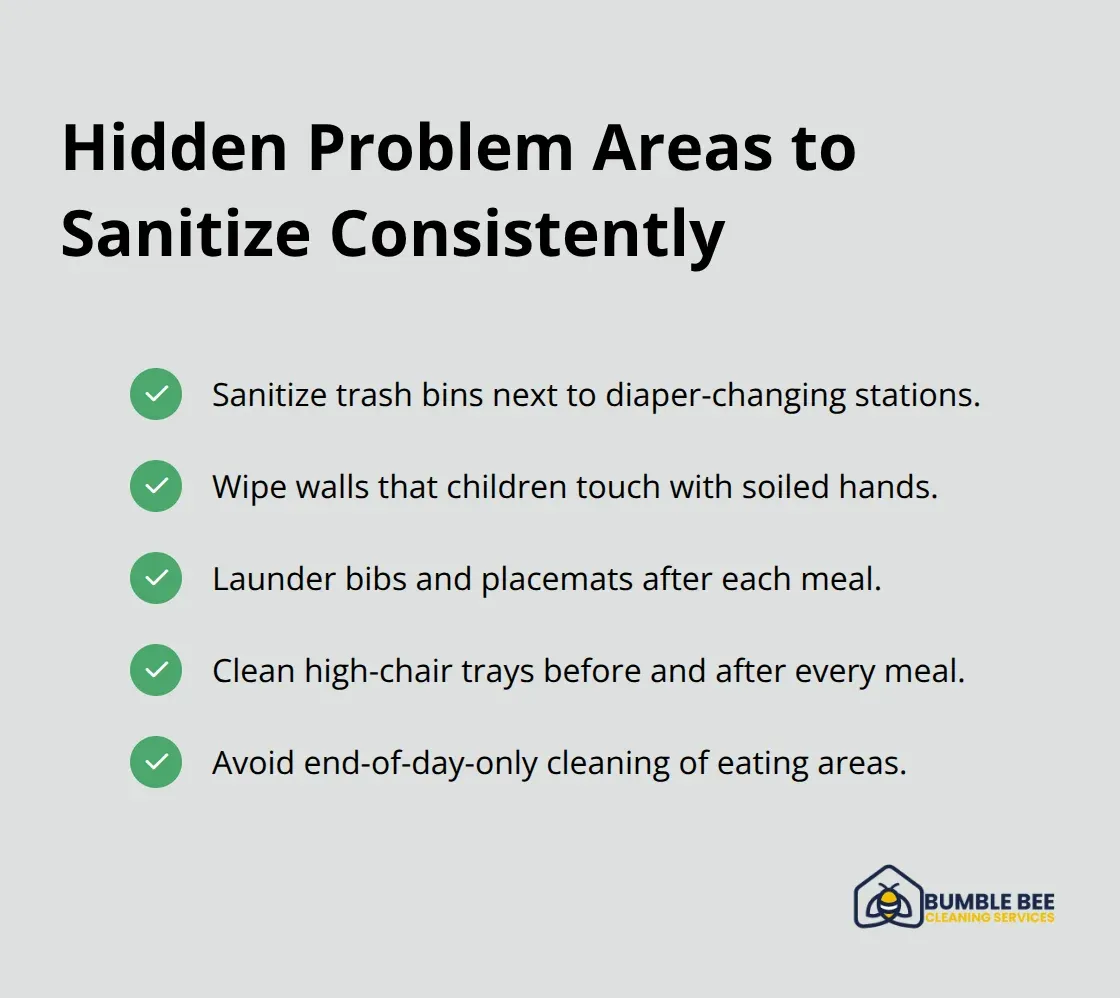
Diaper-changing tables receive daily attention, but the trash bins beside them, the walls where children touch with soiled hands, and the fabric items like bibs and placemats rarely receive scheduled sanitization. Staff often forget that cloth materials must be laundered after each meal, not once per day. Eating areas present another blind spot: high-chair trays and countertops require cleaning before meals and immediately after, yet many centers clean only at the end of the day when contamination has already spread to multiple surfaces and children. These overlooked zones (trash areas, walls, fabric items) become silent vectors for illness transmission that staff never address in their daily routines.
The Cost of Inconsistent Execution
Seattle childcare facilities that maintain rigorous daily schedules, use appropriate EPA-registered products, and address every contaminated surface see measurable reductions in illness transmission within weeks, while those that treat sanitization as an occasional task or a checkbox exercise continue losing children to preventable illness. The investment in consistent execution pays off immediately in fewer sick days for families and stronger trust from parents who expect their childcare center to prioritize health.
Final Thoughts
Childcare sanitization works when facilities commit to daily execution, use EPA-registered products correctly, and address every surface where germs accumulate. The three-step method matters because it removes dirt before sanitizers can work effectively. High-touch surfaces need attention every single day, toys require sanitization after each use for infants and toddlers, and handwashing with proper technique stops more illness than any other single practice.
Most childcare centers struggle to maintain rigorous sanitization schedules without dedicated support. Staff juggle multiple responsibilities, and cleaning often gets deprioritized when children need attention. This gap between good intentions and consistent execution is where professional cleaning services make a real difference-we at Bumble Bee Cleaning Services understand that childcare facilities need reliable partners who handle sanitization with the same precision that parents expect.
When you evaluate childcare options for your family, ask specific questions about their cleaning schedule. Do they sanitize toys daily or weekly? Are high-touch surfaces cleaned multiple times per day? Do they clean eating areas before and after meals? Centers that openly share these details and maintain documented schedules demonstrate they take health seriously. If your current childcare facility struggles with consistent sanitization, professional cleaning support can transform their practices and give you genuine peace of mind.
