
Moving out of a rental property in Seattle means one thing: your security deposit is on the line. Landlords conduct thorough inspections, and final cleaning Seattle standards are strict-dirty carpets, grimy kitchens, or overlooked baseboards can cost you hundreds of dollars.
We at Bumble Bee Cleaning Services have helped countless renters protect their deposits by handling the detailed work that most people miss. This guide walks you through exactly what landlords expect, room-by-room tasks, and the mistakes that drain security deposits fastest.
Understanding Move-Out Cleaning Requirements
What Landlords Actually Inspect During Move-Out
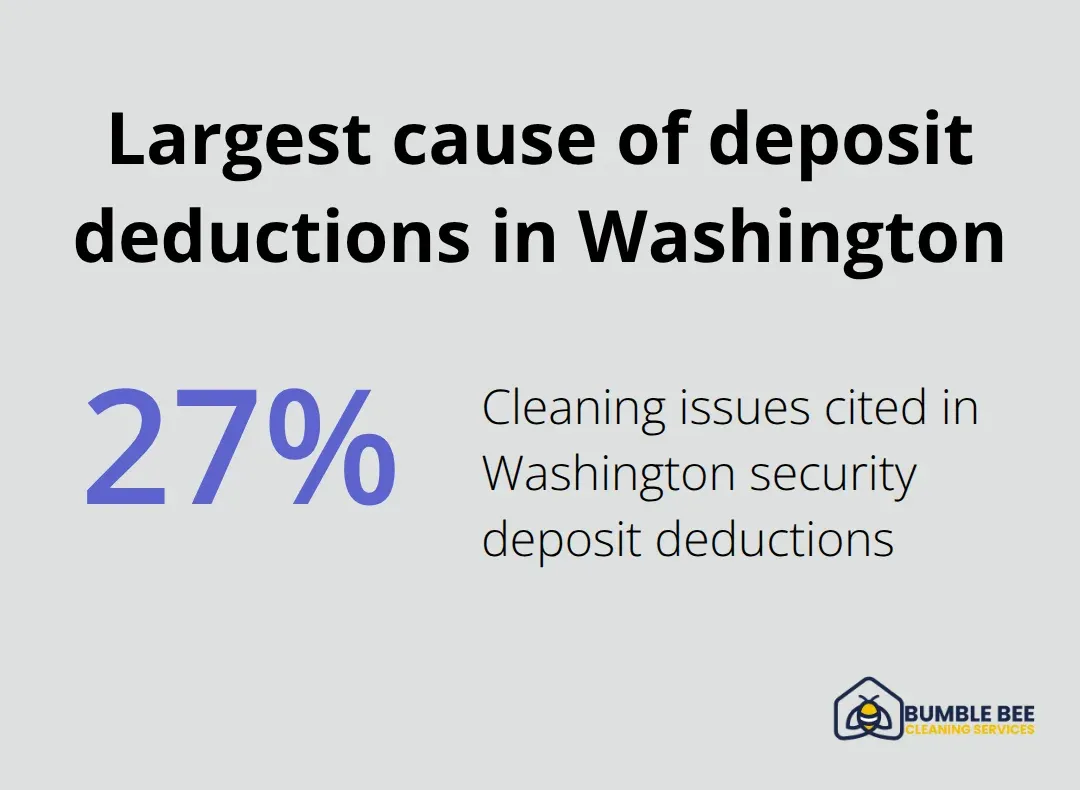
Landlords in Seattle follow a specific inspection pattern, and understanding it protects your deposit. They focus hardest on kitchens and bathrooms because these spaces reveal water damage, grime buildup, and neglect faster than anywhere else. According to Washington state law, landlords can only deduct for cleaning if the unit falls below the move-in cleanliness standard-not for normal wear and tear. Your move-in inspection photos matter enormously. If your lease requires the unit returned in the same condition as move-in, you need documentation proving what that condition actually was. Cleaning issues account for approximately 27% of all security deposit deductions in Washington, making this the single largest reason tenants lose money at move-out.
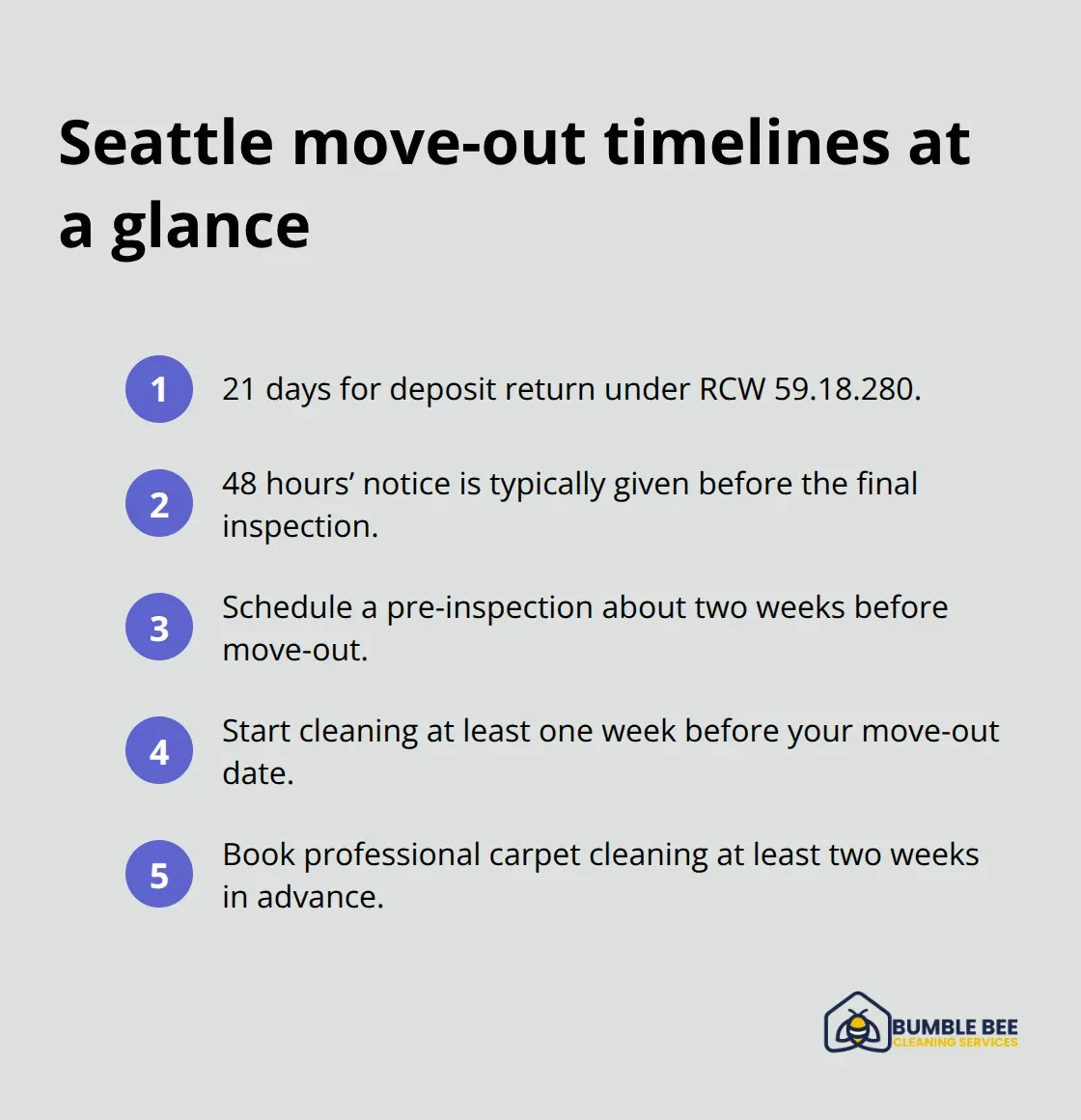
Landlords typically allow 48 hours’ notice before a final inspection, so scheduling a pre-inspection about two weeks before your move-out date gives you time to fix problems without rushing. Start your cleaning at least one week before the official move-out to avoid last-minute gaps and missed spots.
Seattle’s Security Deposit Rules and Timelines
Washington state law under RCW 59.18.280 requires landlords to return security deposits within 21 days and provide an itemized deduction list if they withhold money. Deductions must tie directly to conditions that differ from move-in, and landlords cannot charge for normal wear and tear.
If your lease specifies professional carpet cleaning, skipping this step triggers automatic deductions because it violates the lease terms, not because the carpet looks bad. Carpets typically have a 5–7 year lifespan, and stains, burns, or pet damage can be deducted even on older carpets. Most Seattle leases require returning the unit in the same condition as move-in, with kitchens and bathrooms receiving the closest scrutiny. Maintain detailed move-in inspection photos with dates and attach invoices for any professional work you complete-this documentation protects you if disputes arise. The move-out standard is conditional, not generic; you only need to address what changed since you moved in, not restore everything to showroom condition.
Documentation That Protects Your Deposit
Take comprehensive photos of every room before you start cleaning and after you finish. Landlords often prefer detailed documentation because it reduces guesswork during the final walk-through. Keep all receipts and invoices from professional cleaners or carpet services (professional carpet cleaning typically costs between $150–$400 for residential properties). Store these records alongside your move-in inspection checklist and dated photos. This paper trail becomes your defense if the landlord disputes deductions after you move out. The move-out inspection comparison reveals which cleaning and repair tasks are actually required based on your specific unit’s condition at move-in.
How to Clean Every Room for Move-Out Inspection
Kitchen Deep Cleaning: Where Landlords Look Hardest
Kitchens demand the most attention during move-out inspections because landlords scrutinize them for water damage, grease buildup, and appliance neglect. Empty all cabinets and drawers, then wipe interiors and exteriors with warm water and baking soda to eliminate odors and residue. Clean the tops of cabinets where dust accumulates over years of tenancy. For the oven, use heavy-duty oven cleaner and scrub thoroughly until the interior gleams; landlords notice burnt-on food immediately. The refrigerator requires cleaning both inside and outside, including the space behind and underneath where mold and dust hide. Run an empty dishwasher with white vinegar to sanitize it, then clean the sink, faucet, and disposal with a bleach solution to remove hard water stains and odors. Wipe all countertops and backsplashes with a vinegar-and-water solution (equal parts), which cuts through grease without leaving residue. Mop the floor last, moving appliances to clean underneath them.
Bathrooms: Addressing Seattle’s Moisture Problem
Bathrooms come second in landlord priority because moisture breeds mold rapidly in Seattle’s humid climate. Mold can grow within 24 to 48 hours of moisture exposure according to EPA guidelines. Scrub the toilet thoroughly, including the base and behind the seat where urine stains hide. Use a vinegar solution for soap scum and hard water deposits on shower walls and glass doors. Clean grout with a baking soda paste or specialty grout cleaner, working section by section. Polish mirrors and chrome fixtures until they shine without streaks. Clean the exhaust fan and light fixtures, which tenants typically overlook but landlords inspect. Address any visible mold with a bleach solution (1 cup per gallon of water) for small patches under 10 square feet; larger areas require professional remediation. Wipe cabinet interiors and exteriors, clean shelves with warm water, and ensure the space smells fresh and dry.
Living Areas and Bedrooms: Systematic Attention to Detail
Living areas and bedrooms require systematic attention to high-touch surfaces and often-missed spots. Dust from top down, starting with ceiling fans and light fixtures, then moving to shelves and surfaces. Clean windows on both sides and wipe tracks and sills thoroughly because window condensation signals poor ventilation to landlords. Remove wall scuffs with a magic eraser, working gently to avoid damaging paint. Wipe doorknobs, door frames, and doors because these accumulate fingerprints and grime. Clean baseboards and corners where dust settles. Vacuum carpets thoroughly, including corners and under where furniture sat, then consider professional carpet cleaning if the lease requires it. Professional cleaning removes dirt and allergens using hot water extraction, which matters because skipping this step triggers automatic deductions. For hardwood floors, sweep then damp-mop with a floor cleaner appropriate for the finish. Wipe light switches and outlet plates. Empty all garbage and ensure the space smells neutral.
Timing and Focus: Where Your Energy Matters Most
Start cleaning at least one week before move-out to avoid rushing through details and missing problem areas. Landlords compare your move-out condition directly to the move-in baseline documented in your initial inspection photos, so focus energy on areas that changed during tenancy rather than attempting perfection everywhere. The timing matters as much as the tasks themselves. Kitchen and bathroom work typically consumes the most hours, so allocate your effort accordingly and tackle these spaces first when your energy is highest.
Common Move-Out Cleaning Mistakes to Avoid
Hidden Areas That Landlords Always Inspect
Most tenants fail move-out inspections not because they cleaned poorly overall, but because they ignored specific areas landlords always check. Window tracks and sills accumulate dust that signals neglect to landlords within seconds of inspection, yet renters typically overlook these entirely or wipe them with a damp cloth that leaves streaks. The space behind the refrigerator and under kitchen cabinets holds years of grease and dust buildup that becomes visible when appliances are moved during the final walk-through. Baseboards collect fingerprints and scuffs that a magic eraser removes instantly, but most people skip them because they seem minor.
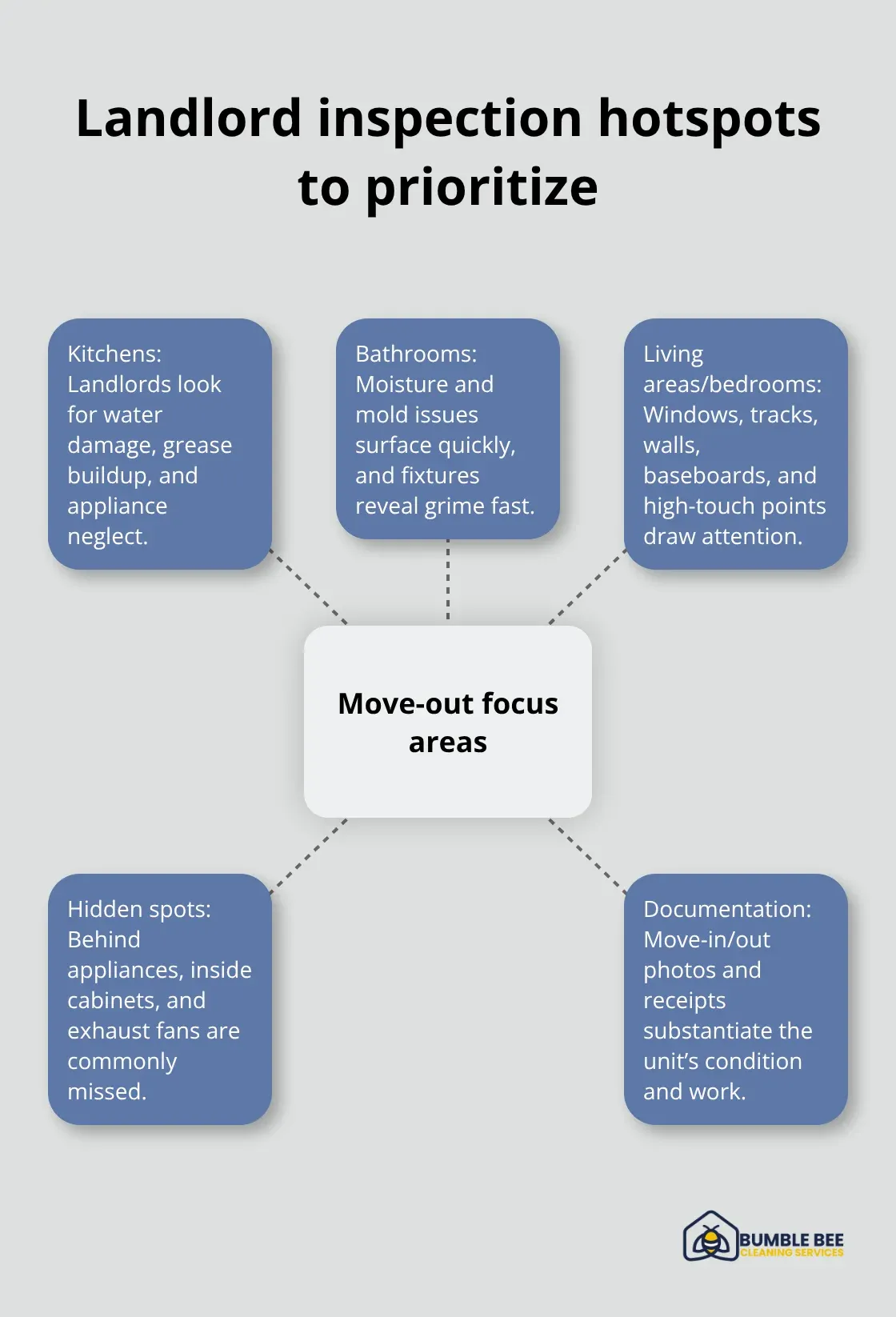
Light switch plates, outlet covers, and doorknobs transfer fingerprints constantly and require targeted cleaning with a microfiber cloth and appropriate surface cleaner. Exhaust fans in bathrooms accumulate dust that falls back onto clean surfaces if you don’t clean them first, working top-to-bottom. The inside of cabinet doors and shelves go unseen until landlords open them, revealing dust and residue that tenants assume won’t matter.
Wrong Cleaning Products Damage Surfaces and Deposits
Cleaning product choices destroy deposits faster than actual dirt does. Vinegar on natural stone etches the surface permanently. Bleach on stainless steel appliances leaves streaks and discoloration. Harsh scrubbing powders scratch glass shower doors. Standard all-purpose cleaners on grout leave residue that looks worse than the original grime.
Test any cleaner on an inconspicuous area first, and match the product to the specific surface. For grout, baking soda paste works effectively without damaging tile. For stainless steel, use a stainless steel-specific cleaner or olive oil on a microfiber cloth. For glass, stick with white vinegar and water or a squeegee to avoid streaks.
Professional Carpet Cleaning Separates Full Refunds From Losses
Professional carpet cleaning separates tenants who recover full deposits from those who lose hundreds. If your lease requires professional carpet cleaning, skipping this step triggers automatic deductions regardless of how clean the carpet looks to you, because you violated the lease terms. Rental machines from big-box stores remove surface dirt but fail to extract deep soil and allergens that professionals target.
Professional-grade hot water extraction removes deep soil and allergens, meaning the carpet actually gets clean rather than appearing clean. Landlords know the difference. Budget $150–$400 for professional carpet cleaning depending on the home size, and book services at least two weeks before move-out because summer months fill schedules quickly. If stains exist, photograph them before professional cleaning and after completion to prove the cleaner addressed them.
Upholstery attached to the unit, like built-in window seats or built-in benches, requires the same professional treatment as carpet. We at Bumble Bee Cleaning Services handle deep carpet cleaning with IICRC-certified staff and address stubborn stains that rental machines cannot touch, giving you documented proof of professional-grade work for your landlord file.
Final Thoughts
Professional move-out cleaning protects your deposit by addressing the exact standards landlords enforce during final inspections. DIY cleaning leaves gaps-missed window tracks, grease behind appliances, or inadequate carpet treatment-that cost you hundreds in deductions. When you hire professionals, you get systematic checklists, documented before-and-after photos, and certified expertise that landlords recognize and respect.
We at Bumble Bee Cleaning Services handle final cleaning Seattle style with IICRC-certified staff who understand exactly what landlords scrutinize during move-out inspections. Our team works through kitchens and bathrooms with the precision these high-priority spaces demand, addresses Seattle’s moisture and mold risks, and completes professional carpet cleaning that rental machines cannot match. We photograph before-and-after conditions and provide documentation that supports your deposit claim if disputes arise.
Contact Bumble Bee Cleaning Services at 425-786-1360 or info@qbclean.com to schedule professional cleaning at least one to two weeks before your move-out date. Gather your move-in inspection photos and lease requirements, then let professionals handle the detailed work while you focus on packing.
For more information about our cleaning services in Seattle and Atlanta, or to request a cleaning quote, call or text us at 425-786-1360 or email us at info@qbclean.com
