
Moving out of a rental in Seattle means facing a thorough end of tenancy inspection. Landlords check everything from kitchen appliances to carpet condition, and missing even small details can cost you hundreds in deposit deductions.
We at Bumble Bee Cleaning Services help tenants avoid these costly mistakes by walking through exactly what inspectors look for and how to prepare your space properly. This guide covers the standards Seattle landlords enforce and the practical steps you need to take before your final walkthrough.
What Seattle Landlords Actually Inspect
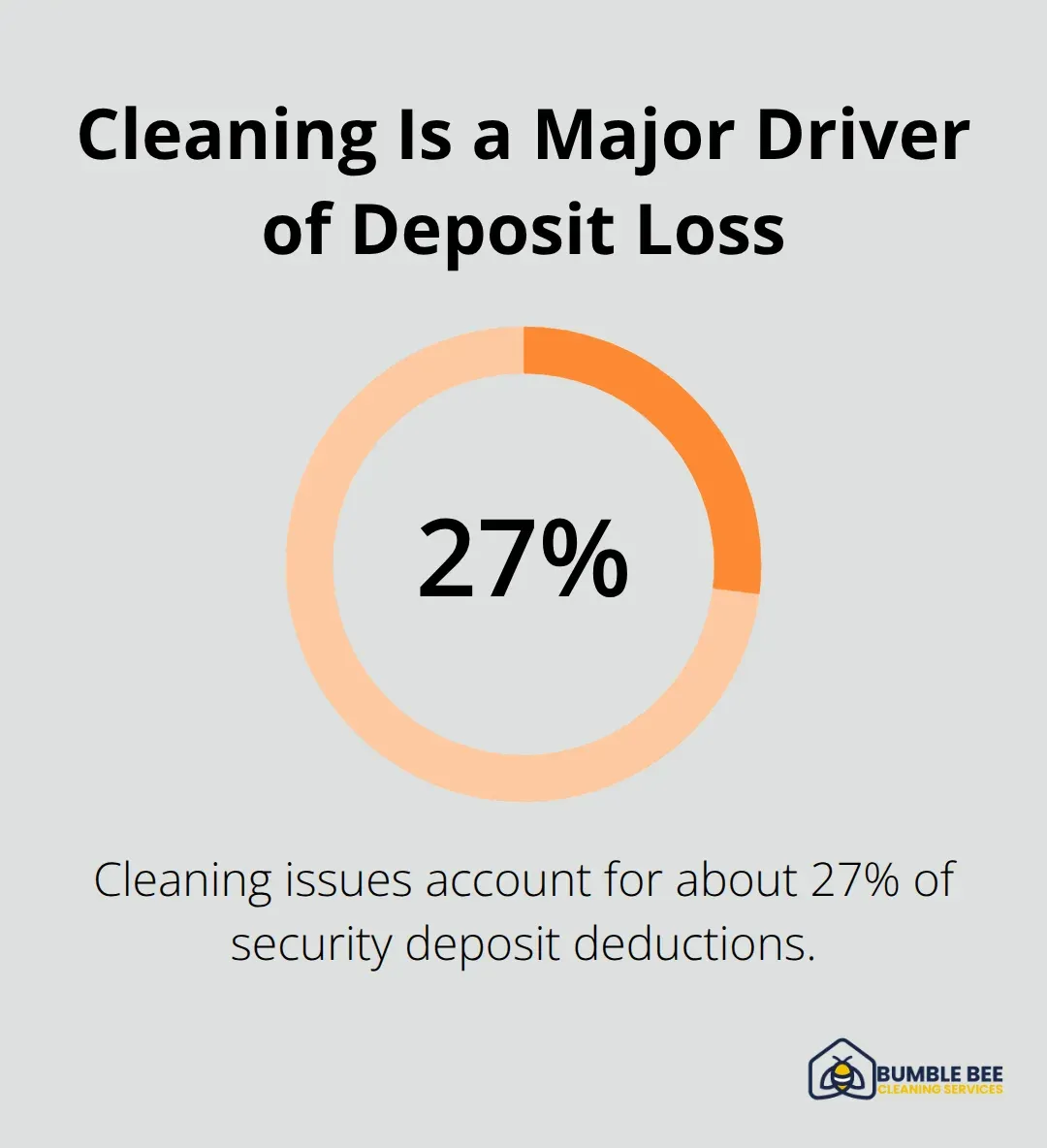
Seattle landlords focus on three specific areas during end of tenancy inspections, and understanding exactly what they measure determines whether you lose hundreds or get your full deposit back. According to Washington state law RCW 59.18.280, landlords must return security deposits within 21 days and provide an itemized deduction statement, but they only deduct for issues beyond normal wear and tear. Cleaning issues account for about 27% of security deposit deductions, making it the second-largest reason for lost money after damage. Most Seattle leases require you to return the unit in the same condition as move-in, which means kitchens and bathrooms receive the most scrutiny due to moisture and grime buildup.
Landlords compare your move-out condition directly to your move-in condition rather than applying a generic standard, so a pristine kitchen at move-in means you cannot be charged for minor wear later. This is critical: take timestamped photos at move-in and move-out of the exact same angles to prove what changed and what stayed the same.
Kitchen and bathroom standards matter most
Kitchens and bathrooms determine deposit outcomes more than any other space because they show neglect or care immediately. A dirty oven represents tenant responsibility, not normal wear, and landlords charge for heavy grease or burnt buildup that wasn’t present at move-in.
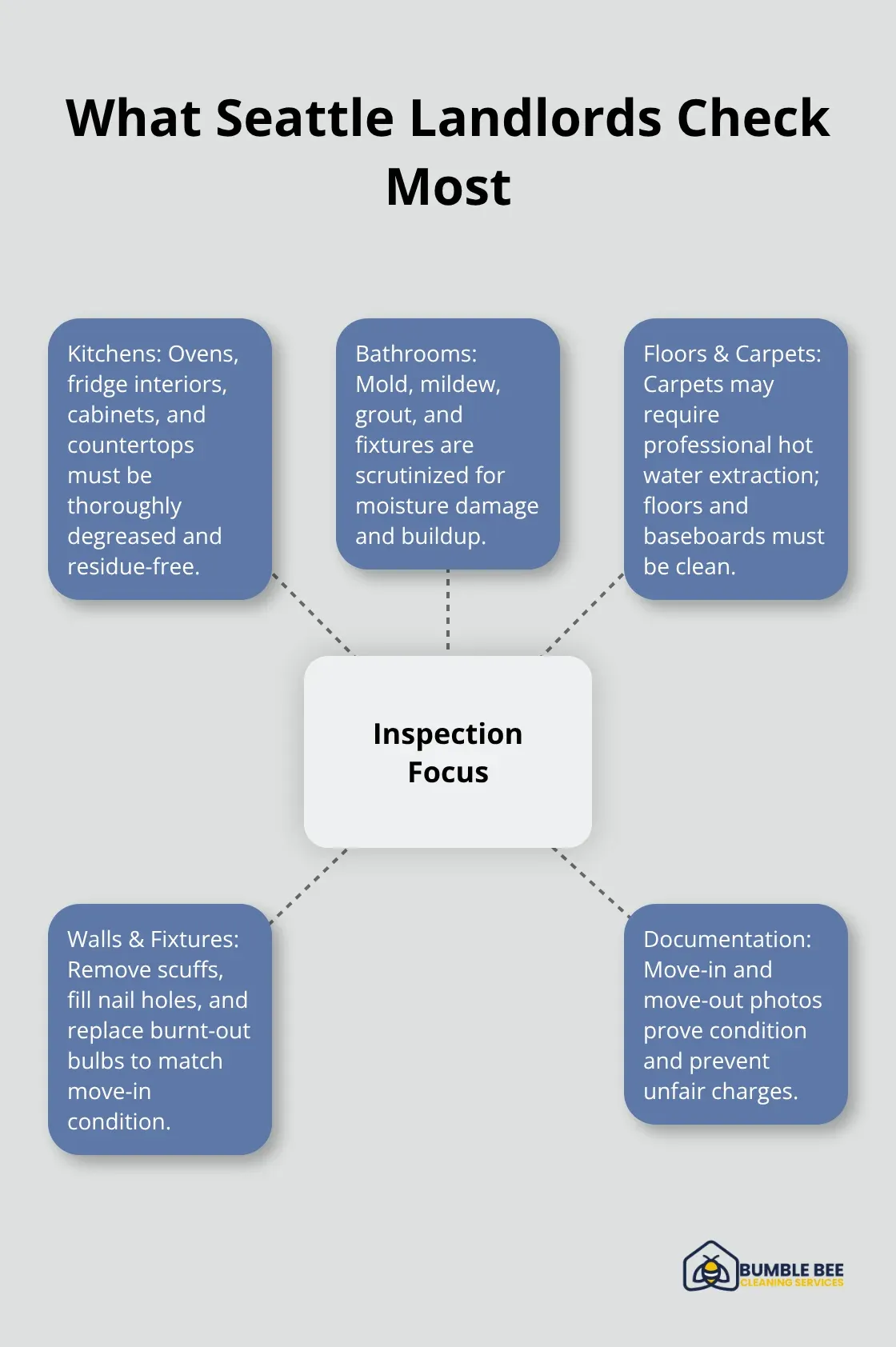
The same applies to refrigerator interiors, cabinet shelves, and countertops-you must wipe these clean, not just remove surface-level dust. Bathrooms demand aggressive mold and mildew removal because Seattle’s damp climate makes moisture damage obvious; the toilet base, behind the bowl, tile grout, and exhaust fans all receive close inspection. Landlords expect you to remove soap scum, hard-water stains, and any mold patches smaller than 10 square feet using solutions like equal parts water and white vinegar or a baking soda paste applied for about 10 minutes before scrubbing.
Flooring and carpet requirements
Professional carpet cleaning becomes non-negotiable when your lease requires it; landlords verify this through receipts and expect the IICRC hot water extraction method, which removes over 90% of dirt and allergens. Flooring, walls, and fixtures receive equal attention-you must wipe baseboards, keep walls free of scuffs, fill nail holes, and replace light bulbs. These details separate tenants who recover their full deposits from those who face multiple deductions.
Your preparation timeline matters
Start cleaning at least one week before move-out and create a detailed room-by-room roadmap to ensure no areas get missed. This advance work prevents last-minute scrambling and gives you time to address problem areas that require extra attention or professional help.
Your Room-by-Room Cleaning Action Plan
The difference between recovering your full deposit and losing hundreds lies in executing a systematic cleaning approach that targets the exact areas Seattle landlords inspect most closely. Start with the kitchen because it accounts for the largest concentration of deductions after bathrooms. Empty every cabinet completely, wipe the interior shelves and doors with warm water and baking soda, clean the tops of cabinets where dust settles, and clean behind and underneath the refrigerator using a vacuum or damp cloth. Use heavy-duty oven cleaner on the oven interior and stovetop, paying special attention to burnt-on grease that landlords photograph and document. Run the dishwasher empty with white vinegar to remove mineral deposits, then wipe down all countertops and clean the sink thoroughly. This entire kitchen process takes a typical tenant about 2 to 3 hours, but professionals complete it in 45 minutes to an hour using industrial equipment.
Bathrooms demand aggressive moisture control
Move directly to bathrooms because Seattle’s moisture-heavy climate makes mold and mildew a common concern for landlords inspecting rental properties. Scrub the toilet thoroughly, including the base and the area behind the bowl where grime accumulates invisibly. Remove soap scum and hard-water stains using equal parts white vinegar and water, then tackle grout with a baking soda paste applied for 10 minutes before scrubbing with a toothbrush. Polish mirrors, chrome fixtures, and exhaust fan covers until they shine, then wipe down all cabinet interiors and shelves. Professional bathroom cleaning takes 1 to 1.5 hours; DIY work typically requires 3 to 4 hours.
Walls, flooring, and carpet require systematic attention
For living areas and bedrooms, focus on walls by removing scuffs with a magic eraser, filling all nail holes with spackling compound, and wiping baseboards top to bottom. Vacuum carpets thoroughly, including corners and under furniture where dirt hides, or schedule professional steam cleaning if your lease requires it. Windows demand attention on both sides plus tracks, and light fixtures need new bulbs if any are burnt out. Carpet steam cleaning costs about $360 on average for a typical apartment but protects your deposit by removing allergens and stains that landlords specifically evaluate.
Timeline and professional support
A two-bedroom apartment requires roughly 6 to 8 hours of thorough DIY cleaning spread across multiple days, but professionals finish the entire job in 3 to 4 hours. Professional move-out cleaning services provide documented before-and-after photos, which aligns with Washington’s requirement for detailed itemized deductions and protects you against deposit disputes. This systematic approach ensures no area escapes inspection and positions you to recover your full security deposit when the landlord conducts the final walkthrough.
Protect Your Deposit with Documentation and Professional Help
The most expensive mistake tenants make is waiting until move-out day to address cleaning and repairs. Three weeks before your lease ends, conduct a detailed move-in inspection comparison by taking the exact same photos you took when you arrived, using the same angles and lighting to show what changed. Washington state law RCW 59.18.280 requires landlords to provide itemized deductions with attached receipts and invoices, not vague line items, according to the Goodwill v. Madison Real Estate ruling. This means your landlord must also include copies of estimates, invoices, and other documents to prove the charge(s), but you also cannot claim you left the unit pristine without timestamped photo evidence showing the before and after states side by side.
Schedule a Pre-Inspection Two Weeks Before Move-Out
Schedule a pre-inspection with your landlord about two weeks before move-out to identify problem areas early. This step allows you to prioritize repairs and deep cleaning for those specific zones rather than spreading effort thinly across the entire unit. Nail holes larger than a quarter-inch diameter, scuff marks covering more than a few inches of wall space, and any visible mold or mildew patches require immediate attention because landlords photograph these during final inspection and use them to justify deductions.
Professional Cleaning Protects Larger Deposits
Professional move-out cleaning costs between $250 and $800 depending on property size, condition, and service requirements, but this investment protects deposits worth $1,000 or more by preventing even a single deduction that could exceed the service fee. Professionals using industrial equipment complete tasks in 3 to 4 hours that take tenants 6 to 8 hours, and they deliver consistent results that landlords recognize and approve more readily than DIY work. This approach provides defensible evidence if any deposit dispute arises.
Execute Your Timeline Strategically
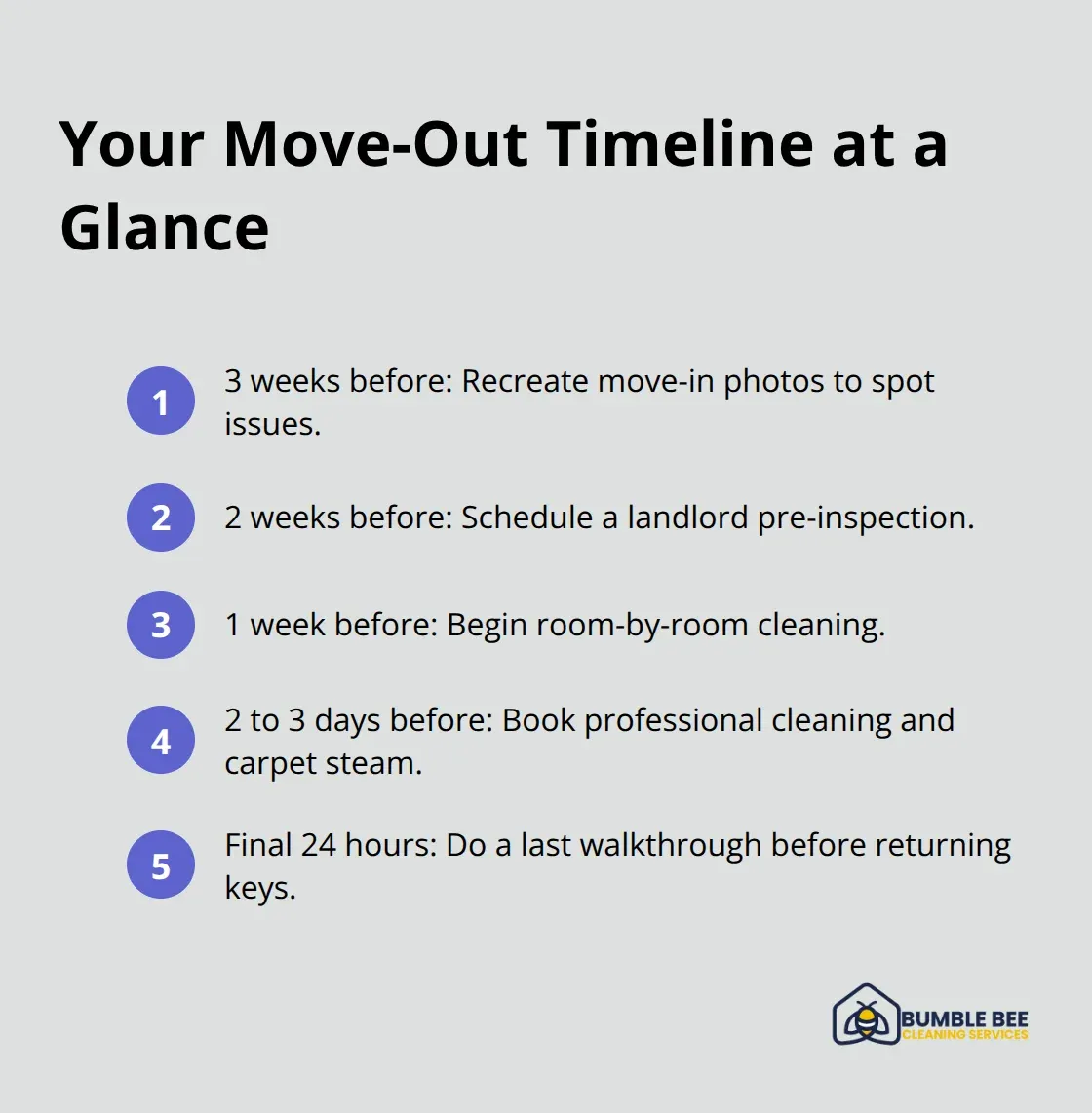
Start your cleaning process one full week before move-out, address all visible damage on days five and four, then schedule professional cleaning for days two and three, leaving time for a final walkthrough before returning keys. This timeline prevents last-minute stress and ensures landlords find no legitimate grounds for deductions when they conduct the final inspection (which typically occurs within 24 hours of your departure).
Professional documentation with before-and-after photos strengthens your position against any questionable deductions your landlord might attempt to claim.
Final Thoughts
End of tenancy in Seattle requires three concrete actions that protect your deposit: document your move-in condition with timestamped photos, execute a systematic cleaning plan one week before departure, and invest in professional help for carpets and deep kitchen work. Cleaning issues account for 27% of security deposit deductions, making this the second-largest reason tenants lose money after damage. A professional move-out cleaning service costs $250 to $800 but protects deposits worth $1,000 or more by preventing even one deduction that could exceed the service fee itself.
Your timeline should follow this sequence: three weeks before move-out, compare your current condition to move-in photos and identify problem areas; two weeks out, schedule a pre-inspection with your landlord to catch issues early; one week before departure, start your room-by-room cleaning and prioritize kitchens and bathrooms where landlords focus their scrutiny. Hire professionals two to three days before move-out to handle carpet steam cleaning and deep sanitization using industrial equipment that delivers results DIY work cannot match. This approach prevents last-minute scrambling and gives landlords no legitimate grounds for deductions when they conduct the final inspection within 24 hours of your departure.
After moving out, provide your forwarding address immediately so your security deposit refund arrives quickly, as Washington state law requires landlords to return deposits within 21 days with itemized deductions backed by receipts and invoices. If you followed this guide and hired professionals, you have documented evidence through before-and-after photos that protects you against questionable charges. We at Bumble Bee Cleaning Services specialize in move-out cleaning with eco-friendly products and a quality guarantee to keep your deposit return intact.
For more information about our cleaning services in Seattle and Atlanta, or to request a cleaning quote, call or text us at 425-786-1360 or email us at info@qbclean.com
