
Construction projects in Seattle often leave behind moisture and humidity that create ideal conditions for mold growth. If you’ve recently completed renovations or a new build, mold prevention should be on your radar.
We at Bumble Bee Cleaning Services recommend getting a professional inspection within the first few weeks after construction ends. Catching mold early protects your health, your home’s structure, and your investment.
Why Mold Takes Hold After Seattle Construction
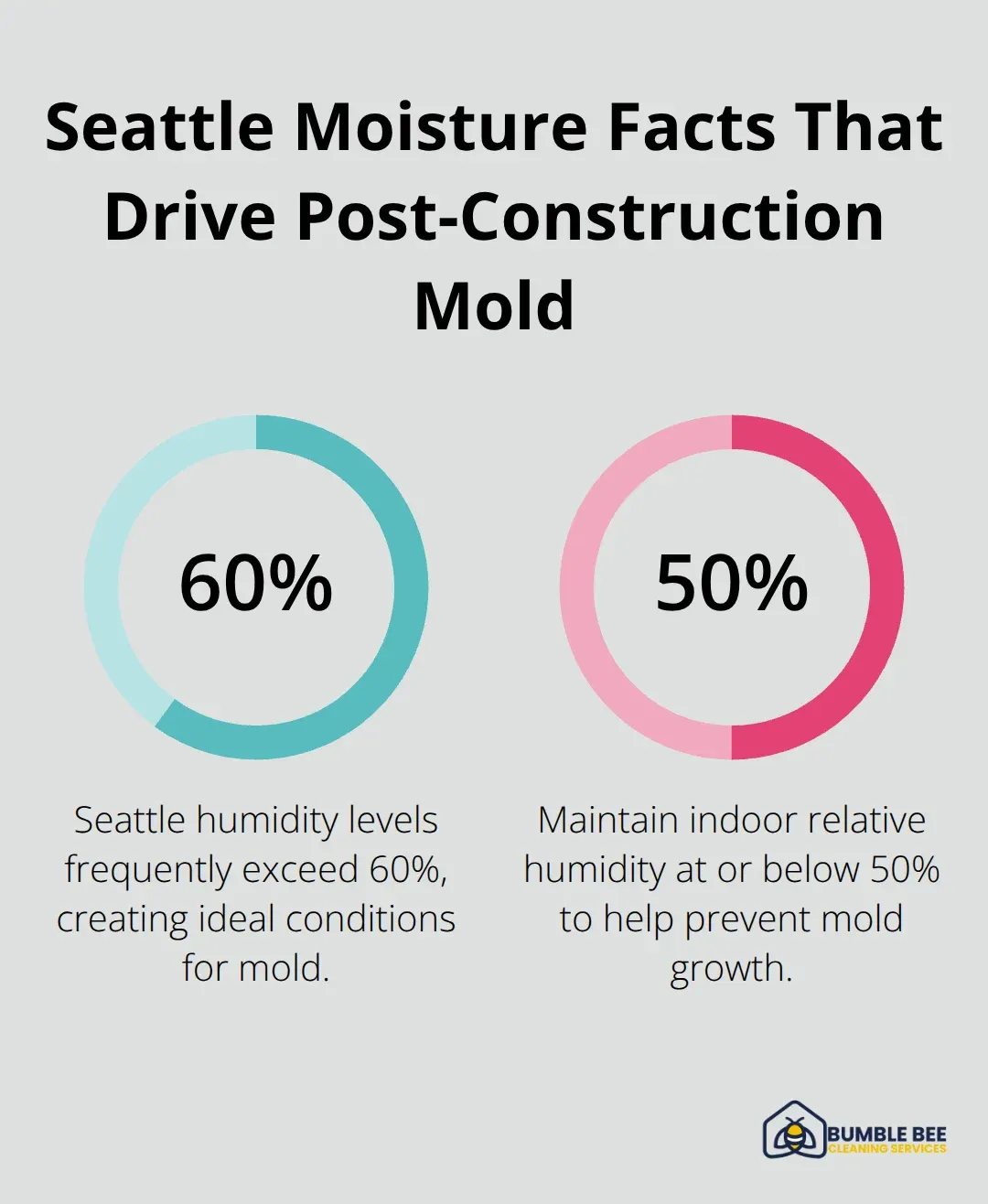
Mold thrives after construction because the work itself introduces moisture that lingers long after the final nail goes in. Seattle’s climate makes this worse-the region averages 152 rainy days per year, and humidity levels frequently exceed 60 percent, creating the exact environment mold needs to colonize. Construction dust, drywall residue, and exposed wood absorb moisture from the air and from water used during the building process.
If drying protocols aren’t followed aggressively, moisture gets trapped inside walls, under flooring, and in crawl spaces where you can’t see it developing.
Where Mold Takes Root in New Construction
Mold doesn’t appear randomly. It grows in predictable locations that receive moisture and poor air circulation. Bathrooms and kitchens are primary targets because water use creates humidity spikes that construction-phase ventilation systems often can’t handle. Basements and crawl spaces collect moisture from both groundwater seepage and condensation, especially if dehumidification equipment wasn’t used during and after construction. Window frames and areas around doors are vulnerable too-if the building envelope has gaps or wasn’t properly sealed, rain and condensation accumulate in these spots. Attics and roof penetrations become problem zones when roofers leave gaps or when interior moisture rises and condenses on cold roof surfaces. The Washington State Department of Health emphasizes that thorough drying and dehumidification prevent mold-related health risks, yet many construction crews skip or rush this step.
Health Effects You Shouldn’t Ignore
Mold exposure triggers respiratory problems in a significant portion of the population. The American Lung Association notes that construction dust and mold spores worsen respiratory conditions in King County residents, particularly those with asthma or compromised immune systems. Some people develop coughing, wheezing, or shortness of breath within days of exposure. Others experience allergic reactions including itchy eyes, runny nose, or skin irritation. The problem is that mold-related illness varies widely-some people show no symptoms while others in the same home experience serious health effects. This unpredictability means you can’t wait to see if symptoms develop. A home with mold is a health liability whether symptoms appear immediately or not.
What Happens Next
Identifying mold early stops it from spreading deeper into your home’s structure. Professional inspection reveals hidden moisture and mold growth before they cause permanent damage to framing, insulation, and finishes. The next section covers what a professional inspection actually includes and how testing protects both your family and your property value.
Signs Your Home Needs a Post-Construction Mold Inspection
Visible Mold Growth and Discoloration
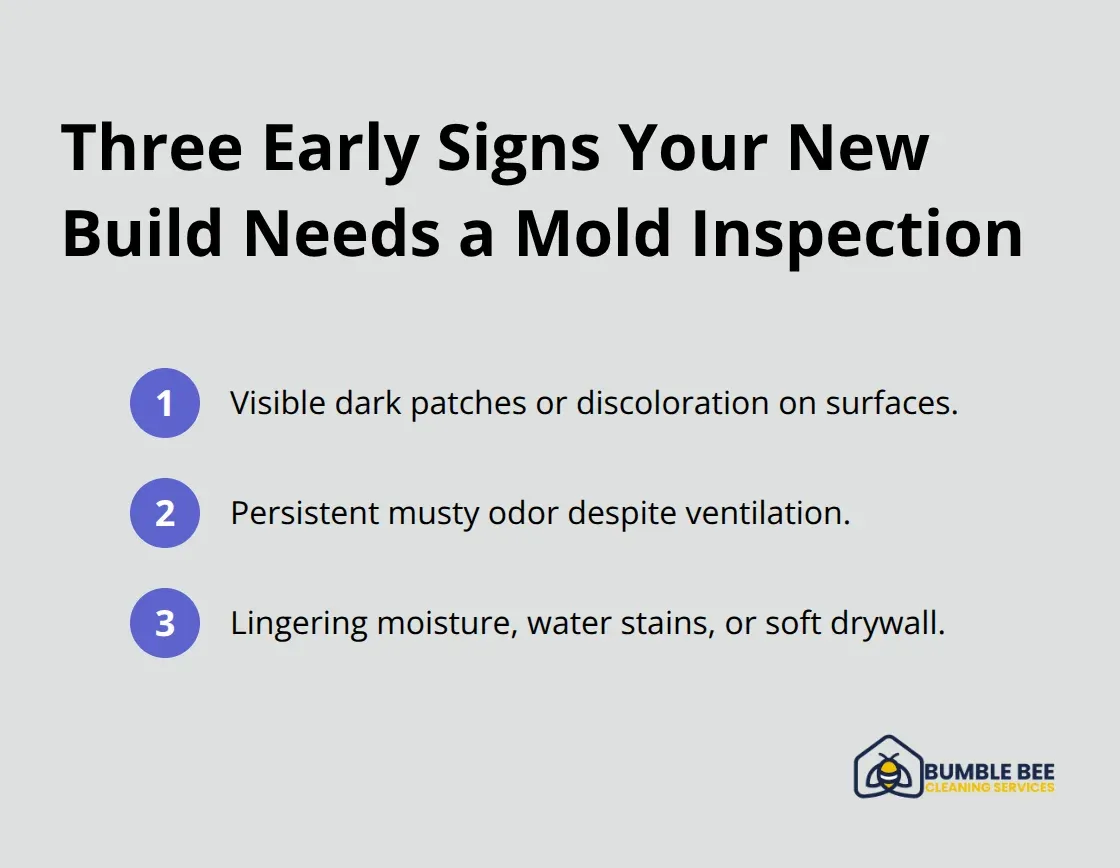
Dark patches on surfaces signal that mold has already colonized your Seattle home. Mold appears as black, green, or brown spots, often fuzzy or slimy to the touch, particularly in bathrooms, kitchens, basements, and around windows. If you spot these patches within weeks of construction completion, moisture has accumulated faster than expected and mold spores have found ideal conditions. Waiting allows growth to spread deeper into walls and insulation, where professional remediation becomes exponentially more expensive and invasive.
Musty Odors Reveal Hidden Mold
A persistent musty odor indicates mold is growing even when you cannot see it. This smell comes from microbial volatile organic compounds that mold releases as it metabolizes building materials. If your home smells like a damp basement despite recent construction and open windows, hidden mold almost certainly colonizes wall cavities, under flooring, or within HVAC ducts. This odor appears before visible growth becomes obvious, making it an early warning system.
Water Damage and Lingering Moisture
After construction, drywall, concrete, and wood should dry within 48 to 72 hours if proper dehumidification occurred. If surfaces remain wet, tacky, or show water stains beyond this window, drying protocols failed and moisture trapped itself where you cannot access it. Wet insulation, soft drywall, or rust on metal framing all point to active moisture problems that will spawn mold colonies. These conditions demand immediate professional assessment because they reveal that construction moisture management fell short.
What Professional Inspection Reveals
A professional mold inspection uses moisture meters to measure water content in building materials and FLIR infrared cameras to locate hidden moisture behind walls and ceilings. Testing identifies whether mold spores have colonized surfaces and at what contamination levels. This data becomes essential for insurance claims, as documentation proves the mold resulted from construction defects rather than occupant behavior. More importantly, early detection stops mold from penetrating structural materials, which can require costly remediation or even structural repairs.
Seattle’s 152 rainy days annually and persistent humidity mean that post-construction moisture does not dry on its own-it deepens. If you notice any of these three signs, contact a certified professional within days, not weeks. The next section explains what happens during a professional inspection and how testing protects both your family and your property value.
Getting Your Seattle Home Inspected and Remediated
What a Professional Mold Inspection Includes
A professional mold inspection in Seattle differs significantly from a general home inspection. The inspector uses moisture meters to measure water content inside drywall, wood framing, and concrete-not just surface readings. FLIR infrared cameras detect temperature differences that reveal hidden moisture behind walls, under flooring, and inside ceiling cavities where visual inspection alone misses problems. The inspector collects air samples and surface samples according to a property-specific strategy, meaning the sampling locations depend on your home’s construction type, the areas you’ve reported concerns about, and where moisture patterns suggest mold growth. The ANSI/IICRC S530 Standard guides this process, ensuring the inspector follows industry best practices rather than guessing. Improper sampling can produce false negatives, leaving active mold undetected. After sampling, a laboratory analyzes the results and compares them to baseline outdoor levels.
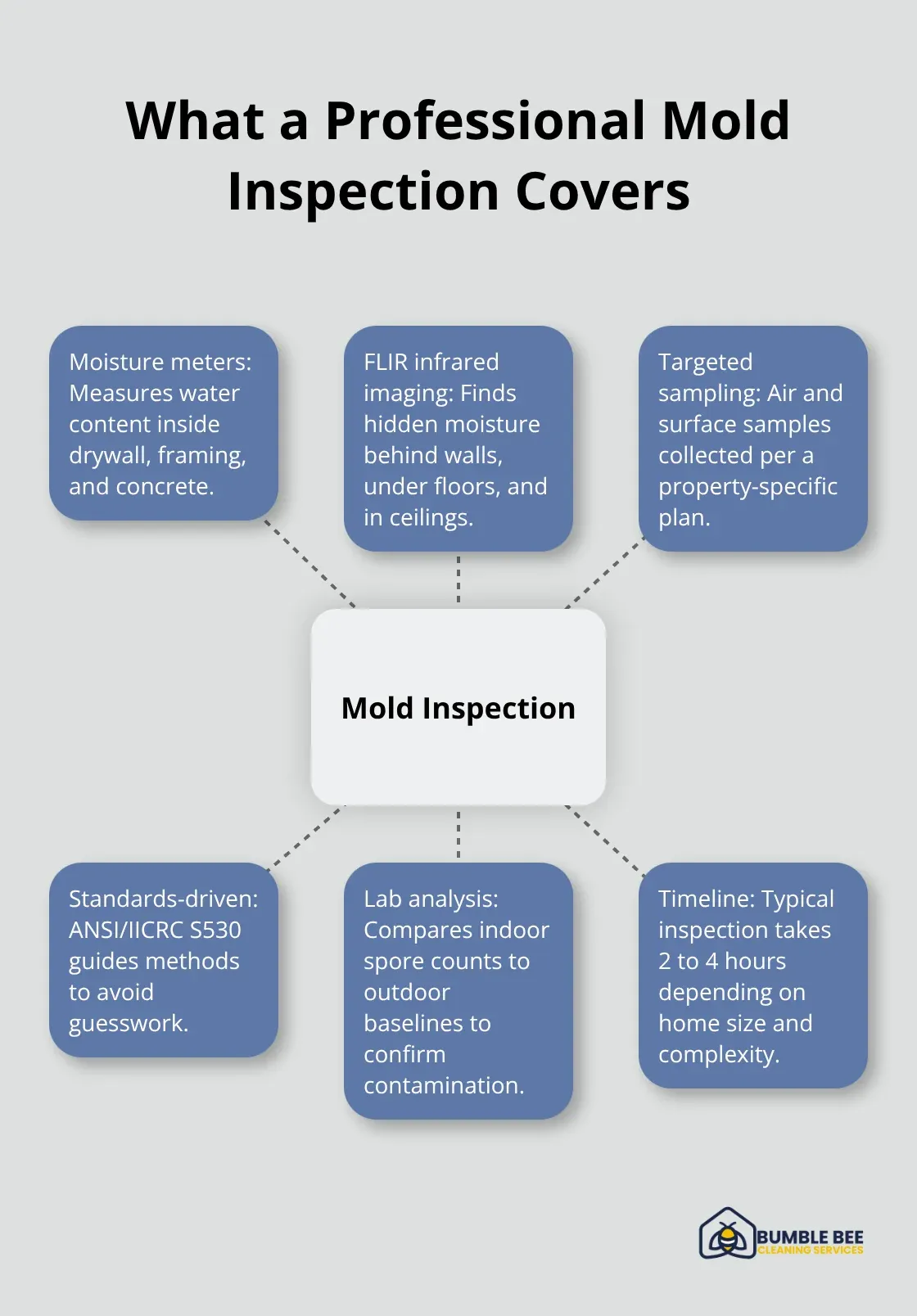
If indoor mold spore counts exceed outdoor counts significantly, your home has a contamination problem requiring remediation. The entire inspection process typically takes 2 to 4 hours depending on your home’s size and complexity.
Documentation for Insurance Claims
You receive a detailed report documenting moisture levels, sampling locations, lab results, and recommendations for remediation or further assessment. This documentation becomes essential if you file an insurance claim, as it proves the mold resulted from construction defects rather than occupant behavior like poor ventilation or water leaks from daily use. The report provides the evidence insurers need to approve coverage and supports your claim that the contractor bears responsibility for moisture management failures.
Professional Remediation Standards
Professional remediation addresses both the mold itself and the moisture source driving its growth. A certified remediation contractor follows the ANSI/IICRC S520 Standard for mold remediation, which specifies containment procedures, removal techniques, and post-remediation verification. The contractor isolates affected areas to prevent spores from spreading to clean spaces, removes contaminated materials like drywall or insulation, cleans surfaces with appropriate antimicrobial treatments, and replaces materials with mold-resistant alternatives. The remediation contractor also identifies and corrects moisture sources-whether that means sealing roof leaks, improving bathroom ventilation, installing dehumidifiers in basements, or upgrading crawl space drainage.
Prevention Strategies for Seattle’s Climate
Prevention strategies specific to Seattle’s climate include installing exhaust fans in bathrooms and kitchens that vent outside, using industrial-grade dehumidifiers to keep humidity below 50 percent as the Washington State Department of Health recommends, and ensuring proper attic ventilation to prevent condensation on roof decking. These measures stop moisture from accumulating in the first place, protecting your home from future mold colonization. Proper ventilation and humidity control work together to create an environment where mold cannot establish itself.
Post-Remediation Clearance Testing
After remediation, a post-remediation clearance inspection confirms that mold removal succeeded and spore levels have returned to normal. This clearance testing protects your family and validates the remediation work before you fully occupy the space. The inspector verifies that all contaminated materials were removed, surfaces were properly treated, and moisture sources no longer pose a threat to your home’s structure.
Final Thoughts
Your Seattle home’s value depends on catching mold problems before they spread into framing and insulation. Post-construction mold inspection protects both your family’s health and your property investment by identifying moisture and contamination early, when remediation costs far less than structural repairs. The combination of Seattle’s 152 rainy days annually and construction moisture creates conditions where mold colonizes quickly if drying protocols fail.
Professional inspection using moisture meters and infrared cameras reveals hidden moisture that visual inspection misses, while laboratory testing confirms contamination levels and guides remediation decisions. Professional mold prevention strategies specific to Seattle’s climate stop problems before they start-installing exhaust fans, maintaining humidity below 50 percent, and ensuring proper ventilation create an environment where mold cannot establish itself. Post-remediation clearance testing validates that remediation succeeded and your home is safe for occupancy.
We at Bumble Bee Cleaning Services combine post-construction cleaning with mold prevention expertise to remove construction dust and debris while identifying moisture problems that could lead to mold growth. Our team uses eco-friendly products and follows industry standards to ensure your newly constructed or renovated space is safe, clean, and ready for occupancy. Contact us today to schedule your post-construction inspection and cleaning, and protect your Seattle home from mold before it becomes a costly problem.
For more information about our cleaning services in Seattle and Atlanta, or to request a cleaning quote, call or text us at 425-786-1360 or email us at info@qbclean.com
