
Seattle’s damp climate creates the perfect conditions for dust, mold, and allergens to build up in your home faster than in other regions. A deep clean checklist for Seattle homes goes far beyond your weekly vacuum and wipe-down, targeting the hidden grime that regular cleaning misses.
We at Bumble Bee Cleaning Services know that most homeowners underestimate how much buildup accumulates in baseboards, ceiling fans, and behind appliances. This guide walks you through exactly what needs attention in every room, what tools you’ll need, and how to plan your deep clean.
What Deep Cleaning Actually Means
Deep cleaning targets the buildup that regular weekly vacuuming and surface wiping simply cannot reach. While your routine cleaning handles visible dirt and dust, a deep clean addresses the grime trapped in baseboards, inside ceiling fan blades, behind refrigerators, and within grout lines where moisture and allergens accumulate. Hidden buildup becomes a serious problem within months in Seattle homes, not years. The difference matters because regular cleaning maintains what you already have, while deep cleaning actively restores your home to a genuinely clean state. Most homeowners notice they need deep cleaning when dust returns faster than expected or when allergy symptoms worsen indoors despite regular tidying.
Why Seattle’s Climate Accelerates Home Deterioration
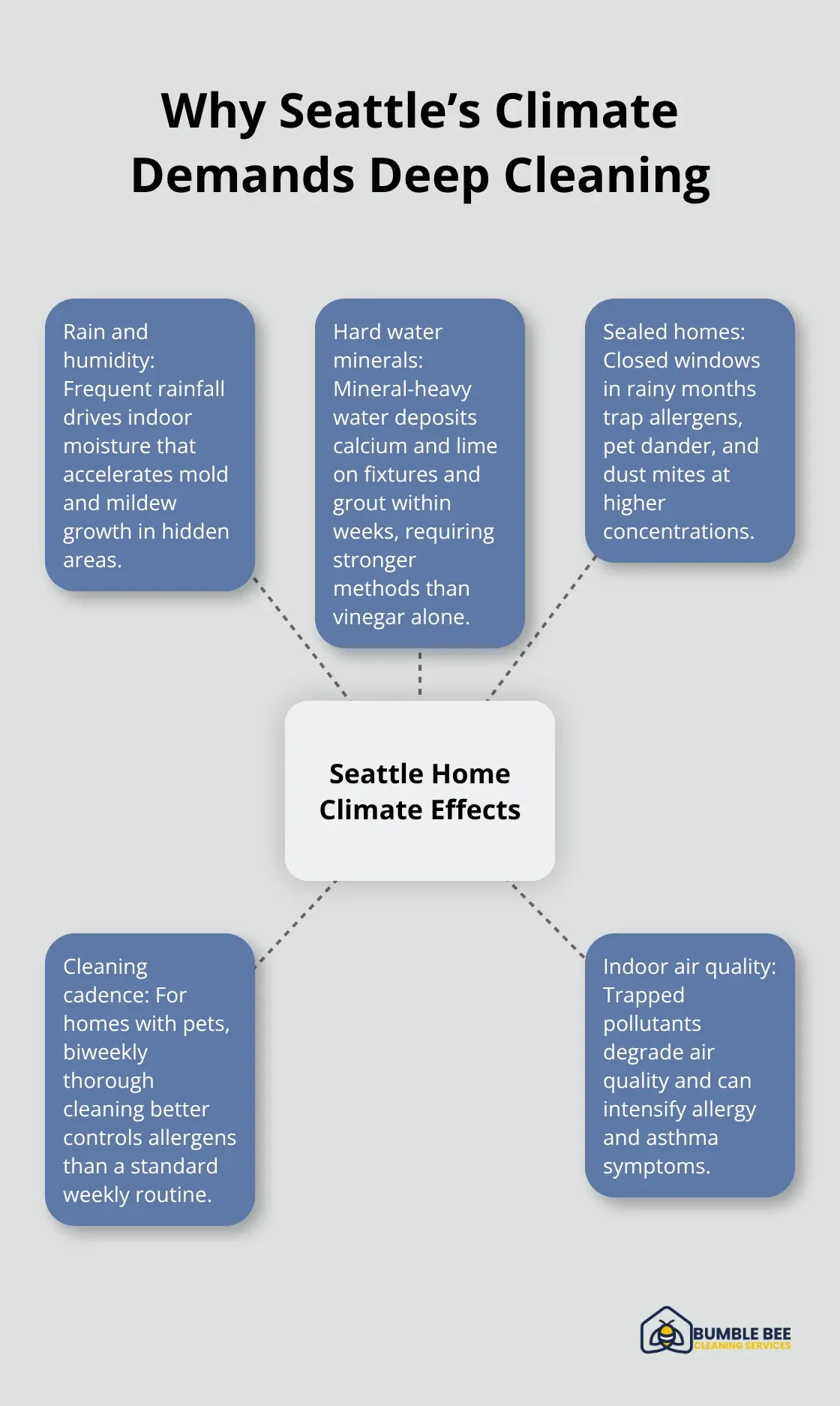
Seattle receives 38 inches of annual rainfall, and that moisture doesn’t just stay outside. The Seattle Department of Health recommends mold inspections at least monthly, especially from October through March, because trapped indoor moisture speeds up mold and mildew growth dramatically. Hard water minerals from the Pacific Northwest deposit calcium and lime buildup on shower fixtures and tiles within weeks, not months. This means your bathroom grout deteriorates faster here than in drier climates, and white vinegar alone won’t cut through stubborn mineral deposits without professional-grade restoration. Indoor air quality suffers too because sealed homes during rainy months trap allergens, pet dander, and dust mites at concentrations significantly higher than outdoor air. The Asthma and Allergy Foundation of America advises thorough cleaning at least biweekly for homes with pets, yet most Seattle residents clean on a standard weekly schedule that simply isn’t aggressive enough for this climate.
Health Gains Worth the Effort
Dust mites thrive in moisture-rich environments and trigger respiratory issues in environments with poor hygiene. When you deep clean baseboards, under beds, and inside closets where humidity collects, you physically remove the environments where these allergens breed. Mold exposure carries documented health risks ranging from asthma attacks to chronic respiratory infections, making monthly bathroom deep cleaning non-negotiable in Seattle rather than optional. Deep cleaning also eliminates bacterial growth in refrigerator coils, washing machine interiors, and dishwasher components where moisture creates ideal breeding grounds. Your family experiences noticeably better sleep quality and fewer morning allergy symptoms within days of a thorough deep clean because allergen loads drop sharply when you address the spaces where they accumulate.
What Separates Deep Cleaning from Surface Maintenance
The spaces you can’t see during your regular routine-ceiling fan motors, window tracks, inside cabinet bases, and behind large appliances-hold the most problematic buildup. These hidden zones collect moisture, dust, and allergens that spread throughout your home even when your visible surfaces look clean. A deep clean targets these specific problem areas with focused attention and appropriate tools, not just a faster version of your weekly routine. Understanding this distinction helps you recognize when professional help makes sense, especially in Seattle’s demanding climate where moisture accelerates deterioration faster than standard maintenance can address.
Room-by-Room Deep Cleaning Strategy
Kitchen: Tackling Grease, Minerals, and Bacterial Growth
Your kitchen demands the most aggressive deep cleaning effort because it concentrates grease, mineral deposits, and bacterial growth faster than any other room. Start inside your refrigerator and freezer, removing every shelf and drawer to wipe down interiors where spills create bacterial colonies; this step alone prevents foodborne illness risks that surface wiping completely misses. Deep clean your oven by removing racks and soaking them while you scrub interior walls with a paste of baking soda and water, targeting the carbonized buildup that regular cooking never touches. Run a cycle in your microwave with a bowl of water and lemon to loosen interior grime, then wipe every surface including the ceiling where steam deposits accumulate. Scrub cabinet fronts and hardware with appropriate cleaners for your material because fingerprints and cooking splatter embed into wood grain and metal finishes over months. Run your dishwasher on an empty cycle with vinegar to sanitize internal components where mold grows unseen in the filter and spray arms. Wipe down all countertops, backsplash, and the sink drain with a baking soda and vinegar rinse to eliminate odors and bacterial growth that thrive in damp conditions.
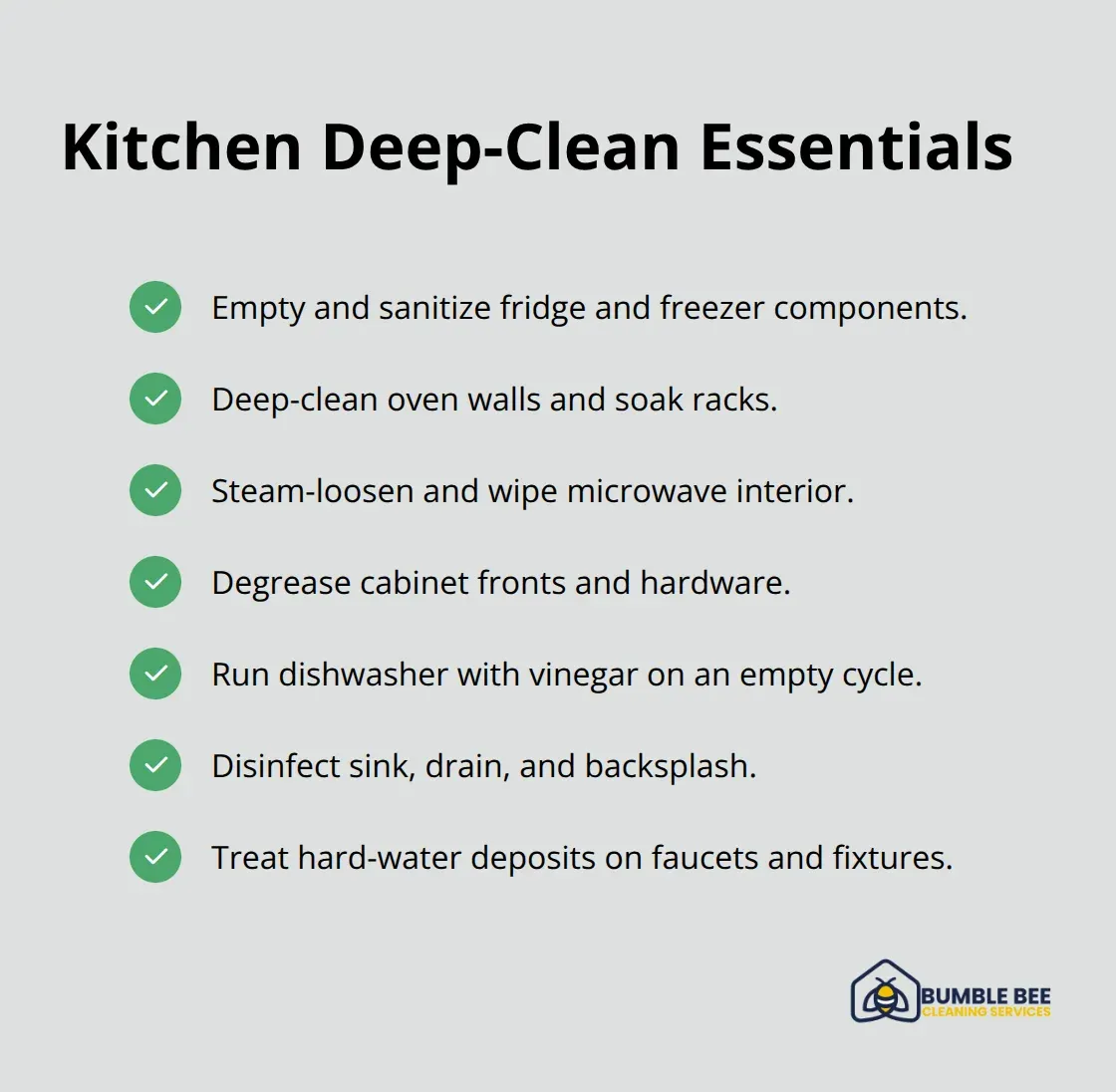
Hard water minerals from Pacific Northwest water leave stubborn calcium and lime deposits on faucets and fixtures that require white vinegar soaked onto the surface for an hour before scrubbing; if buildup has calcified, professional restoration protects your grout better than aggressive scrubbing that damages sealant.
Bathrooms: Combating Moisture and Mold Growth
Your bathrooms rank second in priority because moisture creates ideal conditions for mold growth that poses documented health risks. Focus on grout lines and tile where mineral deposits accumulate rapidly in Seattle’s hard water environment; use a grout brush with appropriate cleaner and scrub thoroughly because surface wiping leaves mold spores embedded in porous grout. Sanitize your toilet bowl, seat, and base with a disinfectant, spending extra time under the rim where bacteria concentrate. Clean window tracks and sills where condensation collects moisture that breeds mold; use a microfiber cloth dampened with vinegar and water solution to remove mineral deposits and trapped moisture. Organize and discard expired toiletries and medications to reduce clutter that traps moisture behind items. Run your washing machine on an empty cycle with vinegar to eliminate mold in the drum and gasket where moisture persists between loads.
Living Areas and Bedrooms: Removing Allergen Hotspots
Strip all bedding including pillowcases and duvet covers, washing in hot water to kill dust mites that thrive in Seattle’s humidity. Vacuum or rotate your mattress and wash your pillows to remove allergen accumulation; dust mites concentrate in bedroom surfaces and can trigger allergic symptoms and asthma attacks. Dust ceiling fans, light fixtures, and baseboards with microfiber cloths because these areas trap allergens that regular cleaning leaves untouched. Vacuum under large furniture where pet dander and dust accumulate, and clean window blinds and tracks where condensation deposits moisture and dust. Your bedroom closet needs organization and decluttering to improve air circulation and prevent mold growth in enclosed spaces; donate unused clothing and ensure shelves have breathing room.
With each room addressed systematically, you’ll uncover just how much buildup your regular routine misses. The next section covers the specific tools, products, and realistic timeline you’ll need to execute this deep clean without overwhelming yourself.
Tools, Products, and Timeline for Deep Cleaning
Essential Equipment for Seattle’s Climate
Tackling a Seattle deep clean requires specific tools that actually work in our climate, not generic supplies you’ll find at every store. Microfiber cloths outperform cotton rags because they trap moisture and dust mites far more effectively, which matters when you’re fighting Seattle’s humidity. A HEPA filter vacuum is non-negotiable if anyone in your home has allergies or respiratory sensitivity, since standard vacuums recirculate fine particles back into the air rather than trapping them. White vinegar and water solution handles mineral deposits on fixtures better than commercial cleaners, though stubborn calcified buildup demands professional-grade restoration products that won’t damage your grout sealant.
Baking soda works as both a deodorizer and gentle abrasive for scrubbing without scratching surfaces, and lemon cuts through grease more effectively than many chemical alternatives while improving air quality. For your bathroom grout, a dedicated grout brush with stiff bristles reaches into porous lines where mold spores hide-something a standard sponge cannot accomplish. A squeegee for shower doors and windows prevents water spots and mineral buildup from forming in the first place, which saves hours of scrubbing later. An old toothbrush handles tight spaces around faucet bases and cabinet hardware where larger tools cannot reach.
Why Eco-Friendly Products Matter in Seattle Homes
Skip products with harsh ammonia or bleach because Seattle’s moisture means your home needs ventilation during cleaning, and toxic fumes concentrate in sealed homes during rainy months. Eco-friendly alternatives protect your indoor air quality while still eliminating mold, bacteria, and mineral deposits effectively. The cost for supplies ranges from 40 to 80 dollars for a complete eco-friendly toolkit that lasts multiple cleaning cycles, making the per-use cost minimal compared to hiring professional services.
Realistic Timeline for Your Deep Clean
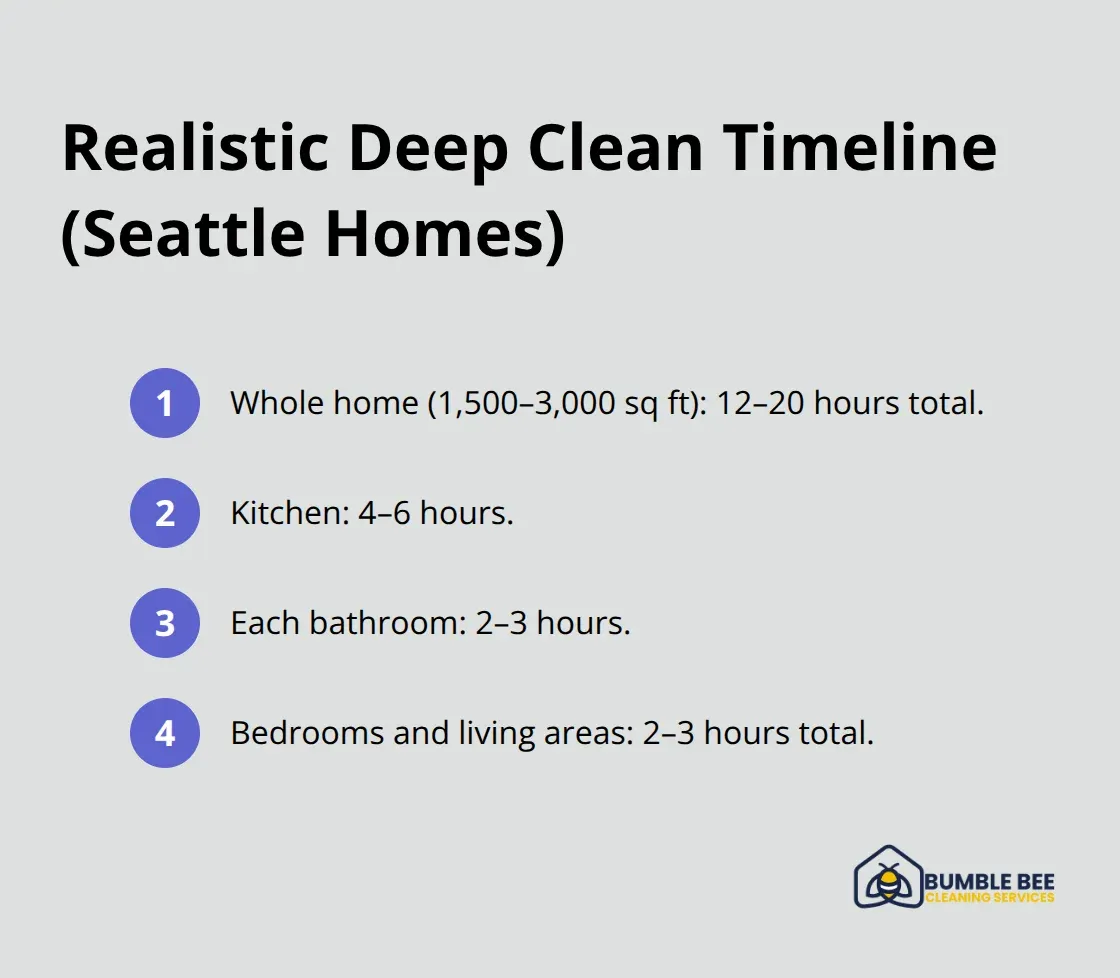
The timeline for a deep clean depends entirely on your home’s size and how aggressively buildup has accumulated, but most Seattle homes between 1,500 and 3,000 square feet require 12 to 20 hours spread across a weekend or staggered across a week. Your kitchen alone demands 4 to 6 hours when you factor in refrigerator interior cleaning, oven deep scrubbing, and mineral deposit removal from fixtures. Bathrooms typically need 2 to 3 hours per bathroom because grout scrubbing and mold prevention work requires controlling moisture levels to mitigate mold growth. Bedrooms and living areas average 2 to 3 hours total depending on carpet condition and furniture arrangement.
Attempting to complete everything in a single 8-hour marathon guarantees missed corners and physical exhaustion that leads to skipped steps. Spreading the work across two weekends or completing one room per evening after work produces better results because you maintain focus and actually inspect your progress rather than powering through fatigue.
Cost Considerations for DIY Versus Professional Services
Professional deep cleaning in Seattle costs between 400 and 900 dollars depending on home size and condition, which sounds expensive until you calculate that it prevents costly mold remediation or grout replacement that runs 1,500 to 5,000 dollars or more when moisture damage escalates. Your investment in professional services protects your home’s structural integrity and your family’s health far more effectively than attempting the work yourself while managing fatigue and incomplete technique.
Final Thoughts
Seattle’s moisture and mineral-heavy environment demands deep cleaning on a schedule that matches your climate, not a generic national standard. Spring and fall represent ideal timing because seasonal transitions expose how much buildup accumulated during months of sealed windows and high indoor humidity. October through March requires monthly bathroom inspections and aggressive mold prevention work, while summer offers a window to address carpet and upholstery deep cleaning when you can open windows for ventilation.
Professional deep cleaning delivers results that DIY efforts struggle to match, particularly in Seattle where mineral deposits calcify on fixtures and mold embeds into grout faster than standard scrubbing can address. We at Bumble Bee Cleaning Services bring experience and eco-friendly products to every deep clean, using methods that protect your indoor air quality while eliminating the buildup your regular routine misses. Our team knows exactly where Seattle homes accumulate the most problematic grime and applies focused attention to those high-risk zones rather than spreading effort across tasks that don’t match your climate’s specific challenges.
Assess your home’s current condition against the deep clean checklist Seattle homeowners need and decide whether tackling the work yourself or scheduling professional help makes sense for your situation. Either way, committing to a deep clean within the next month protects your home’s value and your family’s health far more effectively than waiting for problems to become obvious.
For more information about our cleaning services in Seattle and Atlanta, or to request a cleaning quote, call or text us at 425-786-1360 or email us at info@qbclean.com
