
Your Seattle workplace faces real health risks when hygiene standards slip. Poor cleaning practices spread illness, tank employee morale, and expose your business to legal liability.
We at Bumble Bee Cleaning Services know that commercial hygiene in Seattle isn’t optional-it’s foundational to a healthy, productive workplace. This guide walks you through proven practices and shows how to build a hygiene plan that actually works.
Why Commercial Hygiene Matters for Your Seattle Workplace
Health Risks from Poor Hygiene Standards
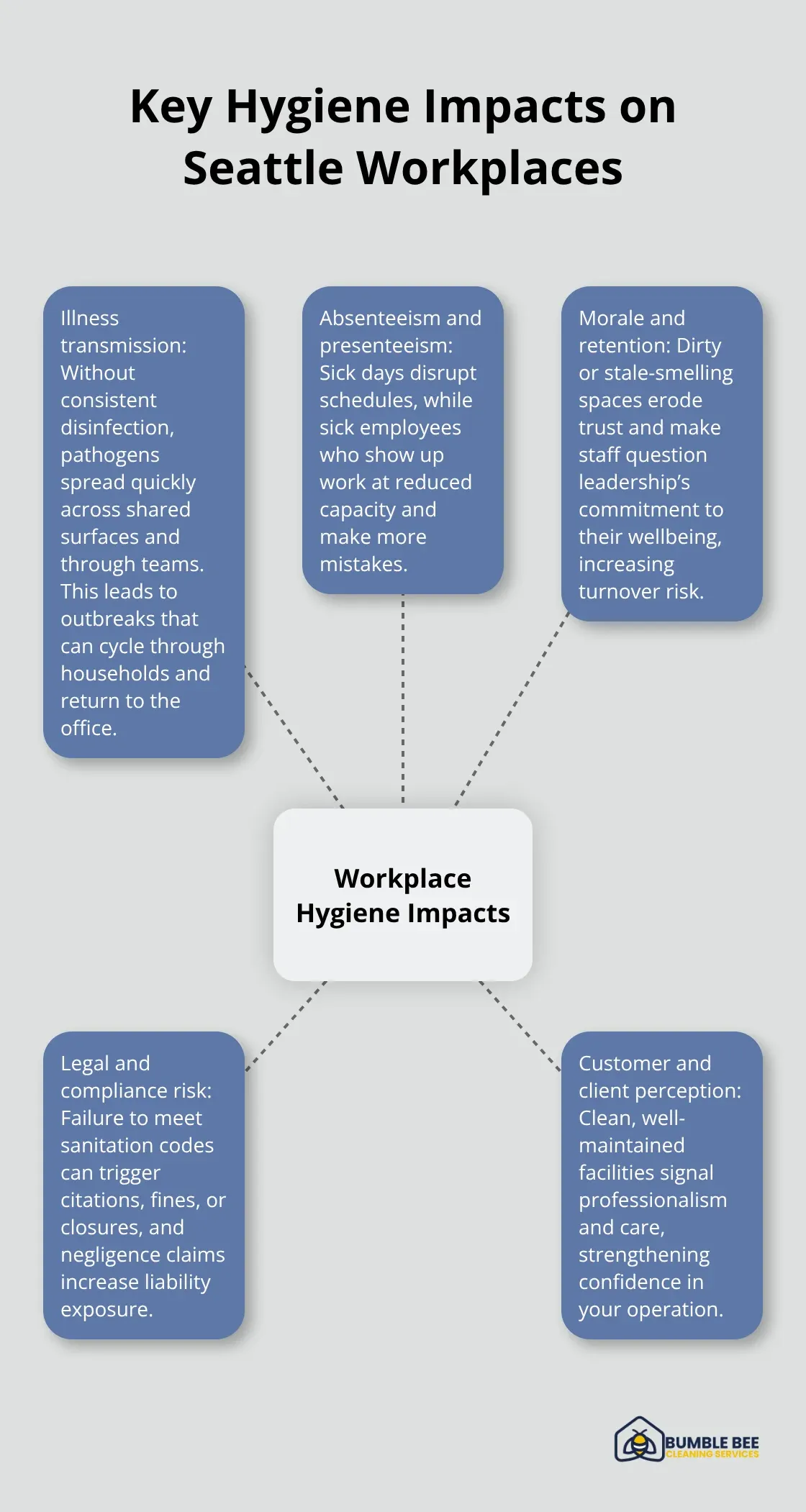
Poor hygiene in Seattle workplaces spreads illness faster than most business owners realize. The Washington State Department of Labor & Industries reports that workplace deaths, injuries, and illnesses are preventable with proactive hygiene and safety measures. When you skip regular disinfection of high-touch surfaces like door handles, light switches, and countertops, germs multiply rapidly. Employees then carry those germs home, infect their families, and return to work sick. This cycle tanks productivity immediately.
A single employee absence costs your business time and disrupts operations. Multiple absences from preventable illness create staffing chaos that compounds daily. Sick employees who do show up work at reduced capacity, making mistakes and slowing projects. The morale damage runs deeper still-workers notice when their workplace feels grimy or smells stale and question whether management cares about their health.
Impact on Employee Productivity and Morale
Resentment spreads through your team when hygiene standards slip, affecting retention and making it harder to keep experienced staff. Employees who feel unsafe or uncomfortable in their workspace perform worse and leave faster. A clean, well-maintained workplace signals that you value your team’s wellbeing, which directly improves how they work and how long they stay.
Legal Compliance Requirements for Businesses
The legal side of commercial hygiene in Seattle is non-negotiable. The King County Board of Health Code sets strict sanitation standards for non-food businesses, while food service operations must comply with the Seattle Food Code (which mandates daily cleaning of all food-contact surfaces and proper storage of cleaning equipment). Failure to meet these standards exposes your business to citations, fines, and potential closure.
If an employee gets sick from workplace conditions and proves negligence, your business faces workers’ compensation claims and possible litigation. The Washington State Department of Labor & Industries enforces these rules aggressively, and inspections happen without warning. You need documented cleaning protocols and trained staff to protect your operation. Waiting until an inspection arrives to clean properly is reactive and expensive-building a hygiene system now prevents legal headaches and keeps your workplace running at full strength.
The next section walks you through the specific daily and weekly practices that work in Seattle’s climate and regulatory environment.
Best Practices for Maintaining Commercial Hygiene in Seattle
Daily Cleaning and Sanitization Protocols
Start your Seattle workplace with a daily focus on high-touch surfaces because they carry the most germs and demand the most attention. Door handles, light switches, countertops, and elevator buttons need disinfection every single day in high-traffic areas. The Washington State Department of Labor & Industries emphasizes that cleaning comes first-you must remove visible dirt with soap and water before disinfecting, because dirt shields germs from chemical cleaners and renders disinfection ineffective. After cleaning, apply an EPA-registered disinfectant and keep the surface visibly wet for the contact time listed on the product label, typically 30 seconds to 10 minutes depending on the product and the germs you’re targeting.
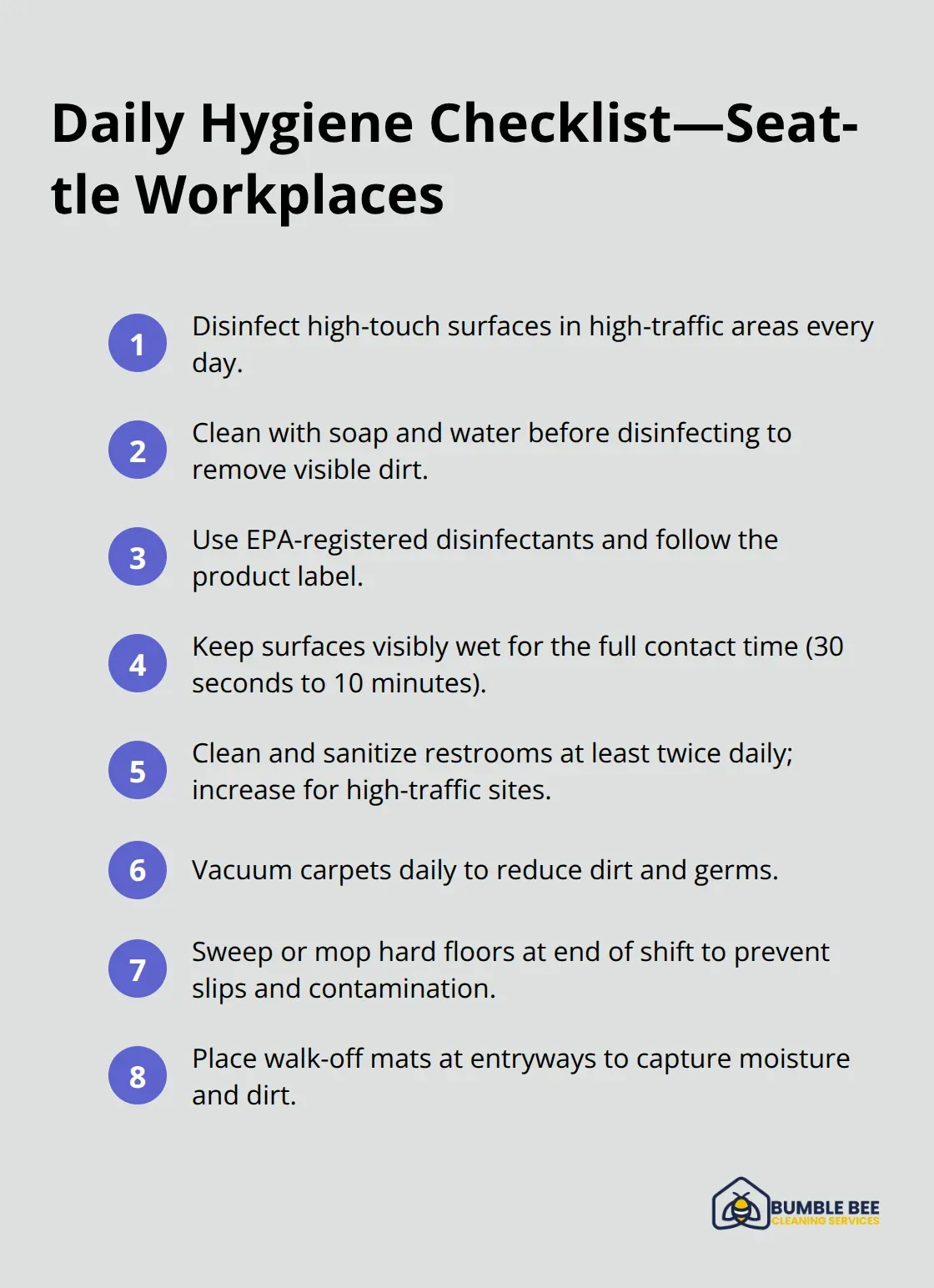
Restrooms demand cleaning and sanitization at least twice daily in most Seattle offices, but high-traffic facilities like retail locations or medical offices need restroom attention three or four times daily. Floors collect dirt that spreads germs, so vacuum carpeted areas daily and sweep or mop hard floors at end of shift to prevent slip hazards and reduce contamination. Your entryway matters too-place walk-off mats to capture outside moisture and dirt before they spread through your facility, especially critical in Seattle’s rainy climate where moisture creates mold risks.
Weekly Deep Cleaning Tasks
Weekly deep cleaning tasks go beyond daily touch-ups and address areas that daily routines miss. Disinfect break-room appliances, keyboards, phones, and desk surfaces where employees spend extended time eating or working. Clean and sanitize garbage and recycling bins to prevent bacterial growth, which accelerates in Seattle’s damp conditions. For food service operations or offices with kitchens, this means cleaning refrigerator handles, microwave buttons, and countertops with special attention.
Monthly Maintenance and Mold Prevention
Air filters in your HVAC system need inspection and replacement on a monthly basis-clogged filters reduce air quality and force your system to work harder, increasing energy costs. Seattle’s damp climate makes mold and mildew inspections non-negotiable; check bathrooms, basements, and areas near HVAC equipment where moisture collects. If you spot mold growth, address it immediately rather than waiting-mold spreads quickly in humid conditions and poses serious health risks to employees.
Documentation and Accountability
Document your cleaning schedules and completion with checklists, either digital or paper-based, to prove compliance during inspections and hold your team accountable. These records protect your business when regulators arrive and demonstrate that you take workplace health seriously. With daily and weekly routines in place, your facility stays protected-but selecting the right partner to execute these practices determines whether your hygiene plan actually works in practice.
Creating a Commercial Hygiene Plan for Your Business
Assess Your Facility’s Cleaning Needs
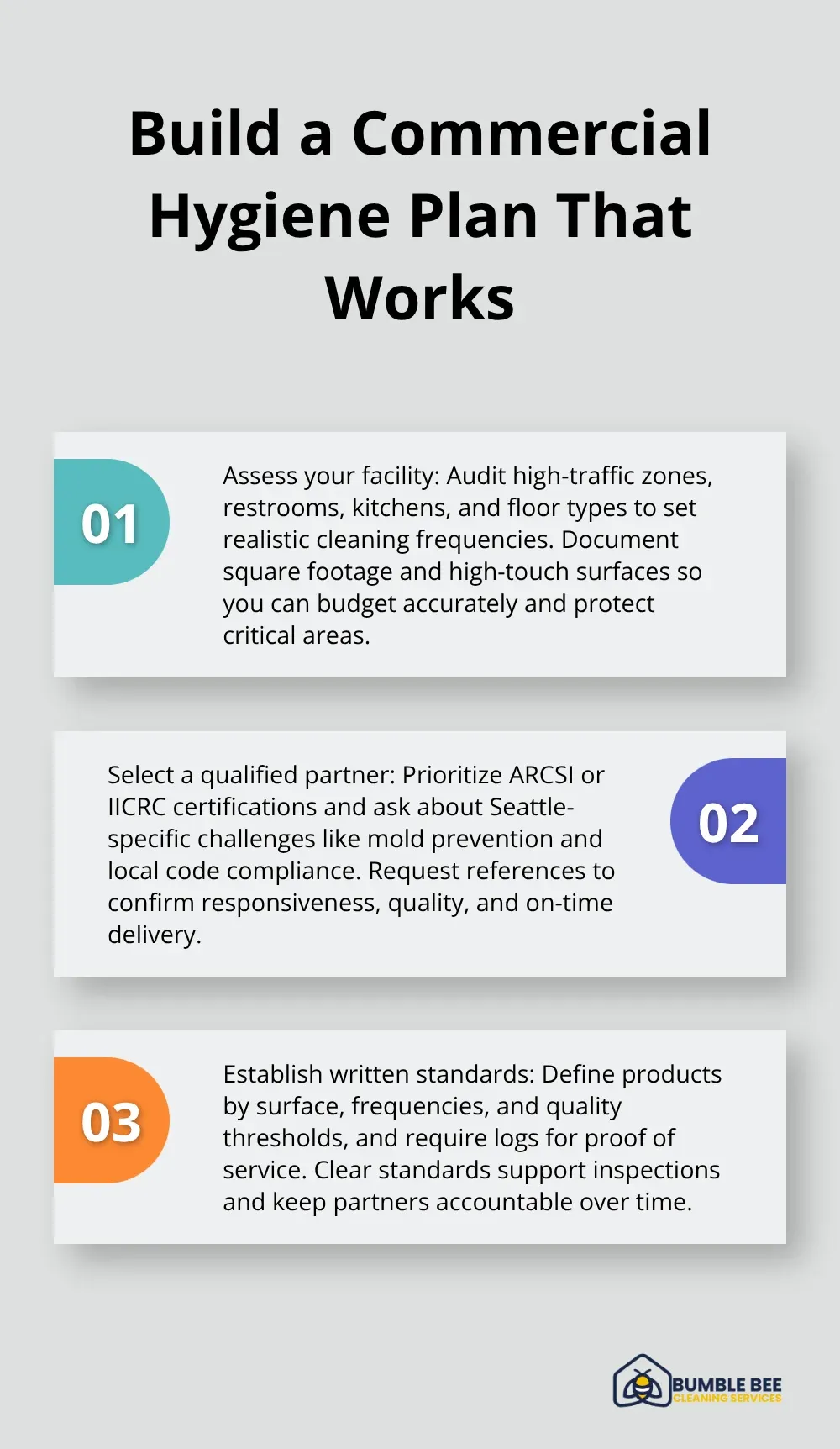
Walk through your facility and identify which areas need cleaning most frequently and why. High-traffic zones like lobbies, restrooms, and break rooms demand daily attention, while less-used conference rooms or storage areas might need weekly or monthly service. Document what you find: note the square footage of carpeted versus hard-surface floors, count the number of restrooms, identify food preparation areas, and list all high-touch surfaces in each zone. This audit takes a few hours but prevents overspending on unnecessary cleaning while protecting critical areas.
Seattle’s damp climate requires you to flag any areas prone to moisture buildup, since mold thrives in bathrooms and basements without proper ventilation and regular inspection. Once you know what needs cleaning, you can build realistic schedules and costs instead of guessing.
Select a Cleaning Partner With Proven Credentials
Execution matters more than the plan itself, so selecting a cleaning partner makes or breaks your hygiene program. Look for providers with ARCSI or IICRC certifications, which means their staff has received rigorous training in industry standards and safety protocols. Beyond credentials, ask potential partners how they handle Seattle’s specific challenges: do they understand mold prevention in our damp climate, do they know King County Board of Health Code requirements for your industry, and can they provide documented cleaning logs for compliance proof?
Avoid cleaning companies that quote flat monthly rates without assessing your actual needs first-generic pricing often means your high-risk areas get shortchanged. Request references from Seattle businesses similar to yours and ask specifically whether the cleaner met deadlines, handled problems responsively, and maintained quality over time.
Establish Written Cleaning Standards
Once you hire a partner, establish written cleaning standards that spell out which products get used on which surfaces, how often each area gets cleaned, and what constitutes acceptable quality. This prevents misunderstandings and gives you documentation to show regulators that you maintain professional standards deliberately, not accidentally. Clear standards also hold your cleaning partner accountable and create a reference point if performance slips over time.
Final Thoughts
Commercial hygiene Seattle businesses implement today prevents costly problems tomorrow. The practices outlined in this guide-daily disinfection of high-touch surfaces, weekly deep cleaning, monthly mold inspections, and documented protocols-form the foundation of a workplace where employees stay healthy and productive. Your facility’s cleanliness directly affects whether staff show up ready to work or call in sick, whether regulators find compliance during inspections or cite violations, and whether customers and clients feel confident in your operation.
We at Bumble Bee Cleaning Services bring experience serving Seattle businesses with ARCSI and IICRC certifications that guarantee trained staff and adherence to industry standards. Our team handles recurring commercial cleaning, deep cleaning, and post-construction cleaning with eco-friendly products and documented protocols that protect your compliance and your team’s health. Audit your current cleaning practices against the standards outlined here, identify gaps, and commit to closing them.
If your internal team lacks capacity or expertise, professional cleaning services eliminate guesswork and guarantee consistent execution. Contact Bumble Bee Cleaning Services to discuss your facility’s specific needs and build a hygiene plan that works for your Seattle business. Your employees deserve a clean, safe workplace, and your business deserves the protection that professional hygiene standards provide.
For more information about our cleaning services in Seattle and Atlanta, or to request a cleaning quote, call or text us at 425-786-1360 or email us at info@qbclean.com
