
Post-construction cleanup leaves behind stubborn stains that settle deep into grout lines. Dust, concrete residue, and construction debris create grout discoloration that standard cleaning won’t fix.
We at Bumble Bee Cleaning Services know that Seattle’s construction season brings real challenges for property owners. The good news is that proven restoration methods can bring your grout back to life.
What Causes Grout Discoloration After Construction
Construction dust does not simply sit on top of grout lines. Fine particles from drywall, concrete cutting, and sanding operations become airborne and settle into the porous grout structure, creating stains that standard mopping cannot remove. Concrete residue proves particularly problematic because it contains alkaline compounds that can damage or etch cement grout when used improperly, making the surface rougher and more likely to retain soil. Construction debris like joint compound, paint overspray, and caulk remnants also embed themselves into grout lines during the building process. The severity of discoloration depends on the construction phase-rough framing creates less dust than finishing work, but drywall finishing produces the finest particles that penetrate deepest into grout.
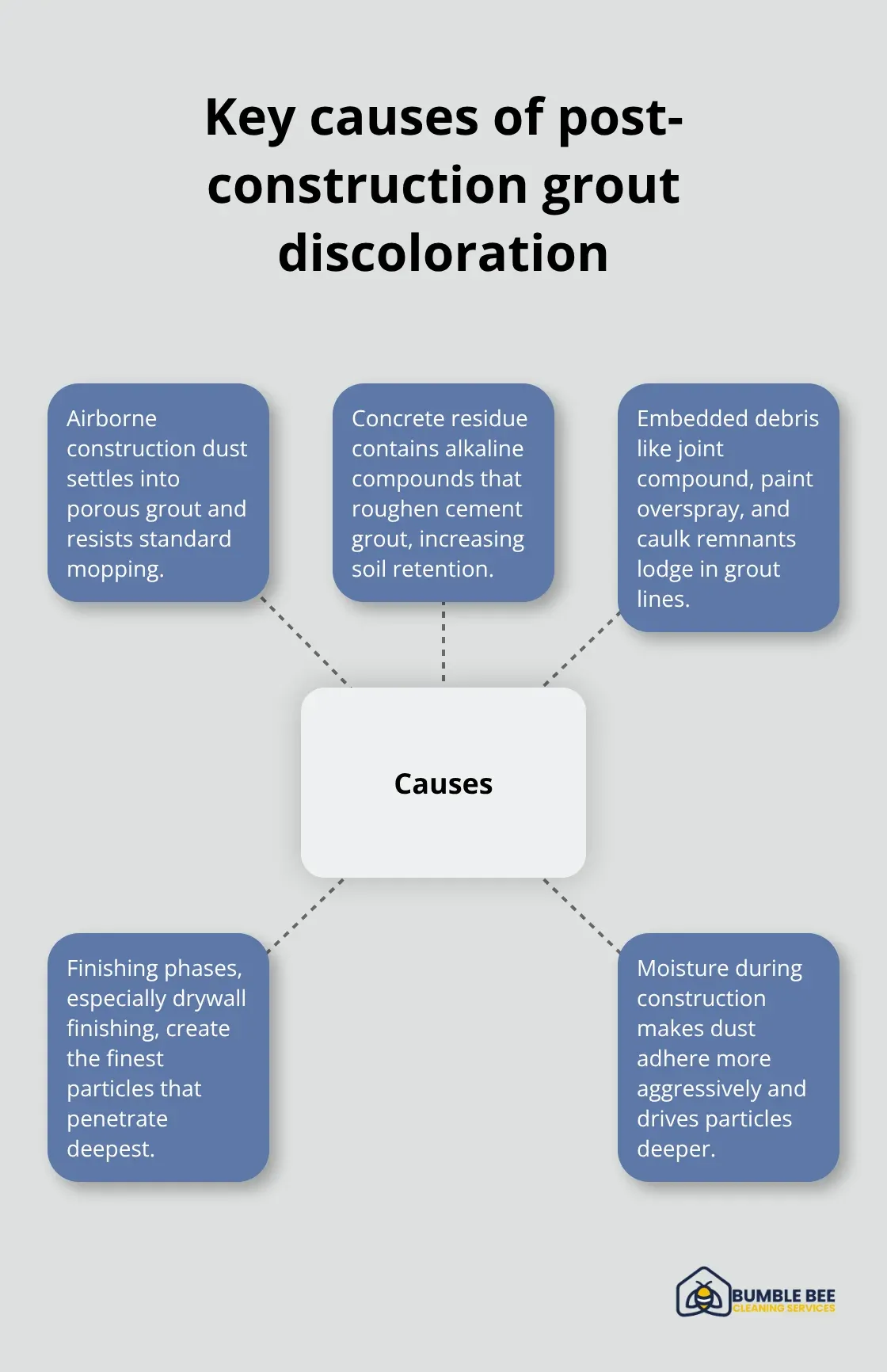
Moisture present during construction accelerates this process, as wet dust adheres more aggressively to porous surfaces than dry particles do.
How Grout Absorbs Construction Residue
Grout’s porous nature makes it a magnet for construction debris. Unlike sealed tile surfaces, unsealed grout acts as a sponge, absorbing liquids and trapping fine particles within its crystalline structure. IICRC standards for professional cleaning recognize that post-construction moisture combined with dust creates a particularly stubborn combination, as water carries particles deeper into the grout matrix while simultaneously activating chemical bonding with concrete-based residues. The smaller the grout line, the more concentrated the discoloration appears, even if the actual volume of debris is minimal. Grout lines typically measure 2 to 3 millimeters wide, meaning even light dust accumulation creates visible staining that spreads across the entire floor in a grid pattern. This is why post-construction grout restoration requires aggressive cleaning methods rather than routine maintenance approaches.
Timeline for Visible Staining
Discoloration becomes apparent within days of construction finishing. Heavy dust settles immediately, but chemical bonding intensifies over the first two to three weeks as moisture evaporates and residues cure. After 30 days, stains that professionals could remove with standard cleaning may become permanent if construction dust has fully crystallized within the grout structure.
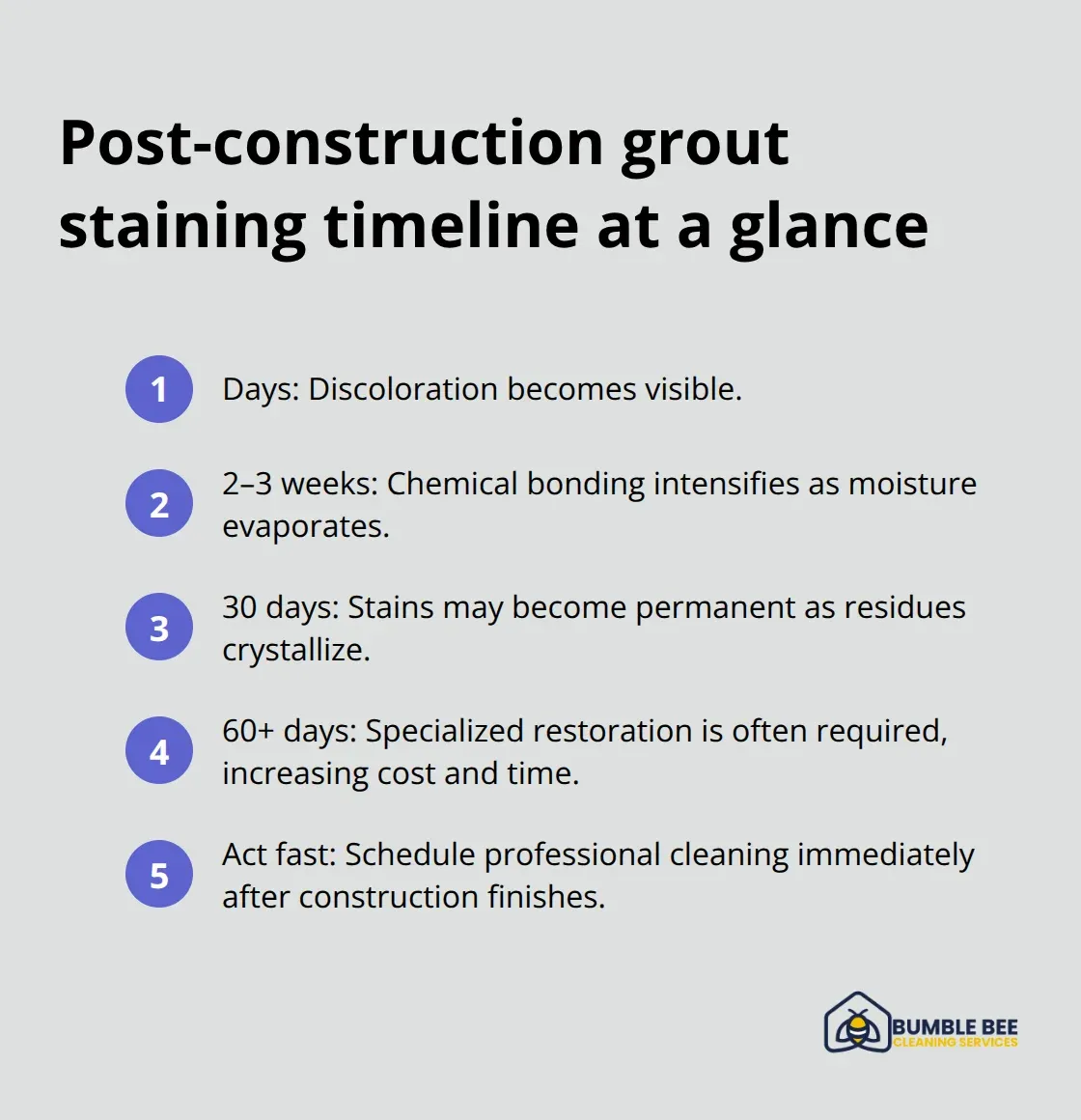
The longer discoloration sits, the more difficult restoration becomes, making immediate post-construction cleaning critical for optimal results. Properties that wait more than 60 days before addressing grout discoloration often require specialized restoration techniques rather than standard deep cleaning, which increases both cost and timeline for restoration. Understanding these timelines helps property owners recognize when professional intervention becomes necessary.
Restoring Grout Without Causing More Damage
Pressure Washing: Speed and Precision
Pressure washing removes construction dust from grout quickly, but it demands precision to avoid etching or widening grout lines. Different surfaces require different pressure levels, with water pressure between 1,500 and 2,000 PSI working effectively on concrete residue without damaging standard cement grout, though anything above 3,000 PSI risks permanent surface erosion. The nozzle should maintain a 45-degree angle and stay at least 12 inches from the grout line to prevent concentrated pressure damage. Most property owners underestimate how aggressive pressure washing can be-many Seattle post-construction projects show wider, rougher grout lines after DIY attempts with rental equipment. Professional pressure washing works best for post-construction grout because trained technicians understand substrate composition and adjust pressure accordingly. However, pressure washing alone often fails to remove crystallized residues that have bonded chemically to grout, requiring supplemental treatment with specialized cleaners designed for construction staining rather than general household grime.
Chemical Treatments for Stubborn Residue
Chemical cleaners formulated specifically for post-construction cleanup outperform standard grout cleaners because they target concrete residue, alkaline deposits, and joint compound rather than surface dirt. Acidic cleaners containing phosphoric or hydrochloric acid dissolve mineral deposits and concrete dust effectively, but they require careful application to avoid harming natural stone tile or damaging grout already in place. Eco-friendly alternatives using citric acid or enzymatic formulas work more slowly and may require multiple applications, yet they eliminate concerns about chemical runoff affecting Seattle’s watershed systems and reduce respiratory exposure for residents during restoration. Professional standards recommend testing any chemical on inconspicuous grout areas first, as grout composition varies between manufacturers and age affects how materials respond to acidic treatments.
Multi-Method Professional Restoration
Professional deep cleaning services combine pressure washing with chemical treatment and often include steam cleaning at 250 to 300 degrees Fahrenheit, which penetrates porous grout more effectively than cold water alone and reduces the need for harsh chemicals. This multi-method approach addresses both surface debris and embedded particles trapped within the grout matrix, delivering results that single-method approaches cannot achieve. The combination of mechanical action, chemical dissolution, and heat penetration works together to restore grout to its original appearance while protecting the surrounding tile and substrate. Once grout is sealed, it helps protect it from stains, dirt, and moisture, making this the next priority in preserving your restoration work.
Protecting Grout After Restoration
Seal Grout Immediately After Professional Cleaning
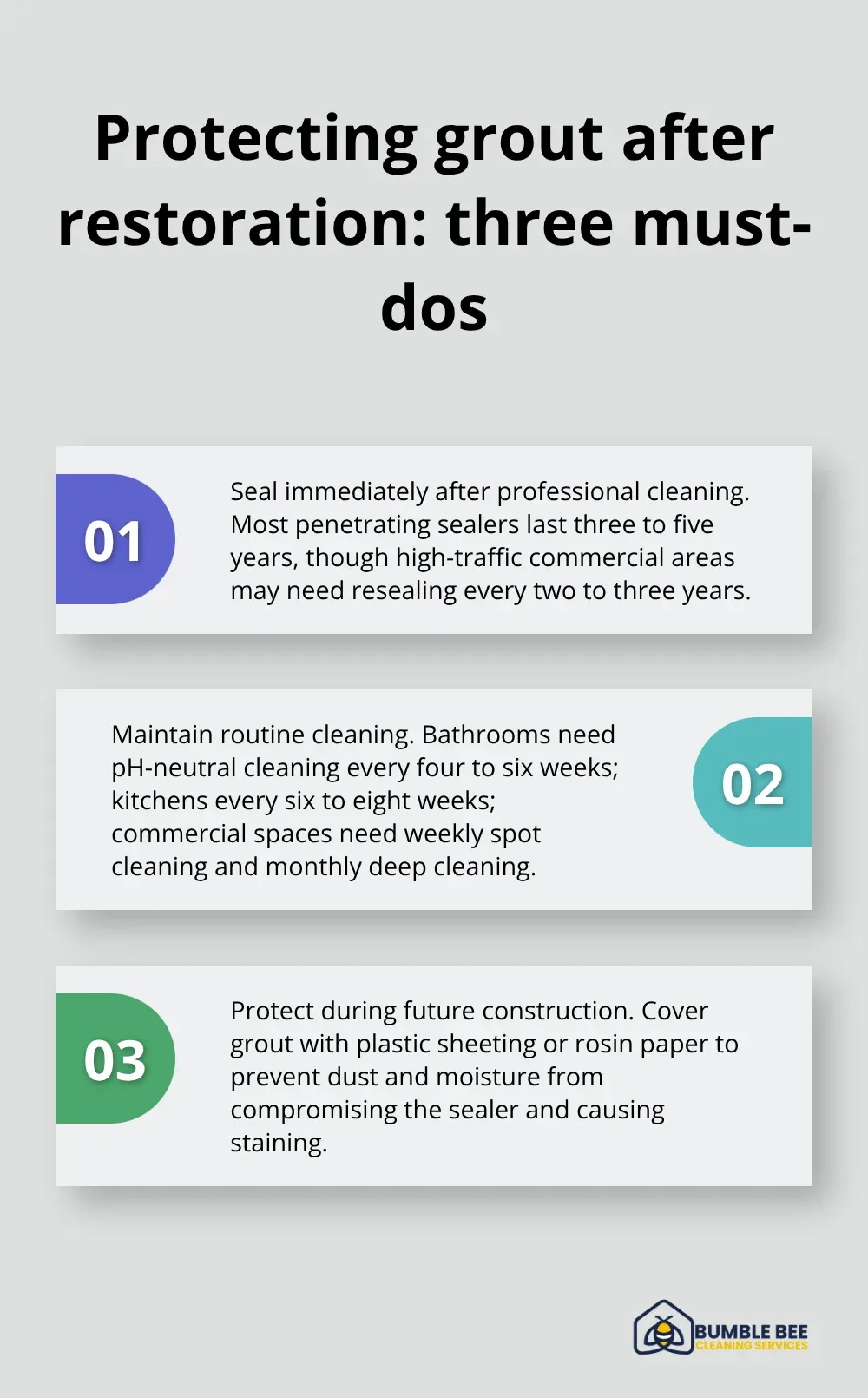
Sealing grout immediately after professional restoration prevents the need to repeat this expensive process in five years. Unsealed grout absorbs moisture, stains, and bacteria at rates that surprise most property owners, with the International Institute of Inspection, Cleaning and Restoration Certification showing that unsealed grout absorbs liquids within seconds of contact. A quality grout sealer creates a protective barrier that slows water penetration and prevents construction debris or household stains from bonding to the grout matrix. Most penetrating sealers last between three and five years before requiring reapplication, though high-traffic commercial spaces may need resealing every two to three years. Schedule sealing within 48 hours of professional grout cleaning, while the grout remains completely dry and the pores stay open from the cleaning process. Failure to seal grout after restoration means your investment in professional cleaning provides temporary aesthetics rather than lasting protection.
Establish Regular Maintenance Schedules
Maintenance frequency determines whether grout stays clean or requires aggressive restoration again. Grout in residential bathrooms needs cleaning every four to six weeks with pH-neutral cleaners that won’t damage the sealer, while kitchen grout tolerates longer intervals of six to eight weeks since kitchens typically see less moisture than bathrooms. Commercial spaces with higher foot traffic require weekly spot cleaning and monthly deep cleaning to prevent the accumulation that turns minor staining into permanent discoloration. These intervals keep grout looking fresh and prevent the buildup that leads to costly restoration work later.
Protect Grout During Future Construction
During future construction projects, protect sealed grout with plastic sheeting or rosin paper before work starts, preventing dust from settling and moisture from compromising the sealer during the vulnerable construction phase. This single preventive step eliminates the need for post-construction grout restoration after renovation work. Properties that fail to protect grout during construction often face staining that professional cleaning cannot fully reverse, making prevention dramatically more cost-effective than restoration. Taking these precautions upfront saves thousands in restoration expenses down the road.
Final Thoughts
Post-construction grout discoloration responds best to professional treatment within the first 30 days after construction finishes, as residues crystallize and bond permanently to the grout matrix the longer you wait. Trained technicians adjust pressure levels, select appropriate chemical treatments, and combine multiple methods to restore grout without damaging surrounding tile or creating wider grout lines. They also recognize when grout has suffered permanent damage and recommend replacement rather than wasting time on restoration that won’t succeed.
Sealing grout immediately after professional cleaning protects your investment and prevents the need to repeat this expensive process in a few years (unsealed grout absorbs moisture and stains within seconds, undoing all restoration work). Regular maintenance schedules keep grout clean between professional treatments, while protective measures during future construction prevent the problem from recurring.
We at Bumble Bee Cleaning Services handle grout restoration as part of comprehensive post-construction cleanup, combining debris removal, dust control, and surface finishing in one coordinated service. Our team follows IICRC standards that demonstrate our commitment to industry best practices. Contact us for professional grout restoration that brings your Seattle property back to pristine condition.
For more information about our cleaning services in Seattle and Atlanta, or to request a cleaning quote, call or text us at 425-786-1360 or email us at info@qbclean.com
