
Construction dust doesn’t disappear on its own. Even after professional cleaning, particles settle in ventilation systems, behind fixtures, and inside walls where standard cleaning can’t reach.
A post-build inspection catches what cleaning crews miss. We at Bumble Bee Cleaning Services recommend inspectors verify that your Seattle property meets building codes and is genuinely safe for occupancy before you move in or hand over the keys.
Why Inspectors Matter After Post-Construction Cleaning
Microscopic drywall dust and plaster particles settle deep inside HVAC systems, behind electrical outlets, and within wall cavities long after cleaning stops. Standard vacuuming and wiping miss these spaces entirely. An inspector with a thermal imaging camera or air quality testing equipment identifies contamination invisible to the naked eye. Without this verification step, occupants risk breathing construction residue for months after move-in, which triggers respiratory issues and allergies. Seattle’s wet climate compounds this problem because moisture traps particles in insulation and ductwork. Professional inspectors use HEPA-filter testing and surface swabs to confirm dust removal meets indoor air quality standards before anyone occupies the space.
Hidden Hazards That Cleaning Alone Cannot Address
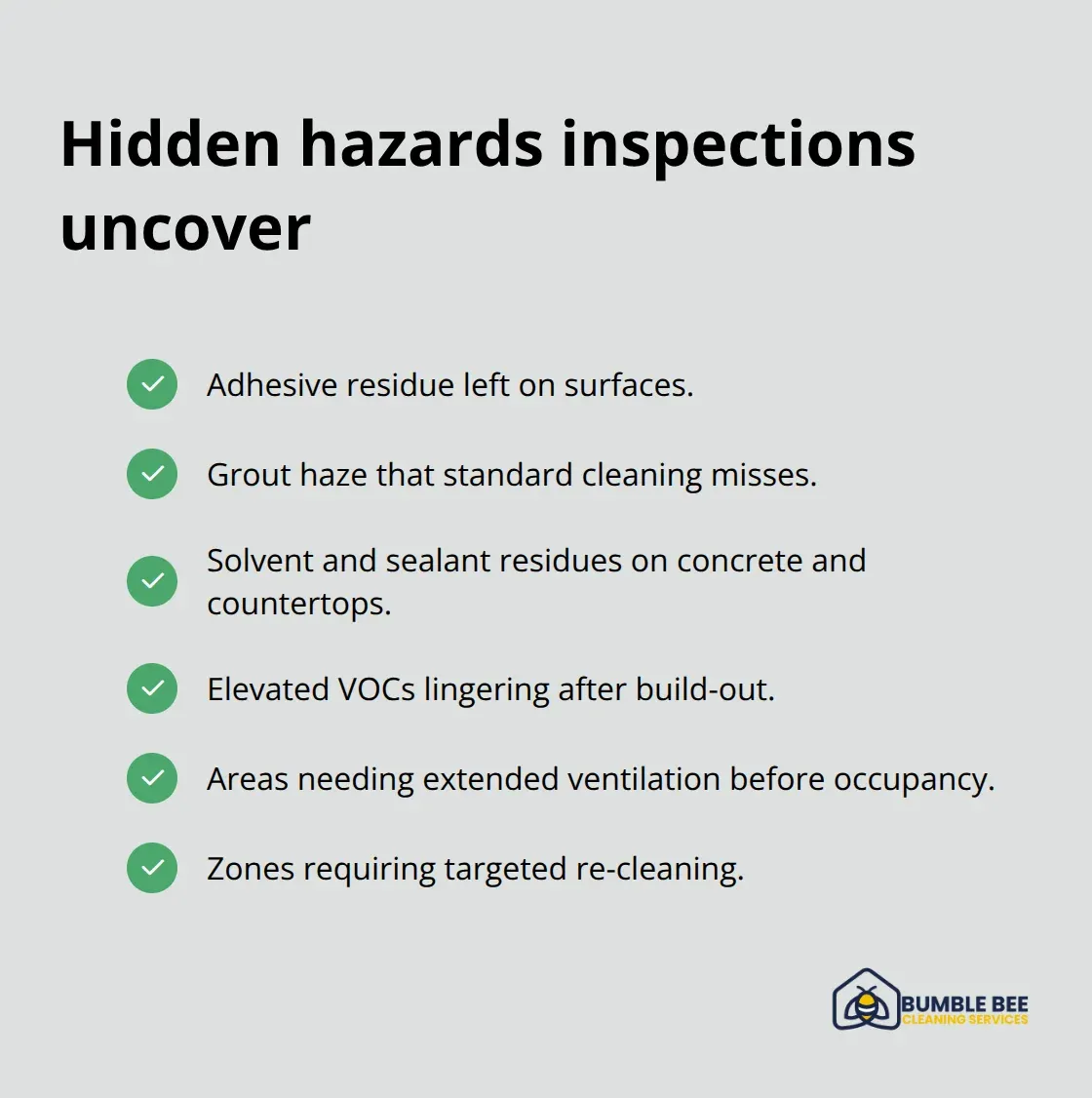
Construction sites leave adhesive residue, paint solvents, and chemical coatings on surfaces that standard cleaning products cannot fully remove. Dried sealants on countertops, grout haze on tile, and solvent residue on concrete require specialized testing to confirm safe levels. Inspectors measure volatile organic compounds (VOCs) that continue off-gassing weeks after construction ends. High VOC levels cause headaches, dizziness, and respiratory irritation in occupants. An inspector measures air samples and identifies which areas need additional treatment or extended ventilation before occupancy. This prevents liability claims from tenants or buyers who experience health problems after moving in.
Building code violations also hide after construction, such as improper electrical grounding, missing fire-blocking in walls, or ventilation systems not meeting Seattle’s International Building Code standards. Cleaning crews cannot identify these code issues.
Documentation That Protects Your Investment
Inspectors generate formal reports with photographs, measurements, and signed certifications that satisfy lenders, insurance companies, and future buyers. This documentation proves the property meets building codes and safety standards at handover. Without it, you face warranty disputes, delayed closing dates on real estate transactions, and potential fines from Seattle’s Department of Construction and Inspections if code violations surface later. An inspector’s signed report becomes part of your permanent property record and protects you if issues emerge after occupancy.
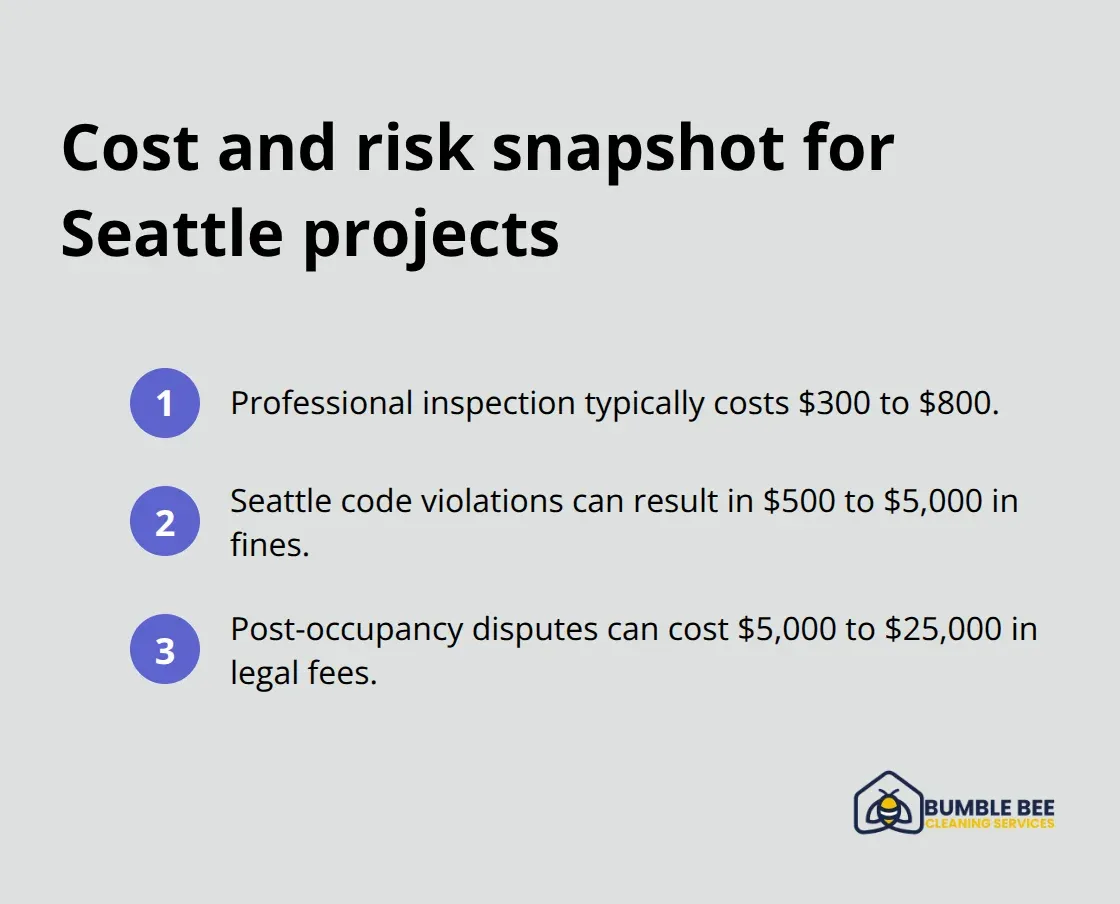
Commercial property owners need this documentation to satisfy tenant lease requirements and maintain compliance with occupancy permits. Residential buyers rely on inspection reports to make informed purchase decisions and negotiate repairs before closing. The cost of a professional inspection typically ranges from $300 to $800 depending on property size, but this investment prevents far costlier remediation work and legal disputes down the line. Once you understand what inspectors verify, the next step involves knowing exactly what to look for in a post-construction inspection and how to coordinate the inspection with your post-construction cleaning timeline.
What Professional Inspectors Verify After Cleaning
Surface Cleanliness and Material Integrity
Professional inspectors walk every room with a flashlight and magnifying tools to spot dust settled on baseboards, inside light fixtures, on top of door frames, and within cabinet interiors. Inspectors use adhesive tape lifts on countertops and flooring to collect surface particles, then compare results against ISSA’s cleaning standards for post-construction environments. They photograph dust accumulation patterns to document which areas received incomplete cleaning. Inspectors also evaluate whether newly installed materials sustained damage during the cleaning process itself. Aggressive scrubbing can scratch fresh paint, etch new tile grout, or damage sealants on countertops and flooring.
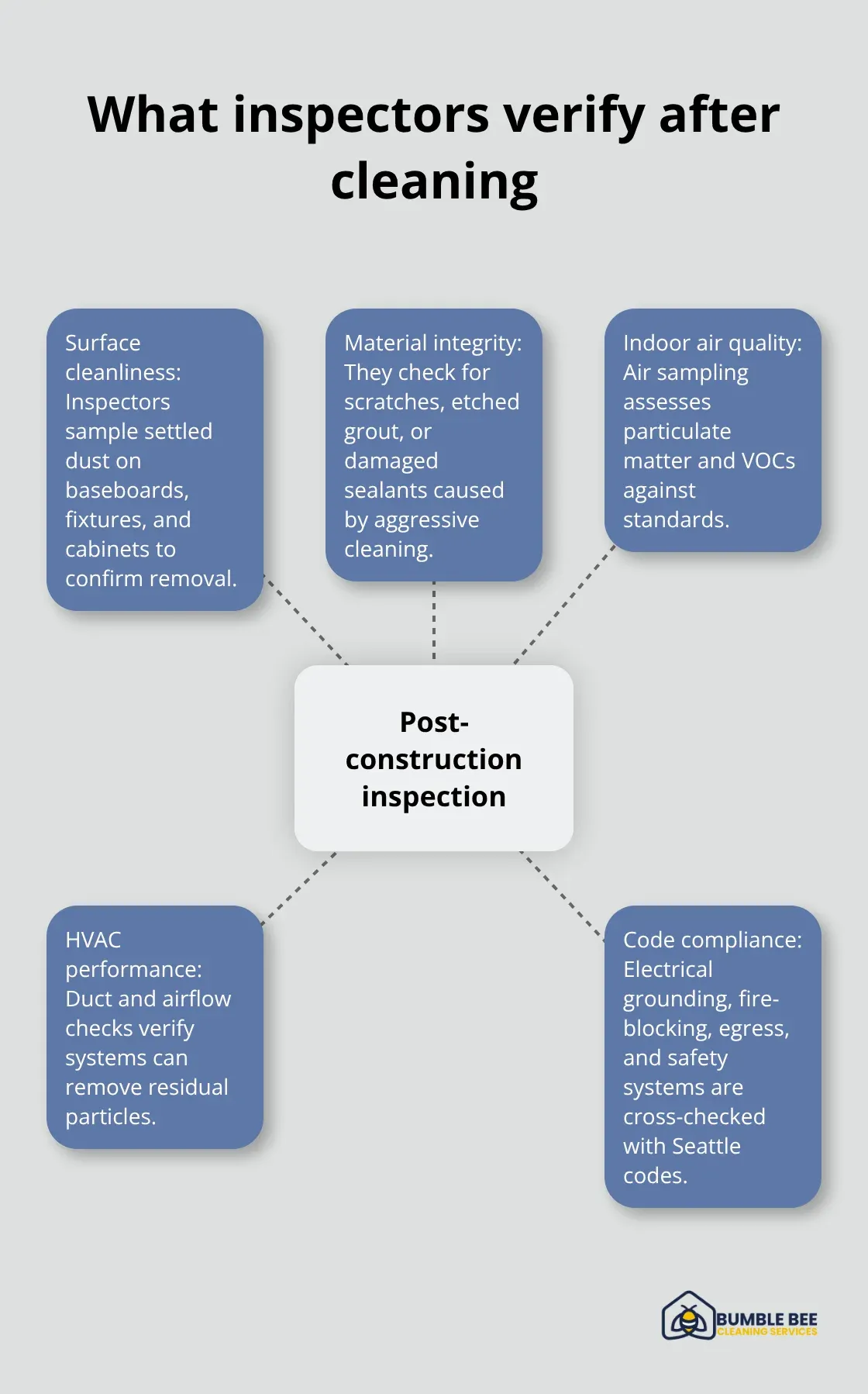
They verify that cleaning crews used non-abrasive methods on delicate surfaces and confirm material integrity by testing adhesion of caulk, paint, and protective coatings.
Indoor Air Quality and Ventilation Systems
Inspectors measure indoor air quality using calibrated equipment that detects particulate matter and volatile organic compounds. They collect air samples from multiple rooms and compare VOC levels against EPA standards and Washington State’s indoor air quality guidelines. High readings in specific zones indicate inadequate ventilation or incomplete dust removal from HVAC systems. Inspectors also inspect ductwork by opening registers and visually checking for construction debris inside supply and return lines. They verify that HVAC systems operate at proper pressure and airflow rates, which confirms ventilation can remove residual particles after occupancy begins.
Seattle Building Code Compliance
Inspectors cross-reference the property against Seattle’s International Building Code and local amendments by reviewing electrical systems for proper grounding, fire-blocking placement in walls, egress pathways, and stairwell compliance. They verify that post-construction cleaning did not disrupt safety equipment, disconnect fire suppression systems, or block emergency exits. The inspector generates a formal report documenting all findings with photographs, measurements, and specific recommendations for any areas requiring additional cleaning or ventilation time before occupancy. This documentation becomes your proof that the property meets code requirements and protects you from liability claims after handover. Understanding what inspectors verify helps you prepare your property and coordinate timing with your cleaning contractor. The next step involves identifying which inspector credentials matter most and how to select a qualified professional for your Seattle project.
Why Post-Construction Inspections Save Time and Money
Inspections Prevent Costly Delays After Move-In
A professional inspection after cleaning catches problems that delay occupancy and create unexpected costs. When inspectors identify incomplete dust removal or air quality issues before tenants move in or buyers close, you avoid costly remediation during occupancy. Incomplete cleaning discovered after move-in forces property managers to schedule additional cleaning crews while tenants occupy the space, disrupting operations and creating liability exposure. Commercial properties face particular risk because tenant lease agreements often require proof of code compliance and air quality certification before occupancy. Without an inspection report signed by a licensed inspector, you cannot legally hand over keys or occupy the space in many cases.
Seattle Code Violations Result in Significant Fines
Seattle’s Department of Construction and Inspections enforces compliance requirements strictly, and violations result in fines ranging from $500 to $5,000 depending on severity. An inspection that costs $300 to $800 upfront prevents these penalties and accelerates your project timeline significantly. Inspectors identify which specific areas need additional ventilation time or targeted cleaning, allowing you to make precise decisions about when occupancy can safely start rather than guessing and risking violations.
Health Complaints Create Legal and Financial Exposure
Property owners and managers who skip inspections face financial exposure when health complaints emerge weeks after occupancy. Tenants experiencing respiratory issues or headaches from residual volatile organic compounds file complaints with the health department and pursue lease termination or rent reduction claims. Residential buyers who discover air quality problems post-closing pursue legal action against sellers and contractors. These disputes cost $5,000 to $25,000 in legal fees alone, not including settlement amounts or remediation expenses (and often much more).
Documentation Protects You Against Post-Closing Claims
An inspection report with documented air quality measurements and surface cleanliness verification provides legal protection by proving you took reasonable steps to ensure the property met safety standards at handover. Commercial property owners need this documentation to maintain insurance coverage and satisfy tenant requirements. Residential sellers use inspection reports to defend against post-closing claims and demonstrate due diligence to future buyers. This formal documentation becomes your strongest defense when disputes arise after occupancy begins.
Final Thoughts
Post-construction cleaning removes visible dust and debris, but a professional post-build inspection verifies that your Seattle property meets safety standards before occupancy. Inspectors measure air quality, test for volatile organic compounds, and confirm that building code violations don’t hide inside ventilation systems or behind walls. This verification step protects your investment by preventing costly delays, health complaints, and legal disputes after move-in.
Combining quality cleaning with formal inspection documentation gives you defensible proof that the property meets safety standards at handover. Commercial property owners satisfy tenant lease requirements and maintain insurance coverage, while residential sellers defend against post-closing claims and demonstrate due diligence to buyers. Without this documentation, you face fines from Seattle’s Department of Construction and Inspections, tenant complaints about air quality, and potential legal action that costs far more than the inspection itself.
We at Bumble Bee Cleaning Services specialize in post-construction cleaning with eco-friendly products and a quality service guarantee. Our team handles the cleaning phase thoroughly so inspectors have a clean baseline to verify, and we recommend scheduling your post-build inspection within 48 hours after cleaning concludes. Contact us to schedule your post-construction cleaning and coordinate timing with your inspector so your property meets both cleaning and code compliance standards before occupancy.
For more information about our cleaning services in Seattle and Atlanta, or to request a cleaning quote, call or text us at 425-786-1360 or email us at info@qbclean.com
