
Construction projects in Seattle leave behind more than just finished spaces. Attic dust removal after building work is essential because construction debris settles into your attic, creating serious health and property risks.
We at Bumble Bee Cleaning Services know that most property owners underestimate how much dust infiltrates attic spaces during renovation. This invisible layer affects your indoor air quality, clogs HVAC systems, and can trigger respiratory problems for building occupants.
What Health Dangers Lurk in Post-Construction Attic Dust
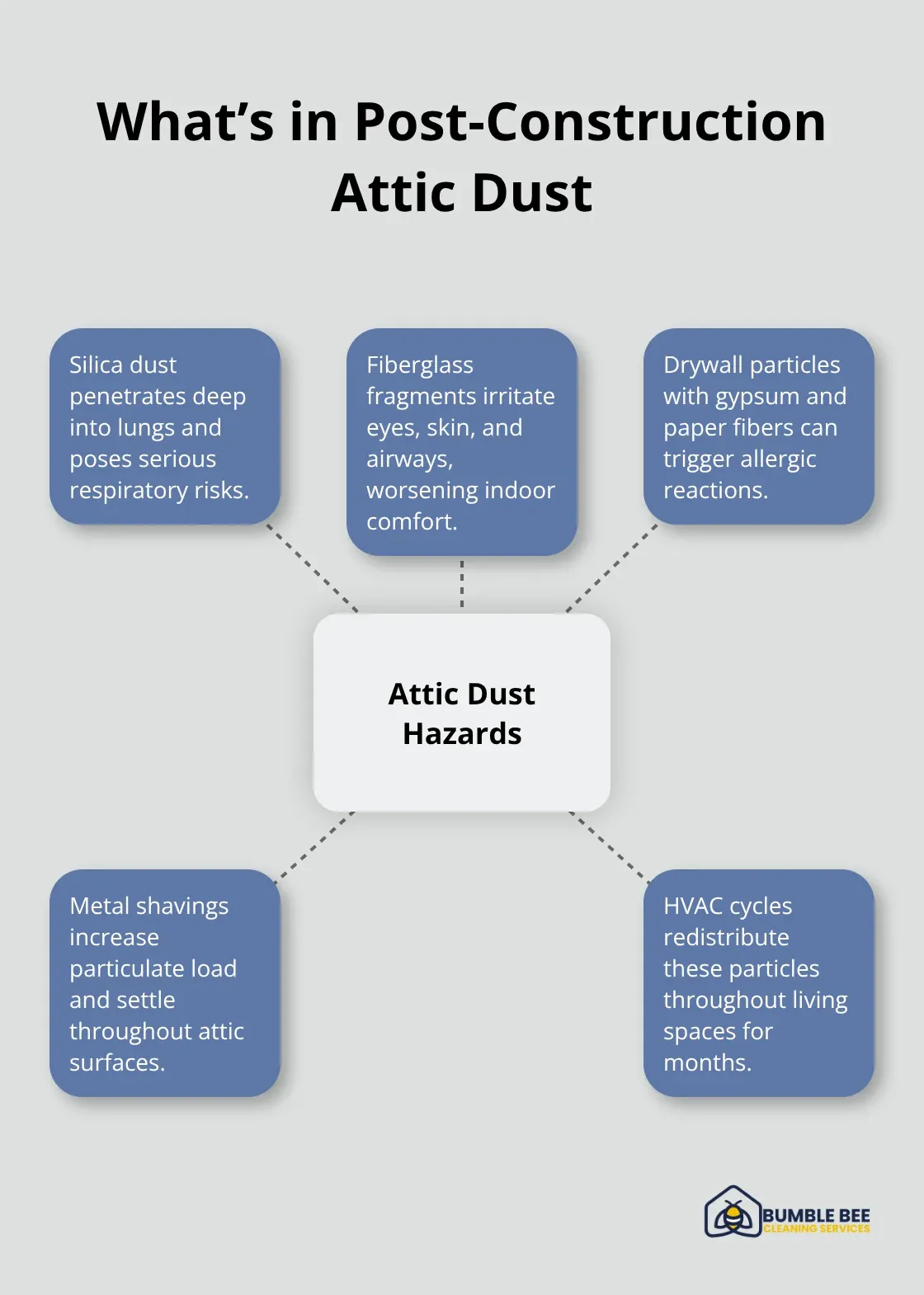
Construction dust contains far more than harmless particles. When Seattle contractors finish renovation work, they leave behind silica dust, fiberglass fragments, drywall particles, and metal shavings that accumulate in attic spaces. Silica dust poses particular danger because crystalline silica dust penetrates deep into lungs. Your attic becomes a reservoir for these hazardous materials, and every HVAC cycle circulates these particles throughout your home or commercial building. Construction dust doesn’t settle and disappear-it remains suspended in attic air and gets distributed through ventilation systems for months after work ends.
Respiratory Damage from Fine Particles
Attic dust from construction triggers immediate and delayed respiratory problems. Fine particles smaller than 2.5 microns bypass your nose and mouth defenses, reaching your lungs directly. People with asthma experience flare-ups within days of exposure, while others develop new respiratory issues. Building occupants report coughing, wheezing, and shortness of breath weeks after construction ends because the dust source remains untreated in the attic above them. Vulnerable populations-children under five and adults over 65-face the highest risk of complications. Your HVAC system pulls this dust downward into living spaces constantly, making the situation worse over time rather than better.
Allergens That Persist Year-Round
Construction creates a unique allergen environment that standard cleaning misses. Drywall dust contains gypsum and paper fibers that trigger allergic reactions in sensitive individuals. Fiberglass insulation particles shed continuously and irritate eyes, skin, and respiratory passages. Construction debris also attracts dust mites and mold spores, which multiply in attic environments. These secondary allergens persist long after visible dust settles, causing chronic symptoms like itchy eyes and nasal congestion. Standard household vacuums cannot reach attic spaces effectively, and homeowners typically ignore this problem entirely.
Long-Term Property and Health Consequences
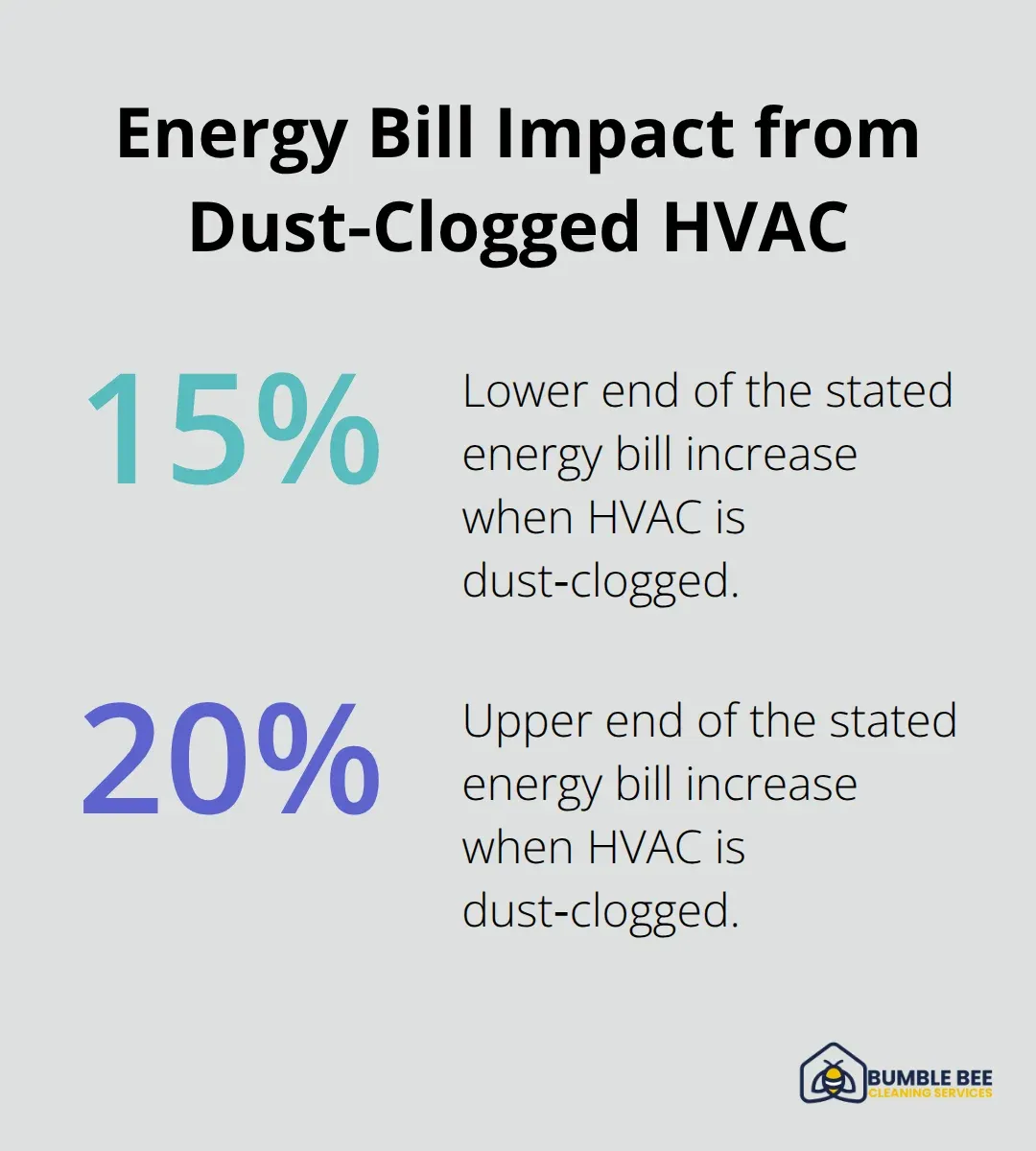
Ignoring post-construction attic dust creates compounding health and financial damage. Building occupants experience reduced productivity and increased sick days due to air quality issues. Indoor air pollution has been found to be associated with cardiovascular disease, respiratory disease, and poor health. Your HVAC system clogs with dust, reducing efficiency and forcing it to work harder, which drives up energy bills by 15-20%. The dust deposits onto ductwork surfaces, creating permanent contamination that standard filters cannot remove. Professional post-construction cleaning specifically addresses attic dust through specialized equipment and techniques designed for this exact problem.
This targeted approach prevents long-term consequences from developing and protects both occupant health and your property investment.
How Professional Attic Dust Removal Works
We at Bumble Bee Cleaning Services start every post-construction attic project with a thorough inspection before any equipment arrives. Our team assesses dust accumulation levels, identifies contaminated ductwork, checks for mold growth triggered by construction moisture, and evaluates your HVAC system’s condition. This assessment determines which specialized equipment we need and how long the project takes. Safety protocols matter enormously because attic spaces present fall hazards, limited ventilation, and exposure to the hazardous particles we discussed earlier. We establish containment barriers to prevent dust migration into living areas during removal, use proper respiratory protection for our technicians, and shut down HVAC systems to stop circulating particles throughout your property during the cleaning process.
Removing Dust With Industrial-Grade Equipment
Standard household vacuums fail at post-construction attic cleaning because they lack the suction power and filtration needed for fine construction particles. Professional teams use HEPA-filtered vacuum systems that capture 99.97% of particles as small as 0.3 microns. Negative air machines create controlled pressure in the attic space, preventing dust from spreading to other areas of your building. Compressed air systems dislodge particles from surfaces, insulation, and ductwork that settled during construction. Manual wiping and brushing of HVAC components remove dust deposits that equipment alone cannot reach.
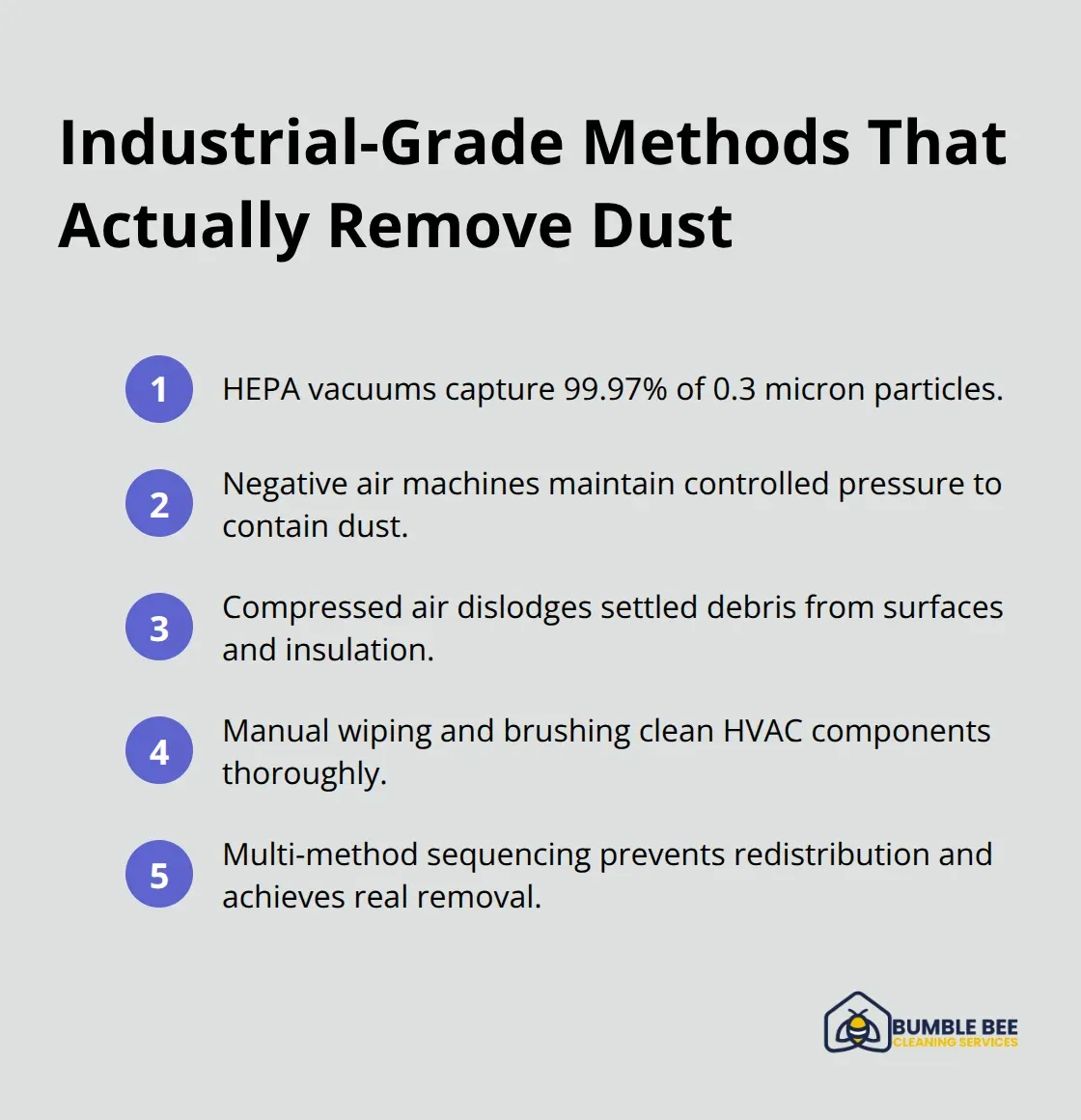
This multi-method approach takes longer than quick cleaning but delivers actual results rather than pushing dust around.
Handling Specialized Contamination Issues
Some Seattle properties built before 1980 contain asbestos in insulation or materials, requiring specialized protocols that standard cleaners cannot handle. Professional post-construction cleaning addresses these complications properly rather than creating liability through improper handling. Mold growth often accompanies construction dust in attic spaces, particularly when moisture infiltrates during renovation work. Technicians trained in post-construction cleaning identify mold colonies and treat them with appropriate methods rather than simply vacuuming over the problem. Fiberglass insulation particles require careful handling to prevent further shedding and airborne distribution throughout your property.
Testing Air Quality and Final Verification
After dust removal completes, air quality testing verifies that the attic environment meets acceptable standards. This testing measures particulate levels and confirms that your HVAC system no longer circulates construction debris. Visual inspection of ductwork confirms cleanliness and checks that insulation sits properly without damage from the cleaning process. Documentation of this testing protects your property value and provides evidence for insurance purposes if needed. These verification steps separate professional post-construction cleaning from incomplete DIY attempts that leave hidden contamination behind.
The difference between removing visible dust and actually solving your attic air quality problem comes down to what happens next-and that’s where the real protection for your building begins.
What Changes When You Remove Post-Construction Attic Dust
Professional attic dust removal delivers measurable improvements that homeowners and commercial property managers can verify immediately. When post-construction attic cleaning finishes, your HVAC system stops circulating construction debris within days. Energy consumption drops noticeably because your heating and cooling equipment no longer fights against clogged filters and contaminated ductwork. Your air conditioning and heating system runs at design efficiency again, reducing strain on components and extending equipment lifespan significantly. Building occupants report clearer breathing within a week because the dust source above them no longer feeds particles into living spaces continuously. Air quality testing after professional removal typically shows particulate levels dropping to pre-construction standards, which means your building meets acceptable air quality benchmarks again.
HVAC Protection Matters More Than Cleaning Visible Surfaces
Construction dust coating your ductwork creates permanent efficiency losses if left untreated. Standard post-construction cleaning often misses ductwork contamination entirely, focusing only on visible surfaces instead. Your HVAC system pulls air through contaminated ducts constantly, which means the dust problem persists even after general cleaning finishes. Professional attic dust removal specifically targets ductwork with specialized equipment that dislodges settled particles and removes them completely rather than redistributing them. Properties with protected ductwork maintain consistent airflow pressure, meaning your system heats or cools spaces faster while consuming less energy. Commercial buildings especially benefit from protected ductwork because tenant health directly impacts productivity and retention rates. When your HVAC system runs clean, it operates quieter too, which reduces noise complaints in residential and commercial properties. The filtration upgrade that follows ductwork cleaning maintains this improvement indefinitely because debris no longer accumulates in your system continuously.
Property Value and Buyer Confidence After Professional Cleaning
Real estate transactions in Seattle slow considerably when inspectors discover post-construction dust in attic spaces. Buyers request price reductions or walk away entirely when air quality testing reveals construction debris still present months after work finished. Professional attic cleaning with documented air quality testing removes this negotiating disadvantage completely. Properties with verified clean attics and tested HVAC systems command higher asking prices because buyers understand they inherit a protected system rather than a contamination problem. Commercial tenants specifically request air quality documentation before signing leases, and professional post-construction cleaning provides this verification automatically. Your property insurance may also provide better rates once you document that construction-related contamination has been professionally addressed, since you’ve eliminated a known liability.
Final Thoughts
Post-construction attic dust removal protects both your health and your property investment after renovation work finishes. The respiratory damage, persistent allergens, and long-term contamination we’ve covered don’t resolve without professional intervention, and your HVAC system will continue circulating construction debris for months unless you address the source directly. Building occupants deserve clean air, and your property deserves protection from the efficiency losses and value reduction that contaminated ductwork creates.
Professional attic dust removal represents a smart investment in immediate health and long-term property performance. Real estate buyers in Seattle specifically request air quality documentation, and documented professional cleaning gives you that verification that protects your asking price. The cost of professional cleaning is far lower than the energy waste, HVAC repairs, and negotiating disadvantages you’ll face if you ignore this problem.
We at Bumble Bee Cleaning Services handle post-construction cleaning with the specialized equipment and expertise this work demands. Our team uses HEPA filtration, negative air machines, and ductwork-specific techniques that standard cleaners don’t have, and we provide air quality testing after completion so you have documented proof that your attic meets acceptable standards. Contact us to schedule an assessment of your post-construction attic space and get your property back to clean, healthy operation.
For more information about our cleaning services in Seattle and Atlanta, or to request a cleaning quote, call or text us at 425-786-1360 or email us at info@qbclean.com
