
Your warehouse is losing money right now, and you might not even know it. Poor sanitation leads to contaminated inventory, sick employees, and regulatory penalties that drain your budget fast.
We at Bumble Bee Cleaning Services have seen Seattle businesses recover thousands of dollars annually through proper warehouse sanitization. A clean warehouse isn’t a luxury-it’s the foundation of a profitable operation.
What Actually Happens When Your Warehouse Stays Dirty
Contaminated Inventory Destroys Revenue Fast
Contaminated inventory and product loss hit your revenue directly. A warehouse storing hazardous materials or allowing dust and debris to accumulate creates conditions where products degrade, become unsellable, or trigger customer returns. In 2013, a Berger, Missouri warehouse accumulated 6,500 tons of toxic sandblasting powder containing lead, cadmium, and chromium. The contamination was so severe that local businesses shuttered and downtown foot traffic collapsed. The cleanup took until 2019, but the real damage came earlier-the visible hazard destroyed consumer confidence and devastated the local economy.
Your Seattle warehouse doesn’t need to reach that extreme to cost you money. Fine dust settles on electronics or food products and makes them worthless. Equipment deteriorates faster when dirt infiltrates cooling systems and filtration. Dirty warehouse floors hide surface damage that accelerates equipment wear, costing you £50 to hundreds of pounds in forklift wheel repairs alone, with engine and drivetrain repairs running into the thousands according to HSM Search.
A single contamination event wipes out entire inventory batches and forces you to shut down operations while you assess damage.
Employee Illness and Safety Failures Drain Your Budget
Employee illness and safety failures drain your budget in ways that spreadsheets often miss. Nearly 200,000 same-level slip-and-fall incidents occur annually in U.S. warehouses, costing approximately 70 billion dollars nationwide, according to CleanLink. Your employees need dry, hazard-free walkways to stay safe.
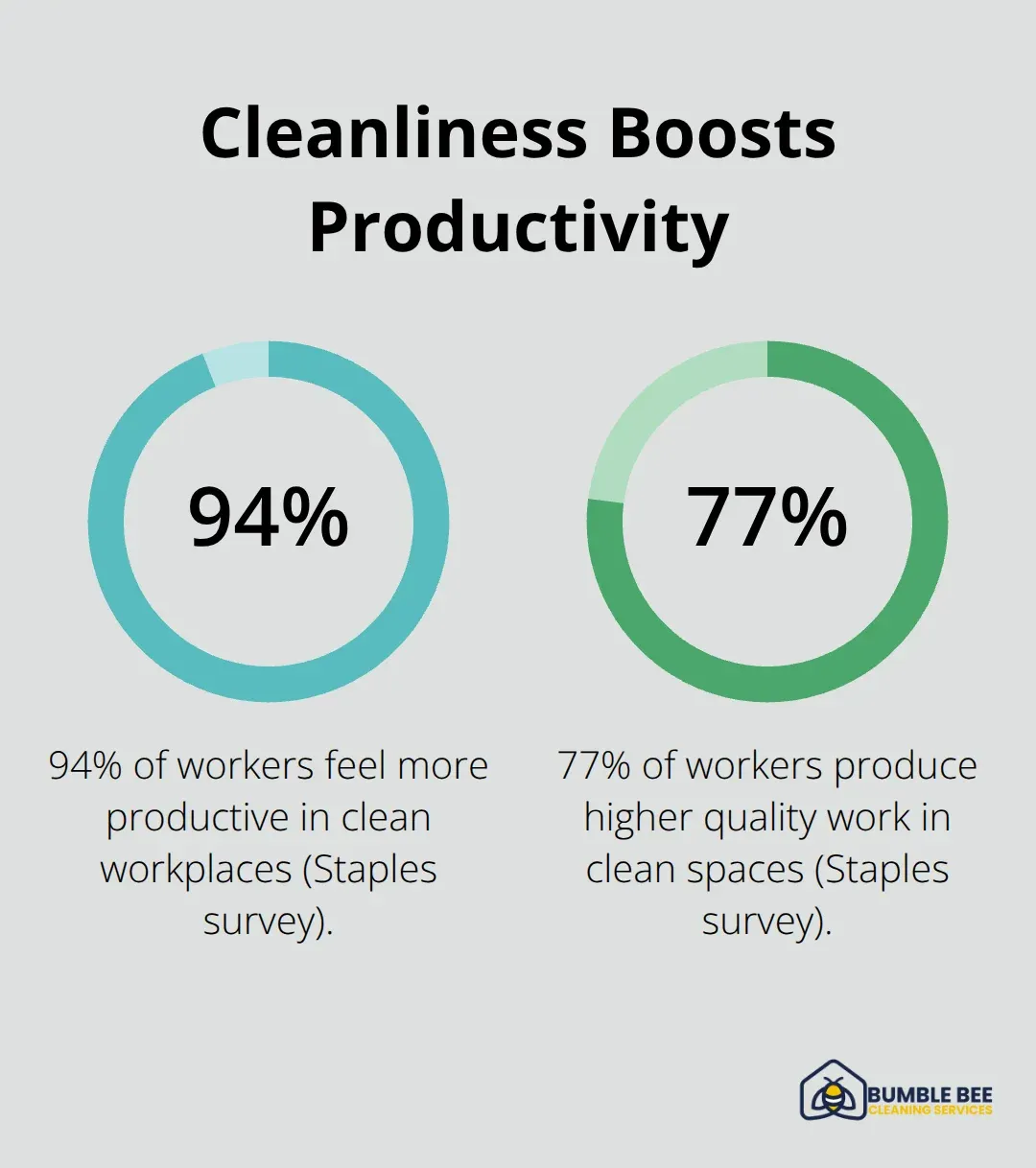
When your warehouse is filthy, workers catch respiratory illnesses from dust buildup, take sick days, and eventually leave for cleaner workplaces. The U.S. Bureau of Labor Statistics reports 2.8 million lost workdays annually due to injuries and illnesses that proper sanitation prevents. A Staples survey found 94 percent of workers feel more productive in clean spaces and 77 percent produce higher quality work.
Regulatory Penalties Add Up Quickly
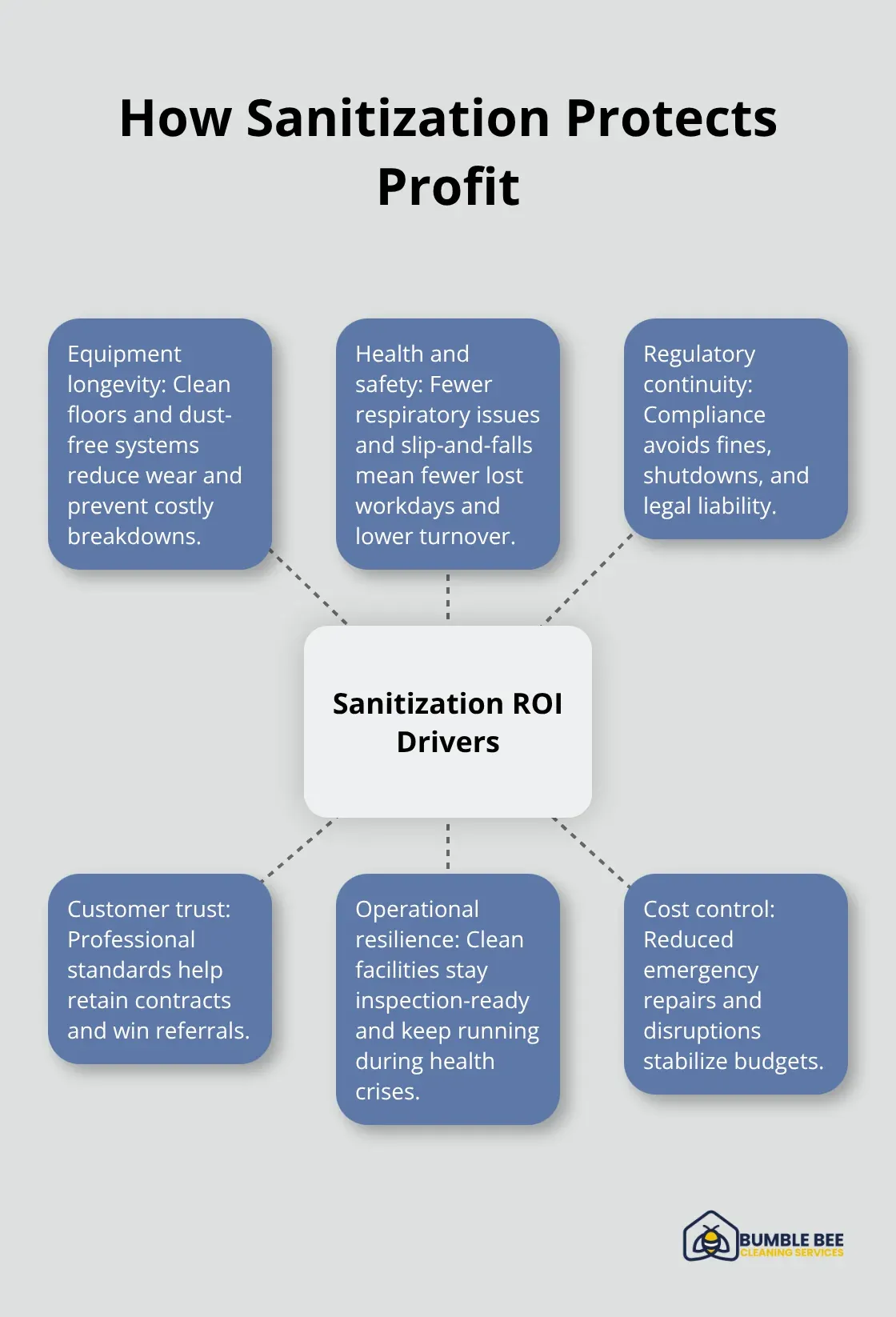
Beyond morale, regulatory penalties for non-compliance with OSHA sanitation guidelines add thousands to your compliance costs. Hazardous material storage violations, improper disposal practices, and failure to maintain safe work environments result in fines that compound quickly. Seattle businesses operating without proper warehouse sanitation face citations, forced shutdowns, and legal liability that insurance won’t fully cover.
Clean facilities stay operational during health crises and inspections-and that operational continuity directly protects your bottom line. The question isn’t whether you can afford proper sanitization; it’s whether you can afford the losses that poor sanitation guarantees.
How Sanitization Protects Your Bottom Line
Equipment Runs Longer Without Costly Breakdowns
Clean warehouses stop equipment from failing prematurely. Dirt and dust infiltrate machinery cooling systems, filtration units, and moving parts, forcing premature wear that translates to expensive repairs or replacement. A warehouse that stays clean avoids the scenario where forklift wheel replacement can cost from £50 to hundreds of pounds, or worse, engine and drivetrain repairs that cost thousands. Robotic cleaners or scheduled professional sanitization maintain debris-free floors methodically, preventing the accumulation that triggers these failures. When your equipment runs longer without breakdown, your operation doesn’t pause for emergency repairs, and your team stays productive instead of waiting for maintenance crews.
Your Workforce Stays Healthier and More Engaged
Your employees stay healthier and more engaged when your warehouse is genuinely clean. Workers exposed to constant dust and debris develop respiratory issues that lead to sick days, which proper sanitation helps prevent. A clean, uncluttered workplace boosts employee morale and fosters positive energy that enhances creativity and productivity. Clean warehouses reduce slip-and-fall incidents and create safer working conditions. Employees who feel their workspace is maintained professionally are also less likely to leave for competitors, reducing costly turnover and the time spent training replacements.
Customer Trust Follows From Operational Cleanliness
Customer trust follows naturally from operational cleanliness. When your facility is visibly well-maintained during inspections or client visits, you project reliability and professionalism that competitors with neglected warehouses cannot match. That reputation translates to retained contracts and new business referrals in Seattle’s competitive logistics and distribution market. A clean operation signals that you manage details carefully-from inventory handling to safety protocols-which matters to clients who depend on your reliability. This foundation of trust positions you well as you consider which sanitization methods and partners will sustain these gains long-term.
Making Sanitization Stick in Your Warehouse
Map Your Warehouse and Prioritize High-Risk Zones
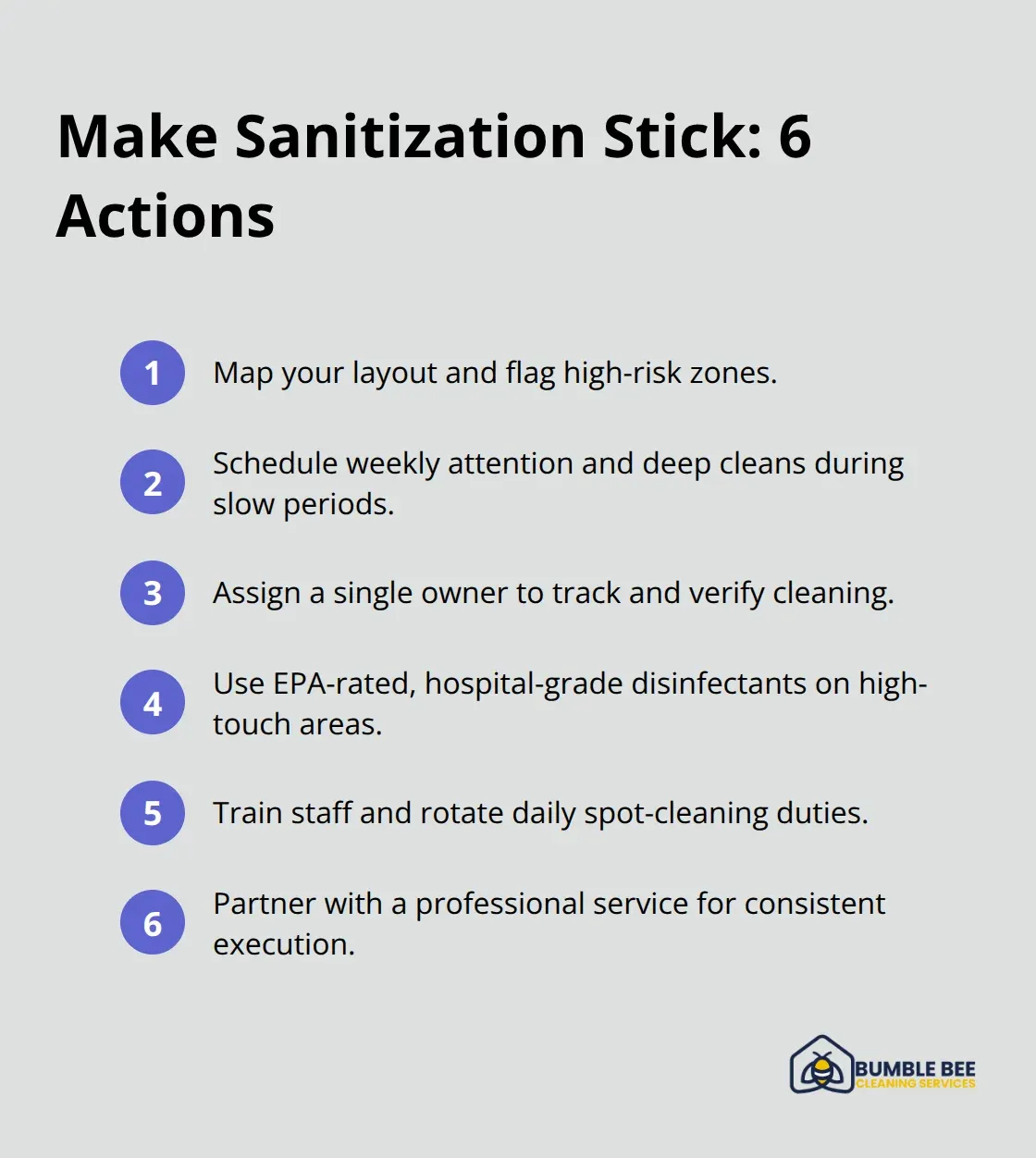
Knowing you need a clean warehouse and actually maintaining one are two different things. Sporadic cleaning efforts fail every time. You need a system that works with your operation, not against it. Start by mapping your warehouse layout and identifying high-risk zones where contamination happens fastest. Equipment areas, loading docks, and inventory storage zones need attention every single week, not once a month. Schedule deep cleaning during your slowest operational periods so cleaning crews don’t disrupt production. Most Seattle warehouses operate on predictable cycles, and fitting sanitization into those gaps means you avoid the chaos of shutting down for emergency cleaning.
Assign Clear Accountability for Cleaning Tasks
Assign one person on your team to oversee the cleaning schedule and verify completion weekly. That accountability matters more than any other factor. This single step transforms cleaning from a vague responsibility into a measurable commitment. Your designated person tracks what gets cleaned, when it happens, and whether standards hold.
When someone owns the process, problems surface before they become expensive failures.
Use Hospital-Grade Disinfectants on High-Touch Surfaces
EPA-approved disinfectants work only if your team applies them correctly to surfaces that actually matter. Don’t spray everything indiscriminately. Focus on high-touch surfaces like forklift handles, equipment controls, and checkout areas where cross-contamination spreads fastest. Your cleaning partner should use hospital-grade disinfectants rated for industrial environments, not generic retail products. Ask your cleaning service to specify which EPA products they use and verify those products match your facility’s needs. If your warehouse handles food products or pharmaceuticals, your disinfectant selection becomes non-negotiable from a compliance standpoint.
Train Your Staff on Why Sanitation Protects Their Paychecks
Your staff needs training that goes beyond watching a five-minute video. Warehouse workers should understand why sanitation matters to their paycheck and their safety, not just follow orders. Show them the connection between clean floors and fewer slip-and-fall incidents, between dust-free equipment and uninterrupted shifts. Train new hires on day one about maintaining their work zones and reporting spills immediately instead of letting them sit. Rotating responsibility for daily spot-cleaning among your team builds ownership and catches problems before they grow. When employees see that management invests in professional sanitization services, they take their own sanitation duties seriously. That cultural shift from indifference to accountability transforms your operation.
Build a Partnership With Your Cleaning Service
Your cleaning partner should bring certified expertise and eco-friendly products to your commercial space, ensuring your warehouse meets health standards while protecting your team’s wellbeing. Your investment in proper training and professional sanitization partners pays for itself through avoided equipment failures, reduced sick days, and maintained customer trust.
Final Thoughts
Warehouse sanitization protects your bottom line in ways that spreadsheets reveal within months, not years. Clean warehouses keep equipment running longer, which eliminates the thousands you’d otherwise spend on emergency repairs. Your workforce stays healthier and produces higher quality work, which means fewer sick days and lower turnover costs. Customers trust operations that maintain professional standards, and that trust translates directly to retained contracts and new business in Seattle’s competitive market.
The financial advantage compounds over time as your equipment lasts years longer without premature wear. Employees who work in clean, safe environments stay with your company instead of leaving for competitors. Your reputation for reliability attracts better clients and allows you to command better rates. The businesses losing money right now are the ones treating sanitation as optional, not the ones investing in it systematically.
Your Seattle operation deserves a cleaning partner that understands warehouse environments and delivers consistent results. We at Bumble Bee Cleaning Services bring certified expertise to commercial cleaning, using eco-friendly products that protect your team while maintaining rigorous sanitation standards. Stop accepting preventable losses and start protecting your operation today by contacting Bumble Bee Cleaning Services to build the clean warehouse that your business needs to thrive.
