
Seattle warehouses face unique environmental challenges that standard cleaning services can’t handle effectively. The Pacific Northwest’s constant moisture and industrial debris create serious health and safety risks.
We at Bumble Bee Cleaning Services understand that proper warehouse sanitation requires specialized expertise and equipment. Professional cleaning services deliver measurable cost savings through reduced injuries, extended equipment life, and improved worker productivity.
What Makes Seattle Warehouses So Hard to Clean?
Seattle’s maritime climate creates a perfect storm of cleaning challenges that standard janitorial services simply can’t handle. The city receives significant rainfall annually, which pushes humidity levels between 70-90% throughout most of the year. This constant moisture penetrates warehouse structures and creates persistent condensation on metal surfaces, equipment, and storage areas. Mold spores thrive in these conditions and spread rapidly across concrete floors while they climb warehouse walls within 24-48 hours of moisture exposure. The combination of high humidity and temperature fluctuations causes metal equipment to sweat continuously, which requires specialized dehumidification and anti-corrosive treatments that go far beyond basic mopping and wiping.
Pacific Northwest Weather Creates Unique Debris Problems
Seattle’s unique position between Puget Sound and the Cascade Mountains means warehouses face a constant barrage of salt-laden moisture from the west and fine particulate matter from the east. During winter storms, facilities accumulate up to 3 inches of tracked-in mud, salt, and organic debris daily. Spring brings pollen counts that exceed 1,500 grains per cubic meter and coats surfaces with sticky yellow residue that standard cleaning methods can’t remove.
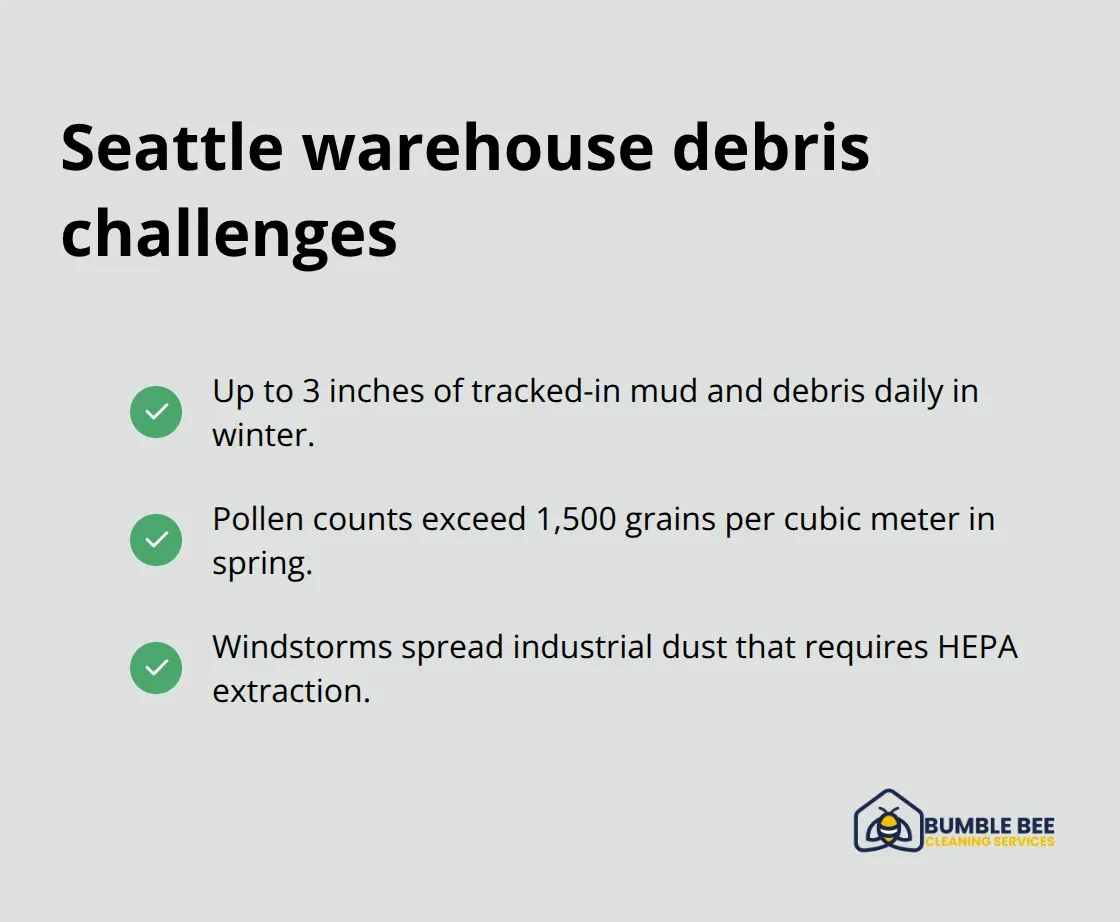
The region’s frequent windstorms carry industrial dust from shipping operations and create abrasive particles that damage equipment if technicians don’t properly extract them with HEPA filtration systems and specialized vacuum equipment.
Washington State Safety Regulations Demand Expert Knowledge
Washington’s Department of Labor and Industries enforces warehouse safety standards, with violation fines that start at $7,000 for first-time offenses. The state requires specific cleaning protocols for facilities that handle hazardous materials and mandates trained technicians who understand proper chemical disposal and decontamination procedures. OSHA compliance in Washington warehouses demands documented cleaning schedules, specialized training certifications, and regular air quality testing that only experienced industrial cleaning teams can provide effectively.
These environmental and regulatory challenges directly impact worker health and safety in ways that many warehouse operators don’t fully understand (or budget for appropriately).
How Professional Cleaning Protects Your Workers
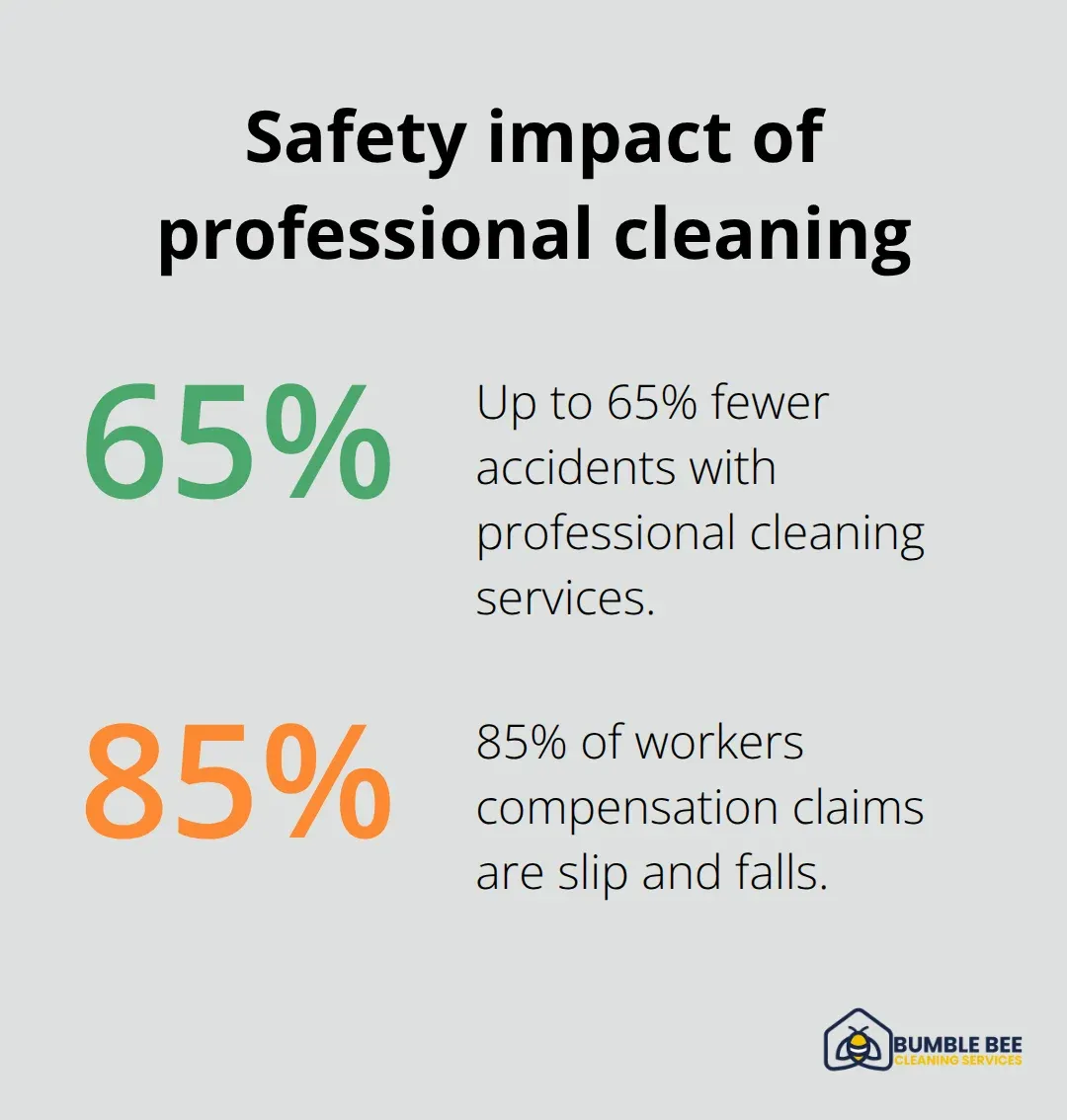
Workplace injuries in warehouses cost businesses an average of $90,043 per incident according to the National Safety Council, but professional cleaning services reduce these accidents by up to 65%. Slip and fall incidents account for 85% of workers compensation claims in warehouse environments, with wet floors and debris accumulation as the primary culprits.
Facilities see dramatic improvements when they implement daily floor cleaning with specialized equipment that removes moisture, oil residue, and tracked-in materials that create hazardous surfaces. Professional teams use industrial-grade extractors that pull moisture from concrete pores and apply slip-resistant treatments that maintain traction even during Seattle’s wettest months.
Air Quality Issues Cost More Than You Think
Poor indoor air quality in warehouses is associated with decreased productivity and increased absenteeism among workers. Seattle’s high humidity creates perfect conditions for mold growth, dust mite populations, and bacterial contamination that trigger respiratory problems, allergic reactions, and chronic fatigue among warehouse staff. Professional cleaning teams use HEPA filtration systems and antimicrobial treatments that eliminate airborne contaminants and maintain indoor air quality standards below 50 micrograms per cubic meter. Regular deep cleaning of HVAC systems and air ducts removes accumulated particulates that standard maintenance schedules miss completely.
Pest Prevention Saves Thousands in Damage
Rodent infestations in warehouses cause an average of $18,000 in product contamination and structural damage per incident, but professional sanitation programs prevent 95% of pest problems before they start. Seattle’s mild, wet climate supports year-round pest activity, with rats and insects that seek shelter in warm warehouse environments during winter months. Professional cleaning eliminates food sources, moisture accumulation, and debris that attract pests while teams seal entry points and treat areas with targeted prevention methods that don’t require harmful pesticides around stored products.
Long-Term Health Benefits Add Up Fast
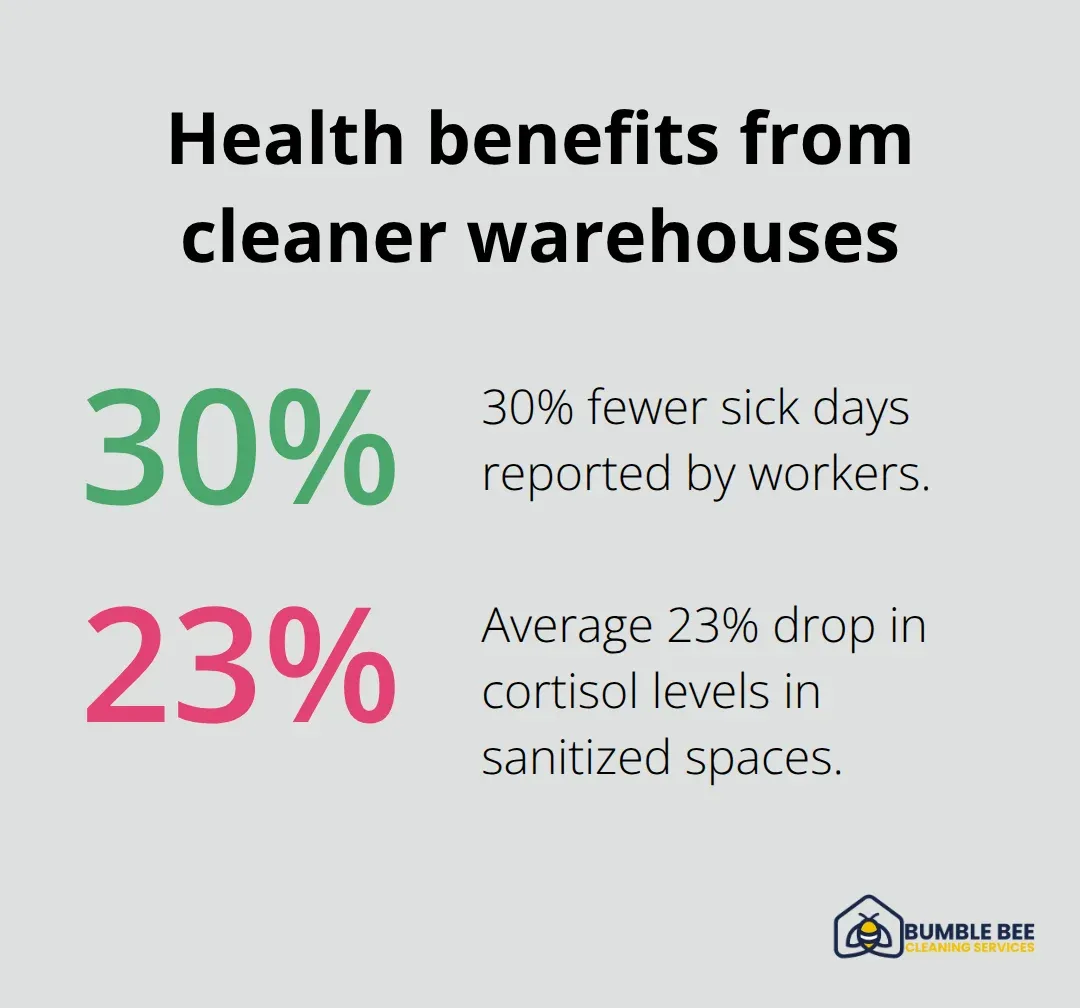
Workers in professionally cleaned warehouses report 30% fewer sick days and show measurably better job satisfaction scores compared to facilities with basic cleaning protocols. Clean work environments reduce stress hormones (cortisol levels drop by an average of 23% in sanitized spaces) and improve mental clarity that translates directly into fewer workplace errors and accidents. Professional cleaning also eliminates chemical residues from improper cleaning product use that can cause skin irritation, headaches, and respiratory sensitivity over time.
These health and safety improvements create a foundation for the substantial cost savings that warehouse operators experience when they invest in specialized cleaning services.
How Much Money Does Professional Warehouse Cleaning Actually Save?
Professional warehouse cleaning delivers immediate and long-term financial returns that far exceed the initial investment costs. Equipment manufacturers report that industrial machinery benefits significantly from properly maintained environments through comprehensive maintenance strategies. Conveyor systems, forklifts, and packaging equipment require fewer repairs when facilities maintain consistent cleanliness standards. Seattle warehouses that implement professional cleaning programs see average equipment maintenance cost reductions annually per 50,000 square feet of space. Dust, moisture, and debris cause premature wear on moving parts, electrical systems, and hydraulic components that cost thousands to replace or repair.
Insurance Companies Reward Clean Facilities
Insurance providers offer discounts for facilities that meet enhanced cleanliness standards because clean warehouses generate fewer liability claims. Property insurance rates also decrease when facilities demonstrate proper maintenance through professional cleaning contracts. Clean warehouses experience fewer OSHA violations, which saves facilities money per year in potential fines and legal costs according to OSHA recordkeeping guidelines.
Worker Productivity Gains Add Up Fast
Employees in professionally cleaned warehouses complete tasks faster than workers in standard facilities. Clean work environments reduce time spent searching for tools, navigating around debris, and dealing with equipment malfunctions that slow operations. Seattle warehouses report productivity improvements when they switch from basic cleaning to specialized industrial cleaning services.
Professional Teams Minimize Operational Disruption
Professional cleaning teams reduce downtime for deep cleaning projects by completing work during off-hours with minimal operational disruption. These specialized crews work around warehouse schedules and complete comprehensive cleaning tasks without interrupting daily operations (unlike internal staff who must balance cleaning duties with other responsibilities). Expert teams also identify potential equipment issues during routine cleaning that prevent costly emergency repairs and unplanned shutdowns.
Final Thoughts
Seattle warehouses face environmental challenges that demand specialized warehouse sanitation expertise. The Pacific Northwest’s high humidity, industrial debris, and strict Washington State regulations create conditions that standard services cannot handle effectively. Professional teams understand these unique demands and provide solutions that basic approaches miss completely.
Professional warehouse sanitation delivers measurable returns through reduced worker injuries, extended equipment life, and improved productivity. Facilities that invest in specialized services see fewer OSHA violations, lower insurance premiums, and significant reductions in maintenance costs. Clean warehouses also experience fewer pest infestations and maintain better air quality for workers (which translates directly into higher employee satisfaction and retention rates).
Warehouse owners and managers should evaluate their current protocols against industry standards and regulatory requirements. Bumble Bee Cleaning Services offers comprehensive commercial solutions with certified technicians who understand the unique demands of Seattle’s industrial facilities. We provide quality service that makes professional warehouse sanitation an investment rather than an expense.
