
Seattle offices face mounting pressure to meet strict commercial hygiene standards and OSHA regulations. A single compliance failure can expose your business to fines, health risks, and damaged employee trust.
Standard cleaning simply doesn’t cut it anymore. We at Bumble Bee Cleaning Services know that compliance deep cleaning targets the hidden contamination that regular maintenance misses-from HVAC systems to high-touch surfaces where bacteria thrive.
What Seattle Offices Must Know About Workplace Safety Standards
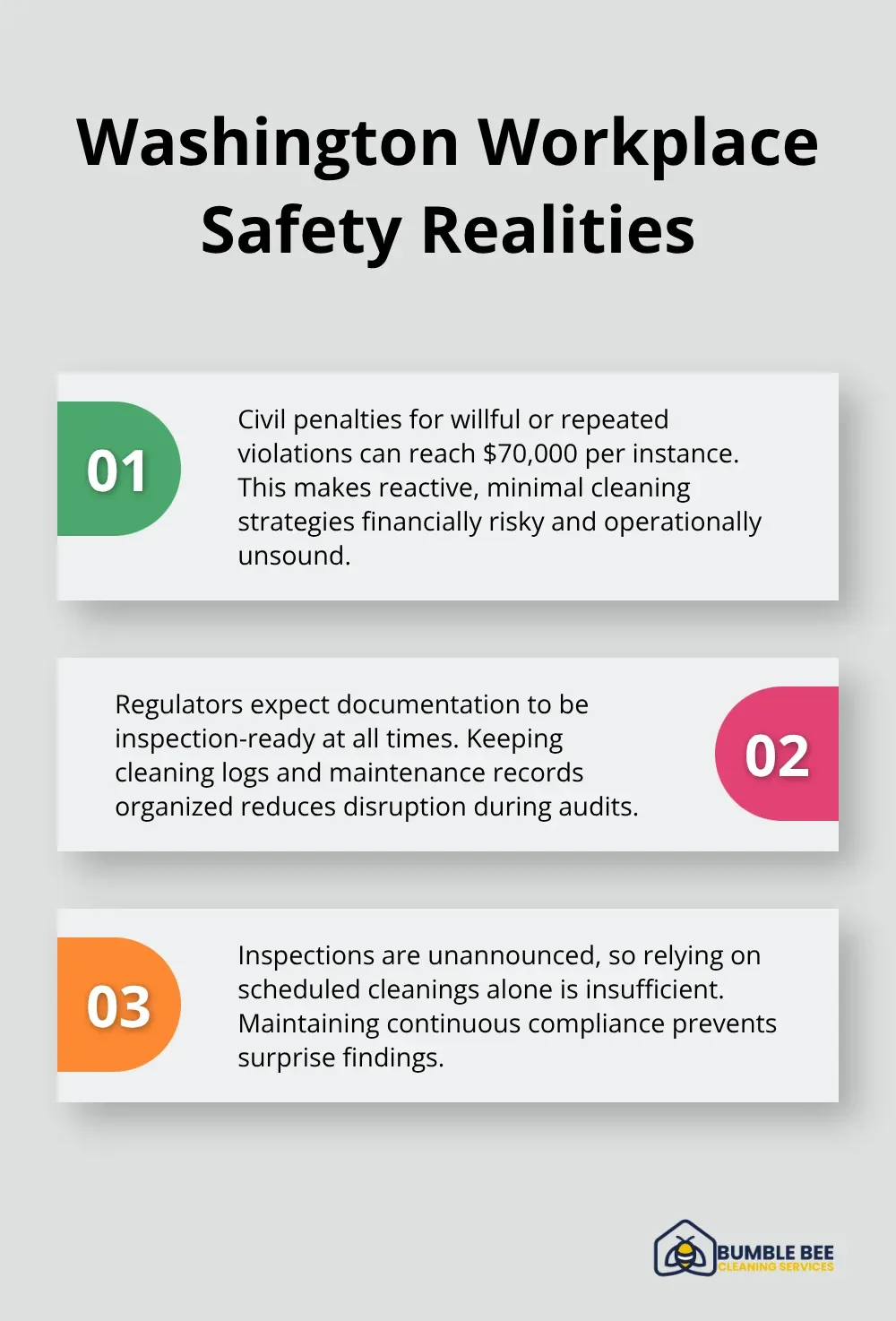
Washington State’s workplace safety framework is far more stringent than many office managers realize. RCW 49.17.060 requires employers to provide a workplace free from recognized hazards, and Washington’s standards match or exceed federal OSHA requirements under RCW 49.17.050. This isn’t theoretical compliance-violations carry civil penalties up to $70,000 per willful or repeated violation, and inspections happen without advance notice. Your cleaning logs, maintenance records, and compliance documentation must stay ready at any time. The state’s Occupational Safety and Health Administration conducts unannounced inspections under RCW 49.17.070, so offices cannot rely on scheduled cleanings alone to stay compliant.
The Hidden Cost of Poor Indoor Air Quality
Most Seattle office managers underestimate how dust and contamination in HVAC systems directly impact both health and compliance. Deep cleaning of air ducts and HVAC components removes accumulated dust that standard daily cleaning misses-dust that circulates through your building and triggers allergies, respiratory issues, and reduced productivity. The CDC emphasizes routine cleaning schedules to prevent germ buildup, especially in high-traffic areas, and high-touch surfaces like door handles, light switches, shared keyboards, and phones require frequent disinfection to interrupt disease transmission. Washington State mandates EPA-registered disinfectants and strict adherence to chemical safety guidelines under RCW 49.17.465, so your cleaning partner must follow proper ventilation, dilution ratios, and documented contact times. Poor indoor air quality doesn’t just violate standards-it directly increases employee sick days and reduces focus. A clean office environment signals to employees that their health matters, which directly improves retention and morale.
Why Standard Cleaning Fails on Compliance
Standard daily cleaning addresses visible dirt and surface clutter but ignores the contamination zones where bacteria and allergens accumulate. High-touch surfaces, baseboards, vents, and equipment casings harbor pathogens that regular maintenance skips. Compliance deep cleaning targets these hidden areas with specialized tools and EPA-approved disinfectants applied at proper contact times (the duration required for the disinfectant to actually kill pathogens on a surface). When illness outbreaks occur, heightened cleaning frequency on high-touch surfaces becomes mandatory under Washington health directives, and offices without a documented deep cleaning protocol face immediate compliance gaps. Your cleaning partner must follow rigorous protocols for proper ventilation, dilution precision, and surface contact times that standard cleaners often overlook.
What Separates Compliance Deep Cleaning from Daily Maintenance
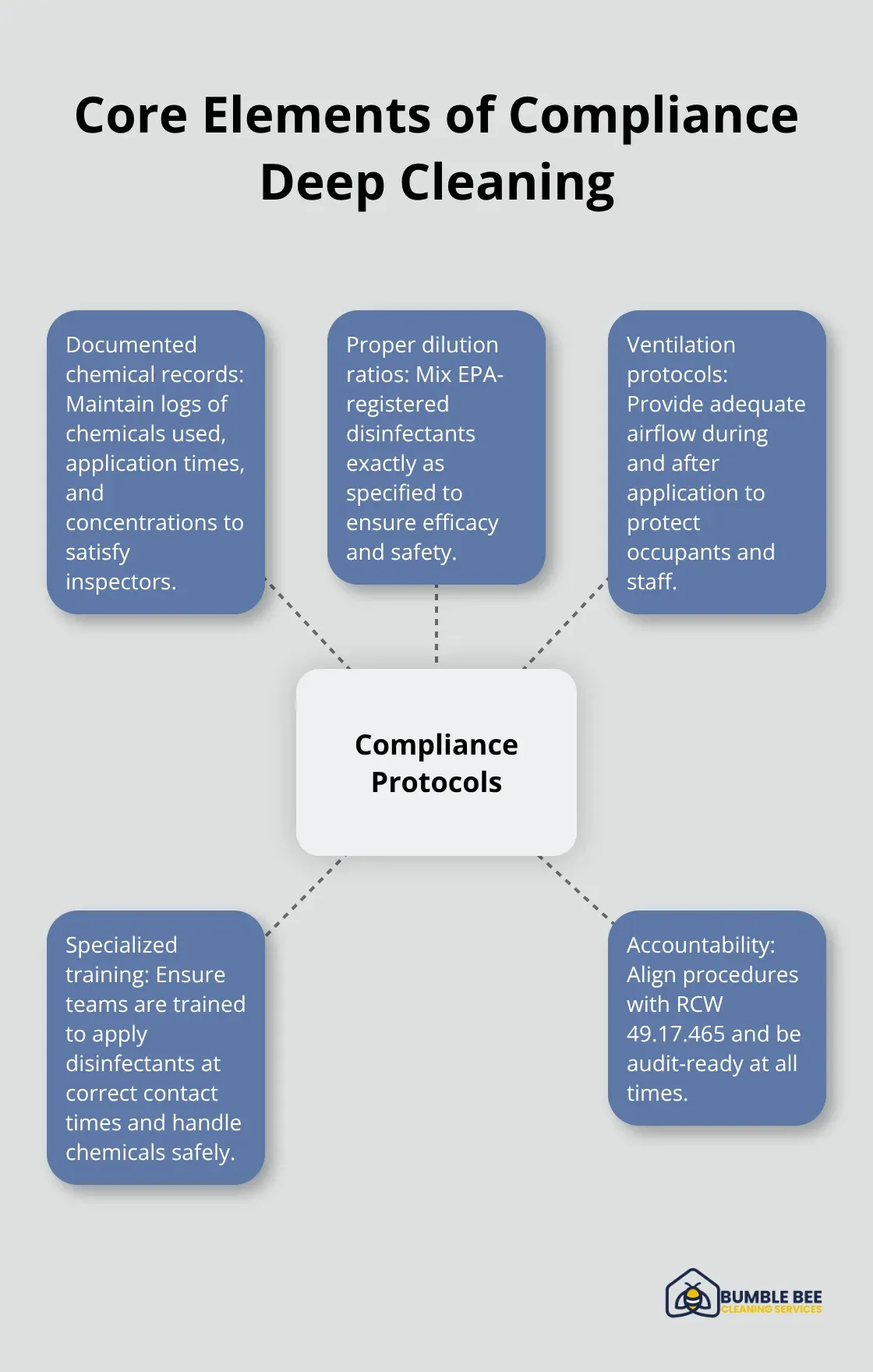
Compliance deep cleaning reaches areas that daily maintenance cannot touch. Standard cleaning handles floors, desks, and visible surfaces, but compliance protocols address HVAC components, behind equipment, under furniture, and inside vents where contamination accumulates. Certified cleaners apply EPA-registered disinfectants at the correct contact times and concentrations-details that matter for actual pathogen elimination. Documentation becomes part of the process too; your cleaning partner must maintain detailed records of chemicals used, application times, and concentrations to satisfy Washington State requirements. This level of accountability separates compliance cleaning from routine maintenance and protects your office during unannounced inspections.
The difference between passing an inspection and facing violations often comes down to whether your office has a documented, professional deep cleaning protocol in place. Understanding these standards sets the foundation for choosing the right cleaning partner and establishing a compliance schedule that actually works.
Compliance Deep Cleaning vs. Standard Cleaning
Daily maintenance and compliance deep cleaning operate on completely different scopes and timelines, and confusing the two will cost your Seattle office money, health risks, and potential regulatory violations. Daily maintenance handles visible surfaces, floors, and desks-work that keeps an office looking presentable but leaves contamination untouched in the areas where bacteria actually thrive. Compliance deep cleaning reaches behind equipment, inside HVAC systems, under furniture, and into baseboards where dust, allergens, and pathogens accumulate over weeks and months. The CDC identifies high-touch surfaces like door handles, light switches, keyboards, and phones as critical vectors for disease transmission, yet standard cleaning rarely addresses these with the proper contact times required for EPA-registered disinfectants to actually kill pathogens. Washington State mandates documented chemical records, proper dilution ratios, and ventilation protocols under RCW 49.17.465, requirements that demand specialized training and accountability. Most Seattle offices discover this gap only after an unannounced OSHA inspection reveals violations, at which point the $70,000 per violation penalty suddenly makes professional compliance cleaning look like a bargain.
How Often Your Office Needs Compliance Deep Cleaning
The frequency question matters more than most office managers understand. High-traffic commercial spaces with frequent occupancy changes or public interaction need compliance deep cleaning quarterly at minimum, while standard daily cleaning handles routine surface maintenance. If your office experiences illness outbreaks, pest activity, or has HVAC systems showing dust accumulation, deep cleaning becomes immediate rather than scheduled. Offices in buildings with shared HVAC systems, multiple tenants, or healthcare-adjacent work need deeper protocols than isolated spaces. Post-construction cleaning, move-out situations, and facility transitions absolutely require compliance-level deep cleaning to meet health and safety standards before occupancy.
What Compliance Deep Cleaning Actually Covers
Compliance deep cleaning targets areas that daily maintenance cannot reach. Standard cleaning handles floors, desks, and visible surfaces, but compliance protocols address HVAC components, behind equipment, under furniture, and inside vents where contamination accumulates. Certified cleaners apply EPA-registered disinfectants at the correct contact times and concentrations-details that matter for actual pathogen elimination. Documentation becomes part of the process too; your cleaning partner must maintain detailed records of chemicals used, application times, and concentrations to satisfy Washington State requirements. This level of accountability separates compliance cleaning from routine maintenance and protects your office during unannounced inspections.
The Hidden Costs of Skipping Compliance Cleaning
Offices that avoid professional compliance deep cleaning face hidden costs that dwarf the cleaning investment. Employee absenteeism increases measurably when indoor air quality suffers from dust-clogged HVAC systems and contaminated surfaces. Extended equipment lifespan protection matters too-dust buildup on computers, printers, and servers creates repair costs that compliance cleaning prevents entirely. The real financial advantage comes from regulatory protection and liability reduction. An unannounced inspection finding violations creates immediate abatement deadlines, forced remediation work, and potential fines that transform a quarterly deep cleaning budget into a crisis expense. Seattle offices that maintain documented compliance cleaning schedules pass inspections cleanly and avoid the downstream costs of citations, employee illness, and reputational damage that spread through workplace culture quickly. The cost of compliance cleaning typically ranges from $2,000 to $5,000 for a standard 5,000-square-foot office, yet a single regulatory citation costs ten times that amount and damages employee trust permanently.
Why Your Cleaning Partner’s Credentials Matter
The difference between passing an inspection and facing violations often comes down to whether your office has a documented, professional deep cleaning protocol in place. Your cleaning partner must follow rigorous protocols for proper ventilation, dilution precision, and surface contact times that standard cleaners often overlook. ARCSI certification ensures that cleaners follow proper ventilation, dilution ratios, cross-contamination prevention, EPA-registered disinfectants, and correct surface contact times. When you evaluate potential cleaning partners, verify their certifications and ask for documentation of their chemical handling practices and training records. The right partner transforms compliance from a regulatory burden into a competitive advantage that protects your employees and your bottom line.
With the right compliance deep cleaning protocol in place, your office moves from reactive crisis management to proactive risk prevention-and that shift determines whether your facility becomes a liability or an asset during regulatory scrutiny.
Common Compliance Issues in Seattle Offices
HVAC Contamination and Indoor Air Quality Failures
HVAC systems in Seattle offices accumulate dust and allergen buildup that standard daily cleaning never touches, and this contamination circulates directly into employee lungs throughout the workday. When air ducts and HVAC components remain uncleaned for months, dust layers restrict airflow, force HVAC systems to work harder, and push contaminated air into occupied spaces. Employees experience increased respiratory issues, allergies spike during high-pollen seasons, and sick days climb measurably. Routine cleaning schedules prevent germ buildup, yet most Seattle offices treat HVAC cleaning as optional rather than essential. Compliance deep cleaning removes dust from air ducts, vents, and equipment casings that daily maintenance completely ignores. Indoor air quality directly determines whether employees stay healthy or cycle through illness.
Bacterial Growth on High-Touch Surfaces
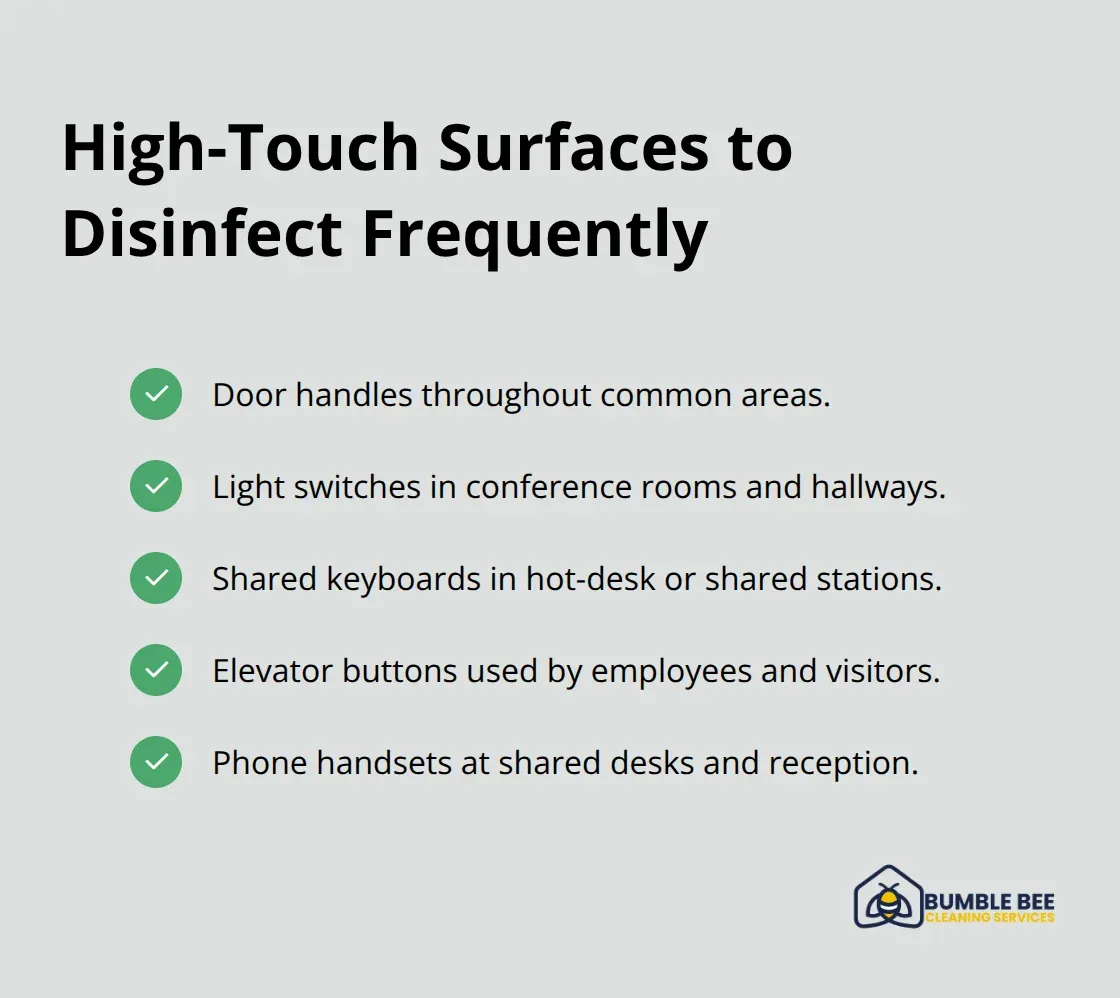
High-touch surfaces present a critical compliance gap because bacteria multiply fastest exactly where hands touch most frequently. Door handles, light switches, shared keyboards, elevator buttons, and phone handsets become bacterial reservoirs within hours of standard cleaning. Washington State mandates that EPA-registered disinfectants reach proper contact times (the specific duration required for a disinfectant to actually kill pathogens on a surface) under RCW 49.17.465, yet standard cleaners rarely apply disinfectants with the precision or documentation that compliance demands.
Compliance deep cleaning applies EPA-approved disinfectants at correct contact times with documented records proving adherence to Washington safety requirements. When illness outbreaks occur, offices without this documented protocol face immediate compliance violations and forced remediation that costs far more than preventive deep cleaning.
Pest Infestations from Sanitation Failures
Pest infestations develop silently in spaces where sanitation fails, and most Seattle offices discover pest problems only after employees report sightings or after an inspection reveals contamination. Food residues in break rooms and kitchens attract rodents and insects within days if cleaning protocols skip behind appliances, inside cabinets, or under sinks where crumbs accumulate. Compliance deep cleaning reaches these hidden sanitation zones and eliminates the food sources and moisture that pests require to establish infestations. Offices that maintain regular compliance deep cleaning schedules prevent pest problems entirely rather than facing costly extermination services and the reputational damage of employee complaints about rodents or insects in the workplace.
Why Certification Standards Protect Your Office
ARCSI-certified cleaners follow protocols that prevent cross-contamination, maintain proper ventilation during chemical application, and use dilution ratios that actually eliminate pathogens without creating chemical hazards for employees. The investment in compliance deep cleaning protects your office from the convergence of health risks, regulatory violations, employee illness, and pest-related shutdowns that transform a negligible cleaning budget into a crisis expense.
Final Thoughts
Compliance deep cleaning protects your Seattle office from regulatory violations, employee illness, and the hidden costs of contamination that standard cleaning cannot address. A quarterly deep cleaning investment of $2,000 to $5,000 prevents $70,000 regulatory penalties, reduces absenteeism, extends equipment lifespan, and demonstrates to employees that their health matters. Offices that maintain documented compliance protocols pass unannounced inspections cleanly and avoid the crisis expenses and reputational damage that citations create.
Selecting the right cleaning partner determines whether commercial hygiene standards become a burden or a competitive advantage. Look for ARCSI certification, which guarantees that cleaners follow proper ventilation, dilution ratios, cross-contamination prevention, and documented surface contact times required by Washington State law. Ask potential partners for proof of their chemical handling practices, training records, and experience with compliance deep cleaning in commercial spaces, and verify that they maintain detailed records of chemicals used, application times, and concentrations to satisfy regulatory requirements during inspections.
We at Bumble Bee Cleaning Services bring 20+ years of Seattle experience and ARCSI certification to every commercial cleaning project, ensuring your office meets compliance standards while protecting employee health. Contact us at 425-786-1360 or visit Bumble Bee Cleaning Services to schedule a compliance deep cleaning assessment and move your office from reactive crisis management to proactive risk prevention.
For more information about our cleaning services in Seattle and Atlanta, or to request a cleaning quote, call or text us at 425-786-1360 or email us at info@qbclean.com
