
Pet owners in Seattle face a hidden problem that regular cleaning can’t solve. Pet hair, dander, and bacteria accumulate deep in carpets and upholstery, creating allergen control challenges that affect your family’s health.
Surface-level vacuuming misses the real issue. We at Bumble Bee Cleaning Services know that professional deep cleaning reaches where standard methods fall short, protecting both your home and your loved ones.
Where Pet Hair Really Hides in Your Home
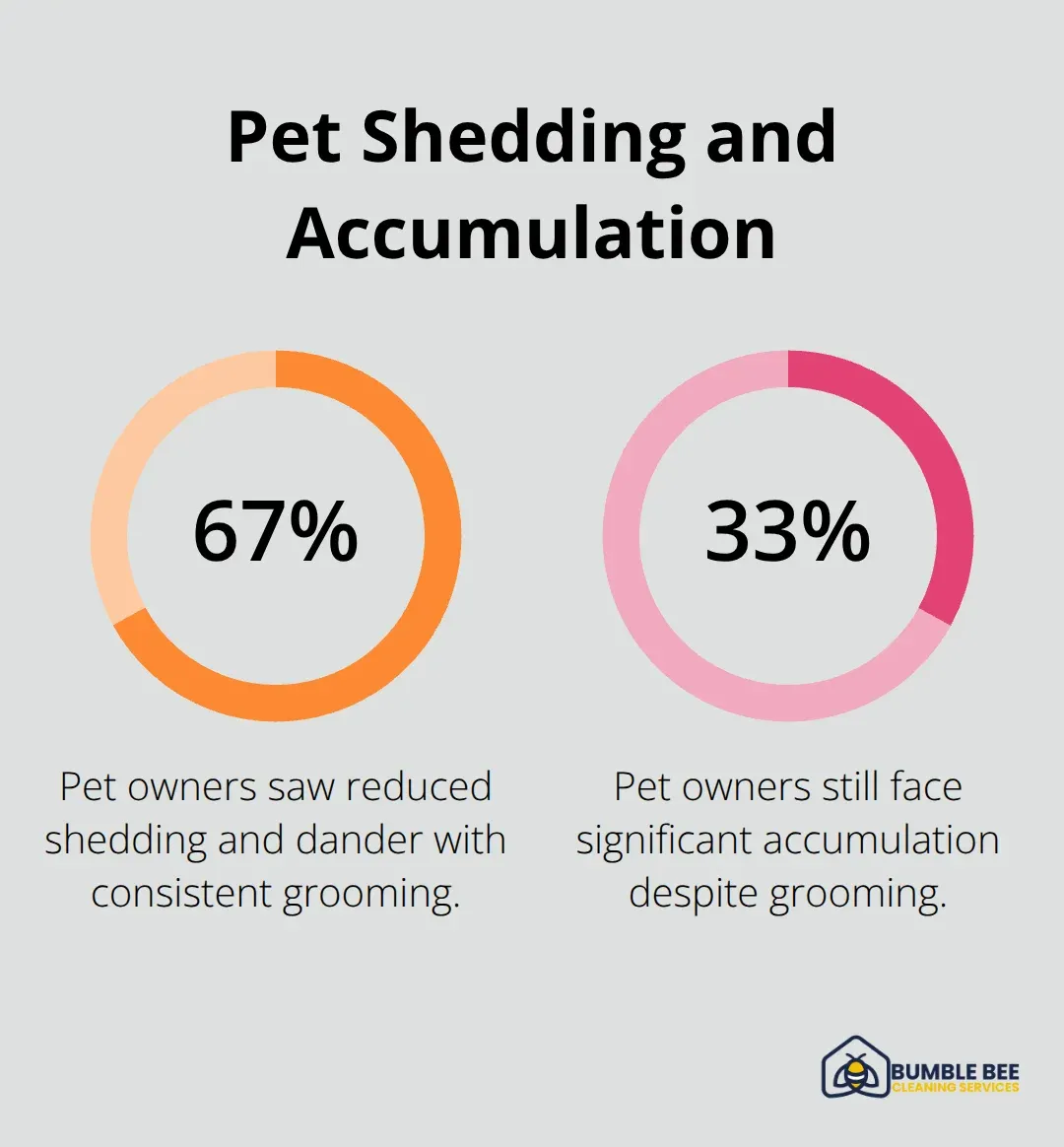
Pet hair doesn’t just sit on carpet surfaces where your vacuum can reach it. The American Pet Products Association reports that 67% of pet owners saw reduced shedding and dander with consistent grooming, which means the remaining 33% deal with significant accumulation. That hair works its way deep into carpet fibers, embedding itself below the pile where standard vacuuming misses it entirely. Upholstery absorbs pet hair even faster because fabric textures trap strands immediately upon contact.
Within weeks of pet ownership, microscopic dander particles settle into cushions, under furniture, and inside air vents.
How Deep Carpet Fibers Trap Pet Allergens
A vacuum with HEPA filtration removes up to 99.97% of particles as small as 0.3 microns, but only from surfaces it actually touches. The spaces behind baseboards, under radiators, and inside ductwork remain untouched by weekly cleaning routines. In Seattle’s humid climate, this trapped hair and dander create the perfect environment for dust mites to multiply, since they thrive in warm, damp conditions. Professional carpet cleaning every six to twelve months reaches depths that household vacuums cannot, extracting embedded allergens and hair that regular maintenance leaves behind.
Why Your Weekly Vacuum Falls Short
Vacuuming twice weekly is standard advice, yet pet-heavy homes still experience persistent allergen problems. The issue isn’t frequency but depth. A typical household vacuum, even quality models, only penetrates approximately one-third to one-half of carpet pile depth.
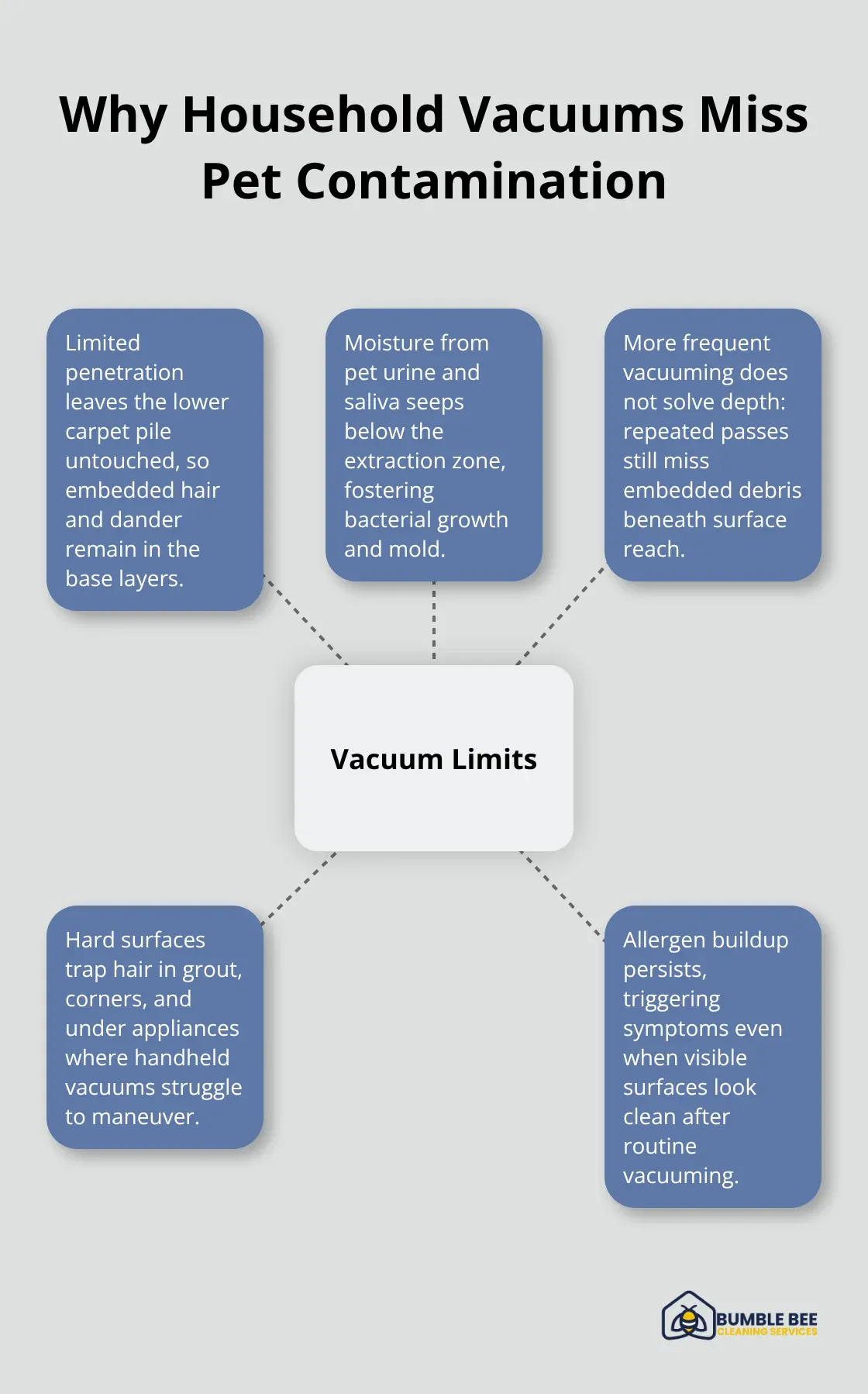
Pet urine and saliva seep below this extraction zone, creating moisture that promotes bacterial growth and mold. Hard-surface floors present a different challenge: pet hair accumulates in grout lines, corners, and under appliances where handheld vacuums cannot maneuver effectively.
What Surface Cleaning Leaves Behind
Enzymatic cleaners address odor at the source by breaking down the compounds responsible for smell, but they cannot replace the mechanical action required to remove embedded solids. Deep cleaning with professional-grade equipment applies hot water extraction and powerful suction that lifts debris from carpet backing and subfloor areas. This process eliminates both visible and hidden contamination that surface cleaning ignores entirely, preparing your home for the health risks that accumulate when pet environments remain inadequately treated.
What Health Risks Hide in Pet-Filled Homes
Pet environments create health hazards that go far beyond unpleasant smells. Pet hair and dander accumulate deep in carpets and upholstery, where they don’t simply sit waiting for your next vacuum session. Household pets contribute saliva and animal dander along with pollen and other contaminants that become airborne and affect indoor air quality throughout your Seattle home. Dust mites thrive in the warm, damp conditions created by pet accidents and Seattle’s naturally humid climate, multiplying rapidly in carpet fibers and upholstery where they feed on accumulated dander. Children, elderly family members, and anyone with existing respiratory conditions face heightened vulnerability to these airborne particles. The EPA notes that biological contaminants trigger allergic reactions including hypersensitivity pneumonitis, allergic rhinitis, and asthma, with symptoms ranging from sneezing and watery eyes to shortness of breath and lethargy. Pet urine protein acts as a potent allergen when dried and dispersed throughout your home, and repeated exposure causes immediate allergic reactions in sensitive individuals.
Mold and Bacteria Thrive Where Pets Leave Moisture
Pet accidents introduce moisture that creates ideal breeding grounds for mold, mildew, bacteria, and insects, particularly in Seattle’s wet climate. Standing water, water-damaged materials, or consistently wet surfaces beneath carpets allow these biological contaminants to multiply unchecked, spreading through your home’s air systems and settling on surfaces your family touches daily. Contaminated HVAC systems become particularly problematic because they distribute mold spores and bacteria throughout every room, exposing everyone to microorganisms that cause respiratory illness and allergic reactions. Deep cleaning addresses moisture at the source through extraction that removes water trapped in carpet backing and subfloors, preventing the conditions that allow mold remediation to become necessary later. Keep indoor humidity below 60% to minimize biological contaminant growth, yet pet households often exceed this range due to accidents and inadequate ventilation. Surface-level cleaning cannot remove moisture or the organisms already established in your carpet foundation.
Why Odors Return After Surface Treatment
Persistent pet odors indicate that surface cleaning has addressed only the smell’s surface layer, leaving the source intact beneath carpet fibers and inside subflooring. Enzymatic cleaners break down odor-causing compounds effectively but cannot replace the mechanical extraction required to remove the saturated materials where odors originate. Hard-to-reach areas including corners, baseboards, under appliances, and inside air vents accumulate pet bacteria that standard cleaning methods never contact. These hidden contamination zones continue releasing odors days or weeks after surface cleaning, frustrating pet owners who wonder why their efforts failed. Professional deep cleaning with hot water extraction and powerful suction removes embedded bacteria, urine salts, and organic matter from depths that household equipment cannot reach, addressing odors at their actual source rather than masking them temporarily.
The Hidden Cost of Ignoring Pet Contamination
Airborne pathogens including influenza, measles, and chickenpox transmit through the air in homes where pet-related moisture and contamination compromise indoor air quality. Molds and mildews release disease-causing toxins that affect health, and these organisms establish themselves in carpet backing and HVAC systems where routine cleaning never reaches them. Dizziness, fever, and digestive problems develop in family members exposed to these biological contaminants over time, particularly when moisture remains trapped beneath carpet surfaces. The longer pet contamination sits untreated, the more extensive the biological growth becomes, eventually requiring specialized remediation rather than standard deep cleaning. Understanding these health risks explains why professional deep cleaning becomes not just a comfort measure but a health necessity for pet-owning households in Seattle’s humid environment.
How Professional Deep Cleaning Removes Pet Contamination
Professional carpet cleaning reaches depths that household equipment simply cannot achieve. Hot water extraction, the industry standard recognized by the IICRC S100 standard for textile floor coverings, forces heated water deep into carpet fibers and backing while simultaneously extracting debris, bacteria, and allergens with powerful suction. This process removes embedded pet hair, dander, urine salts, and the moisture that allows mold and dust mites to flourish. A typical household vacuum penetrates only one-third to one-half of carpet pile depth, leaving the lower two-thirds contaminated and potentially wet. Professional extraction equipment reaches the carpet backing and subfloor, removing moisture that traps odors and supports biological growth. For upholstery, professional cleaning applies similar extraction methods specifically designed for fabric care, lifting pet hair and allergens from cushions, seams, and crevices where household spot-cleaning never reaches. The IICRC S300 standard guides upholstery cleaning for pet-laden furniture, ensuring that saliva, dander, and trapped moisture get addressed at the source. Deep cleaning every six to twelve months prevents the accumulation that makes odors return within weeks of surface treatment.
HVAC System Cleaning Stops Airborne Allergen Spread
Contaminated HVAC systems distribute pet allergens throughout your entire home with every heating and cooling cycle, making duct cleaning essential in pet-owning households. The EPA recommends cleaning or replacing furnace filters every three to six months, yet pet homes often require more frequent maintenance because dander and hair clog filters faster. Professional duct cleaning removes accumulated pet hair, dander, dust mites, and mold spores from your central air system, preventing these contaminants from circulating through every room. The IICRC S590 standard guides HVAC system assessment and cleaning following water damage or mold events, applying rigorous procedures that address the moisture conditions pets create. Hard-to-reach areas inside ducts, return vents, and behind baseboards accumulate pet bacteria that standard household cleaning never touches.
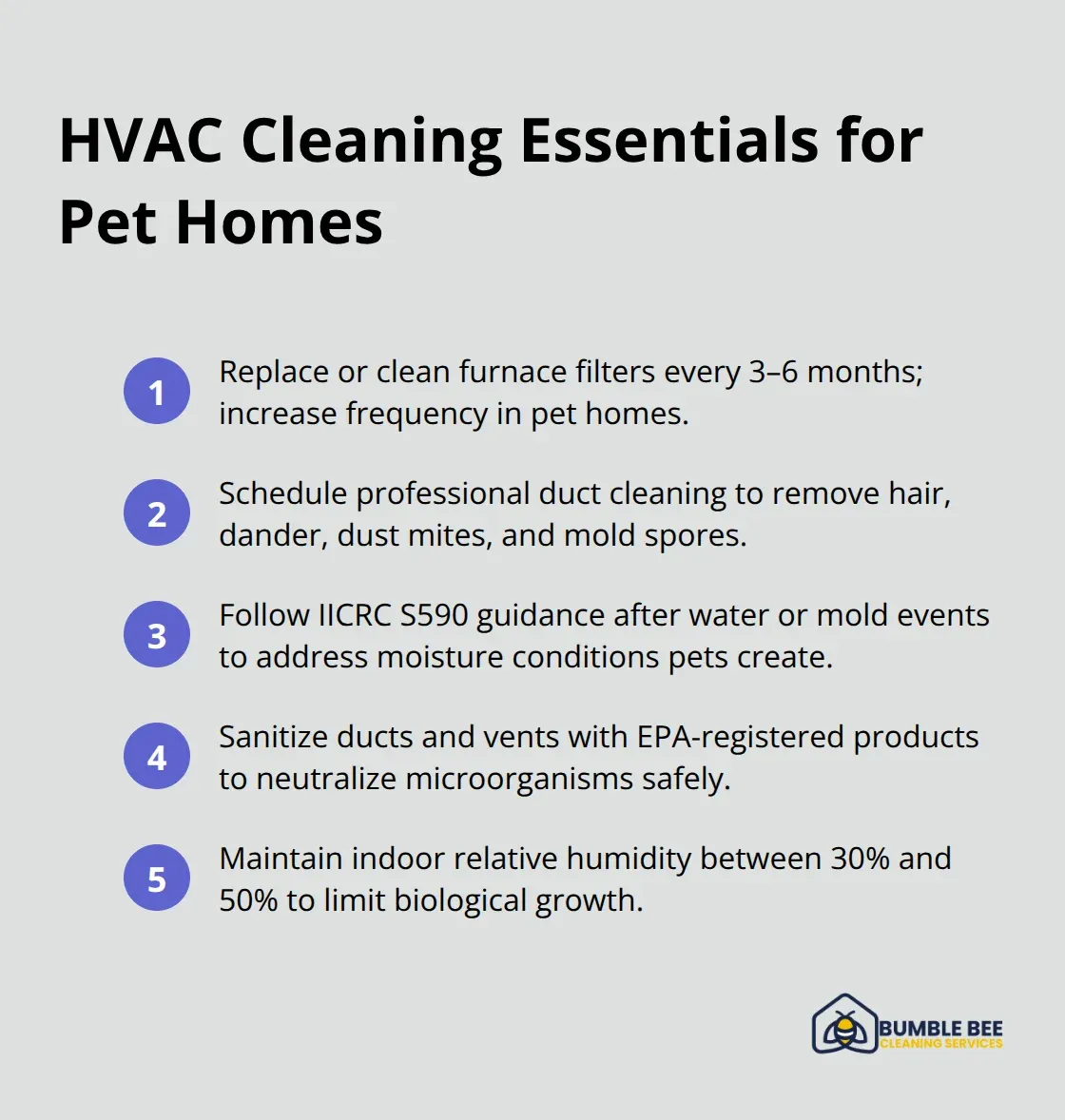
Professional sanitization using EPA-registered products kills bacteria and microorganisms without toxic residue, protecting both your family and pets from airborne pathogens. Keeping indoor relative humidity between 30 and 50 percent (as recommended by the EPA) becomes significantly easier after professional duct cleaning removes the moisture that pet accidents introduce into your HVAC system.
Sanitizing Hidden Contamination Zones
Corners, baseboards, under appliances, and inside closets become bacterial breeding grounds in pet homes because these areas escape routine vacuuming and spot-cleaning. Pet urine seeps into grout lines, wood subfloors, and material crevices where enzymatic cleaners cannot penetrate deeply enough to eliminate the source. Professional deep cleaning sanitizes these hard-to-reach zones using equipment and products specifically formulated to remove pet-related biological contaminants. The IICRC S410 standard addresses cleaning for infection prevention and control, providing professional guidelines for reducing microbial risks in homes where pets introduce bacteria through accidents and shedding. Standard household cleaning misses the areas where contamination actually accumulates, leaving your family exposed to ongoing allergen loads and odor sources. Professional teams move furniture, access areas beneath appliances, and sanitize spaces that typical cleaning routines ignore entirely. This comprehensive approach addresses not just visible pet messes but the hidden contamination that causes health problems and persistent odors long after surface cleaning fails.
Final Thoughts
DIY pet cleaning fails because household equipment lacks the power and reach required to address contamination at the depths where it actually accumulates. A standard upright vacuum or carpet cleaner cannot extract moisture from carpet backing or subfloors, leaving the conditions that allow mold and bacteria to multiply. Professional-grade hot water extraction equipment applies pressure and suction that household models simply cannot match, removing embedded pet hair, dander, urine salts, and trapped moisture in a single pass while delivering the allergen control your family needs.
Professional deep cleaning prevents the expensive problems that develop when pet contamination goes untreated. Mold remediation costs thousands of dollars and requires specialized IICRC S520 certified procedures, while preventative deep cleaning every six to twelve months costs a fraction of that price. Pet urine that seeps into subfloors and wood structures causes permanent damage requiring replacement, yet professional extraction removes moisture before it penetrates these materials.
We at Bumble Bee Cleaning Services handle pet-related challenges with IICRC and ARCSI certification, meaning our team follows industry standards that guarantee thorough contamination removal. Our deep cleaning services use eco-friendly products safe for pets and families while delivering the extraction power that addresses pet contamination at depths household equipment cannot reach. We move furniture, sanitize hidden zones, and apply professional-grade equipment to remove the embedded hair, dander, bacteria, and moisture that cause persistent odors and health problems.
For more information about our cleaning services in Seattle and Atlanta, or to request a cleaning quote, call or text us at 425-786-1360 or email us at info@qbclean.com
