
Persistent odors in Seattle commercial spaces don’t just smell bad-they signal to clients and employees that your business isn’t properly maintained. Standard cleaning masks these problems temporarily, but the smell returns because the root cause remains untouched.
An enzymatic deodorizer works at the bacterial level, actually eliminating odor sources rather than covering them up. We at Bumble Bee Cleaning Services have found this approach transforms how Seattle offices feel and function.
Why Commercial Spaces Develop Odor Problems
Common Sources of Persistent Odors in Office Buildings
Kitchens and break rooms create the primary odor problems in Seattle commercial spaces. Coffee residue, spoiled food in refrigerators, and grease buildup on stovetops produce persistent smells that standard surface cleaning never addresses. Restrooms present an equally serious challenge, especially in high-traffic facilities. Urine and fecal matter seep into grout, tile joints, and subfloor materials where mops and disinfectants cannot reach. Carpeted areas absorb moisture and organic matter, becoming breeding grounds for odor-causing bacteria that multiply continuously.
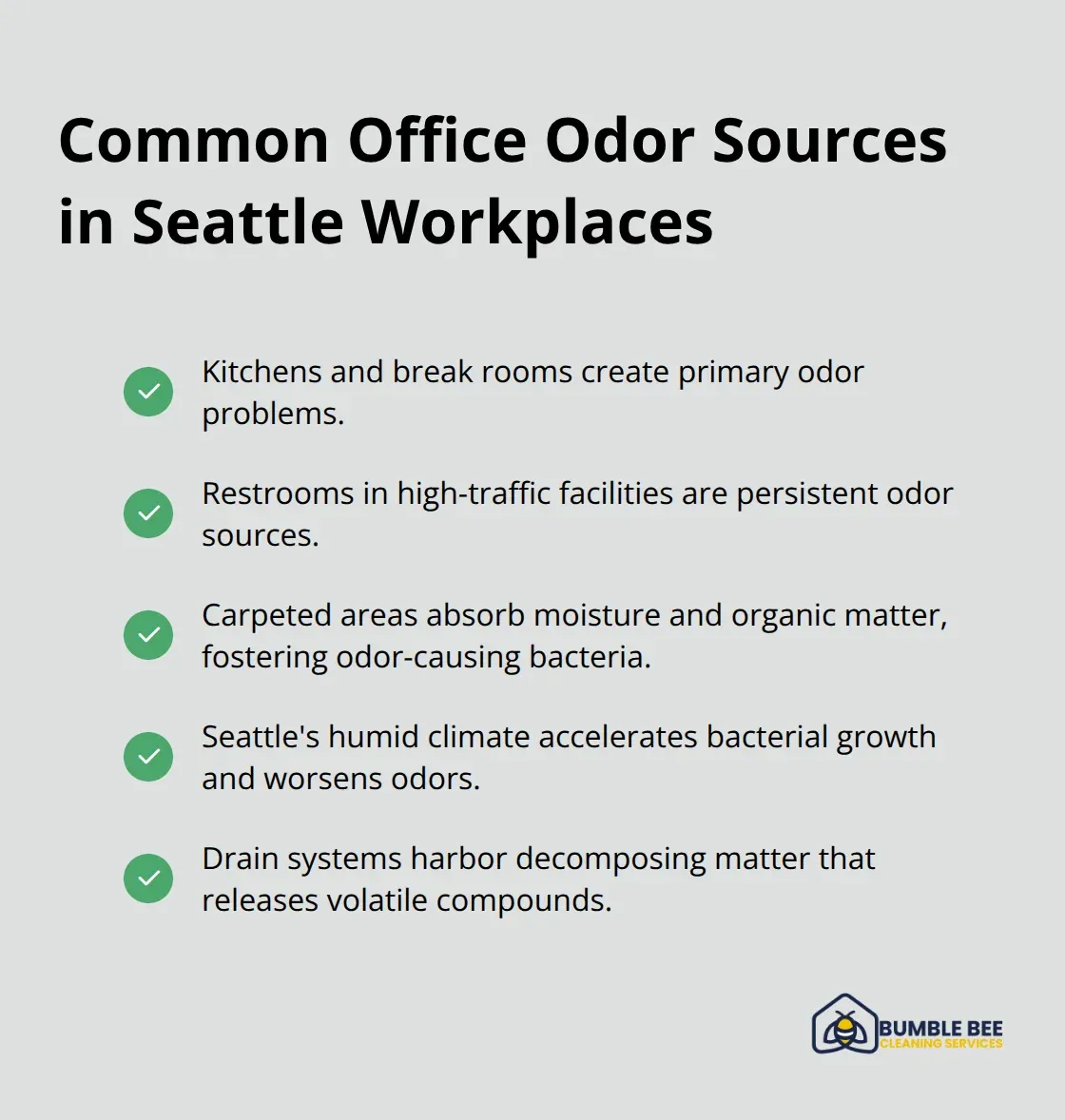
In Seattle’s humid climate, moisture accelerates bacterial growth, making odor problems worse than in drier regions. Drain systems also harbor decomposing matter, with hydrogen sulfide and other volatile compounds rising through pipes into occupied spaces.
Why Standard Cleaning Falls Short
Standard cleaning methods fail because they address only surface symptoms. A typical office cleaning routine wipes down visible surfaces, vacuums carpets, and sprays air freshener, but this approach leaves odor sources intact. Bacteria responsible for smells continue multiplying beneath surfaces where conventional cleaning cannot penetrate. Disinfectants kill some microbes but do not eliminate the organic compounds that produce odors, so the smell returns within hours. Biological breakdown of organic compounds causing odors requires specialized treatment, not chemical masking.
Impact of Odors on Employee Productivity and Client Perception
Employee productivity suffers measurably when odor problems persist. Poor indoor air quality and unpleasant odors increase sick leave requests, reduce focus, and lower morale among staff. Clients notice these problems immediately and form negative impressions about your business standards and professionalism. A stale or unpleasant-smelling office signals poor maintenance, regardless of how clean surfaces appear. For Seattle businesses competing for talent and client trust, odor problems directly damage your reputation and bottom line. This reality makes understanding how enzymatic deodorizers work-and why they succeed where standard methods fail-essential for any commercial property manager.
How Enzymatic Deodorizers Actually Eliminate Odors
The Science Behind Enzymatic Breakdown
Enzymatic deodorizers work through a fundamentally different mechanism than anything you’ve tried before. Instead of masking odors with fragrance, they deploy live bacteria and specialized enzymes that chemically break down the organic compounds causing smells. Protease enzymes attack protein-based odors from urine and fecal matter. Lipase enzymes dissolve grease and fat deposits in kitchen drains and stovetops. Amylase targets carbohydrate residues from food spills.
This targeted approach means the odor source actually disappears rather than getting buried under artificial scent. Hillyard’s Liquid Enzyme II contains active bacteria, providing the microbial workforce needed to handle serious odor problems in commercial spaces. These bacteria remain active as long as moisture and organic matter are present, creating continuous cleaning action that lasts far longer than traditional treatments.
Why Seattle’s Humidity Amplifies Enzymatic Effectiveness
In Seattle’s humid environment, this persistent biological activity becomes a major advantage because moisture that normally accelerates odor problems instead fuels the enzymatic treatment. The constant dampness that plagues Pacific Northwest commercial spaces actually activates and sustains the bacterial colonies working to eliminate odors. Standard treatments fail under these conditions, but enzymatic solutions thrive when humidity remains high.
Enzymatic Treatment Versus Masking Products
The critical difference between enzymatic deodorizers and masking products shows up immediately in results. Air fresheners and fragrance sprays temporarily cover odors but never address what causes them, which is why smells return within hours. Enzymatic treatments destroy bacterial populations and organic compounds at their source, eliminating odors permanently until new contamination occurs.
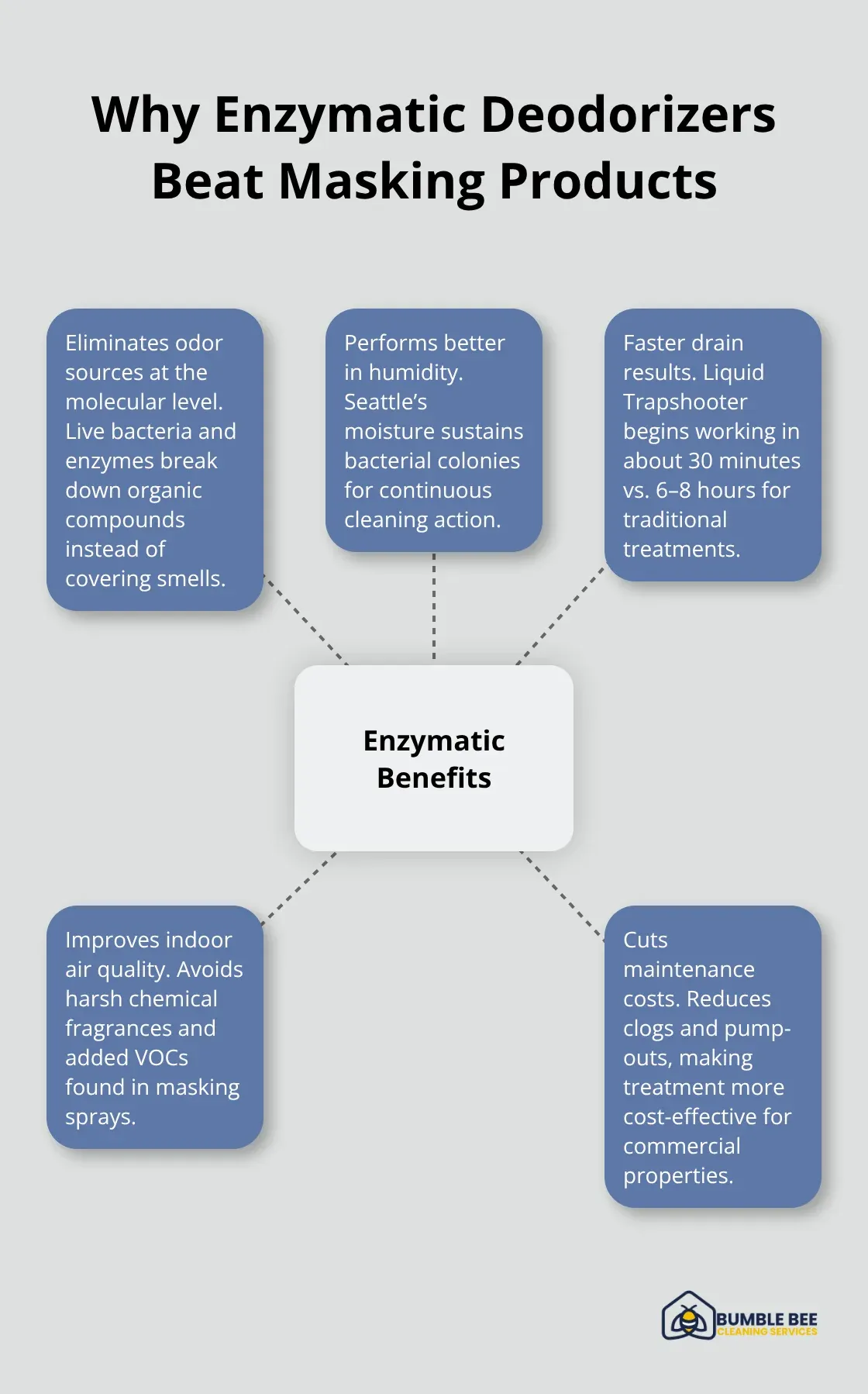
For drain systems specifically, Liquid Trapshooter begins breaking down grease buildup in approximately 30 minutes, compared to traditional drain treatments requiring 6 to 8 hours. Daily use reduces odor, prevents clogs, and decreases the frequency of expensive pump-outs, making enzymatic drain treatment both more effective and more cost-effective for Seattle commercial properties.
Real Results in Problem Areas
Odor Control Take Down uses bacteria and enzymes to target odors in restrooms, carpets, garbage containers, and other problem areas without relying on harsh chemicals. Your space smells genuinely fresh rather than chemically masked. The enzyme-based approach also means you’re not introducing volatile organic compounds into your indoor air, which improves the actual air quality your employees breathe rather than trading one problem for another.
These biological solutions work where conventional methods fail because they address root causes instead of symptoms. Understanding how enzymatic treatments function sets the stage for the practical question every Seattle business owner asks next: how do you actually implement this approach in your facility?
Implementing Enzymatic Treatment in Your Seattle Business
Assessment Identifies Your Specific Odor Sources
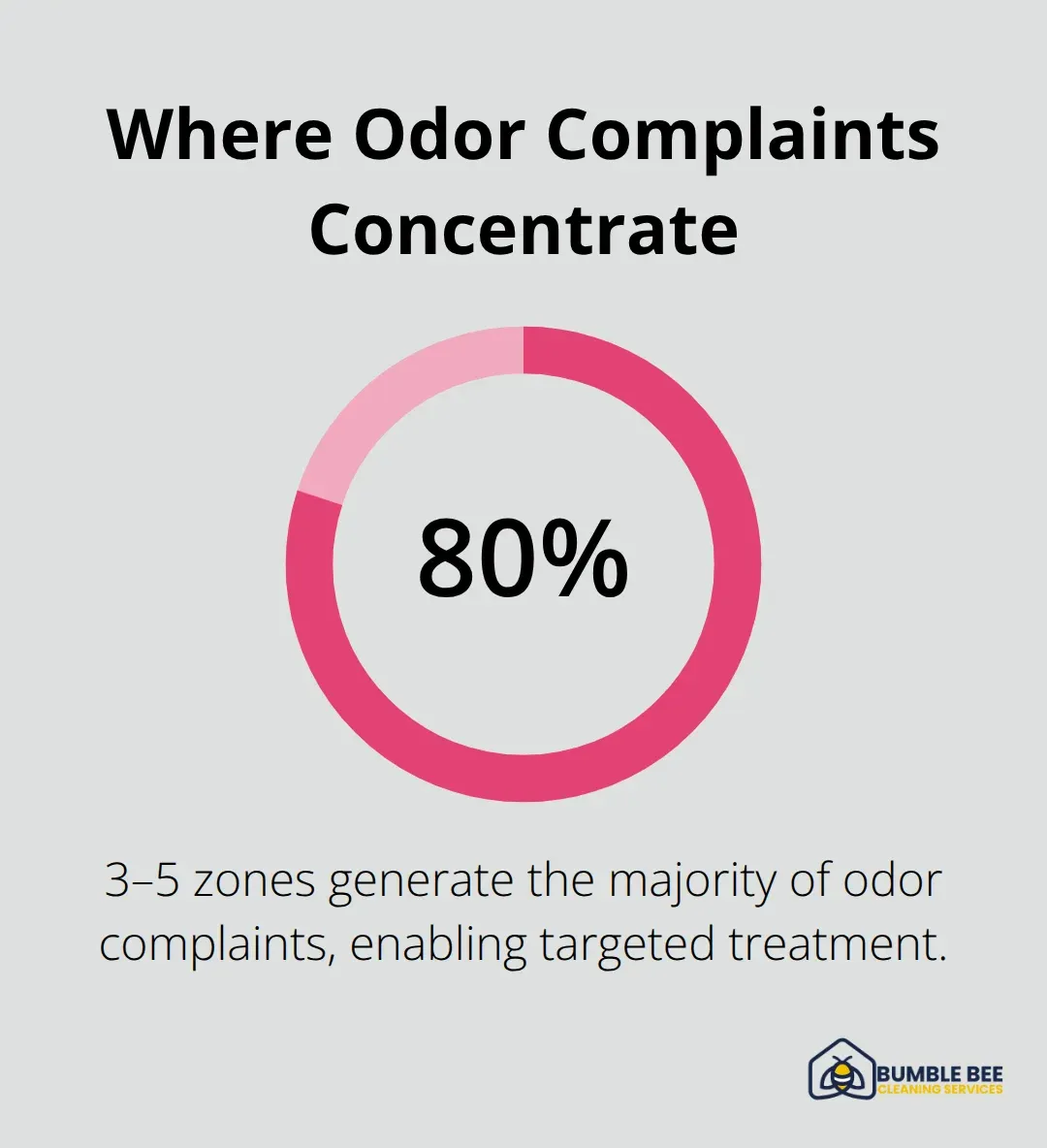
Professional assessment reveals which areas generate the strongest odors and what enzyme types will work best for each location. Different problem zones demand different solutions-a kitchen drain system responds to lipase-based treatments like Liquid Trapshooter, while restroom odors require protease enzymes targeting urine compounds. Carpeted spaces in Seattle’s humid climate need different application methods than hard flooring. The assessment maps moisture patterns throughout your building and evaluates whether existing ventilation systems actually remove odors or simply circulate them. This diagnostic step prevents wasting money on areas that don’t need treatment or applying the wrong enzyme type to a problem. Most facilities discover that three to five specific zones account for 80 percent of their odor complaints, allowing targeted treatment that costs far less than facility-wide application.
Treatment Frequency Sustains Long-Term Results
Enzymatic treatments work continuously in bacterial growth in humid environments, but they require regular reapplication because bacteria consume the organic matter causing odors and then need new substrate to remain active. Kitchen drains benefit from weekly Liquid Trapshooter applications, which begin breaking down grease buildup in approximately 30 minutes compared to traditional treatments requiring 6 to 8 hours. Restroom carpets and tile joints typically need monthly enzymatic treatment during Seattle’s rainy season when moisture accelerates bacterial growth. High-traffic areas like break rooms may need quarterly applications depending on usage patterns. The frequency schedule prevents odors from returning rather than constantly fighting a losing battle with masking products. Facilities that skip maintenance eventually revert to their original odor problems, negating the initial investment entirely.
Cost Savings Compound Across Multiple Areas
The cost-benefit analysis favors enzymatic treatment decisively when you factor in what standard approaches actually cost your business. A typical office using weekly air freshener sprays, monthly professional disinfectant treatments, and annual deep cleaning spends approximately $1,200 to $2,000 annually while odors still persist. Enzymatic treatment costs between $800 and $1,500 per year depending on facility size and problem severity, but eliminates the need for supplemental masking products and reduces professional cleaning frequency. Reduced sick leave from poor air quality and eliminated client complaints about odor problems generate quantifiable productivity gains. Facilities that implement enzymatic treatment report improved employee retention and fewer negative client comments. The treatment prevents expensive drain pump-outs (potentially saving $500 to $1,000 annually) by stopping grease accumulation before clogs form, making enzymatic drain treatment both more effective and more economical for Seattle commercial properties.
Final Thoughts
Enzymatic deodorizer treatment represents a fundamental shift in how Seattle commercial spaces handle persistent odor problems. Unlike temporary masking solutions that fade within hours, enzymatic treatments eliminate odors at their source by deploying live bacteria and specialized enzymes that break down the organic compounds causing smells. This approach delivers lasting results because the biological activity continues working as long as moisture and organic matter remain present, which makes it especially effective in Seattle’s humid climate where standard methods consistently fail.
The financial case for enzymatic treatment strengthens when you calculate the true cost of doing nothing. Facilities spending $1,200 to $2,000 annually on air fresheners, frequent disinfectant applications, and supplemental cleaning still battle persistent odors while employees suffer reduced productivity and clients form negative impressions. Enzymatic treatment costs less while actually solving the problem rather than masking it temporarily, and the savings extend beyond product costs into reduced sick leave, fewer drain pump-outs, and improved client retention.
Maintaining a fresh environment year-round requires consistent application schedules tailored to your specific problem areas. Kitchen drains need weekly treatment, restrooms typically require monthly applications during rainy seasons, and high-traffic spaces benefit from quarterly maintenance. Contact Bumble Bee Cleaning Services to assess your facility’s specific odor sources and develop a treatment plan that eliminates problems permanently rather than temporarily covering them up.
For more information about our cleaning services in Seattle and Atlanta, or to request a cleaning quote, call or text us at 425-786-1360 or email us at info@qbclean.com
