
Construction sites leave behind more than just finished buildings. Concrete dust, paint splatters, and metal shavings coat every surface, creating health hazards and an unprofessional appearance.
Pressure washing removes this stubborn debris quickly and effectively. At Bumble Bee Cleaning Services, we’ve seen how proper post-construction cleaning transforms spaces and protects occupants from respiratory risks and slip hazards.
What Construction Debris Actually Stays Behind
Seattle construction projects leave behind three main categories of debris that most property owners underestimate. Concrete dust settles on every surface-floors, trim, fixtures, and even inside HVAC systems. Permissible Exposure Limit standards show that dust hazards from concrete work are quantifiable and serious. Paint splatters harden on windows, trim, and flooring, while adhesive residue bonds to concrete and wood surfaces. Metal shavings from framing and fastening embed themselves into crevices where standard vacuums cannot reach. Drywall dust produces fine particulates that irritate eyes and respiratory systems, and older Seattle homes may contain asbestos in drywall materials, requiring professional handling per Washington State Department of Labor & Industries guidelines.
Why Standard Cleaning Falls Short
Damp-wiping and regular vacuums remove surface debris but miss the stubborn residue that pressure washing targets. Microfiber cloths capture up to 99% of dust when used correctly, but they cannot dislodge paint overspray or concrete haze fused to surfaces. HEPA-filtered vacuums capture 99.97% of particles as small as 0.3 microns, yet they still leave behind adhesive films and cement splatter that require chemical breakdown or mechanical force. Pressure washing dislodges these remnants through controlled water pressure, which removes dirt, grime, cement residue, and mold from concrete, wood, metal, and brick surfaces without damaging finishes when the correct nozzle and pressure level are applied.
Seattle’s Moisture Compounds the Problem
Seattle’s rainy, humid environment compounds the problem significantly. Moisture trapped in construction dust creates mold growth risk if surfaces remain dirty. Thorough post-construction cleaning prevents mold from establishing on cleaned surfaces, which is especially important in Seattle’s damp climate. Paint overspray responds well to warm water with dish soap and plastic scrapers for initial removal, but pressure washing finishes the job completely. Grout haze on ceramic tiles dissolves with vinegar solutions, yet pressure washing removes residual particles that vinegar leaves behind. The combination of Seattle’s moisture and construction residue means incomplete cleaning leads to visible staining and mold within weeks.
Why Pressure Washing Becomes Necessary
Pressure washing removes this stubborn debris quickly and effectively-far faster than manual methods alone. The equipment uses controlled water pressure to penetrate crevices and break apart fused residue that standard tools cannot reach. Different spray patterns and pressures enable safe cleaning of diverse materials without surface damage when professionals apply the right technique. This mechanical force accomplishes what chemical cleaners and microfiber cloths cannot, making pressure washing the most practical solution for post-construction sites in Seattle’s challenging climate. Property owners who skip this step face long-term surface degradation, mold establishment, and health risks that cost far more to address later.
Health and Safety Risks From Incomplete Post-Construction Cleanup
Respiratory Hazards From Construction Dust
Construction dust contains silica, wood particles, drywall fragments, and paint residues-each with distinct respiratory dangers. A MSHA study covering 2000 to 2019 found that 11.8% of respirable dust samples from construction sites exceeded the Permissible Exposure Limit, proving that construction dust poses a serious health hazard. Wood dust carries classification as group 1 carcinogenic to humans by IARC, linked to nasal cancer and respiratory problems in carpentry-heavy Seattle renovations.
The number 100% seems to be not appropriate for this chart. Please use a different chart type. Drywall dust irritates eyes, skin, and the respiratory system immediately, while paint particles release volatile organic compounds that cause headaches, nausea, and long-term organ damage. Homes built before 1978 face additional risk from lead-based paint dust, which causes neurological damage according to Washington state health guidance.
Where Standard Cleaning Fails
These particles settle deep in HVAC systems, crevices, and flooring where standard vacuums and wiping cannot reach them. Incomplete cleanup leaves occupants breathing contaminated air for months after construction ends. HEPA-filtered vacuums capture 99.97% of particles as small as 0.3 microns, yet they still miss embedded residue in tight spaces. Microfiber cloths capture up to 99% of dust when used correctly, but they cannot extract particles fused into surface crevices or trapped within building systems. Incorrect cleaning techniques can worsen air quality by redistributing harmful particles rather than removing them.
Physical Hazards and Slip Risks
Debris scattered across floors-concrete fragments, metal shavings, paint drips, and adhesive residue-creates slip and fall hazards that OSHA identifies as a primary construction-site injury risk. Moisture from Seattle’s rainy climate combines with construction residue to create slick surfaces that increase accident likelihood. Chemical residues from sealants, primers, and construction adhesives linger on surfaces and in dust, exposing workers and future occupants to skin irritation and inhalation risks that cleaning cloths and basic vacuums fail to eliminate.
Why Pressure Washing Removes What Manual Methods Cannot
Pressure washing removes these hazards completely through mechanical force that dislodges embedded particles from crevices, dissolves chemical films, and clears floors of slip-creating debris. Manual cleaning cannot match this effectiveness. Property owners who delay or avoid professional pressure washing accept ongoing health risks and liability exposure for anyone entering the space. The next section explains how pressure washing technology accomplishes this complete removal and why it stands as the most practical solution for post-construction sites.
How Pressure Washing Defeats Construction Residue
The Mechanical Force Behind Effective Removal
Pressure washing works because it applies mechanical force that manual cleaning cannot replicate. The equipment directs water at controlled pressures-typically between 1,500 and 4,000 PSI for post-construction work-directly into crevices, surface pores, and fused debris that vacuums and cloths miss entirely. Paint overspray hardens into a bond with underlying surfaces; pressure washing breaks this bond and removes the particles in a single pass. Concrete dust settles into floor seams and trim cracks where it remains inaccessible to standard vacuuming; the force of pressurized water dislodges these particles and flushes them away.
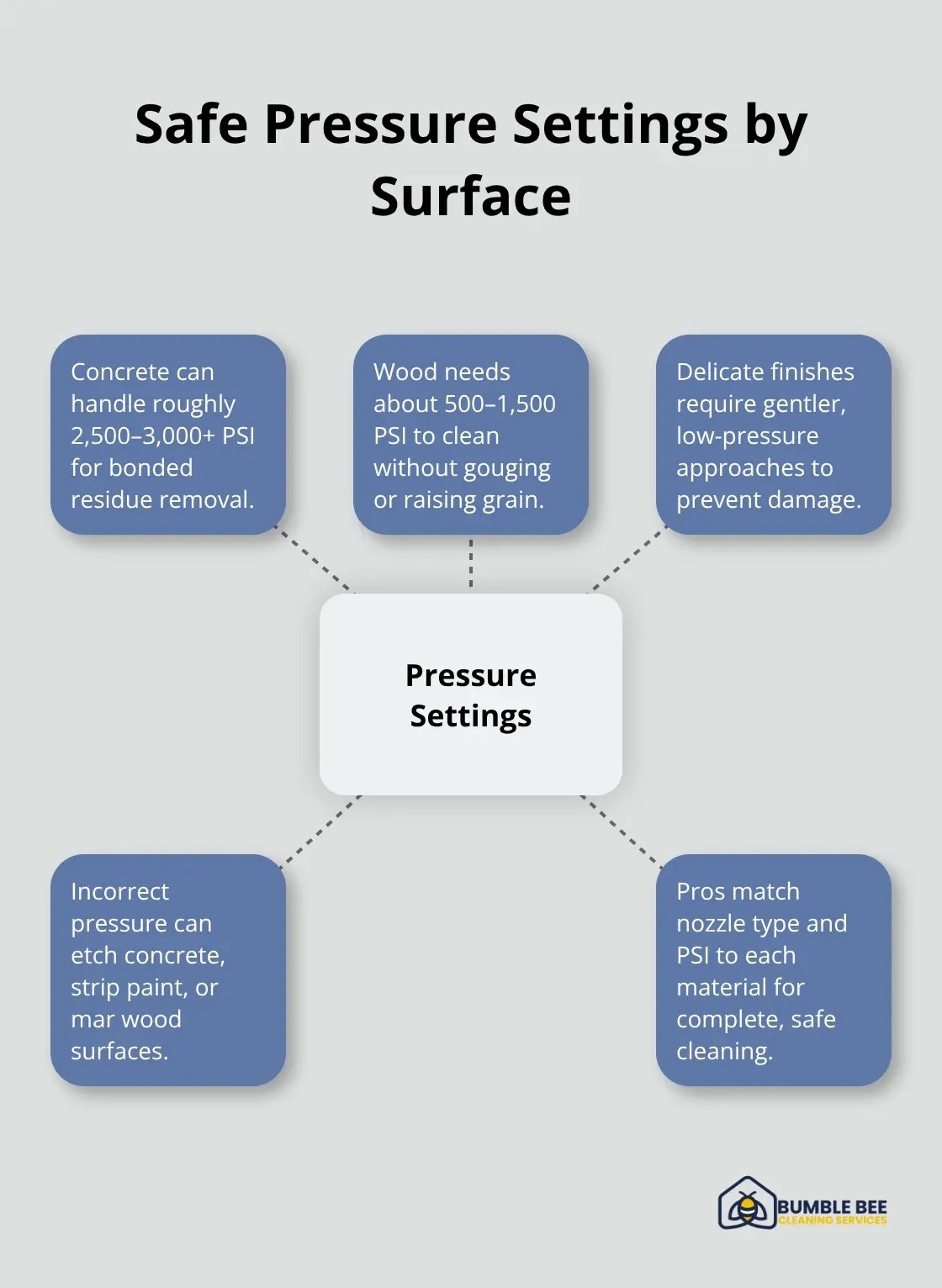
Adhesive residue and cement haze that require chemical soaking for hours respond immediately to pressure washing. Different nozzle types and pressure settings target specific materials safely-concrete can withstand 2,500–3,000+ PSI, wood requires 500–1,500 PSI, and delicate surfaces need gentler pressure. Professional operators understand these distinctions and adjust pressure levels to prevent damage while achieving complete removal. This precision matters because improper pressure damages wood finishes, etches concrete, or strips paint from walls, creating repair costs that exceed the original cleaning investment.
Speed and Efficiency Compared to Manual Methods
Professional cleaning teams finish post-construction pressure washing jobs three times faster than DIY approaches, according to the American Cleaning Institute. A 3,000-square-foot residential project that requires two weeks of manual cleaning takes three to four days with commercial pressure washing equipment. Seattle’s climate accelerates mold growth on damp, contaminated surfaces, so speed translates directly to occupancy readiness and health protection.
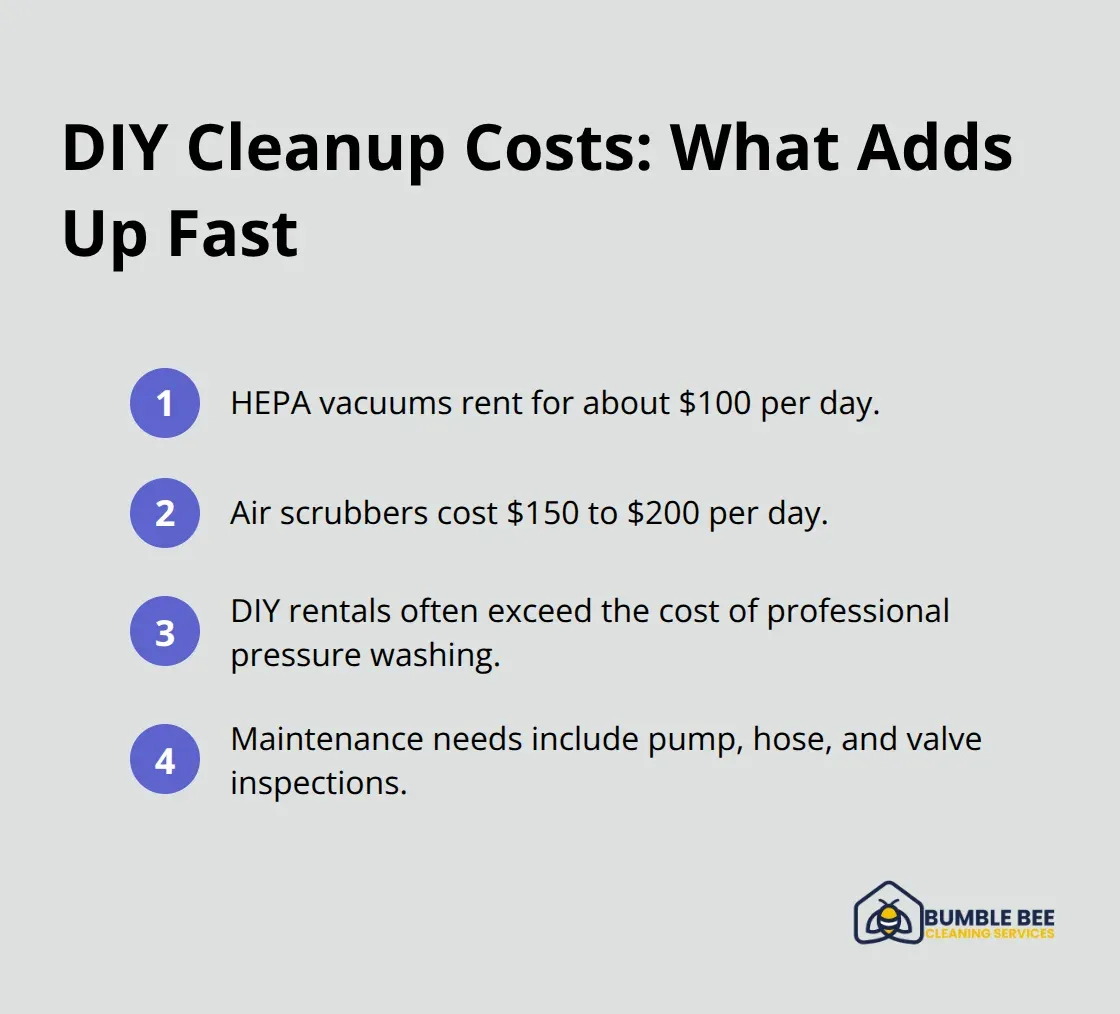
Equipment rental costs add significant expenses to DIY cleanup efforts. HEPA vacuums rent for approximately $100 daily, while air scrubbers cost $150 to $200 daily. Property owners investing in DIY cleanup spend considerably more on equipment rental than professional pressure washing costs. Equipment maintenance poses additional hidden expenses-pressure washing equipment requires regular pump, hose, and valve inspection to prevent leaks and operational failure.
Final Thoughts
Post-construction pressure washing protects both your property and the health of everyone who enters it. The debris left behind by construction-concrete dust, paint splatters, adhesive residue, and metal shavings-creates respiratory hazards, slip risks, and long-term surface damage that incomplete cleaning cannot address. Pressure washing removes these stubborn remnants completely, something manual methods simply cannot accomplish.
Professional cleaning prepares your Seattle space for immediate occupancy. Rather than spending weeks on DIY cleanup with rented equipment that costs hundreds of dollars daily, pressure washing finishes the job in days. Your property becomes safe, visually pristine, and ready for occupants without the health risks that linger after incomplete cleanup, and in Seattle’s damp climate, thorough pressure washing prevents mold establishment on cleaned surfaces.
Surfaces protected from embedded debris and chemical residue maintain their finishes longer, reducing future maintenance costs and preventing the need for expensive re-cleaning. We at Bumble Bee Cleaning Services bring experience and ARCSI and IICRC certifications to post-construction projects across Seattle, using eco-friendly products and delivering complete solutions tailored to your specific project needs.
For more information about our cleaning services in Seattle and Atlanta, or to request a cleaning quote, call or text us at 425-786-1360 or email us at info@qbclean.com
