
Pet odors linger in Seattle homes long after your furry friends move out, and standard cleaners simply can’t touch them. Enzymatic cleaning breaks down the organic compounds that cause these stubborn smells-something regular products fail to do.
We at Bumble Bee Cleaning Services know that move-out cleaning in the Pacific Northwest demands specialized solutions. Seattle’s humidity traps pet odors deep in carpets and flooring, making enzymatic treatment non-negotiable for protecting your security deposit.
How Enzymes Actually Eliminate Pet Odors
Enzymatic cleaners work through a straightforward biological process that standard cleaners cannot replicate. Enzymes break down specific organic compounds at the molecular level. When your pet has an accident, urine contains uric acid, proteins, and bacteria that create odors. Proteases in enzymatic cleaners target these proteins, lipases break down fats, and amylases attack starches-each enzyme type specializes in different molecular structures. Bacteria in these formulations then consume the broken-down compounds, leaving nothing behind for odors to cling to. This differs fundamentally from bleach or vinegar, which mask smells or sanitize surfaces without addressing the root cause of pet odors.
Why Pet Urine Defeats Standard Cleaners
Pet urine contains uric acid, which is not water-soluble. Water alone, vinegar solutions, or typical household cleaners cannot dissolve it completely. Standard products might remove visible stains or temporary odors, but uric acid crystals remain embedded in carpet fibers, padding, and subfloors. When humidity increases-which happens constantly in Seattle-these crystals rehydrate and release ammonia gas again, making the smell worse. Enzymatic cleaners specifically break the chemical bonds in uric acid, converting it into compounds that evaporate as carbon dioxide and water. Without enzymatic treatment, you apply temporary fragrance rather than solving the problem, which explains why security deposits are frequently withheld after pet-friendly moves.
Moisture and Time Control Enzyme Activation
The enzyme activation process requires moisture and time to succeed. Spraying enzymatic cleaner on a carpet and wiping it dry immediately wastes the product’s effectiveness. Instead, saturate the affected area thoroughly, cover it with plastic wrap or a damp towel, and leave it undisturbed for at least 10 to 15 minutes for fresh stains, or several hours to overnight for set-in odors. This damp environment allows enzymes to work at their peak efficiency. For old stains that have hardened into carpet backing or subfloor materials, patience becomes critical-the enzymes simply cannot activate without sustained moisture and contact time with the organic matter they target.
Why Professional Cleaners Succeed Where DIY Efforts Fail
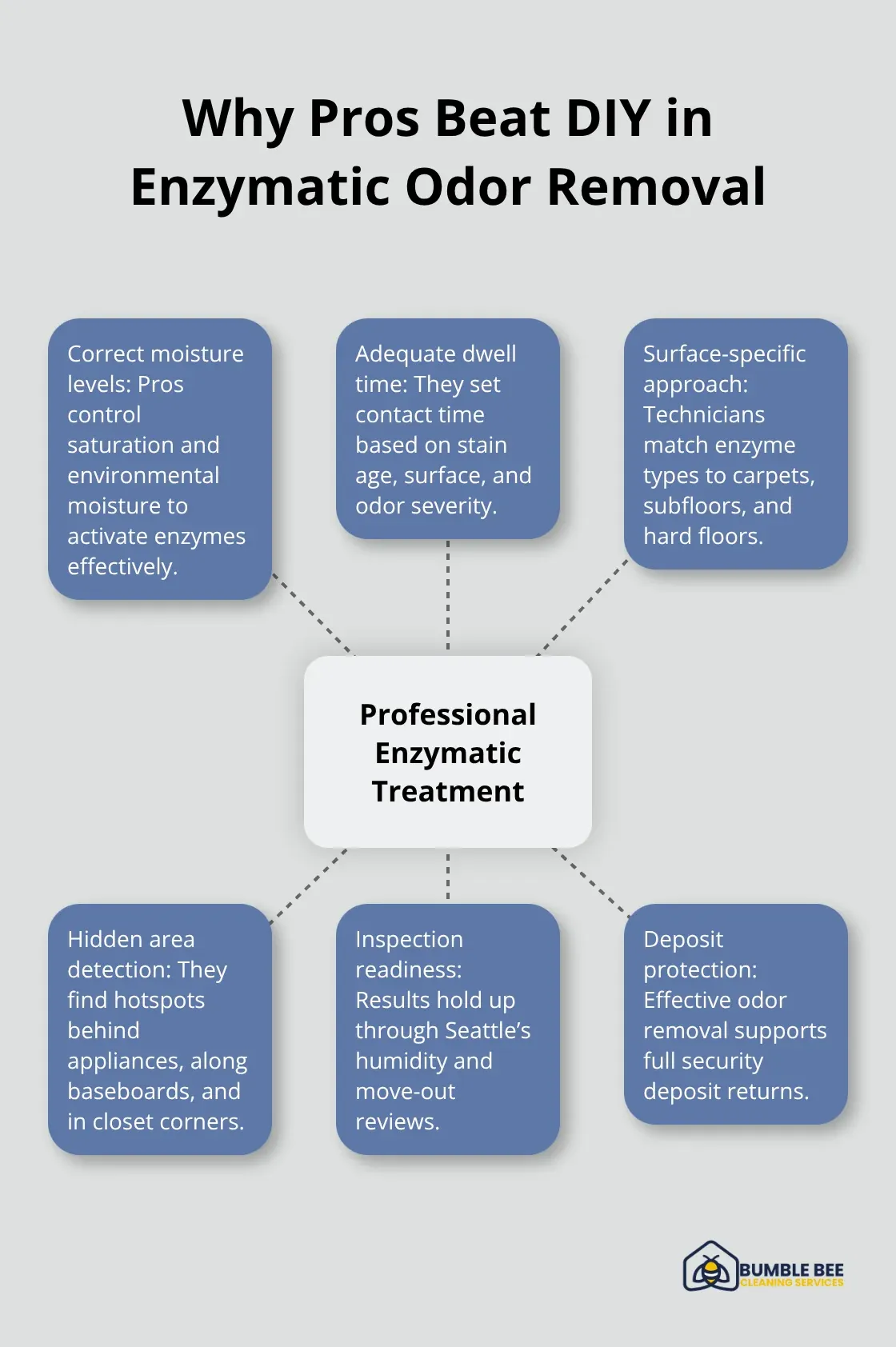
Rushing the enzymatic process defeats the entire purpose of treatment. Many property owners attempt move-out cleaning themselves, only to discover that enzymes need proper activation conditions to work. Professional cleaners understand that enzyme activation requires specific moisture levels, adequate dwell time, and knowledge of which surfaces need extended treatment. They also identify hidden problem areas (behind appliances, under baseboards, in closet corners) where pet odors accumulate unnoticed. This expertise directly impacts whether landlords return your full security deposit or withhold funds for lingering odors and stains. The difference between a rushed DIY approach and professional enzymatic treatment often determines the outcome of your move-out inspection.
Why Seattle’s Climate Traps Pet Odors
Pet Ownership and Hidden Odor Problems
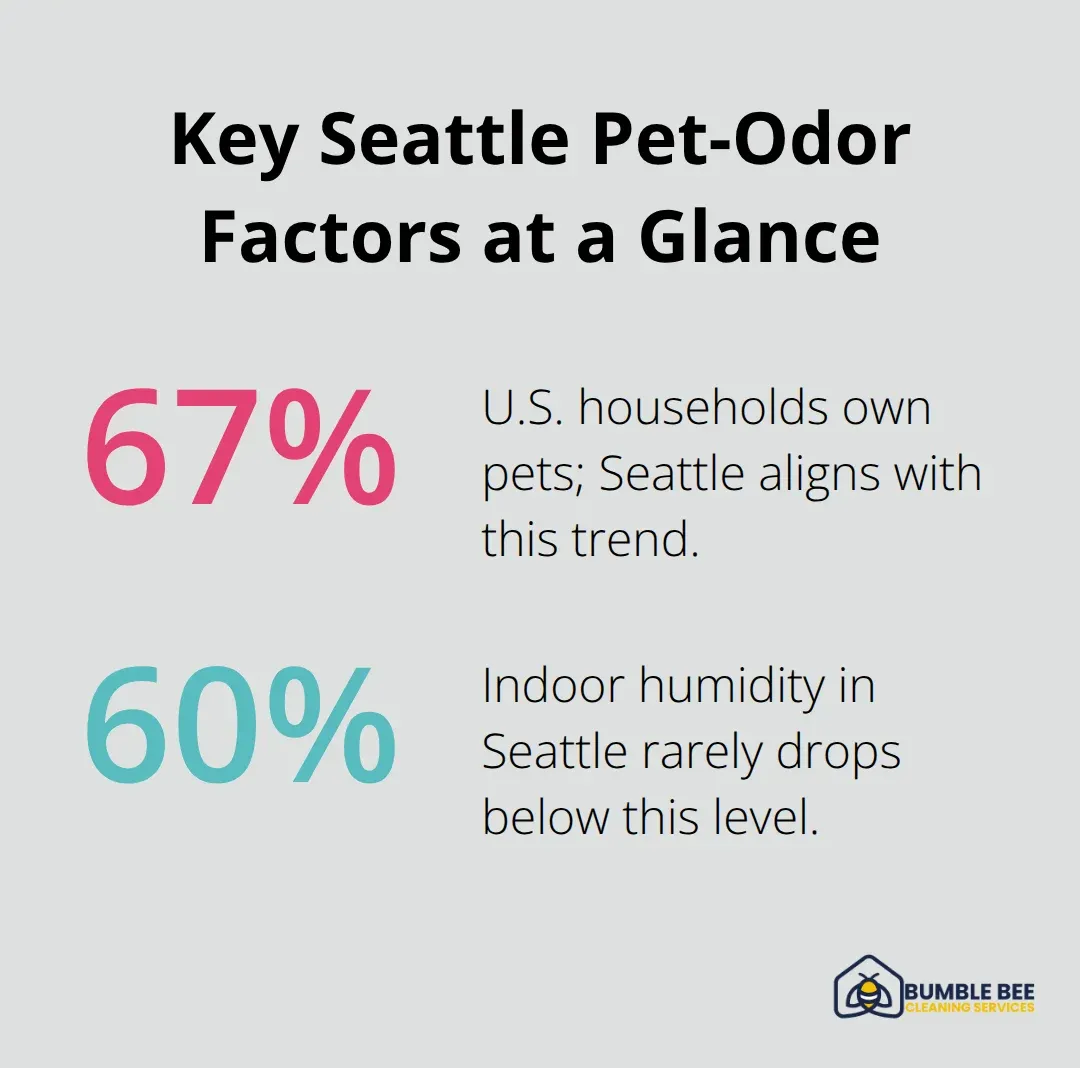
Pet ownership in the Pacific Northwest runs high, with approximately 67% of U.S. households owning pets according to the American Pet Products Association, and Seattle’s rates align closely with this national trend. Most rental properties and homes in the area have dealt with pet accidents, whether visible or hidden. The real problem isn’t just the number of pets-it’s how Seattle’s climate amplifies odor issues that standard cleaners cannot solve.
How Humidity Reactivates Uric Acid Crystals
Seattle receives about 38 inches of annual rainfall and maintains humidity levels that rarely drop below 60%, even indoors. This moisture-rich environment reactivates uric acid crystals in carpet fibers and subfloor materials long after a pet has moved out. Urine that dried weeks ago suddenly becomes active again when humidity spikes, releasing ammonia odors that standard cleaners cannot address. Property managers in Seattle know this pattern well, which is why they scrutinize move-out inspections so carefully. A home that smells fresh on a dry day can reek within hours once the rain returns and humidity climbs.
Why Standard Methods Fail in Damp Conditions
Standard cleaning methods fail in this climate because they don’t account for how moisture interacts with pet odors. Bleach kills surface bacteria but leaves uric acid crystals untouched. Vinegar and baking soda temporarily neutralize smells but don’t break down the chemical compounds that keep regenerating. Enzymatic cleaners work where these methods fail because they break down urine at a molecular level, and they function specifically in the damp conditions Seattle experiences year-round.
The Move-Out Inspection Reality
Move-out cleaning in this region demands a solution that works with humidity, not against it. Your deposit depends on eliminating odors completely, not just temporarily masking them until the next rainy day. Property managers expect thorough odor removal that holds up through Seattle’s wet seasons. This reality shapes how you should approach your move-out cleaning strategy and which treatment methods actually protect your financial interests.
How to Apply Enzymatic Cleaners for Maximum Results
Locating and Saturating Problem Areas
Enzymatic cleaners demand precision in application, not random spraying and hoping the smell disappears. Start by identifying the exact location of pet accidents, which often extends beyond visible stains. A blacklight or your nose will pinpoint urine spots in carpets, on baseboards, and in closet corners where pets frequently marked territory. Once you locate problem areas, saturate them thoroughly with enzymatic cleaner until the carpet or surface turns visibly wet. This saturation step separates successful treatments from failed DIY attempts. Most people under-apply enzymatic cleaners, thinking a light spray will work. It won’t. The enzyme needs direct contact with concentrated urine deposits to break down uric acid effectively.
Dwell Time: The Non-Negotiable Step
After saturation, cover the treated area with plastic wrap or a damp towel and leave it undisturbed. Fresh stains require 10 to 15 minutes of dwell time, while old or set-in odors need several hours or overnight contact. This waiting period is non-negotiable. The enzymes cannot work faster, and cutting short the dwell time wastes your money and effort.
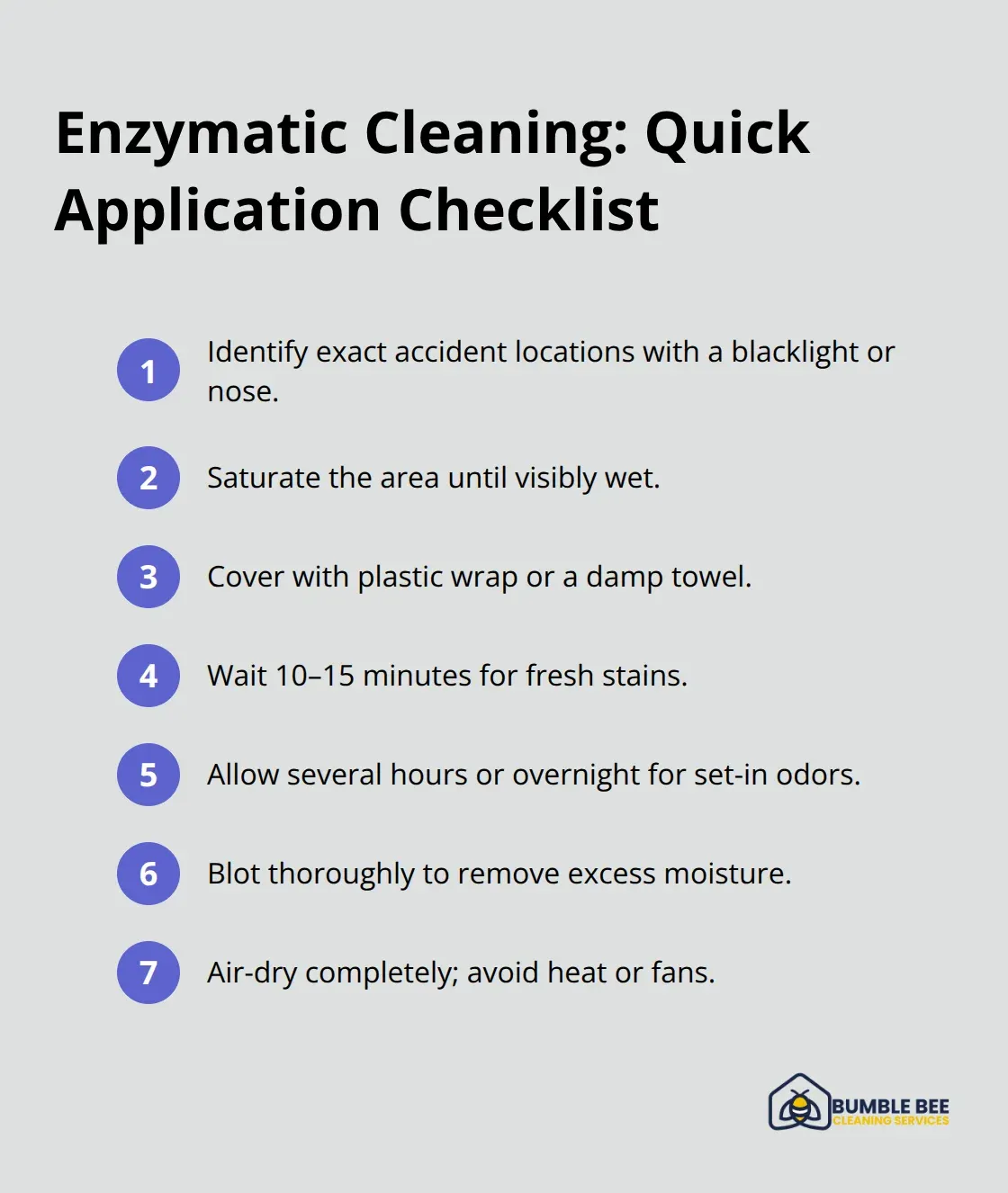
Once the dwell time expires, blot the area thoroughly with clean towels to remove excess moisture, then allow it to air-dry completely. Never use heat or fans to speed drying, as high temperatures can damage enzymatic cleaners before they finish their work.
Targeting Hidden Problem Areas
Prioritizing the right areas makes the difference between a deposit returned and funds withheld. Behind refrigerators, under stoves, and inside kitchen cabinets trap pet hair and urine that owners miss during casual cleaning. These spaces demand enzymatic treatment because humidity concentrates odors there. In bedrooms, focus on closet floors, under beds, and along baseboards where pets sleep or hide accidents. Bathrooms need attention around toilet bases and in grout lines where pet waste can seep. For rental properties, the subfloor beneath carpets often harbors the worst odor problems. If you have access, spray enzymatic cleaner directly on subfloor materials and allow extended dwell time.
Hard Surface Floors and Extended Treatment
Hard surface floors require different handling than carpets. Spray enzymatic cleaner on tile or vinyl, let it sit for 10 minutes, then scrub with a soft brush and rinse thoroughly. The investment in proper enzymatic treatment protects your security deposit far better than rushing through standard cleaning methods.
Final Thoughts
Enzymatic cleaning stands as the only reliable solution for protecting your security deposit during a Seattle pet-friendly move. Standard cleaners simply cannot address the root cause of pet odors, and Seattle’s humidity ensures that uric acid crystals will reactivate unless enzymatic treatment breaks them down at the molecular level. The difference between a returned deposit and withheld funds often comes down to whether you invested in proper enzymatic treatment or settled for temporary masking solutions.
Professional cleaning services understand the specific demands of Seattle’s climate and rental market. We at Bumble Bee Cleaning Services handle move-out cleaning across the Pacific Northwest, where pet odors present unique challenges that standard methods fail to solve. Our team identifies exactly where hidden odor problems accumulate, applies enzymatic cleaners with the proper dwell time in damp conditions, and treats surfaces that demand extended contact with the solution.
When you partner with Bumble Bee Cleaning Services for your move-out cleaning, you work with professionals who understand enzymatic treatment as a science, not a guessing game. Your new space deserves a fresh start, and your wallet deserves the security deposit you earned.
For more information about our cleaning services in Seattle and Atlanta, or to request a cleaning quote, call or text us at 425-786-1360 or email us at info@qbclean.com
