
Pet hair in Seattle homes is relentless, especially with our damp climate making fur stick to everything from carpets to furniture. If you’re a pet owner here, you know the struggle is real.
We at Bumble Bee Cleaning Services help Seattle families tackle pet hair buildup, and we’ve learned what actually works. This guide walks you through the professional pet hair solutions that make a real difference in your home.
Why Seattle’s Damp Climate Traps Pet Hair Differently
Pet hair and dander can become trapped deep within carpet fibers in Seattle’s moisture-heavy air, causing fur to mat and embed deeper into upholstery, carpets, and car seats. When humidity levels stay high, pet hair clings with extra tenacity because the damp environment weakens the grip of standard cleaning tools. Add evergreen tree pollen, which pets track inside constantly, and you have hair mixed with allergens that burrow into fibers faster than in other regions. This combination means Seattle pet owners need different removal strategies than what works in Atlanta or other parts of the country.
Where Pet Hair Hides in Your Home
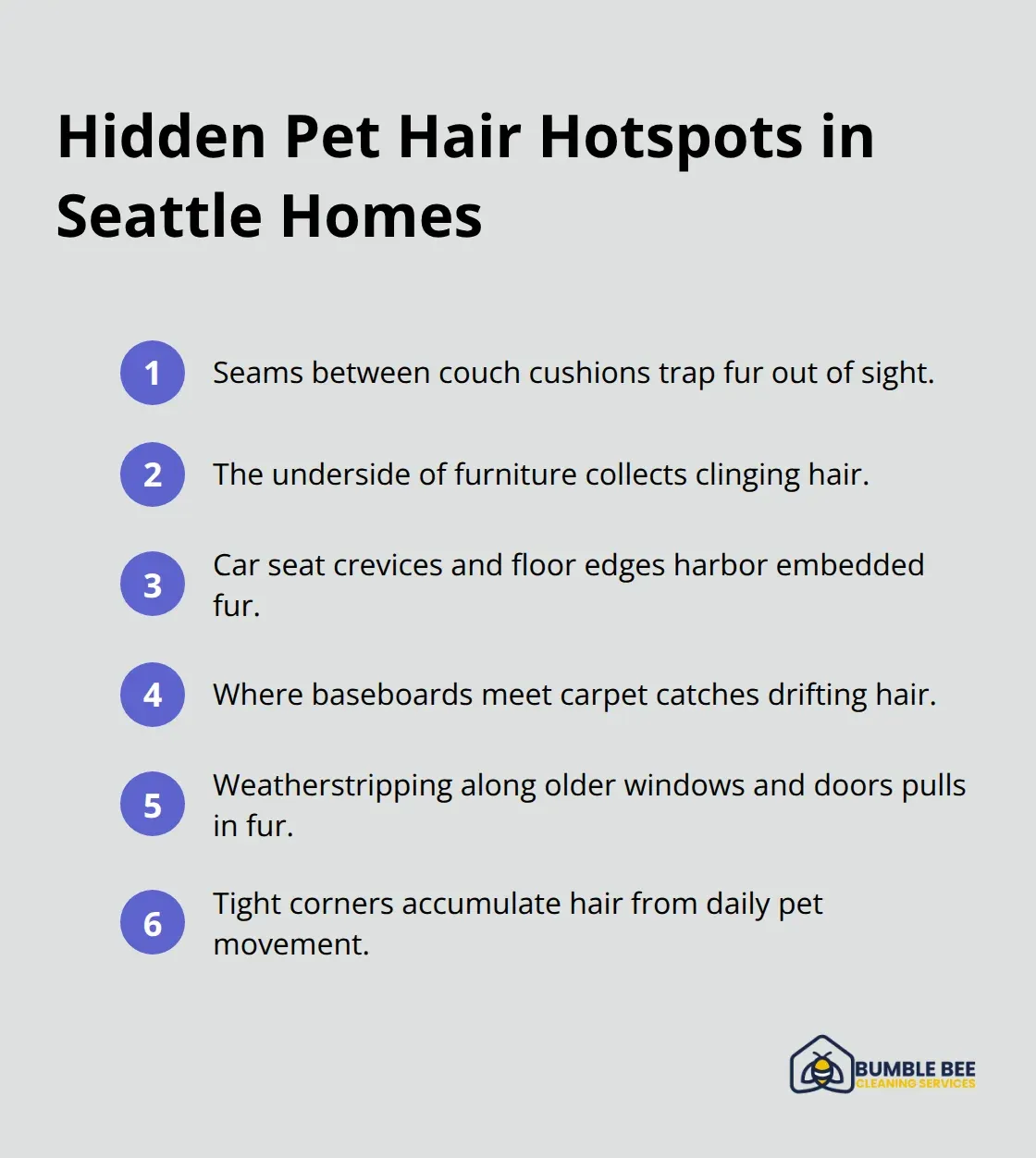
Pet hair accumulates in obvious spots like sofas and bedroom carpets, but the real problem areas are the places most people overlook. Seams between couch cushions, the underside of furniture, car seat crevices, and the spaces where baseboards meet carpet trap fur. Hard-to-reach corners collect hair because pets shed while sleeping, sitting, and moving through tight spaces. Seattle homes with older windows and doors also develop hair buildup along weatherstripping where air circulation pulls fur. The worst offender is often the car interior-a Labrador or similar shedding breed can leave behind enough hair in a vehicle to require professional removal costing around $40 as an add-on service.
Weekly vacuuming at 2–3 times per week helps, but it won’t reach embedded fibers without the right tools first. Many Seattle families find that hair reappears quickly in the same spots because they’re not addressing where it actually embeds.
Health Impact of Pet Hair and Dander Buildup
95 million U.S. households own at least one pet, which means millions of people live with the allergen consequences. Pet hair carries dander, a major allergen trigger for people with sensitivities or asthma. In Seattle’s humid climate, dander doesn’t dry out and float away-it stays moist and clings to hair, making it heavier and harder to filter out. Standard vacuums circulate fine pet particles back into the air, which is why proper filtration matters. Without sealed systems preventing air leaks, you stir allergens around your home rather than removing them. Seattle families dealing with pet allergies or respiratory issues need vacuums with effective filtration paired with targeted cleaning strategies to meaningfully reduce airborne dander and hair particles.
Why Professional Tools Make the Difference
Standard household vacuums and lint rollers fall short when pet hair embeds deep into fabrics. Professional-grade tools like rubber squeegees, static brushes, and specialized vacuum attachments lift embedded pet hair that regular equipment misses. A multi-tool approach works best-using one tool alone rarely produces the results Seattle pet owners need.
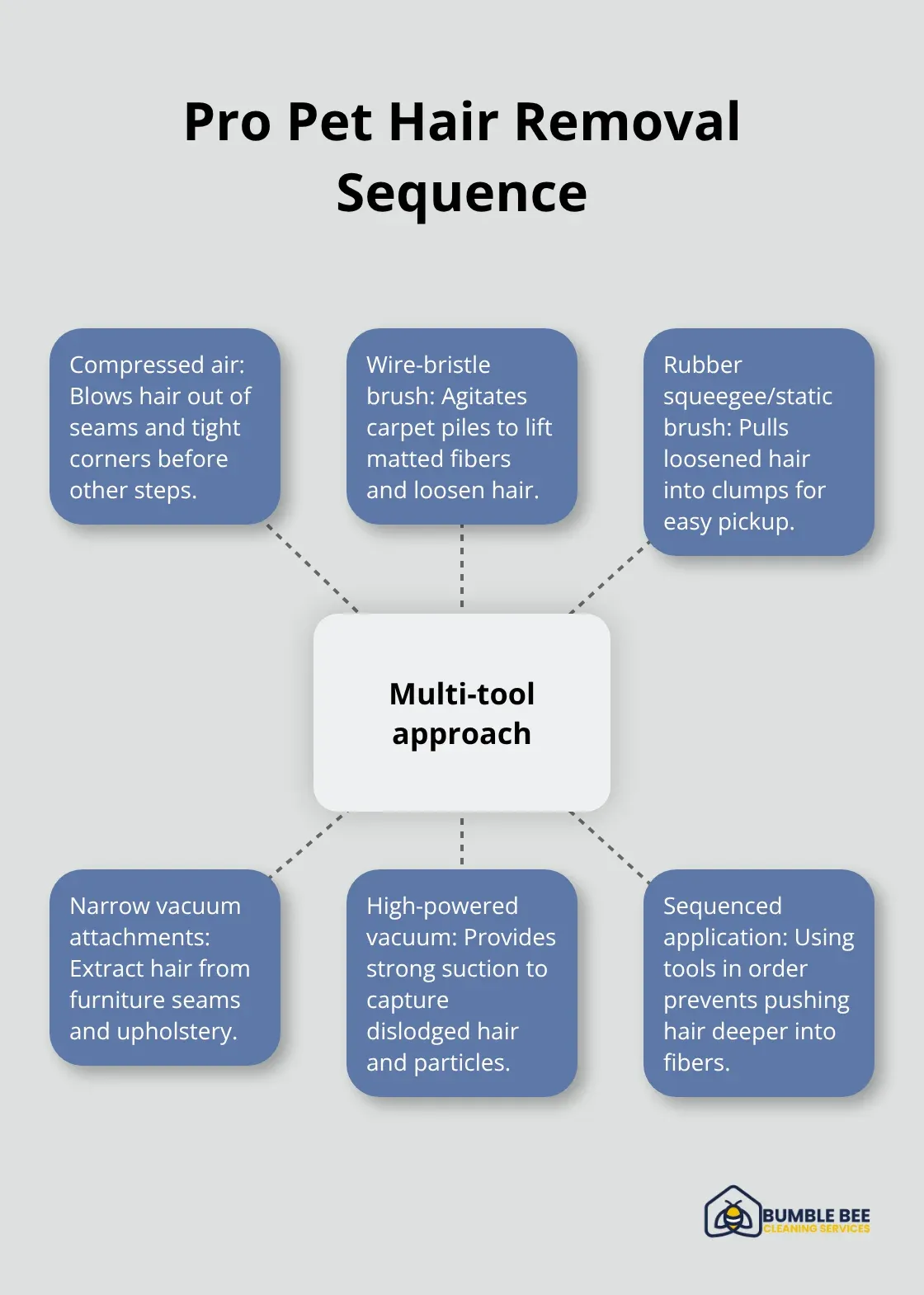
Compressed air lifts hair from tight corners and seams before brushing and vacuuming, while wire-bristle brushes loosen hair from carpet piles to boost removal effectiveness. High-powered vacuums with narrow attachments outperform standard household models for furniture and carpets. The combination of these tools, applied in the right sequence, removes hair that would otherwise remain trapped in your home’s fabrics and surfaces.
Tools That Actually Remove Embedded Pet Hair
HEPA Vacuums: The Foundation of Pet Hair Control
HEPA-filter vacuums form the foundation of pet hair removal in Seattle homes, but only sealed systems prevent air leaks that circulate fine pet particles back into your air. Standard household vacuums stir allergens around your home rather than trapping them, which defeats the purpose entirely. Consumer Reports consistently ranks vacuums with sealed HEPA filtration and strong suction as top performers for removing hair from carpets and upholstery. Look for models with replaceable HEPA filters that capture 99.97 percent of particles 0.3 microns or larger according to EPA guidance. Replace filters every 6 to 12 months depending on usage frequency, or more often if you have multiple shedding pets.
Specialized Brushes and Attachments That Work
Rubber squeegees and static brushes pull hair into clumps rather than scattering it, working differently than traditional bristles. Wire-bristle brushes loosen hair from carpet piles before vacuuming, significantly boosting removal effectiveness on fabric surfaces. High-powered vacuums with narrow crevice attachments outperform standard models for furniture seams and car interiors, where embedded fur hides. Compressed air lifts hair from corners and tight spaces that brushes cannot reach, making it an essential preparatory step before vacuuming. Skip this sequence and hair gets pushed deeper into fibers instead of being removed, making the problem worse.
Air Purifiers and Deep Cleaning Equipment
Air purifiers with HEPA filters reduce pet dander circulating through your home, but they work best paired with consistent vacuuming rather than replacing it. An air purifier alone cannot remove hair already embedded in carpets and upholstery. For Seattle homes with multiple pets or family members with allergies, a room-sized unit in the main living area captures airborne dander while your vacuum removes trapped hair from surfaces. Carpet cleaning equipment goes beyond what vacuums accomplish, using hot water extraction or deep-clean treatments to remove hair oils and dander embedded in fibers. Professional-grade carpet cleaners loosen deeply matted hair that standard tools miss, particularly important in Seattle where humidity causes hair to mat faster.
Grooming and Prevention Strategies
Veterinarians recommend regular grooming with deshedding tools to reduce shedding at the source, cutting the amount of hair you need to remove. Weekly pet brushing before car rides or furniture time prevents loose fur from embedding in the first place. For car interiors, a handheld vacuum with a soft-bristle hard-floor tool prevents hair from scattering across seats and carpets. Hard floors require different attachments than carpet to avoid pushing hair around rather than collecting it. The combination of sealed HEPA filtration, specialized brushes, air purification, and targeted grooming creates the comprehensive approach Seattle pet owners need-but knowing which tools to use is only half the battle. Many homeowners find that even with the right equipment, deeply embedded pet hair resists removal, which is where professional intervention becomes the practical solution.
When Professional Pet Hair Cleaning Becomes Worth It
Signs Your Home Needs Professional Intervention
Your DIY efforts hit a wall when pet hair stops responding to vacuums and brushes, which happens faster in Seattle than most places. If you vacuum 2–3 times weekly and still see hair embedded in furniture seams, car seat crevices, and under cushions, professional intervention stops being optional. The reality is that home tools, even high-powered ones, cannot reach hair that has matted deep into upholstery fibers during Seattle’s humid months. Pet hair that resists your best efforts signals that embedded fibers have bonded to fabric at depths your handheld vacuum cannot access.
What Professional Equipment Accomplishes
Professional cleaners use equipment that goes far beyond what consumer vacuums accomplish-hot water extraction systems, specialized deep-clean treatments, and industrial-strength brushes that actually dislodge fibers rather than just surface-level removal. The difference is dramatic because professionals apply sequential techniques: compressed air loosens embedded hair, specialized brushes lift matted fibers, then extraction equipment removes both hair and the oils that make dander cling. This multi-step process addresses the root problem-hair bonded to fabric at a depth your handheld vacuum cannot reach. Professional-grade carpet cleaning removes what home equipment leaves behind, which is why many Seattle families find the results transformative after months of frustration.
Cost Comparison: Equipment Versus Professional Services
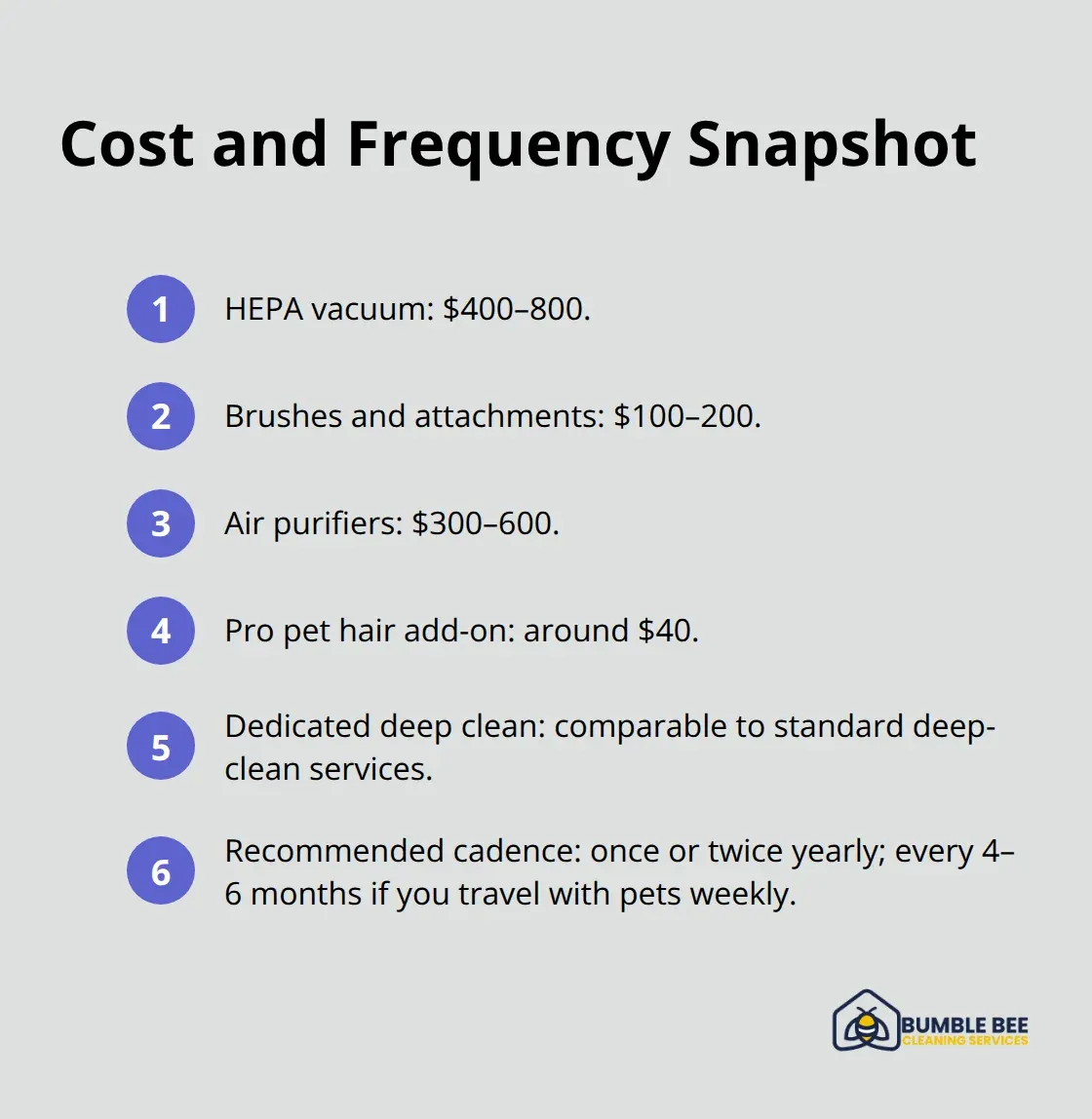
A quality HEPA vacuum runs $400–800, specialized brushes and attachments add another $100–200, and air purifiers cost $300–600, totaling $800–1,600 in equipment before you factor in replacement filters and maintenance. Professional pet hair removal typically costs around $40 as an add-on to interior cleaning services, or you can book a dedicated deep clean for embedded pet hair at rates comparable to standard deep-cleaning services. Most pet owners benefit from professional cleaning once or twice yearly, with more frequent sessions every 4–6 months only if you travel with pets weekly. The math favors professional help: equipment investment plus ongoing maintenance versus targeted professional intervention that removes what your tools cannot.
When Frequency Matters Most
Seattle families with multiple shedding breeds, multi-level homes, or members with pet allergies find that professional deep cleaning every 6–12 months eliminates the frustration of never catching up with hair buildup and delivers air quality improvements that home vacuuming cannot match. Homes where pets spend significant time in vehicles or travel weekly accumulate hair faster than typical households, making more frequent professional attention worthwhile. The investment in professional cleaning pays dividends through reduced allergen levels, improved air quality, and furniture that stays cleaner longer between sessions.
Final Thoughts
Pet hair solutions in Seattle require a realistic approach that combines home maintenance with professional intervention. Home tools like HEPA vacuums, rubber squeegees, and wire brushes form the foundation of what you can accomplish on your own, but they hit a wall when humidity causes hair to mat deep into upholstery and carpet fibers. The investment in quality equipment runs $800–1,600 upfront, plus ongoing filter replacements and maintenance costs that add up over time.
Professional deep cleaning removes what your equipment cannot reach, and we at Bumble Bee Cleaning Services understand that Seattle pet owners face unique challenges from our region’s moisture and constant shedding cycles. A professional deep clean targets embedded hair through sequential techniques-compressed air loosens fibers, specialized brushes lift matted fur, and extraction equipment removes both hair and the oils that trap dander. Most Seattle families benefit from professional cleaning once or twice yearly, with more frequent sessions only if pets travel with you weekly.
Vacuum 2–3 times weekly, brush your pet before car rides, and use specialized attachments on furniture seams and crevices to maintain your home between professional visits. When home efforts plateau and hair still clings to your furniture despite regular cleaning, that’s your signal to call professionals who have the equipment and expertise to actually solve the problem. Contact Bumble Bee Cleaning Services to schedule pet hair removal as an add-on service or book a dedicated deep clean for embedded fur that home tools miss.
For more information about our cleaning services in Seattle and Atlanta, or to request a cleaning quote, call or text us at 425-786-1360 or email us at info@qbclean.com
