
Construction dust, debris, and hazardous materials left behind after building work create serious health and safety problems. Most builders and homeowners underestimate how much cleaning is actually needed to make a property safe and move-in ready.
We at Bumble Bee Cleaning Services have seen firsthand how Seattle post-construction cleaning transforms a chaotic job site into a pristine space. This guide walks you through what professional post-construction cleaning involves and why skipping it costs far more than investing in it upfront.
What Post-Construction Cleaning Actually Involves
Post-construction cleaning extends far beyond sweeping debris and mopping floors. The process systematically removes construction dust, hazardous materials, paint overspray, adhesive residues, and fine particles that settle into every corner of a building. Workers clean ceilings, walls, windows, fixtures, countertops, flooring, and hard-to-reach areas like air vents and light fixtures. Construction sites generate massive amounts of fine dust containing silica particles, which pose serious respiratory hazards if not properly removed. This is why post-construction cleaning requires specialized equipment like HEPA-filter vacuums that capture particles as small as 0.3 microns, not standard household cleaning tools. The process also addresses paint splatters on windows and frames, removes dried adhesive from flooring, and sanitizes bathrooms and kitchens to meet occupancy standards. In Seattle, where moisture and humidity are common, thorough drying and moisture management become part of the cleaning scope to prevent mold growth in newly constructed spaces.
Health Risks From Construction Dust
Construction dust contains respirable crystalline silica, which causes silicosis and other serious lung diseases in workers exposed to engineered stone countertops and similar materials during installation. When this dust remains in your home or commercial space, occupants face ongoing inhalation risks. The silica particles that settle on surfaces and in HVAC systems create a persistent hazard that standard cleaning cannot address. Professional post-construction cleaning removes these particles using equipment and methods designed specifically for silica contamination.
Damage to Property and Systems
Leftover construction debris damages finishes, reduces the lifespan of appliances, and creates an unprofessional appearance that undermines the entire construction investment. Incomplete cleaning leaves adhesive residues on flooring, paint overspray on fixtures, and drywall dust embedded in HVAC systems, which then recirculates contaminated air throughout the building. These contaminants accumulate in ductwork and reduce system efficiency over time.
Why DIY Cleaning Falls Short
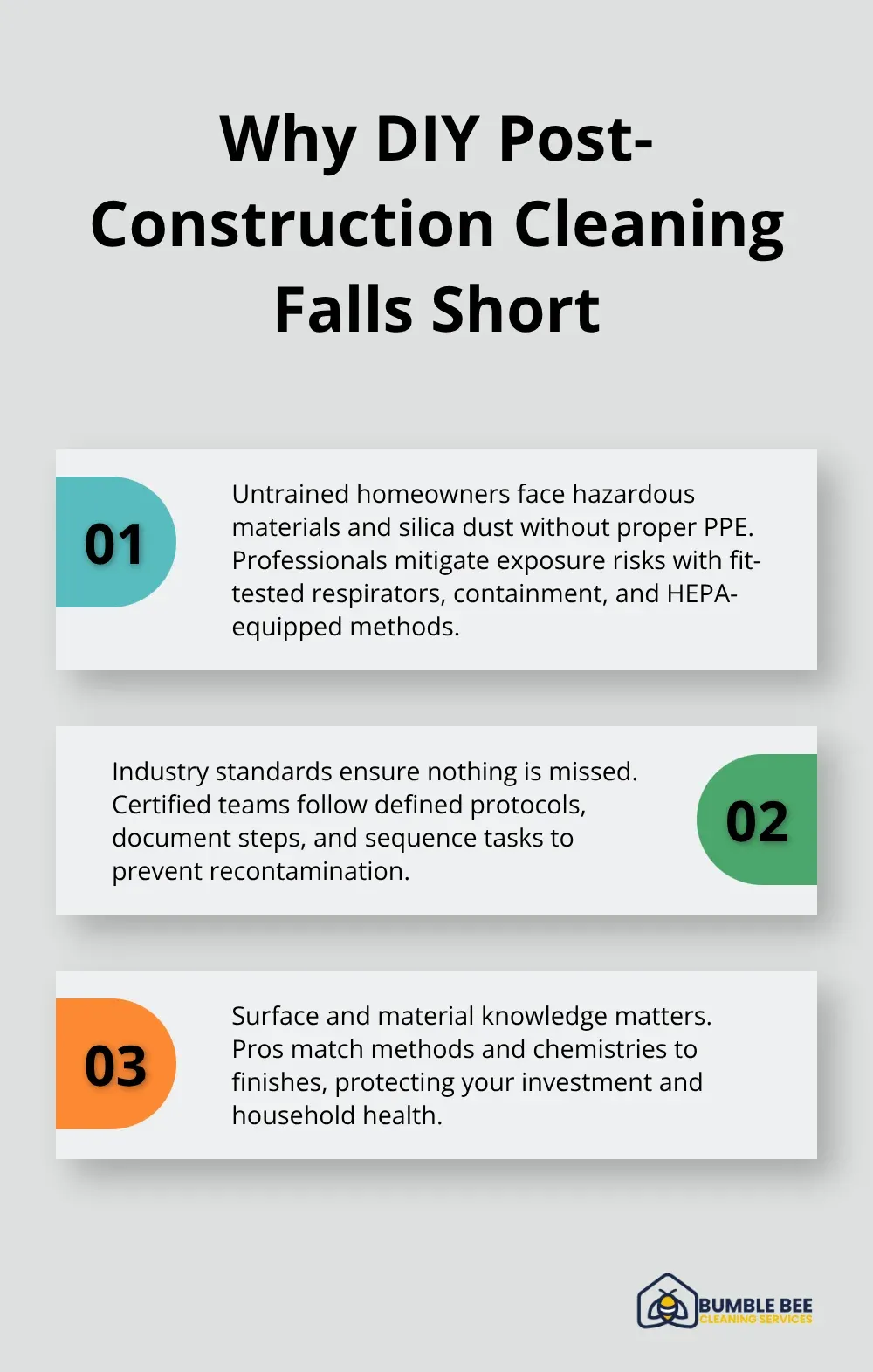
Attempting DIY cleaning on a construction site exposes untrained homeowners to hazardous materials and silica dust without proper respiratory protection or equipment, creating liability issues that far exceed the cost of professional services. Professional post-construction cleaning follows industry standards like the ANSI/IICRC S400 guidelines for cleaning and restoration of the built environment, ensuring nothing is overlooked. Trained crews understand which surfaces require specialized cleaning methods and which materials demand particular care. Understanding what professional post-construction cleaning actually requires helps you recognize why hiring qualified specialists protects your investment and your family’s health.
How Professional Post-Construction Cleaning Works
The Three-Phase Cleaning Process
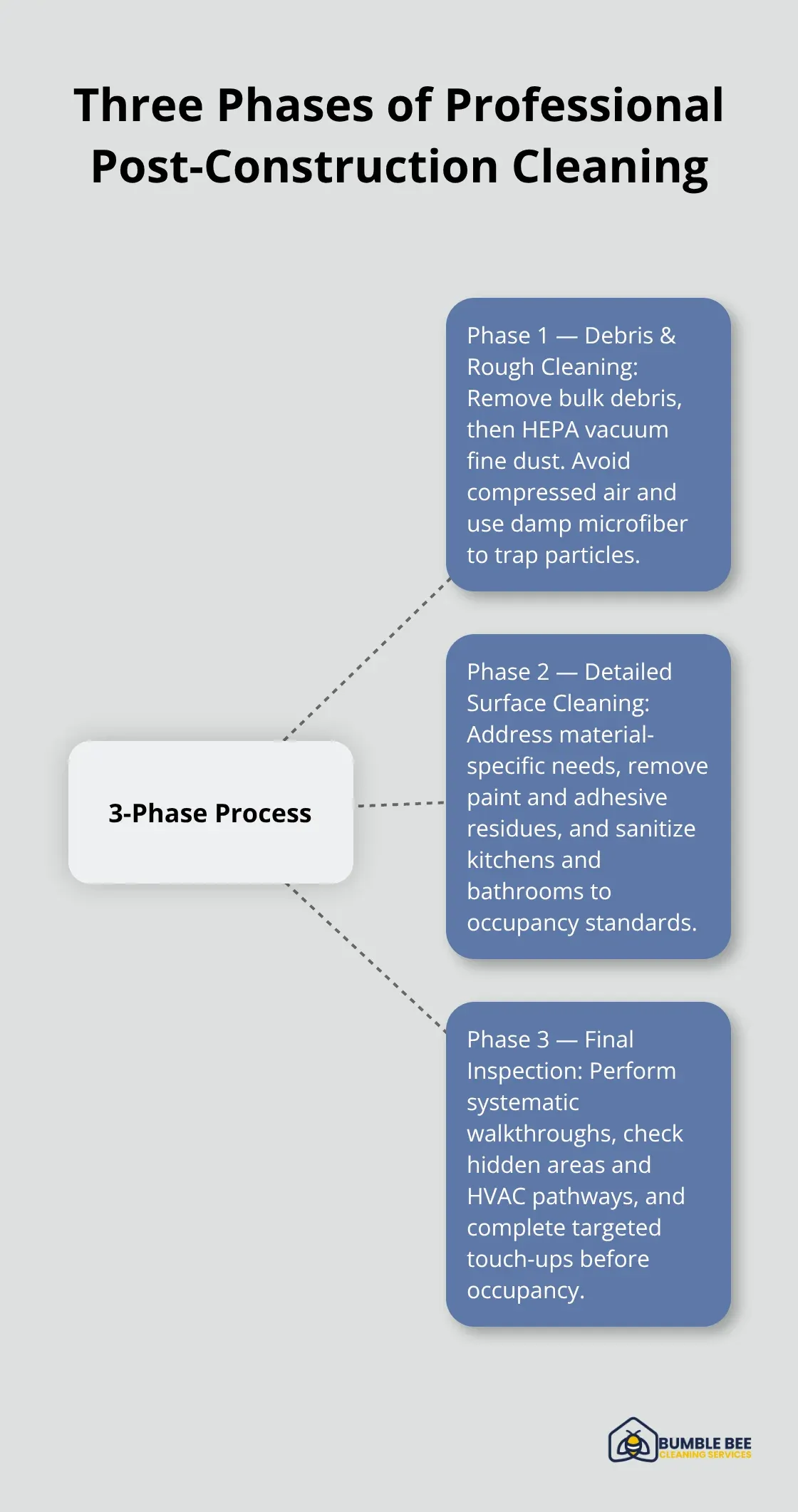
Post-construction cleaning unfolds in three distinct phases, each targeting different types of contamination and requiring specific equipment and techniques. The process starts immediately after construction ends, ideally within 24 hours, because construction dust continues settling onto surfaces for days afterward. Professional crews follow the ANSI/IICRC S400 standard, which requires a top-to-bottom approach that prevents recontamination of already-cleaned areas. This means crews start on upper surfaces-ceilings, light fixtures, air vents, and upper walls-then work downward to floors.
Debris Removal and Rough Cleaning
The initial phase focuses on debris removal and rough cleaning using heavy-duty equipment. Crews remove bulk construction waste, then use HEPA-filter vacuums to capture fine particles that standard vacuums miss. Standard household vacuums recirculate 99.7% of particles back into the air, while HEPA-filter vacuums can capture up to 99.99% of particles down to 0.3 microns-essential for removing silica dust from engineered stone installations and other hazardous materials. Compressed air gets avoided during this phase because it disperses settled dust rather than capturing it. Damp microfiber cloths replace dry sweeping to trap particles instead of lifting them into the air.
Material-Specific Surface Cleaning
The detailed cleaning phase addresses specific surfaces and materials based on their composition and construction contamination. Paint overspray on windows and frames comes off with commercial-grade glass cleaner and microfiber cloths for streak-free results, while stubborn dried paint on non-porous surfaces responds to warm water and dish soap applied immediately after construction, or a plastic scraper for cured paint. Adhesive residues from flooring installations soften with heat guns or hair dryers, then removal happens with plastic scrapers and citrus-based removers on delicate surfaces.
Flooring receives material-specific treatment: unsealed hardwood requires Murphy’s Oil Soap used sparingly, tile floors clean with warm water and mild detergent, and stubborn stains respond to a baking soda paste left for 10–15 minutes before scrubbing. Carpets get vacuumed thoroughly, then latex paint spills receive treatment with commercial latex-paint carpet cleaners, while oil-based stains require professional-grade solvents tested first on inconspicuous areas. Bathrooms and kitchens receive sanitization to occupancy standards, with all fixtures, countertops, and appliances cleaned to remove dust accumulation. Windows receive both interior and exterior cleaning to maximize light transmission and remove construction residue.
Final Inspection and Quality Verification
The final inspection phase involves a systematic walk-through identifying missed spots, rechecking hidden areas like air vents and behind fixtures, and performing touch-ups before occupancy. Quality control measures verify that all surfaces meet standards and that no construction contamination remains in HVAC systems or concealed spaces. This meticulous attention to detail separates professional post-construction cleaning from incomplete DIY efforts, and it determines whether your property truly meets occupancy standards or merely appears clean on the surface.
How to Find a Post-Construction Cleaning Company That Actually Delivers
Verify Certifications and Industry Standards
Finding a qualified post-construction cleaning company in Seattle requires more than checking online reviews. The work demands specialized knowledge of construction contamination, proper equipment, and adherence to industry standards that most general cleaning services simply do not possess. Many cleaning companies advertise post-construction services without the training or certifications to handle silica dust, hazardous materials, or the specific protocols outlined in ANSI/IICRC S400 standards. You need to verify that any company you hire has documented experience with post-construction projects, not just residential or commercial cleaning.
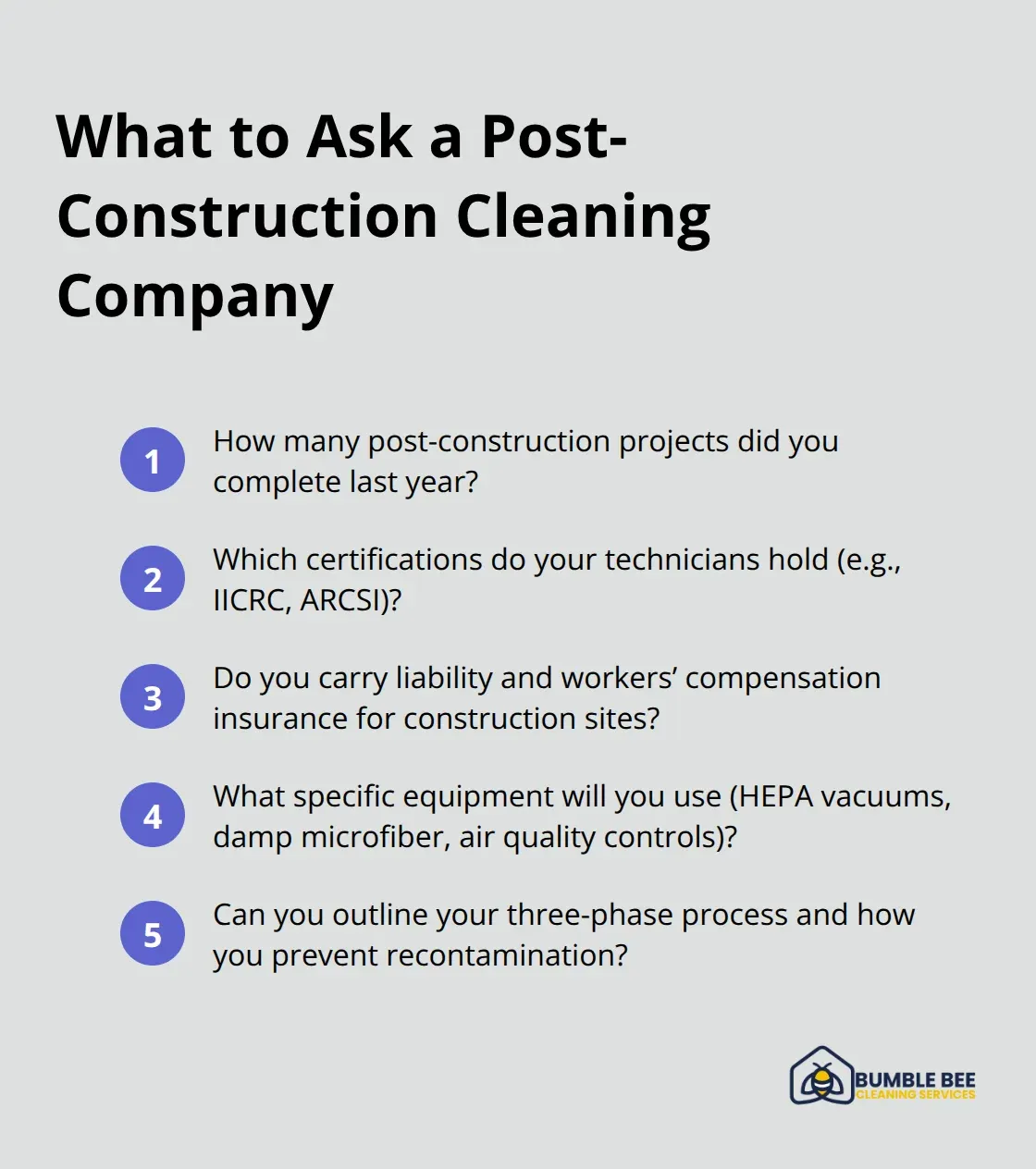
Ask directly how many post-construction cleaning projects they completed last year, what certifications their teams hold, and whether they carry liability insurance specifically covering construction site work. Companies certified by ARCSI or IICRC have demonstrated their commitment to industry standards and ongoing training. A qualified company should explain their equipment in detail, specifically mentioning HEPA-filter vacuums, damp microfiber cleaning methods, and air quality management. They should also walk you through their three-phase process and explain how they prevent recontamination during the top-to-bottom cleaning sequence.
Evaluate Equipment and Process Transparency
A reputable post-construction cleaning company provides transparent details about the equipment and methods they use on your property. Standard household vacuums recirculate 99.7% of particles back into the air, while HEPA-filter vacuums capture 99.97% of particles as small as 0.3 microns-essential for removing silica dust from engineered stone installations and other hazardous materials. The company should explain why they avoid compressed air during cleanup (it disperses settled dust rather than capturing it) and why damp microfiber cloths replace dry sweeping to trap particles instead of lifting them into the air.
Request detailed written estimates that itemize specific services, equipment used, and timeline expectations rather than accepting vague all-inclusive quotes. The company should clearly explain their quality assurance process and offer a satisfaction guarantee, meaning they return to address any missed spots or incomplete cleaning at no additional charge. This commitment to follow-up work demonstrates confidence in their standards and protects your investment.
Assess Insurance and Cost Realistically
Cost matters, but the cheapest quote almost always signals inadequate service. Post-construction cleaning requires investment in proper equipment, trained labor, and time-intensive work that cannot be rushed. A company quoting significantly below market rates either cuts corners on equipment, skips safety protocols, or assigns untrained staff to hazardous work.
Insurance verification is non-negotiable: confirm that the company carries general liability insurance and workers compensation coverage before signing any contract. Ask to see their certificate of insurance and verify coverage limits meet your project needs. Many property owners and builders discover too late that their chosen cleaning company lacked proper insurance, leaving them exposed to liability if an employee gets injured or property damage occurs during the cleaning process. A reputable company provides proof of insurance without hesitation and lists you as an additional insured party on their policy.
Final Thoughts
Post-construction cleaning is not optional work that homeowners and builders can postpone or handle casually. Silica dust, hazardous materials, paint overspray, and fine particles create genuine health risks and property damage that compound over time if left unaddressed. Professional Seattle post-construction cleaning removes these contaminants systematically using specialized equipment and industry-standard protocols that DIY efforts cannot match.
Thorough cleaning prevents HVAC system contamination that would otherwise recirculate hazardous particles for years, reduces respiratory health risks from silica exposure, and protects flooring finishes and appliances from damage caused by leftover construction debris. Properties cleaned to professional standards maintain their value, function properly, and provide safe environments for residents or employees. This protection justifies the upfront cost many times over when you consider the expense of replacing damaged systems or addressing health issues later.
Getting your Seattle property ready starts with contacting a qualified cleaning company that holds ARCSI or IICRC certifications and can document their post-construction experience. We at Bumble Bee Cleaning Services work with teams certified by industry leaders who understand the specific demands of Seattle construction sites and follow the three-phase process that meets industry standards. Contact Bumble Bee Cleaning Services today to schedule your post-construction cleaning and transform your newly built or renovated space into a safe, pristine environment ready for immediate occupancy.
For more information about our cleaning services in Seattle and Atlanta, or to request a cleaning quote, call or text us at 425-786-1360 or email us at info@qbclean.com
