
Seattle’s wet climate creates unique cleaning challenges that most homeowners underestimate. Constant moisture, rain, and sealed indoor spaces mean dust, mold, and hard water stains accumulate faster than in drier regions.
We at Bumble Bee Cleaning Services have helped hundreds of Seattle residents build cleaning routines that actually work for this environment. This Seattle home cleaning guide breaks down exactly what you need to do weekly, monthly, and seasonally to keep your home healthy and manageable.
Why Seattle’s Moisture Problem Demands Year-Round Attention
Seattle receives about 38 inches of rain annually, and that constant moisture doesn’t just sit outside your home-it seeps into walls, settles on surfaces, and creates the perfect breeding ground for mold, mildew, and dust mites. The Seattle Department of Health recommends mold inspections at least monthly, especially during wet months from October through March, because moisture accumulates faster here than in most U.S. climates.
How Seattle’s Climate Traps Indoor Pollutants
Indoor air in Seattle homes can be two to five times more polluted than outdoor air, according to research on indoor air quality, and that pollution comes directly from trapped moisture and the allergens it feeds. Closed windows during rainy seasons trap dust, pollen, and pet dander inside, concentrating allergens to levels that aggravate respiratory issues and allergies. Vacuuming carpets every other day with a HEPA filter and wiping bathroom surfaces daily removes allergens before they settle into your home’s air.
Pet Owners Face Accelerated Allergen Buildup
For homes with pets, the Asthma and Allergy Foundation of America recommends thorough cleaning at least bi-weekly because pet hair and dander combine with Seattle’s moisture to create stubborn allergen buildup that standard vacuuming misses. Pet bedding needs washing regularly, and upholstery requires HEPA-filter vacuuming to capture the fine particles that accumulate in fabric. This bi-weekly rhythm prevents allergens from reaching levels that trigger respiratory problems in sensitive household members.
Mineral Buildup Requires Specific Action
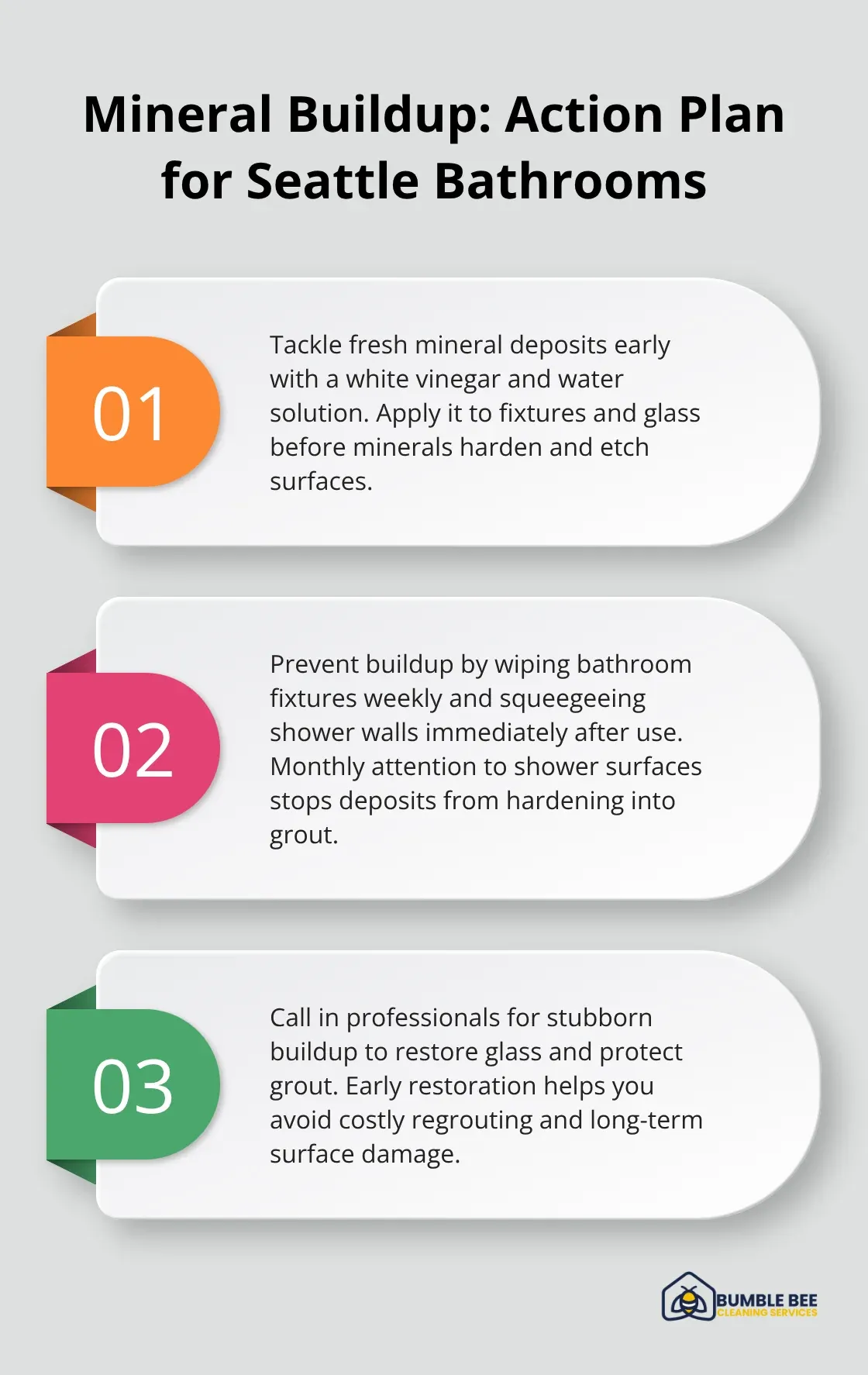
Hard water in the Pacific Northwest compounds moisture problems-mineral deposits from tap water leave calcium, lime, and soap scum on shower walls and bathroom fixtures that regular cleaning alone cannot fully remove without periodic deeper work. Hard water stains in Seattle bathrooms aren’t just cosmetic problems. These mineral deposits accumulate on glass shower doors, faucets, and tile grout, and they worsen over time without intervention.
A white vinegar and water solution tackles fresh deposits, but stubborn buildup requires professional restoration to avoid costly regrouting later. Many Seattle homeowners delay addressing mineral stains until the damage spreads to grout lines, where remediation becomes expensive. Monthly attention to shower surfaces and weekly wiping of bathroom fixtures prevents the heavy mineral accumulation that forces deeper intervention. This preventive approach combined with targeted deep cleaning a few times yearly keeps your bathroom surfaces in good condition and protects your grout from permanent damage.
Understanding these moisture and mineral challenges sets the stage for building a cleaning schedule that actually addresses Seattle’s specific environmental pressures-which is exactly what the next section covers.
Your Weekly and Monthly Seattle Cleaning Routine
Daily Power Cleaning Stops Moisture Before It Settles
A daily 15-minute power clean focused on high-traffic and moisture-prone spaces prevents the rapid accumulation that Seattle’s climate accelerates. Wipe bathroom surfaces, squeegee shower walls immediately after use to prevent mineral deposits, clean kitchen counters, run the dishwasher, and open windows for 15 minutes to improve air circulation even during drizzly weather. This small daily investment stops moisture and allergens from embedding into surfaces where they become harder to remove.
Weekly Tasks That Address Seattle’s Specific Challenges
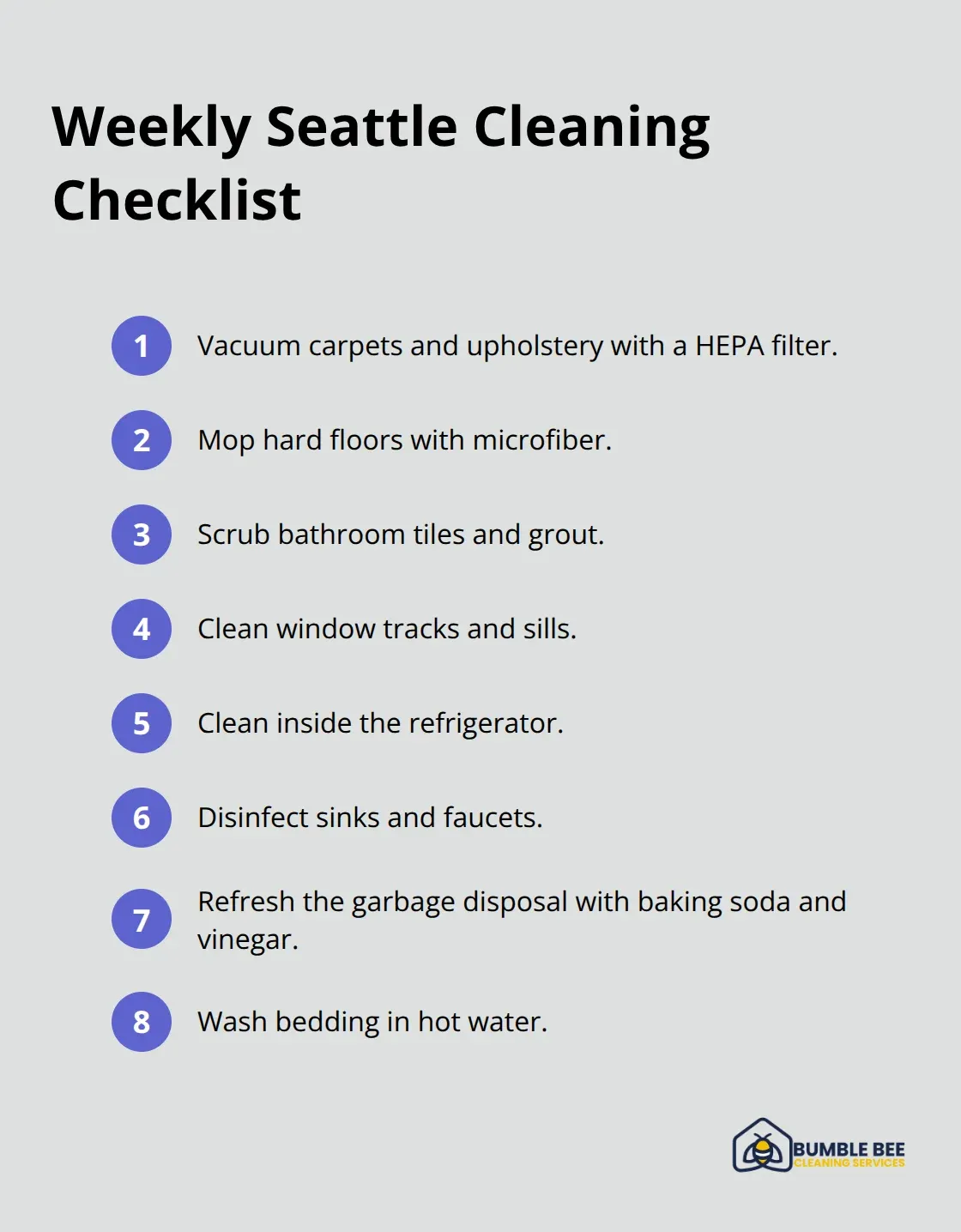
Weekly cleaning builds on this foundation with deeper work that addresses what daily tidying misses. Vacuum carpets and upholstery with a HEPA filter to remove allergens and pet dander, since Seattle’s sealed homes trap allergens faster than homes in drier climates. Mop hard floors with microfiber cloths, scrub bathroom tiles and grout where mineral deposits form, and clean window tracks and sills where condensation collects.
In the kitchen, clean inside the refrigerator weekly, disinfect sinks and faucets, and refresh the garbage disposal with baking soda and vinegar to prevent odor and bacterial growth that thrive in damp conditions. Living areas need dusting with microfiber cloths weekly, plus ceiling fans and baseboards where dust settles heavily. Wash bedding in hot water weekly to kill dust mites that multiply in moisture-heavy environments, vacuum under beds, and rotate mattresses monthly to reduce allergen buildup.
During rainy months from October through March, entryways demand special attention with washable mats cleaned weekly and door handles and light switches wiped daily since these high-touch surfaces accumulate moisture and contaminants tracked inside.
Monthly Deep Work Prevents Hidden Mold and Mineral Problems
Monthly deep cleaning addresses areas that weekly routines overlook and prevents the mineral and mold problems Seattle homeowners face. Focus on baseboards, window tracks, and areas under furniture where dust and moisture accumulate silently. A white vinegar and water solution tackles tough mineral spots on fixtures and glass before deposits harden. Run an empty cycle in the dishwasher and washing machine with vinegar to sanitize internal components where mold can grow unnoticed.
Seasonal Adjustments Keep Your Home Healthy Year-Round
Seasonal adjustments matter more in Seattle than most regions because weather patterns dictate cleaning intensity. From October through March when rain is heaviest, increase entryway cleaning to twice weekly and check for mold in poorly ventilated areas like closets and under sinks. Spring demands deep cleaning of carpets and upholstery with professional equipment to remove allergens effectively. Summer emphasizes dusting and air purification since pollen levels rise, while fall requires checking gutters, downspouts, and weatherstripping before winter moisture sets in.
This rhythm prevents the seasonal mold and moisture problems that hit Seattle homes hardest during winter indoors, where families spend extended time in spaces where allergens concentrate. The cleaning schedule you’ve built so far handles the basics, but Seattle homeowners also face specific obstacles that standard routines don’t fully address-obstacles that require targeted solutions covered in the next section.
Common Cleaning Challenges Seattle Homeowners Face
Mold Grows Fast in Seattle’s Damp Climate
Mold does not just appear on bathroom tiles-it grows inside walls, under sinks, and in closets where moisture sits undisturbed for weeks. Seattle’s 38 inches of annual rainfall creates the exact conditions mold needs: darkness, moisture, and poor air circulation. Moisture events can affect indoor air quality by increasing the likelihood of mold growth and contributing to dust, odor, and VOC concerns.
If you spot black or green discoloration on caulk, grout, or drywall, act immediately. Mold spreads fast in damp climates, and waiting even two weeks allows it to penetrate deeper into materials. Open windows for 15 minutes daily even during drizzle, run bathroom exhaust fans during and 30 minutes after showers, and use a dehumidifier in bedrooms and basements where moisture accumulates silently.
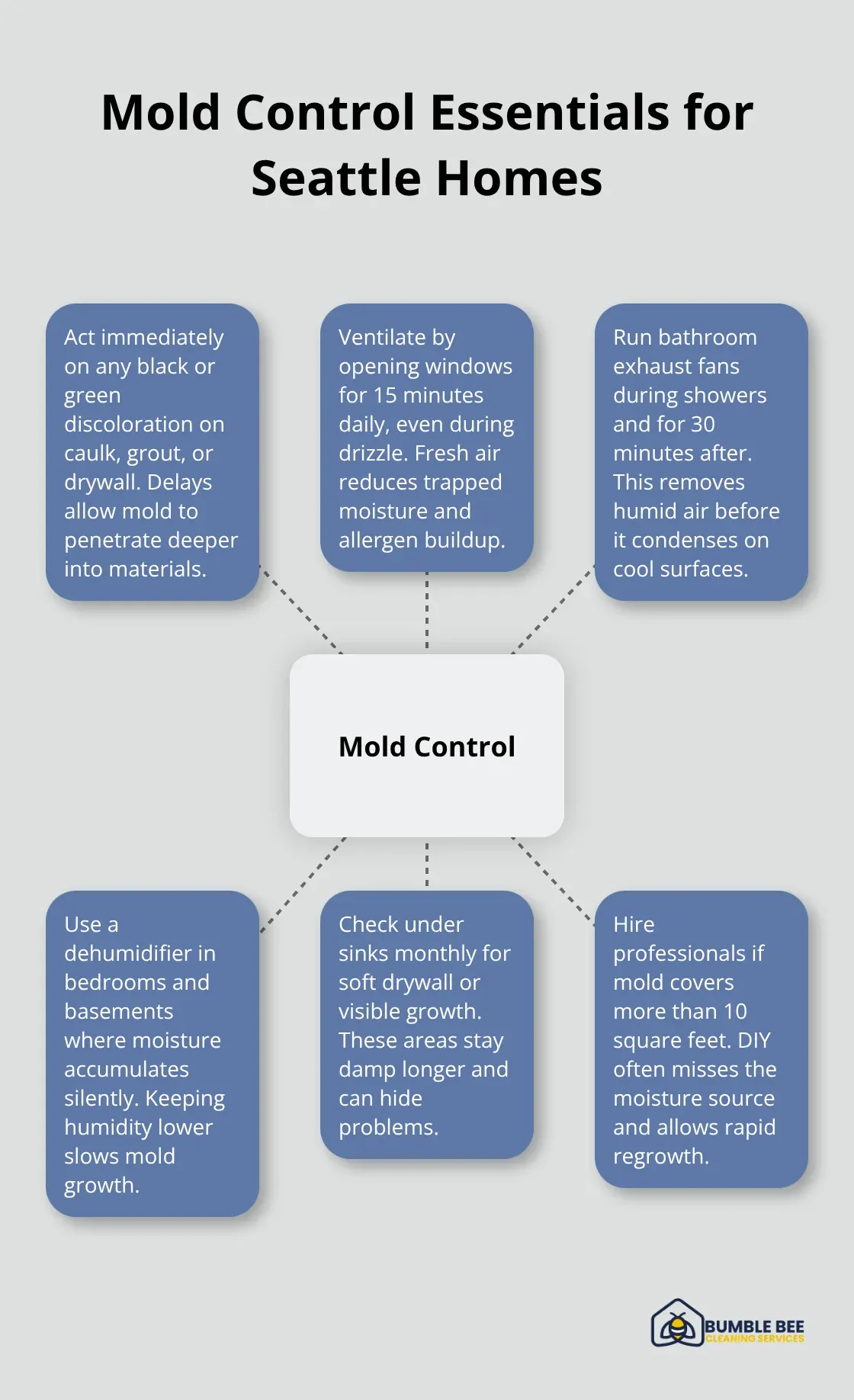
Check under sinks monthly for soft drywall or visible mold growth-these areas stay damp longer than anywhere else in your home. If mold covers more than 10 square feet, professional remediation is necessary because DIY treatment often misses the root moisture source and allows regrowth within weeks.
Hard Water Minerals Embed Into Surfaces
Hard water minerals in the Pacific Northwest are relentless. Calcium and lime deposits do not just sit on shower glass-they embed into grout lines and faucet finishes, where they become nearly impossible to remove without damaging the surface underneath. Weekly wiping of shower walls with a squeegee immediately after use prevents mineral buildup before it hardens.
Monthly treatment with white vinegar and water solution tackles fresh deposits, but stubborn buildup requires professional glass shower cleaning to restore clarity without scratching. Soap scum mixed with minerals creates a stubborn film that standard bathroom cleaners cannot break down effectively.
Outdoor Debris Tracked Inside Accelerates Moisture Damage
Outdoor debris tracked inside during rainy months compounds moisture problems and creates slip hazards. Place washable mats at every entry point and clean them weekly because Seattle’s wet season deposits mud, pollen, and organic matter that accelerate mold growth when left on floors.
Wipe door handles and light switches daily during October through March since these high-touch surfaces accumulate moisture and contaminants that spread bacteria throughout your home. Entryways are where Seattle’s wet climate directly enters your living space, and neglecting them allows moisture penetration that reaches carpets, baseboards, and subflooring where damage becomes expensive.
Final Thoughts
Seattle’s moisture, mineral deposits, and trapped allergens demand a cleaning approach built specifically for this climate. The weekly and monthly routines in this Seattle home cleaning guide work because they address what your home actually faces, not generic advice that ignores the Pacific Northwest’s unique pressures. Consistency matters more than intensity, and a daily 15-minute power clean plus weekly deep work prevents the expensive problems that hit Seattle homes when moisture sits unchecked for weeks.
Professional cleaning services fit into this plan as a force multiplier, not a replacement for your routine. We at Bumble Bee Cleaning Services work with Seattle homeowners who understand that outsourcing deep cleaning and recurring maintenance frees time for life while protecting your home from the damage moisture causes. Our team handles the intensive work that prevents mold from embedding into walls, mineral deposits from hardening into grout, and allergens from concentrating to levels that trigger respiratory problems.
Start by picking one room and committing to the daily and weekly tasks outlined here for two weeks. Track what works and what feels unsustainable, then decide which monthly or seasonal tasks drain your time most. Many Seattle homeowners find that hiring professionals for monthly deep cleaning or seasonal work costs far less than the water damage, mold remediation, or grout replacement that neglect creates.
For more information about our cleaning services in Seattle and Atlanta, or to request a cleaning quote, call or text us at 425-786-1360 or email us at info@qbclean.com
