
Your family’s health matters more than saving a few dollars on cleaning supplies. Many Seattle families are discovering that traditional chemical cleaners come with hidden costs-respiratory problems, allergies, and toxic residue on surfaces where your kids and pets spend time.
We at Bumble Bee Cleaning Services have seen firsthand how Seattle eco-friendly cleaning products deliver real results without the health risks. This guide shows you why the switch makes sense and how to do it.
Why Seattle Families Are Making the Switch
Seattle residents have transformed their city into one of America’s greenest metros, and that environmental consciousness extends straight into their homes. According to the American Lung Association, household cleaning products contribute significantly to indoor air quality problems, with volatile organic compounds from traditional cleaners linked to respiratory issues. Seattle families aren’t waiting around for problems to develop-they actively replace conventional cleaners with plant-based alternatives that actually work. The shift isn’t driven by guilt or trend-following; it’s driven by data. Studies from the University of Washington show that children in homes using traditional chemical cleaners experience higher rates of asthma and allergies compared to homes using eco-friendly products. Parents in the Seattle area connect these dots and make changes that protect their kids’ lungs and their pets’ health at the same time.
Health Risks Hidden in Your Cleaning Cabinet
Traditional cleaning products contain chemicals like ammonia, bleach, and phthalates that linger in your home long after you finish scrubbing. When you spray conventional window cleaner or bathroom scrub, those fumes don’t disappear-they accumulate in carpet fibers, furniture, and the air your family breathes daily. The EPA reports that indoor air can be two to five times more polluted than outdoor air, partly because of these chemical residues. Seattle’s damp climate means homes stay closed during winter months, trapping these toxins inside. Eco-friendly cleaners eliminate this problem entirely.
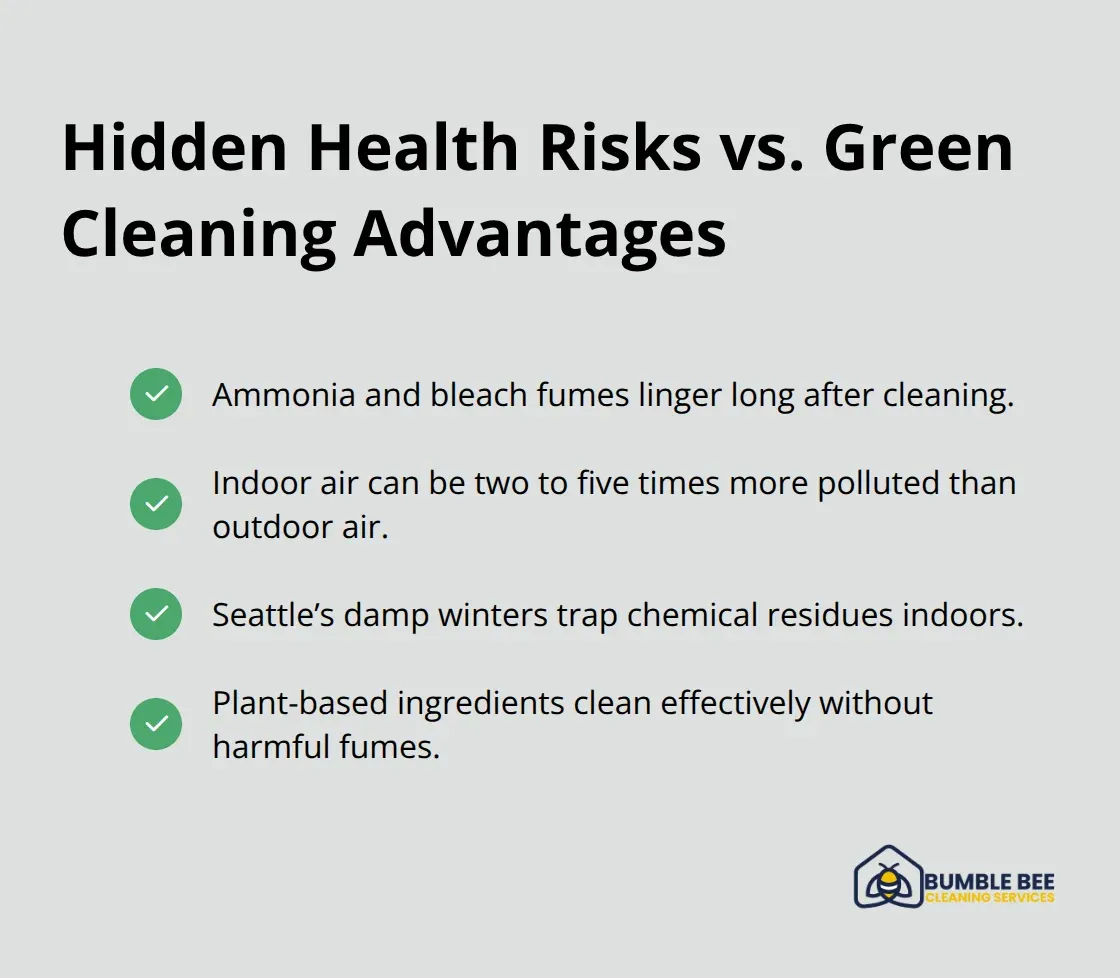
Plant-based ingredients like vinegar, citric acid, and essential oils break down dirt and grime without releasing harmful fumes. They work on the same surfaces-kitchen counters, bathroom tiles, windows-but without the respiratory consequences or the chemical smell that lingers for hours.
Environmental Conscience Meets Practical Results
Seattle’s commitment to sustainability runs deeper than just recycled coffee cups. King County reports that household hazardous waste from cleaning products costs the region millions annually in proper disposal. When you pour traditional cleaners down the drain, they don’t magically disappear-they enter waterways and affect local ecosystems. Eco-friendly products break down naturally and safely, reducing your household’s environmental footprint. More importantly, they perform. Plant-based cleaners tackle grease, soap scum, and hard water stains just as effectively as their toxic counterparts (the performance gap that existed ten years ago has closed completely). Seattle families discover they don’t sacrifice cleaning power when they switch to green products; they only sacrifice the chemical odor and health risks.
What Makes Green Cleaners Actually Work
Plant-based ingredients work through chemistry, not marketing hype. Citric acid cuts through mineral deposits and soap buildup the same way traditional acidic cleaners do. Essential oils like lemon and tea tree oil contain natural solvents that dissolve grease without ammonia’s toxicity. Vinegar’s acetic acid content handles disinfection tasks that bleach handles, but without creating chlorine gas when mixed with other products (a real hazard in homes). These ingredients have cleaned homes and businesses for decades-eco-friendly products simply harness what works and remove what doesn’t. Your Seattle home gets the same sparkling results without the health trade-offs that come with conventional products.
What Green Cleaning Actually Does for Your Family’s Health
Immediate Health Improvements in Your Home
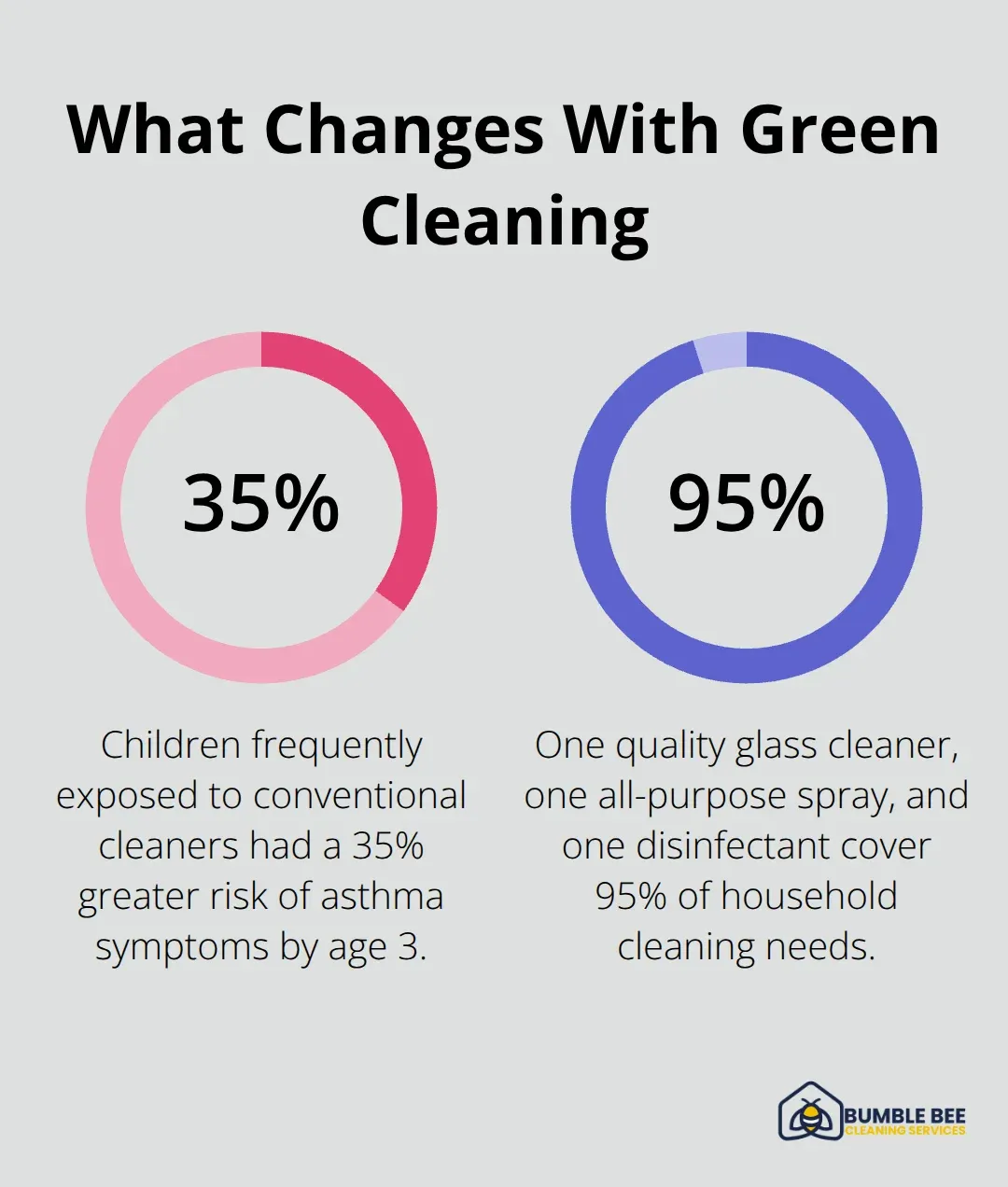
Green cleaning products eliminate the chemical exposure that accumulates in your home day after day. When you stop using traditional cleaners, you immediately reduce the volatile organic compounds circulating through your living spaces. A study published in Environmental Health Perspectives found that children exposed more frequently to conventional cleaning products had a 35% greater risk of developing asthma symptoms by the age of three. That’s a significant health outcome.
Your Seattle home’s air quality improves within weeks of switching, and that improvement compounds over months. Parents notice their kids stop waking up with congestion, pets stop scratching their skin excessively, and the persistent chemical smell that seems normal until it’s gone finally vanishes.
How Your Family Responds to Cleaner Air
The respiratory system responds immediately to cleaner air. You’ll see this in reduced coughing, fewer allergy flare-ups during cleaning days, and better sleep quality for the whole household. Lower toxin exposure also means fewer skin irritations and reduced allergic reactions to surfaces kids and pets touch constantly-kitchen counters, bathroom floors, and furniture where residual chemical cleaners accumulate.
Infants sensitive to air quality and older family members with respiratory conditions both benefit from this shift. The change affects everyone in your household, from the youngest to the oldest residents.
Protecting Your Home’s Surfaces Long-Term
Green products protect your home’s surfaces in ways traditional cleaners damage them over time. Chemical cleaners cause residue, streaking, and buildup that dulls finishes and strips protective coatings. Plant-based cleaners clean without this accumulation, so your countertops, floors, and fixtures maintain their integrity longer.
The cost difference between green and conventional products has narrowed significantly; many plant-based options now cost the same or less than traditional cleaners when you account for the fact that they work more efficiently. Seattle families find that switching to eco-friendly cleaning removes a source of daily chemical exposure while extending the life of your home’s materials.
Making Green Cleaning Work for Your Household
Finding quality green products that deliver results matters more than the brand name on the bottle. Look for plant-based cleaners with transparent ingredient lists-you should recognize most of what’s listed. Test products on inconspicuous areas first, especially on delicate surfaces like natural stone or hardwood. Many Seattle families discover that one or two quality green products handle most household cleaning tasks, reducing both cost and clutter under the sink.
The transition to eco-friendly cleaning doesn’t require replacing everything at once. Use up your current products, then stock your cleaning cabinet with plant-based alternatives as you run out. This gradual approach lets you test what works best for your specific home and family needs without overwhelming your budget or creating waste.

What Actually Happens When You Use Green Cleaners
Plant-based cleaners work through straightforward chemistry, not marketing promises. Citric acid dissolves mineral deposits and soap scum the same way traditional acidic cleaners do, breaking down calcium buildup on faucets and shower doors without producing toxic fumes. Essential oils like lemon and tea tree contain natural solvents that cut through grease on stovetops and kitchen cabinets. Vinegar’s acetic acid disinfects surfaces effectively, and unlike bleach, it won’t create dangerous chlorine gas if accidentally mixed with ammonia-based products. These ingredients have cleaned homes for generations; modern eco-friendly products simply concentrate what works and eliminate what damages your health. Most Seattle families need only two or three quality green products to handle their entire home, compared to the five to eight conventional cleaners gathering dust under most sinks. This simplification cuts costs immediately and reduces the chemical inventory circulating through your living spaces.
Testing Performance Against What You Know Works
Plant-based cleaners now match or exceed traditional products in real-world performance. Hard-water stains, soap scum, and greasy buildup respond equally well to citric acid and vinegar-based solutions as they do to commercial chemical cleaners. The performance gap that existed a decade ago has completely closed. When testing green products in your Seattle home, spray on a small area first, let it sit for 60 to 90 seconds (this matters more than the product itself), then wipe thoroughly. Most households find that plant-based cleaners actually work faster because they don’t leave chemical residue requiring additional rinsing. Your bathroom tiles and kitchen counters achieve the same shine without the lingering smell that chemical cleaners leave behind.
Choosing Products That Actually Deliver
Look for green cleaners with transparent ingredient lists. Avoid products marketing themselves as eco-friendly without specific ingredient disclosure-this vagueness signals marketing over substance. Plant-based cleaners from established brands like Seventh Generation, Mrs. Meyer’s Clean Day, and Ecos have proven track records in Seattle homes and cost between $3 and $6 per bottle, comparable to traditional cleaners like Windex or Lysol. Read labels carefully; some products claim to be green while containing sodium lauryl sulfate or other chemicals you wanted to avoid. Test products on inconspicuous areas first, especially on natural stone counters or hardwood floors where acidic cleaners can cause etching if used improperly. Many Seattle families find that one quality glass cleaner, one all-purpose spray, and one disinfectant cover 95% of their household cleaning needs. This focused approach costs less than maintaining a full cabinet of specialized conventional products and eliminates decision fatigue when cleaning day arrives.
Making the Switch to Green Cleaning
Transition your Seattle home to eco-friendly cleaning one product at a time as your current supplies run out. Start with the cleaner you use most frequently-likely an all-purpose spray or glass cleaner-and swap it for a plant-based alternative. This approach spreads costs across weeks or months and lets you test what works best for your specific surfaces before committing to a full cabinet overhaul. Most Seattle families need only three products: an all-purpose cleaner, a glass cleaner, and a disinfectant that cost between three and six dollars per bottle, matching traditional cleaner prices.
The financial case for switching strengthens over time as you avoid health costs that accumulate from chemical exposure. Fewer doctor visits for respiratory issues, fewer allergy medications, and lower skin irritation treatments add up significantly across a year. Your home’s surfaces also last longer without chemical residue accumulation, which extends the life of countertops, fixtures, and finishes. Over a year, a family of four typically spends between forty and sixty dollars on cleaning supplies regardless of whether they choose green or conventional products-the difference lies entirely in what happens to your family’s health and your home’s condition.
Professional Seattle eco-friendly cleaning services accelerate these benefits significantly without requiring you to handle the physically demanding work yourself. We at Bumble Bee Cleaning Services use plant-based products throughout our recurring home cleaning and deep cleaning services, eliminating the chemical exposure that accumulates from weekly or monthly cleaning cycles. Our team delivers the same sparkling results you’d achieve with conventional cleaners, minus the health trade-offs, and flat-rate pricing makes professional green cleaning affordable for Seattle families.
For more information about our cleaning services in Seattle and Atlanta, or to request a cleaning quote, call or text us at 425-786-1360 or email us at info@qbclean.com
