
Seattle’s damp climate creates unique cleaning challenges that standard approaches simply don’t address. Moisture seeps into corners, mold thrives in hidden spaces, and regular cleaning leaves deep-seated grime untouched.
Deep cleaning tackles what surface cleaning misses. We at Bumble Bee Cleaning Services know that Seattle deep cleaning tips need to account for your region’s specific moisture problems and the health risks they bring.
Why Deep Cleaning Matters in Seattle
Seattle’s Damp Climate Creates Unique Challenges
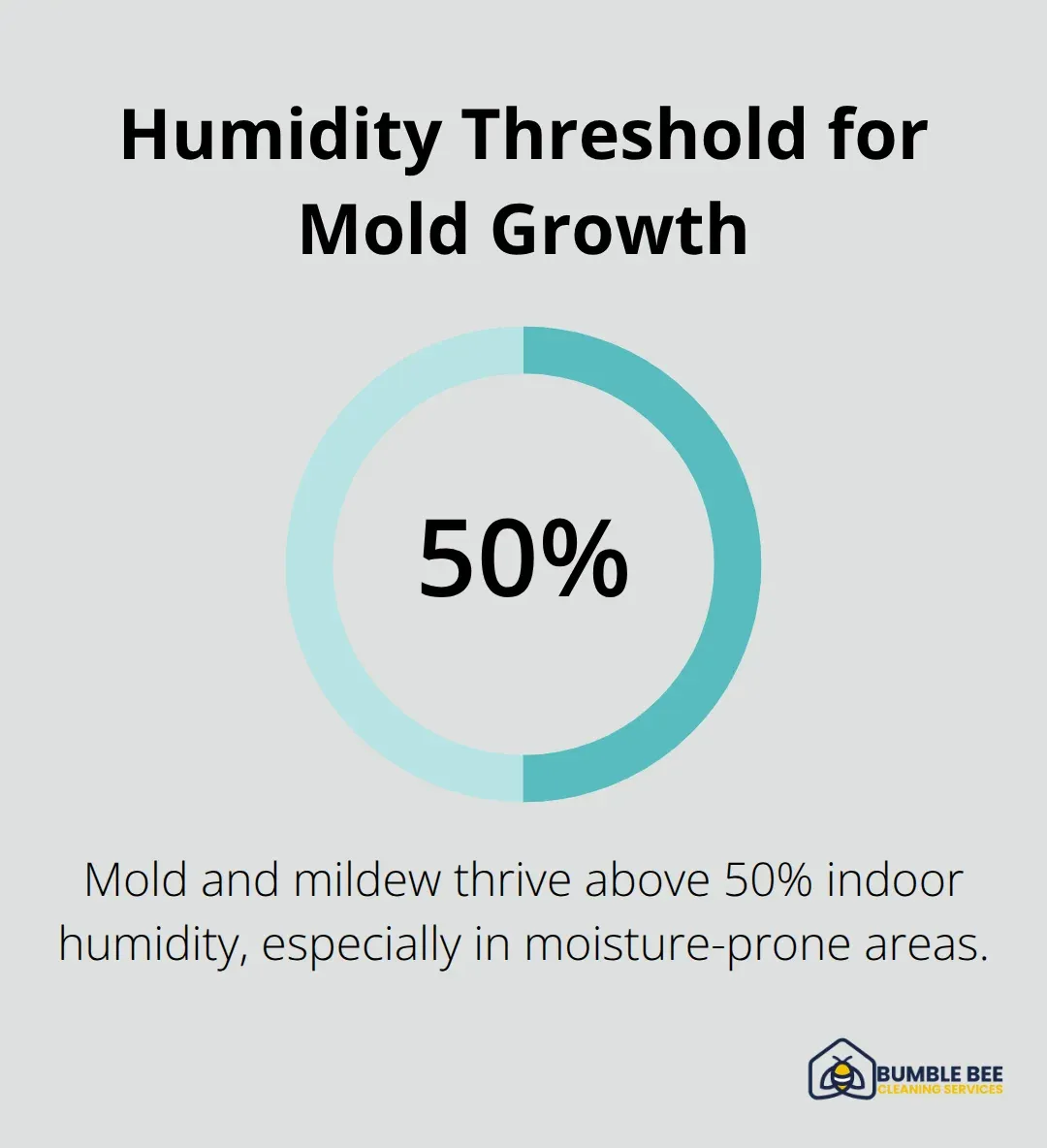
Seattle’s climate isn’t just wet-it’s relentlessly damp. The Pacific Northwest averages 152 rainy days per year, and that moisture doesn’t stay on the streets. It seeps into your home, settling in carpets, under baseboards, inside wall cavities, and within bathroom tiles. This constant humidity creates the perfect breeding ground for mold and mildew, which thrive in moisture levels above 50 percent.
Surface cleaning removes what you can see, but it leaves behind the moisture and organic matter that feed mold colonies. Deep cleaning addresses this directly. It removes trapped moisture, sanitizes affected areas, and targets the hidden spaces where mold takes root before it becomes a health hazard.
Health Risks That Surface Cleaning Misses
The health impact of mold exposure is immediate and measurable. According to the Environmental Protection Agency, mold exposure triggers respiratory issues, allergies, and asthma attacks in vulnerable populations. Children, elderly residents, and anyone with compromised immunity face heightened risk.
Beyond mold, deep cleaning removes accumulated dust, pet dander, and bacteria that regular vacuuming misses. Dust accumulates in air vents, on ceiling fans, inside light fixtures, and along baseboards-areas most people never touch during routine cleaning. When you breathe this air daily, you inhale particles that trigger inflammation and reduce lung function.
Why High-Touch Surfaces Matter
Deep cleaning also sanitizes high-touch surfaces like doorknobs, light switches, and remote controls, which harbor bacteria. These surfaces collect pathogens from daily contact, and standard cleaning leaves them contaminated. A thorough deep clean eliminates this hidden threat.
When Deep Cleaning Becomes Essential
Scheduling deep cleaning every six to twelve months gives your home a genuine reset and protects your family’s respiratory health. For Seattle residents dealing with seasonal allergies and mold sensitivity, skipping deep cleaning isn’t a convenience choice-it’s a health risk that compounds over time. The specific challenges of your region demand a targeted approach that goes far beyond what routine cleaning accomplishes.
Room-by-Room Deep Cleaning Guide
Kitchen Deep Cleaning Essentials
Kitchen surfaces accumulate grease, bacteria, and moisture faster than any other room in your home, requiring aggressive action. Start inside your refrigerator and oven, not just the exteriors. Remove shelves and drawers, wash them separately, and wipe down interior walls where spills congeal and mold begins. The oven requires scrubbing the interior walls, racks, and glass door-neglecting this leaves behind burnt residue that attracts pests and contaminates future meals.
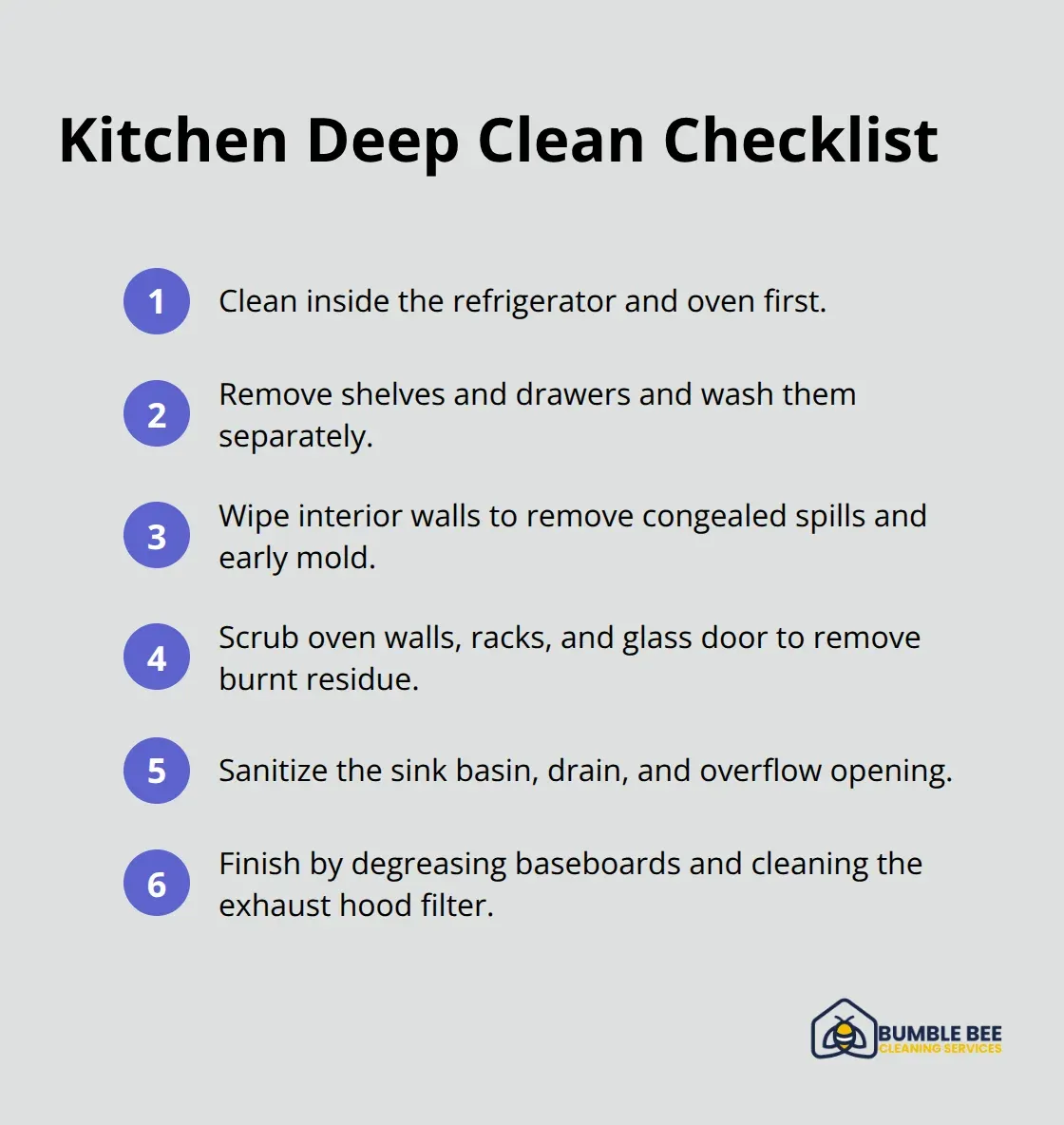
Sanitize your sink basin thoroughly, including the drain and overflow hole where bacteria colonies thrive. Clean inside cabinets and drawers, wiping shelves and removing expired products. Grout between tiles harbors mold in Seattle’s damp climate, so scrub kitchen tile grout with a stiff brush and a mildew-killing solution. Baseboards collect grease splatter and dust, requiring a damp cloth and elbow grease to restore them. Don’t forget the exhaust hood filter above your stove-grease buildup reduces ventilation and creates a fire hazard.
Bathroom Sanitization and Mold Prevention
Bathrooms need the most aggressive mold prevention because they combine moisture, warmth, and organic matter in concentrated spaces. Scrub tile grout with a brush and a solution containing bleach or hydrogen peroxide, as these kill mold at its source rather than masking it. Clean inside the toilet bowl rim and under the waterline, where bacteria accumulate invisibly. Shower walls and doors require scrubbing, not just rinsing, to remove soap scum and mold spores embedded in porous surfaces.
Wipe down exhaust vents to remove dust that blocks air circulation and traps humidity. Inside medicine cabinets and under-sink areas collect moisture and mold, so remove items, wipe shelves dry, and leave doors open periodically to allow airflow.
Living Areas and Bedroom Strategies
Living areas and bedrooms need ceiling fan blades dusted thoroughly since accumulated dust falls onto surfaces you touch daily. Baseboards throughout your home collect dust and pet dander, requiring a damp microfiber cloth to capture particles rather than spreading them. Vacuum under furniture, inside closets, and along walls where dust settles. Light fixtures and ceiling corners accumulate cobwebs and dust, so wipe them down during deep cleaning.
These room-specific actions address Seattle’s moisture problems directly and eliminate the hidden threats that surface cleaning ignores. However, many homeowners struggle with the physical demands and time commitment that deep cleaning requires, which is why understanding what mistakes to avoid becomes your next critical step.
Common Deep Cleaning Mistakes to Avoid
Using Wrong Products for Seattle’s Climate
Most Seattle homeowners reach for generic products designed for dry climates before they even start cleaning. Bleach-based cleaners, ammonia solutions, and standard degreasers fail to address Seattle’s moisture problem effectively. Bleach kills surface mold but doesn’t penetrate porous materials like grout or tile, leaving spores dormant until humidity returns. Ammonia actually attracts moisture and can leave residue that feeds mold growth. For Seattle’s climate, hydrogen peroxide-based mold killers work better because they penetrate porous surfaces and kill mold at the root without leaving moisture-attracting residue. Vinegar solutions seem eco-friendly but lack the sanitizing power needed for bathroom tile and grout in high-moisture environments. The Environmental Protection Agency recommends quaternary ammonium compounds or hydrogen peroxide for mold-prone areas, not general-purpose cleaners. You’ll waste hours scrubbing with the wrong product, see temporary results, and watch mold return within weeks.
Neglecting Hidden Problem Areas
Equally damaging is ignoring hidden problem areas that demand attention before mold takes hold. Air ducts, HVAC vents, and inside ductwork accumulate dust that reduces air circulation and traps humidity indoors. Baseboards harbor moisture-loving mold colonies in their bottom edges where they meet flooring. Ceiling corners and light fixtures collect dust that falls onto surfaces you touch daily, recontaminating your home. Under sinks and inside cabinets develop mold without you noticing until the smell becomes unbearable.
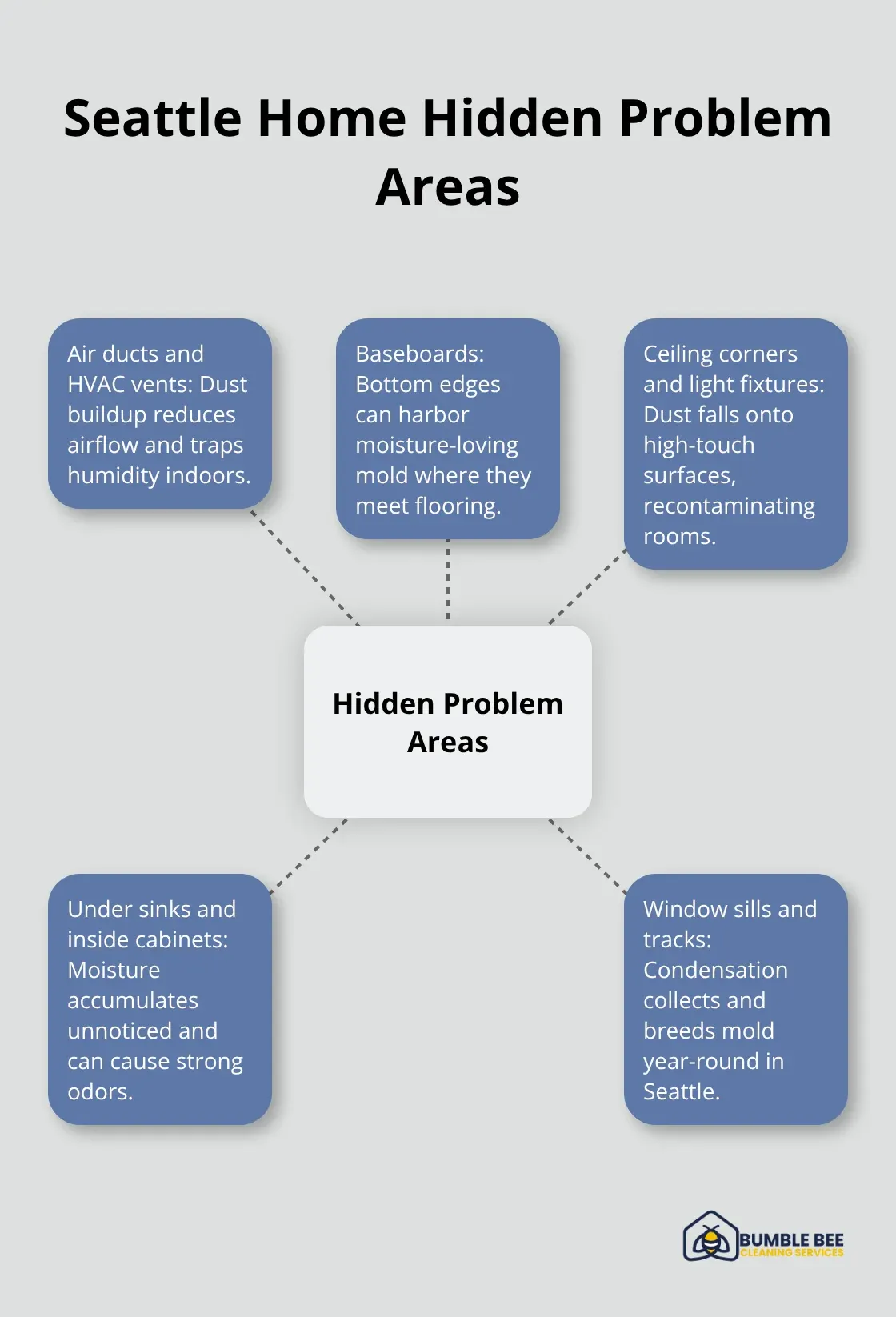
Window sills and tracks trap condensation that breeds mold year-round in Seattle. Most homeowners skip these areas because they’re inconvenient or overlooked, then wonder why deep cleaning doesn’t produce lasting results.
Skipping Professional Equipment and Tools
Professional equipment separates genuine deep cleaning from surface scrubbing. HEPA-filter vacuums capture microscopic particles that standard vacuums recirculate into your air, reducing allergens. Pressure washers remove embedded mold from outdoor surfaces before it migrates indoors. Carpet extraction machines pull moisture and embedded dirt that vacuuming leaves behind-critical in Seattle’s damp climate where carpets stay moist longer. Without this equipment, you fight moisture and mold with inadequate tools, guaranteeing incomplete results and wasted effort.
Final Thoughts
Deep cleaning your Seattle home requires commitment, but the payoff extends far beyond appearance. You’ve learned that Seattle’s moisture-heavy climate demands targeted strategies, room-specific approaches, and the right products to prevent mold from returning. Surface cleaning alone leaves your family exposed to respiratory risks and hidden contamination that compounds over time, so these Seattle deep cleaning tips address your region’s unique challenges directly, from hydrogen peroxide solutions that penetrate grout to HEPA filtration that captures allergens standard vacuums miss.
Knowing what to clean and how to clean it differs from executing a thorough deep clean while managing work, family, and daily responsibilities. Professional deep cleaning services handle the physical demands, specialized equipment, and expertise that guarantee results lasting months rather than weeks-we at Bumble Bee Cleaning Services bring experience and eco-friendly products designed for Seattle’s climate to tackle hidden problem areas and apply the right solutions for mold prevention and moisture control.
Between deep cleaning sessions, maintain your results through consistent action. Wipe down bathroom surfaces weekly to prevent mold accumulation, run exhaust fans during and after showers to reduce humidity, and vacuum high-traffic areas twice weekly with a HEPA filter. Schedule deep cleaning every six to twelve months depending on your home’s condition and your family’s health needs, because for Seattle residents, this protects your home and health against the climate challenges that threaten year-round.
For more information about our cleaning services in Seattle and Atlanta, or to request a cleaning quote, call or text us at 425-786-1360 or email us at info@qbclean.com
