
A poorly written cleaning contract can cost you thousands in unexpected fees, service gaps, or disputes. We at Bumble Bee Cleaning Services have seen Seattle commercial cleaning contracts that leave businesses vulnerable to liability issues and unclear service standards.
The difference between a weak agreement and a strong one comes down to knowing what to negotiate. This guide walks you through the essential terms, red flags, and protections you need in place.
Understanding Your Cleaning Service Needs
Assess Your Facility Through a Walkthrough
Conduct a facility walkthrough before you contact any cleaning company. Document everything: square footage, surface types, traffic patterns, and problem areas. Seattle’s wet climate creates specific challenges that affect your cleaning strategy. You must identify which areas get touched most, including door handles, light switches, elevator buttons, and shared kitchen surfaces. In food-service facilities, compliance with the Seattle Food Code means daily cleaning and sanitization of food-contact surfaces, preparation areas, and storage zones.
Match Your Facility Type to Cleaning Standards
Your facility type determines what cleaning standards apply. A medical office needs different protocols than a retail space. A restaurant requires deep cleaning of ovens, grills, and exhaust hoods weekly, while an office might need only surface disinfection and floor maintenance. Workplace safety standards emphasize slip-and-fall hazard prevention, which in Seattle means extra attention to entryway cleaning during wet months and proper floor care year-round.
Define Your Tasks and Frequency
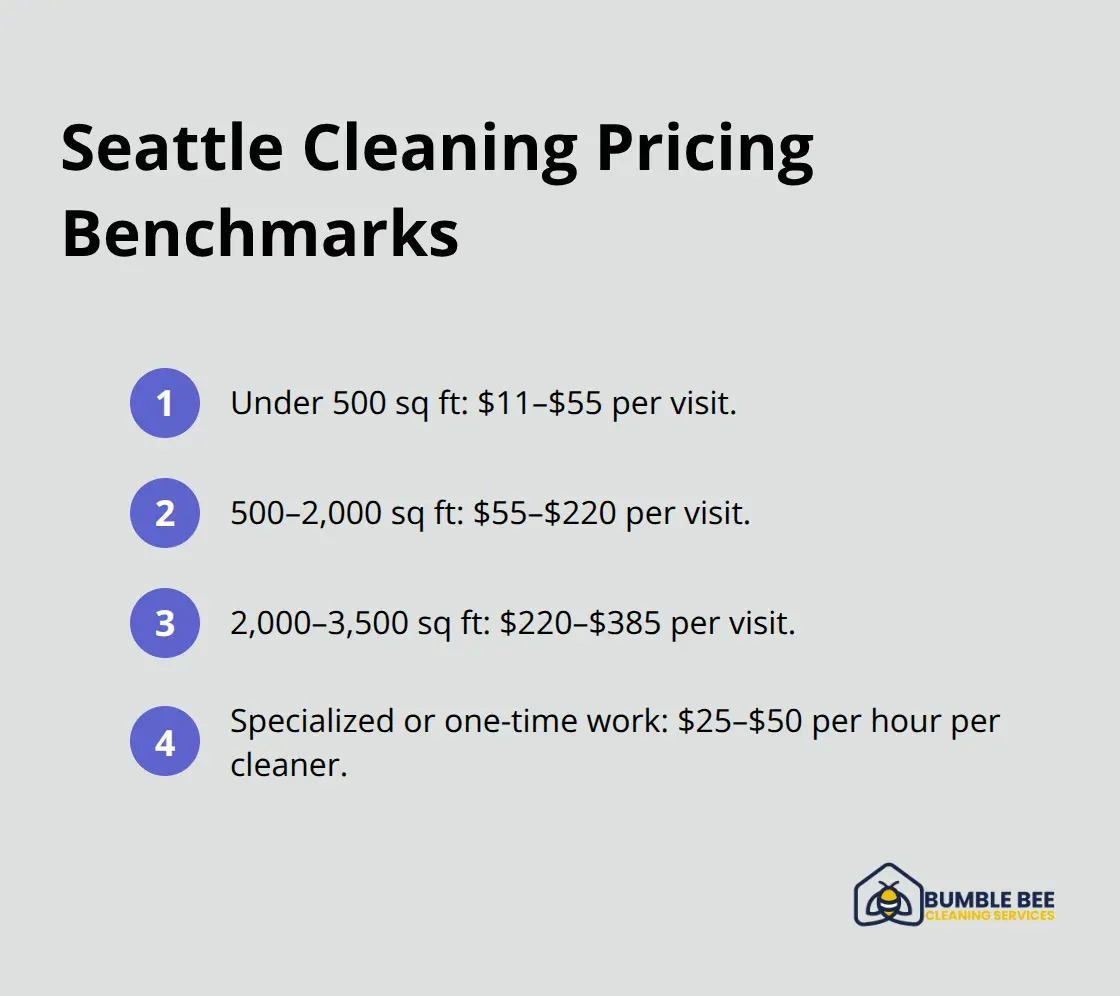
Pricing depends partly on how you define your needs. Square footage pricing in Seattle typically ranges from $11 to $55 per visit for spaces under 500 square feet, $55 to $220 for 500 to 2,000 square feet, and $220 to $385 for 2,000 to 3,500 square feet, according to regional cleaning industry data. Hourly rates run $25 to $50 per hour per cleaner for specialized or one-time work. List exactly which tasks matter most: restroom cleaning and restocking twice daily, trash and recycling removal, dusting, vacuuming, floor care, window cleaning, high-touch surface disinfection, and breakroom sanitization.
Specify frequency for each task. Daily tasks differ from weekly deep-clean tasks, which differ from monthly maintenance like carpet cleaning or air duct ventilation.
Clarify Supplies, Equipment, and Seasonal Needs
Avoid vague language in your contract. Your cleaning partner must detail which supplies and equipment they provide and which you supply. This prevents cost disputes later. Ask for eco-friendly product options aligned with Seattle’s Environmental Management Program. Your contract should address seasonal adjustments as well. Winter months in Seattle demand more frequent entryway cleaning and moisture control to prevent mold growth, so build flexibility into your agreement to increase frequency during wet periods without triggering large additional fees. These specifics form the foundation for negotiating contract terms that protect your business and set clear expectations with your cleaning provider.
Key Contract Terms to Negotiate
Specify Cleaning Schedules and Response Times
Your contract must state exactly when cleaning happens and what occurs if the cleaner misses a scheduled day. Write down the specific days and times-for example, Monday through Friday at 6 p.m., or twice daily at 9 a.m. and 5 p.m. for restrooms. Include a response time clause that defines how quickly your provider reacts to urgent issues. Most Seattle commercial cleaning contracts should require a 24-hour initial response to reported problems. If your building has a food-service area or high-traffic zones, you need faster turnaround times for spills or contamination. Specify who your point of contact is and whether you communicate via email, phone, or a dedicated app. This matters more than it sounds-vague communication channels lead to delays and finger-pointing when standards slip.
Define Measurable quality standards
Quality standards must be measurable, not subjective. Instead of saying the space should be clean, define what clean means. For example: restrooms sanitized twice daily with documented checklists, high-touch surfaces disinfected daily using EPA-approved products, floors vacuumed and mopped with no visible debris, and windows cleaned monthly inside and out. Request that your provider use digital checklists or photographic evidence to prove work completion. Ask for monthly or quarterly quality audits with specific metrics like task completion rates and cleanliness scores.
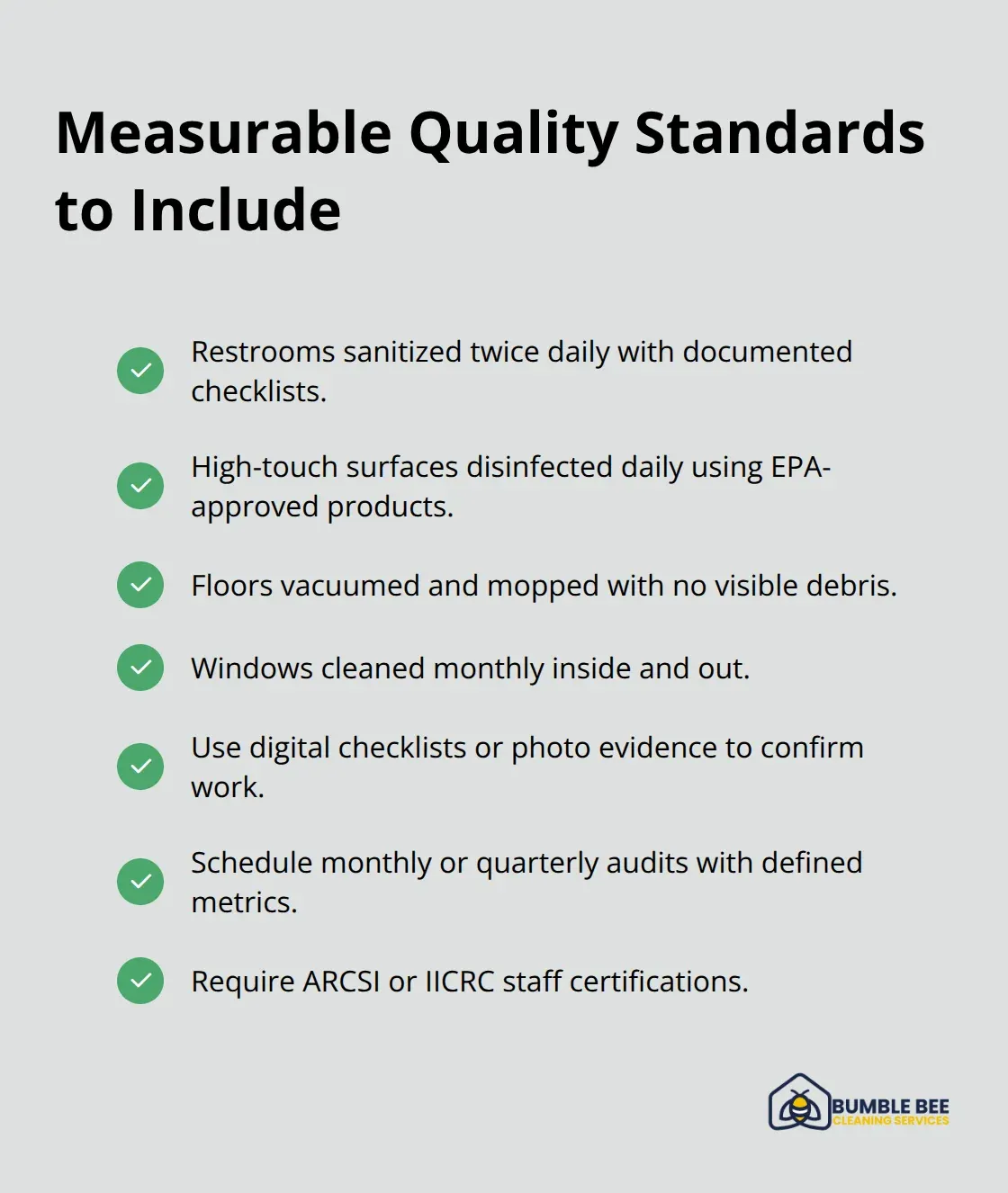
Many Seattle businesses overlook this, then discover months later that corners were cut. Require your cleaning partner to hold staff certifications from recognized bodies like ARCSI or IICRC, which signal trained professionals who understand safety protocols and industry standards.
Structure Transparent Pricing and Payment Terms
Pricing structure determines whether you pay hourly rates, flat fees, or square-footage-based pricing. Seattle’s market typically charges $25 to $50 per hour per cleaner for specialized work, or flat rates based on square footage. Larger spaces often receive better per-unit pricing. Demand a transparent breakdown showing base costs, any extra fees for specialized services like carpet shampooing or window washing, and whether supplies are included or billed separately. State clearly when invoices are due and what payment methods you accept. Include language that allows for some flexibility in service frequency or scope without incurring significant additional costs, and schedule contract reviews every three to six months to catch cost creep before it becomes a problem. These terms form the foundation for a working relationship, but they also expose vulnerabilities that need protection.
Red Flags and Protection Clauses
Verify Insurance Coverage and Liability Protection
Most Seattle commercial cleaning contracts lack adequate insurance requirements, leaving your business exposed if a cleaner gets injured or damages your property. Demand proof of general liability insurance with at least $1 million in coverage and workers’ compensation insurance that meets Washington State requirements. Your cleaning provider must name your business as an additional insured on their liability policy, which protects you if their negligence causes harm. Request certificates of insurance before signing anything, and verify they remain current annually.
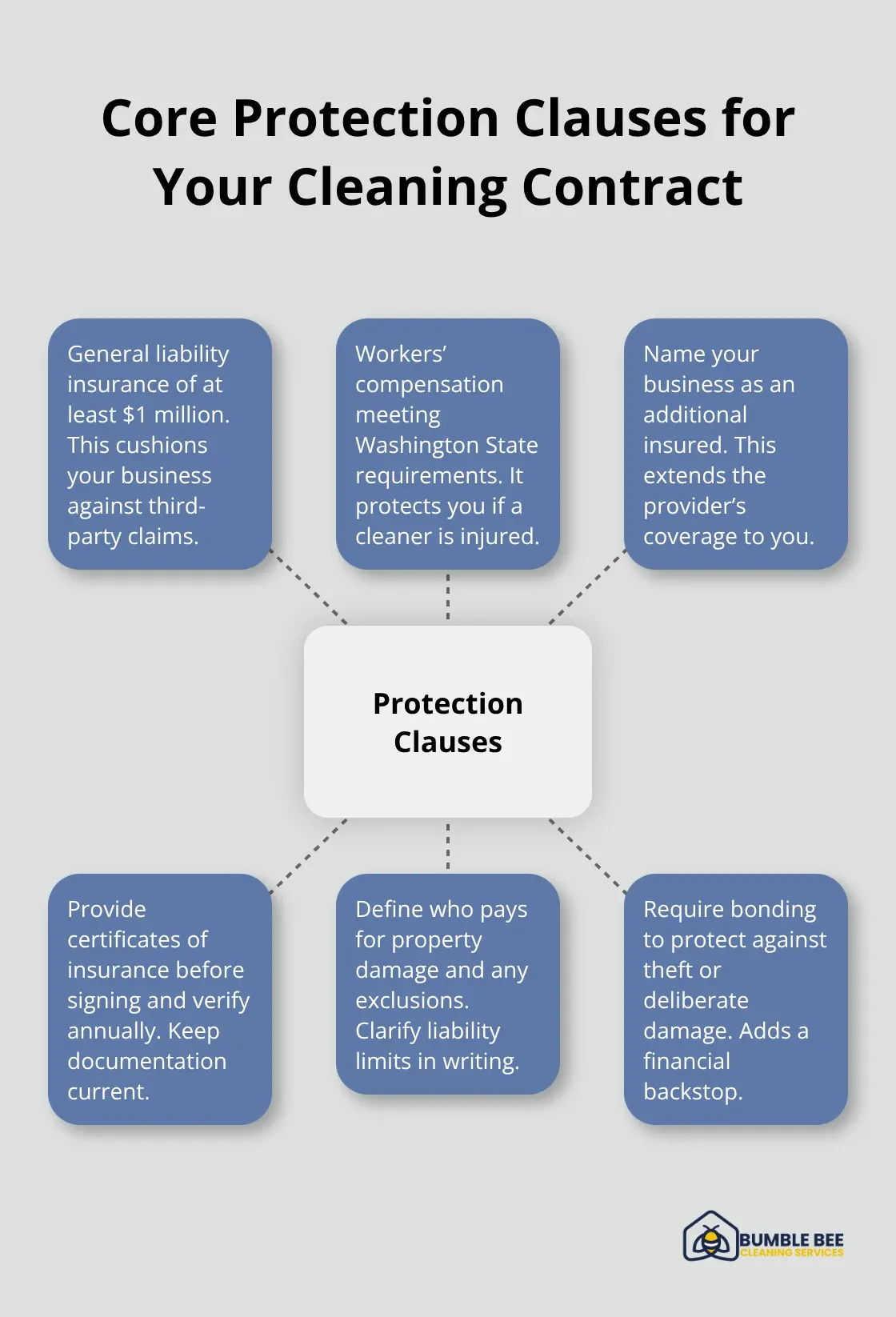
Many Seattle businesses skip this step, then face lawsuits when incidents occur. Your contract must specify what happens if cleaning equipment damages flooring, fixtures, or equipment. Define liability limits clearly: who pays for damage, up to what amount, and what remains excluded. Include a clause requiring your cleaner to carry bonding, which protects against theft or deliberate property damage. Without these protections, a single incident can cost thousands in legal fees alone.
Establish Service Level Agreements with Clear Consequences
Service level agreements separate professional cleaning companies from unreliable ones. Your contract must define exactly what happens when your provider fails to meet standards. Specify that missed appointments, incomplete tasks, or quality failures trigger immediate notification and corrective action within 24 hours, not vague language about best efforts. Include performance remedies such as service credits or rate reductions for repeated failures, not just apologies. State how many documented failures before you can terminate without penalty. Most Seattle contracts should allow termination after two to three consecutive service failures with documentation. This approach holds your provider accountable while giving them a fair chance to improve.
Define Clear Termination Rights and Exit Procedures
Define termination rights clearly: either party should have the ability to exit with 30 days written notice and no cancellation fees if the other party breaches the agreement. Avoid automatic renewal clauses that lock you in without active consent, and require your cleaning provider to give 30 days notice before any price increases. These provisions protect both sides and establish accountability throughout your contract period. A well-structured exit clause prevents you from overpaying for substandard service or getting trapped in an unfavorable agreement.
Final Thoughts
A strong Seattle commercial cleaning contract protects your business, clarifies expectations, and prevents costly disputes. You need three core elements: define your facility’s specific needs through a walkthrough, negotiate measurable service standards with documented performance metrics, and include protection clauses for insurance, liability, and termination rights. Without these protections, you risk paying for work that fails to meet your standards or getting locked into unfavorable terms.
Building a real partnership with your cleaning provider matters more than finding the cheapest option. Your provider should understand Seattle’s unique climate challenges, comply with local health codes, and use eco-friendly products that align with your business values. Regular communication, quarterly contract reviews, and clear performance metrics hold both sides accountable and deliver better results.
Start by documenting your facility’s layout, traffic patterns, and cleaning priorities, then request quotes from at least three reputable companies and compare their certifications, insurance coverage, and references. We at Bumble Bee Cleaning Services bring experience with ARCSI and IICRC certifications, eco-friendly practices, and transparent pricing to help Seattle businesses secure reliable cleaning partnerships. Once you’ve selected a provider, invest time in negotiating contract terms that reflect your actual needs-specify response times, quality standards, pricing breakdowns, and exit procedures in writing so your agreement protects both parties.
For more information about our cleaning services in Seattle and Atlanta, or to request a cleaning quote, call or text us at 425-786-1360 or email us at info@qbclean.com
