
Your dental office’s cleaning standards directly impact patient safety and your practice’s reputation. Seattle’s regulations are strict, and staying compliant requires understanding Washington State Health Department rules, OSHA requirements, and CDC guidelines.
We at Bumble Bee Cleaning Services work with dental practices across Seattle to meet these demanding standards. This guide walks you through what you need to know about professional dental cleaning protocols and how to maintain full compliance.
What Seattle Dentists Must Know About Cleaning Regulations
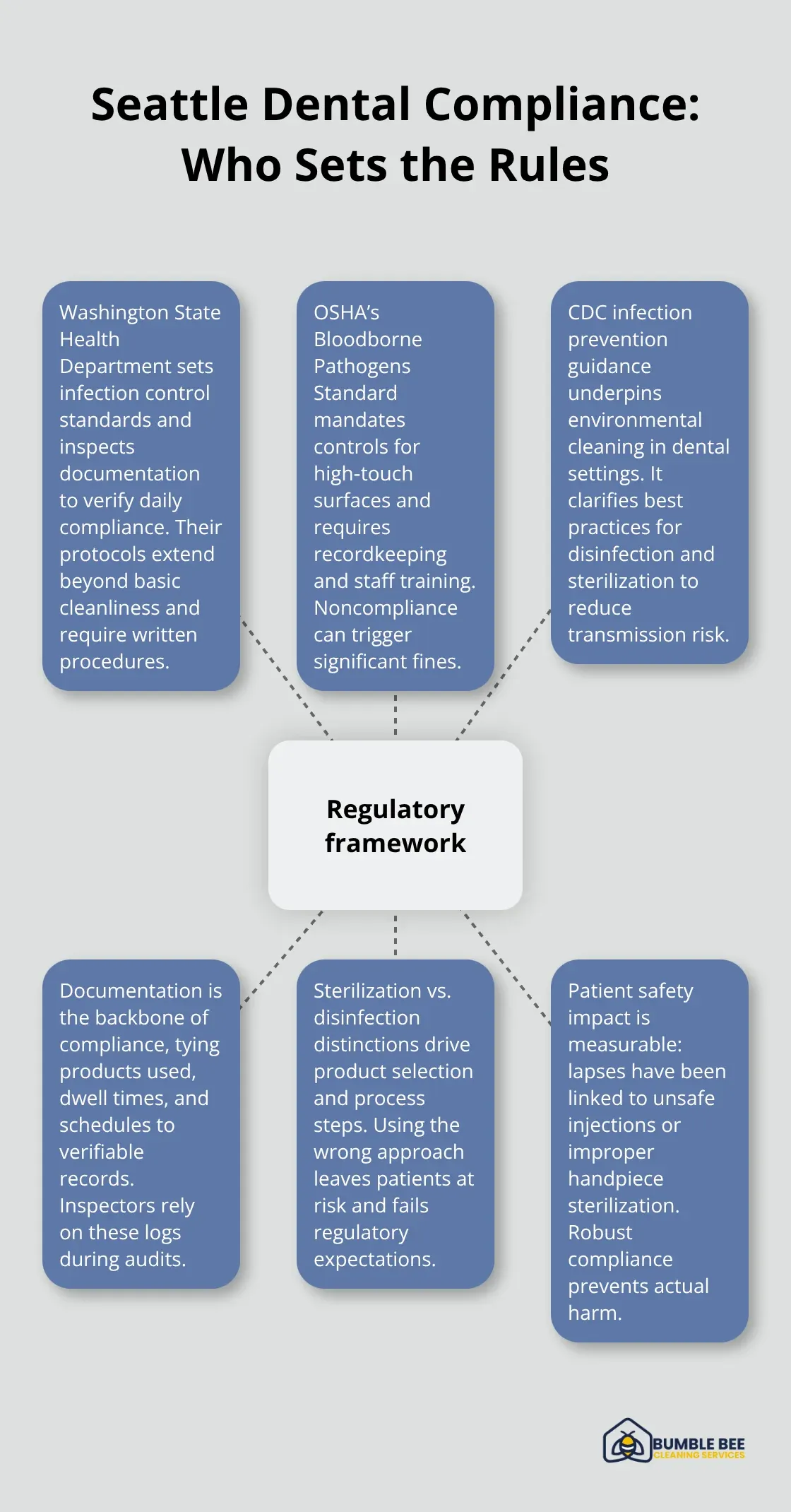
Washington State’s Health Department enforces infection control standards that go far beyond basic cleanliness. The state mandates specific protocols around sterilization, disinfection of surfaces, and documentation of cleaning procedures. You need to understand that sterilization and disinfection operate differently-sterilization eliminates all microorganisms through heat or chemical means, while disinfection reduces pathogens to safe levels. OSHA’s Bloodborne Pathogen Standard applies directly to your practice and requires that high-touch surfaces like patient chairs, light handles, and door knobs receive regular cleaning and disinfection. CDC’s infection prevention guidelines establish that environmental cleaning forms the foundation for preventing disease transmission in dental settings. From 2003 to 2015, documented transmissions in dental settings remained rare, but when they occurred, lapses typically involved unsafe injection practices or failure to properly heat-sterilize handpieces between patients. This reality shows that regulatory compliance prevents actual patient harm.
High-Touch Surfaces Demand Constant Attention
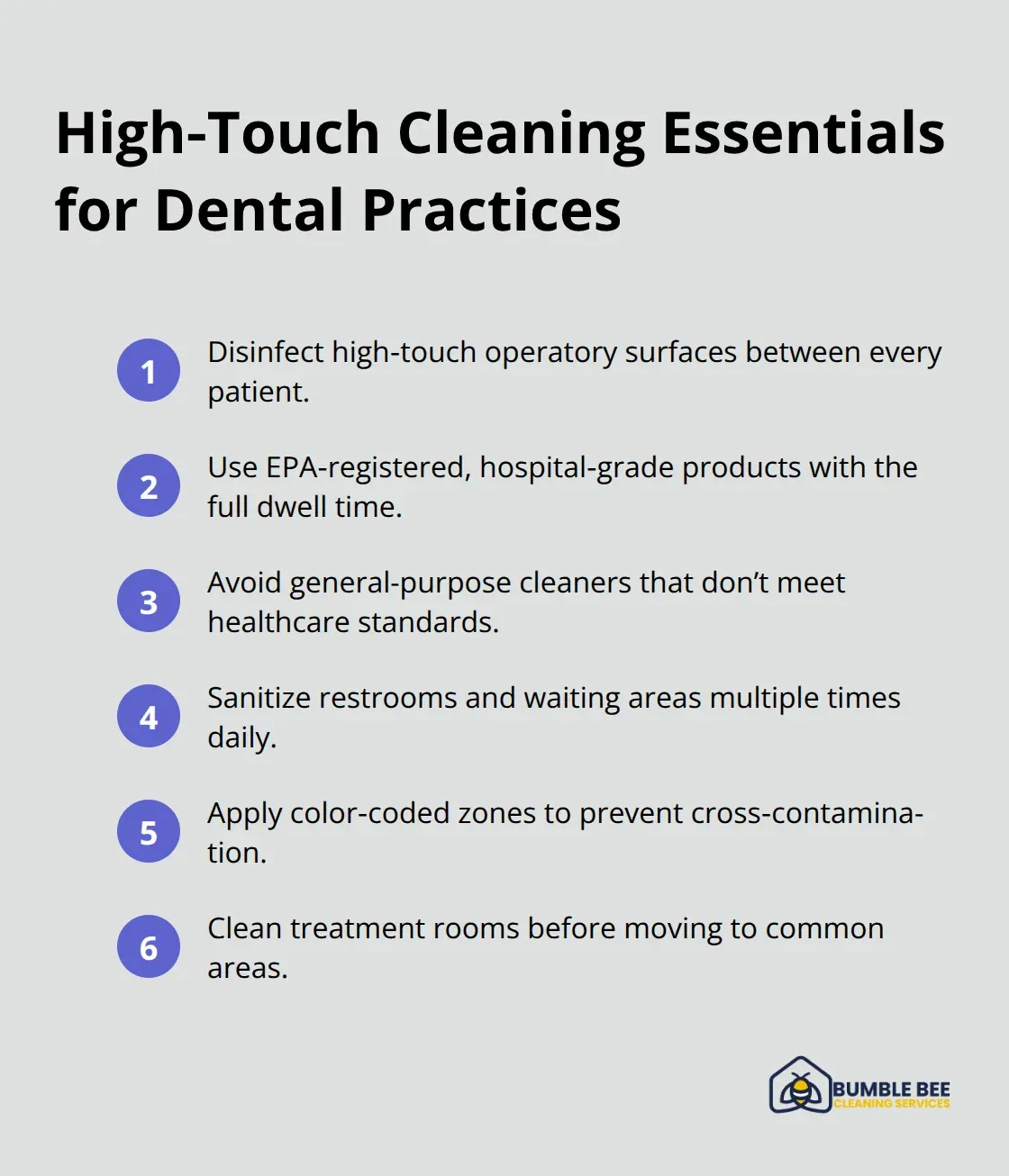
High-touch areas in your operatory require hospital-grade, EPA-registered disinfectants applied with proper dwell times according to manufacturer instructions. Patient chairs, countertops, light switches, door handles, and instrument trays need sanitization between every patient appointment, not just at end of day. OSHA compliance mandates that you use medical-grade products specifically formulated to kill bacteria and viruses; general-purpose cleaners leave residues and fail to meet healthcare standards. Your restrooms and waiting areas require sanitization several times daily because these spaces receive constant contact from multiple patients. Color-coded cleaning zones prevent cross-contamination-treat clinical areas separately from administrative spaces, and always clean treatment rooms before moving to common areas.
Documentation and Staff Knowledge Drive Compliance
Washington State inspectors examine written cleaning schedules, logs documenting when tasks were completed, and records showing which products were used. Staff must understand the difference between sanitizing and sterilizing, and they need training on proper handling of medical-grade disinfectants to avoid damaging dental equipment or creating chemical hazards. OSHA requires that you maintain training records for three years, and noncompliance carries real penalties-a Seattle-area dentist faced a $53,000 fine for OSHA violations. Your team needs to know that sharps containers must be leak-proof, puncture-resistant, and clearly labeled, and that biohazard waste follows specific disposal protocols. Professional cleaning services that specialize in dental offices understand these nuances and handle compliance details that many in-house teams struggle to maintain consistently.
Why Specialized Expertise Matters for Your Practice
Dental office cleaning differs fundamentally from standard commercial cleaning because it involves medical-grade disinfectants, biohazard protocols, and regulatory knowledge that general cleaners lack. Your staff faces competing demands-patient care, scheduling, and administrative work-leaving limited capacity to manage the detailed compliance requirements that state and federal agencies enforce. A specialized dental cleaning provider brings trained personnel who understand sterilization protocols, proper chemical handling, and documentation standards without disrupting your clinical workflow. This expertise becomes especially valuable during staff transitions or when regulatory requirements change, as your team can focus on patient care while compliance remains consistent.
What Deep Cleaning Actually Looks Like in Your Operatory
Deep cleaning in a dental practice means far more than wiping surfaces at the end of the day. Between-patient sanitization requires hospital-grade, EPA-registered disinfectants applied with specific dwell times-the contact time that manufacturers specify for the product to kill pathogens effectively. Your operatory chairs, light handles, and instrument trays need disinfection after every single patient, not just a quick wipe. OSHA standards demand that you use medical-grade products formulated to eliminate bacteria and viruses; general cleaners fail this requirement entirely.
High-Touch Surfaces Need Constant Attention
Most dental offices underestimate how often high-touch surfaces require attention. Restrooms and waiting areas demand sanitization multiple times daily because patients touch door handles, light switches, and seating constantly throughout business hours. Your team should use color-coded cleaning protocols to prevent cross-contamination-clinical areas get cleaned separately from administrative spaces, and treatment rooms always get cleaned before moving to common areas. Documentation matters enormously during state inspections; you need written logs showing exactly when each area was cleaned, which products were used, and who performed the work.
Air Quality Directly Affects Patient Safety
Dental operatories generate airborne particles from drills, suction systems, and patient aerosols that linger in your space far longer than most dentists realize. HEPA-filtered vacuums capture particles that standard vacuums miss entirely, and your air filtration system needs regular maintenance to function properly. Many Seattle dental offices neglect air duct cleaning, allowing dust and pathogens to recirculate through the practice. Schedule professional air duct cleaning at least annually, and inspect your HVAC filters monthly to confirm they’re not clogged.
Proper ventilation with adequate air exchanges per hour creates negative pressure in treatment areas, preventing contaminated air from spreading to waiting rooms. Your staff should understand that surface cleaning alone doesn’t address airborne transmission-you need both environmental cleaning and active air quality management working together. This dual approach costs more upfront but prevents patient infections and demonstrates genuine commitment to safety standards that regulators and patients notice.
Documentation Protects Your Practice
State inspectors examine written cleaning schedules, logs documenting when tasks were completed, and records showing which products were used. Your team must understand the difference between sanitizing and sterilizing, and they need training on proper handling of medical-grade disinfectants to avoid damaging dental equipment or creating chemical hazards. OSHA requires that you maintain training records for three years, and noncompliance carries real penalties-a Seattle-area dentist faced a $53,000 fine for OSHA violations. Your team needs to know that sharps containers must be leak-proof, puncture-resistant, and clearly labeled, and that biohazard waste follows specific disposal protocols.
Maintaining these standards consistently demands expertise that extends beyond typical office management. Your staff faces competing demands-patient care, scheduling, and administrative work-leaving limited capacity to manage the detailed compliance requirements that state and federal agencies enforce. This reality shapes how you should approach your next staffing decision.
How to Build a Sustainable Compliance System
Your dental practice needs a compliance system that works consistently, not one that depends on individual staff members remembering procedures or hoping nothing gets missed. Washington State inspectors don’t accept excuses about staff turnover or scheduling conflicts-they examine written cleaning logs, product documentation, and training records to verify that your practice maintains standards every single day. The most effective practices treat compliance as an operational system with clear accountability, not as an afterthought managed between patient appointments.
Start with a written cleaning schedule that specifies exactly which surfaces you clean at which times, which disinfectants you use, and how long each product needs to remain on surfaces before wiping. OSHA requires you to maintain training records for three years, so your documentation system must track when each team member completed bloodborne pathogen training, received instruction on proper disinfectant handling, and demonstrated competency with your specific protocols. Many Seattle dental offices fail inspections not because they lack good intentions but because their documentation is disorganized, incomplete, or missing entirely.
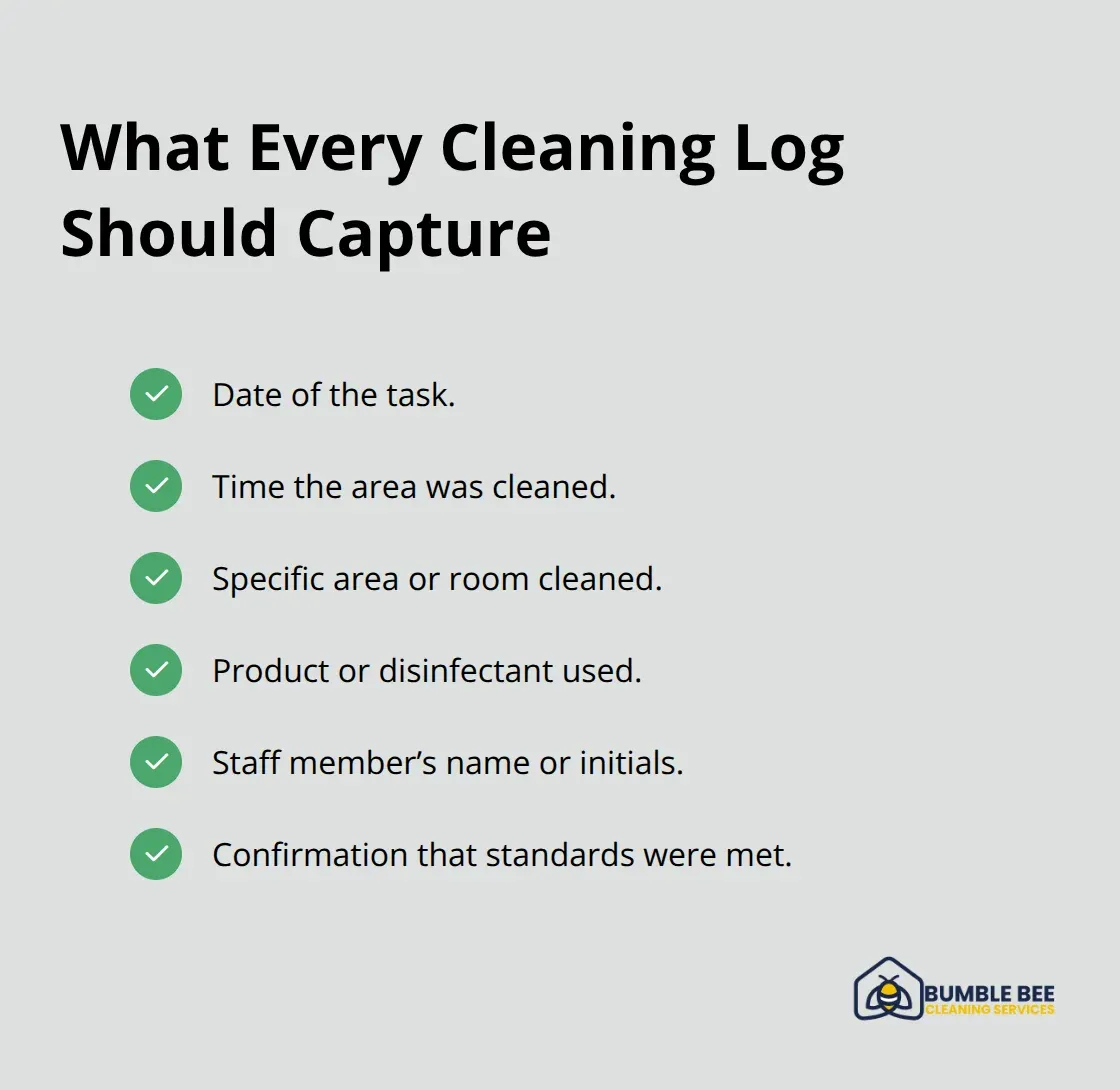
Your logs should include the date, time, area cleaned, product used, staff member’s name, and confirmation that the work met your standards. This level of detail protects you during state audits and creates accountability that prevents shortcuts when you’re busy.
Who Enforces Compliance in Your Practice
Your team members need to understand that OSHA violations carry real financial consequences-regulators pursue cases aggressively when they find lapses. Assign one staff member as your compliance coordinator, someone whose responsibilities include maintaining documentation, scheduling training updates, and conducting monthly spot-checks of your cleaning procedures. This person doesn’t need to perform all cleaning tasks themselves; they need to verify that tasks are completed correctly and that records are accurate.
When you hire a specialized dental cleaning service, you gain trained personnel who understand sterilization protocols and regulatory requirements without adding to your internal management burden. The cleaning provider handles documentation on their end while your coordinator verifies that work meets your standards before the next business day. This partnership approach distributes responsibility and creates multiple checkpoints that catch problems before inspectors do.
Training Your Team on Cleaning Distinctions
Your staff should receive formal training on the difference between sanitizing, disinfecting, and sterilizing-many team members use these terms interchangeably when they describe completely different processes. Sanitizing reduces pathogens to safe levels, disinfecting kills most pathogens but not spores, and sterilizing eliminates all microorganisms. This distinction matters because your operatory protocols demand disinfection or sterilization, not basic sanitizing.
Schedule this training annually and document attendance with signed acknowledgment forms that you retain for the required three-year period. Your team members need to understand that these processes require different products, different contact times, and different equipment to execute properly.
Selecting a Cleaning Partner Who Understands Dental Standards
General commercial cleaning services lack the specialized knowledge required for dental office compliance. They don’t understand that your patient chair requires specific disinfectant dwell times, that color-coded protocols prevent cross-contamination between clinical and administrative spaces, or that sharps containers demand special handling procedures.
When you evaluate a cleaning service, ask directly whether their staff receive OSHA training, whether they use EPA-registered disinfectants, and how they document their work. Request references from other dental practices in Seattle and call those practices to ask specific questions about consistency, responsiveness, and whether the service has ever missed a scheduled appointment.
Your chosen provider should offer detailed written protocols that align with your practice’s specific layout and patient volume, not generic checklists that apply to every facility equally. A professional service handles the compliance burden while your team focuses on patient care, which ultimately protects both your patients and your practice’s reputation.
Conclusion
Seattle’s dental cleaning standards demand more than good intentions-you need documented protocols, trained staff, and consistent execution of EPA-registered disinfectants applied with proper dwell times. Washington State Health Department rules, OSHA regulations, and CDC guidelines work together to create a framework that protects your patients and your practice. Noncompliance brings fines, patient harm, and reputational damage that affects your business for years.
Professional dental cleaning services eliminate the burden of managing these complex requirements while your team focuses on patient care. A specialized provider understands that your operatory chairs, high-touch surfaces, and air quality systems require different approaches than standard commercial spaces. They handle documentation, maintain training records, and use medical-grade products formulated for healthcare environments.
Review your current cleaning procedures and documentation against the standards outlined in this guide, then contact a professional provider who specializes in dental office cleaning and demonstrates experience with Seattle practices. Bumble Bee Cleaning Services offers flat-rate pricing and a 100% quality guarantee, making professional dental cleaning achievable without budget surprises. Your patients deserve a clean, safe environment, and your practice deserves a partner who handles compliance so you don’t have to.
