
Moving out means leaving your rental or home in the best possible condition. A thorough move out cleaning checklist helps you recover your security deposit and maintain a positive reference from your landlord.
We at Bumble Bee Cleaning Services know that moving is stressful enough without worrying about cleaning details. This guide breaks down exactly what needs cleaning, when to do it, and how to handle it efficiently.
What Needs Cleaning Most Before You Move Out
Kitchen and Appliances
The kitchen demands your attention first because landlords scrutinize it heavily during move-out inspections. Stovetops collect grease and food residue that hardens over time, requiring a degreaser and elbow work to remove completely. Oven interiors need thorough cleaning inside and out, including the hood fan above the range where grease accumulates and reduces airflow. Refrigerator coils trap dust that reduces efficiency, so vacuum them carefully. Microwave interiors often harbor splatters that harden when heated repeatedly, so wipe every surface with a damp cloth. Dishwashers need their filter emptied and interior sprayed down to remove food particles.
Cabinet and Counter Surfaces
Cabinet interiors matter more than most people realize because landlords open them to check for damage and cleanliness. Wipe shelves with a damp cloth, remove old shelf liners, and leave surfaces bare or with fresh liners if the lease permits. Kitchen floors must be spotless under appliances where crumbs and grease hide. Move appliances away from walls if possible and sweep or mop thoroughly underneath. Countertops require complete wiping, and backsplashes need attention since they collect cooking splatters over time.
Bathrooms and Fixtures
Bathrooms rank second in inspection intensity because moisture and mold are common landlord concerns. The toilet bowl requires scrubbing inside and behind the base where mineral deposits and dust accumulate. Shower walls and glass doors need thorough scrubbing to remove soap scum, hard water stains, and any mildew. Grout between tiles often discolors over time, so use a grout brush and cleaner to restore its appearance. Vanity cabinets should be emptied, wiped inside and out, and left clear of personal items. Mirrors and fixtures must be streak-free, so use a glass cleaner and microfiber cloth for best results. Bathroom floors need mopping, especially corners where moisture promotes mold growth.
Bedrooms and Living Areas
Bedrooms and living areas require less intensive cleaning but still demand attention to detail. Dust all surfaces including ceiling fans, light fixtures, and windowsills where dust settles. Walls should be inspected for scuffs or marks that can be wiped away with a magic eraser or appropriate cleaner. Closets need to be empty and wiped down, with shelves and rods cleaned of dust and debris. Carpets must be vacuumed thoroughly, and hard floors should be swept and mopped to remove all dust and debris.
With these primary areas addressed, you’ll move into the next phase of your move-out cleaning: tackling the detailed work that transforms your space from lived-in to inspection-ready.
How to Deep Clean Every Surface for Move-Out Inspection
Carpet and Hard Floor Cleaning
Carpets and hard floors require different approaches, and mistakes cost you money during deposit disputes. Standard household vacuums miss embedded dirt that landlords spot immediately during inspections. Rent a carpet cleaning machine from hardware stores for around $50 to $75 per day, or hire professionals who use truck-mounted systems that extract water and soil far more effectively than portable units. Focus on high-traffic areas like hallways and bedroom centers where foot traffic compresses dirt deep into fibers. Hard floors need sweeping first to remove loose debris, then mopping with appropriate cleaners for your floor type.
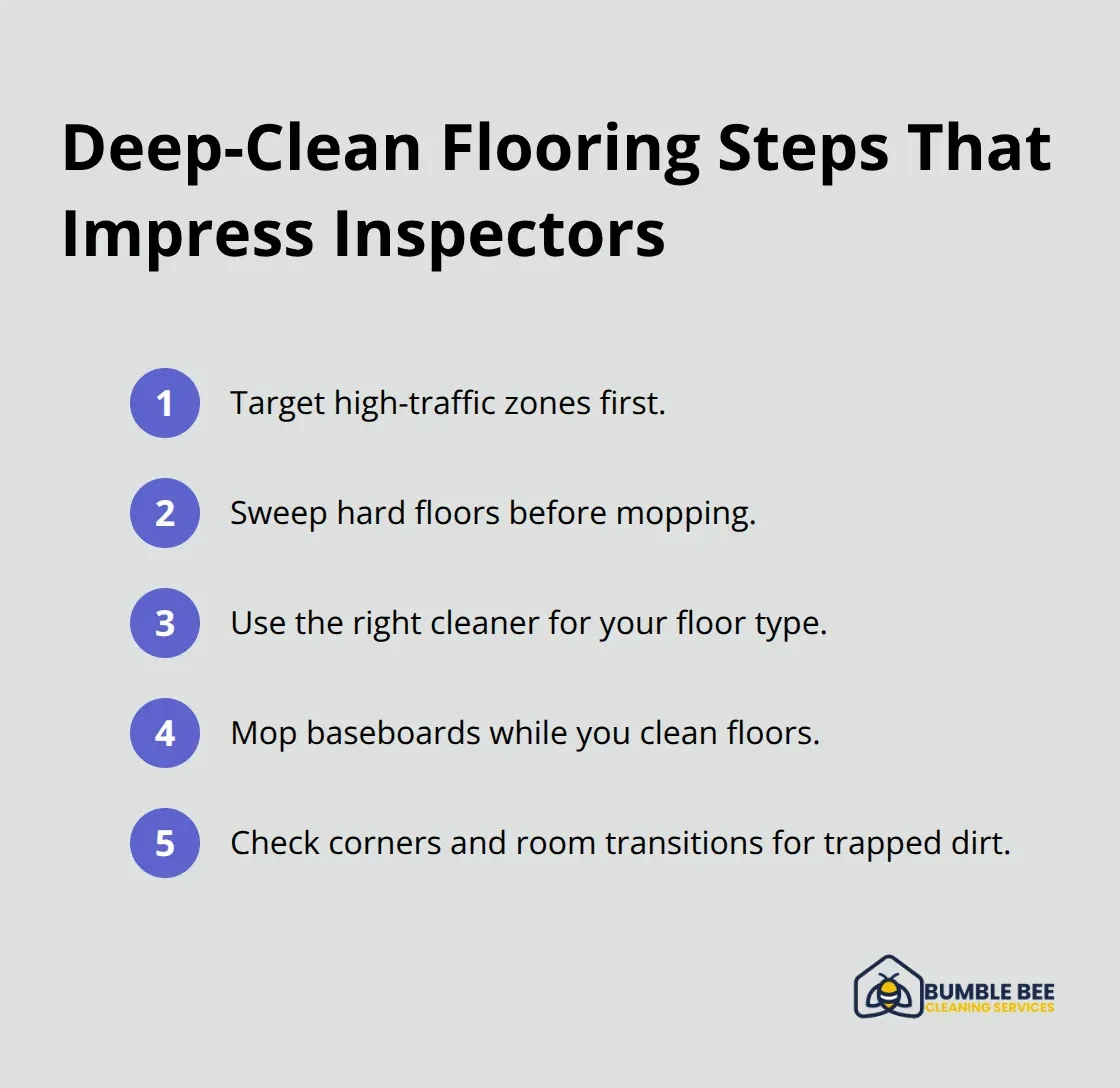
Sealed hardwood requires pH-neutral cleaners to avoid stripping finishes, while tile and vinyl tolerate stronger degreasers. Mop baseboards at the same time since they collect dust and footprints that inspectors specifically check. Pay special attention to corners and transitions between rooms where dirt accumulates.
Walls, Baseboards, and Light Fixtures
Walls, baseboards, and light fixtures separate a casual cleaning from an inspection-ready space. Magic erasers work on most painted walls to remove scuffs and marks, but test them first on inconspicuous areas to avoid damaging finishes. Light switches and door handles accumulate grime from constant touching, and a simple wipe removes it instantly. Wipe all baseboards with a damp cloth to eliminate dust and marks, working from top to bottom to avoid re-soiling cleaned areas. Light fixtures collect dust that dims their appearance, so remove covers and wipe interiors if safe to do so. Ceiling fans are often overlooked but landlords notice dust accumulation immediately.
Cabinets, Closets, and Storage Areas
Cabinets, closets, and storage areas must be completely empty before you clean them effectively. Wipe cabinet shelves with a damp cloth, remove old shelf liners, and leave surfaces bare unless your lease specifies otherwise. Closet rods and shelves need dusting and wiping to show they’re clean and ready for the next tenant. Interior walls of closets sometimes have marks or dust that a quick wipe addresses. Storage areas like under-sink cabinets require emptying, wiping dry, and leaving open briefly to air out any moisture (which could indicate mold concerns to landlords).
With every surface addressed, you’re ready to create a realistic timeline that ensures nothing gets overlooked and your move-out cleaning stays on track.
Move-Out Cleaning Timeline and Preparation Tips
Start your move-out cleaning two to three weeks before your departure to handle unexpected challenges without rushing. Most people severely underestimate how long thorough cleaning takes-an average three-bedroom home requires 8 to 12 hours of concentrated work when you move systematically through each room. If you wait until the final week, you’ll either miss details or pay premium rates for expedited professional cleaning. Create a room-by-room schedule that spreads tasks across your available time rather than cramming everything into one or two days. Start with the kitchen and bathrooms since they demand the most intensive work, then move to bedrooms and living areas where dust and floor cleaning take less effort. This approach prevents you from feeling overwhelmed and allows time to address stubborn stains or problem areas that emerge during your initial passes.
Assembling Your Cleaning Arsenal
Gather supplies before you start to prevent mid-project trips to hardware stores that waste hours. You’ll need a quality HEPA vacuum rated for both carpets and hard floors, microfiber cloths that capture dust more effectively than cotton rags, a degreaser for kitchen surfaces, a grout brush for bathroom tiles, a magic eraser for wall marks, glass cleaner for mirrors and fixtures, and floor cleaner appropriate to your home’s surface type. Eco-friendly options work as effectively as harsh chemicals while protecting your health during extended cleaning sessions. Purchase supplies in bulk if you’re tackling a large property, since concentrated formulas cost less per application. Don’t skimp on the vacuum-a $200 HEPA model outperforms a $50 standard vacuum, and landlords immediately spot dirt that cheaper equipment misses.
Deciding Between DIY and Professional Services
Hiring professional move-out cleaners makes sense if your timeline is tight or if you’re managing multiple properties simultaneously. Professional crews know where landlords look during inspections and prioritize those areas first. If you’re moving during peak season-May through August when demand surges-book professional help at least three weeks ahead since availability becomes extremely limited. The cost typically ranges from $400 to $800 for residential properties, which often costs less than losing your security deposit over missed cleaning details or hiring multiple people to finish quickly. We at Bumble Bee Cleaning Services offer move-out cleaning with eco-friendly products and a 100% quality service guarantee, making the process straightforward and reliable.
Final Thoughts
A thorough move-out cleaning checklist transforms your departure from stressful to straightforward. Kitchens and bathrooms demand the most intensive work, while bedrooms and living areas require systematic attention to dust, walls, and floors. Starting two to three weeks before your move gives you time to handle stubborn stains and problem areas without rushing.
Landlords scrutinize move-out inspections carefully because they need to assess property condition for the next tenant. When you complete every task on your move-out cleaning checklist, you eliminate reasons for deposit deductions and demonstrate respect for the property. This attention to detail also builds your reputation as a reliable tenant, which matters if you need references for future rentals or housing applications.
Professional move-out cleaning services eliminate the guesswork and physical demands of handling everything yourself. We at Bumble Bee Cleaning Services bring experience and industry certifications that guarantee thorough, inspection-ready results (our team knows exactly where landlords look during final walkthroughs). Contact Bumble Bee Cleaning Services to handle your move-out cleaning with flat-rate pricing and a quality service guarantee, making the entire process reliable and stress-free.
For more information about our cleaning services in Seattle and Atlanta, or to request a cleaning quote, call or text us at 425-786-1360 or email us at info@qbclean.com
