
Your final walkthrough is the moment that determines whether you get your full security deposit back. Most landlords find issues that cost tenants hundreds of dollars because they weren’t prepared.
We at Bumble Bee Cleaning Services know that the difference between keeping your deposit and losing it often comes down to one thing: how clean and well-documented your apartment is on inspection day. This guide walks you through exactly what landlords look for and how to handle it.
Getting Ready for the Walkthrough
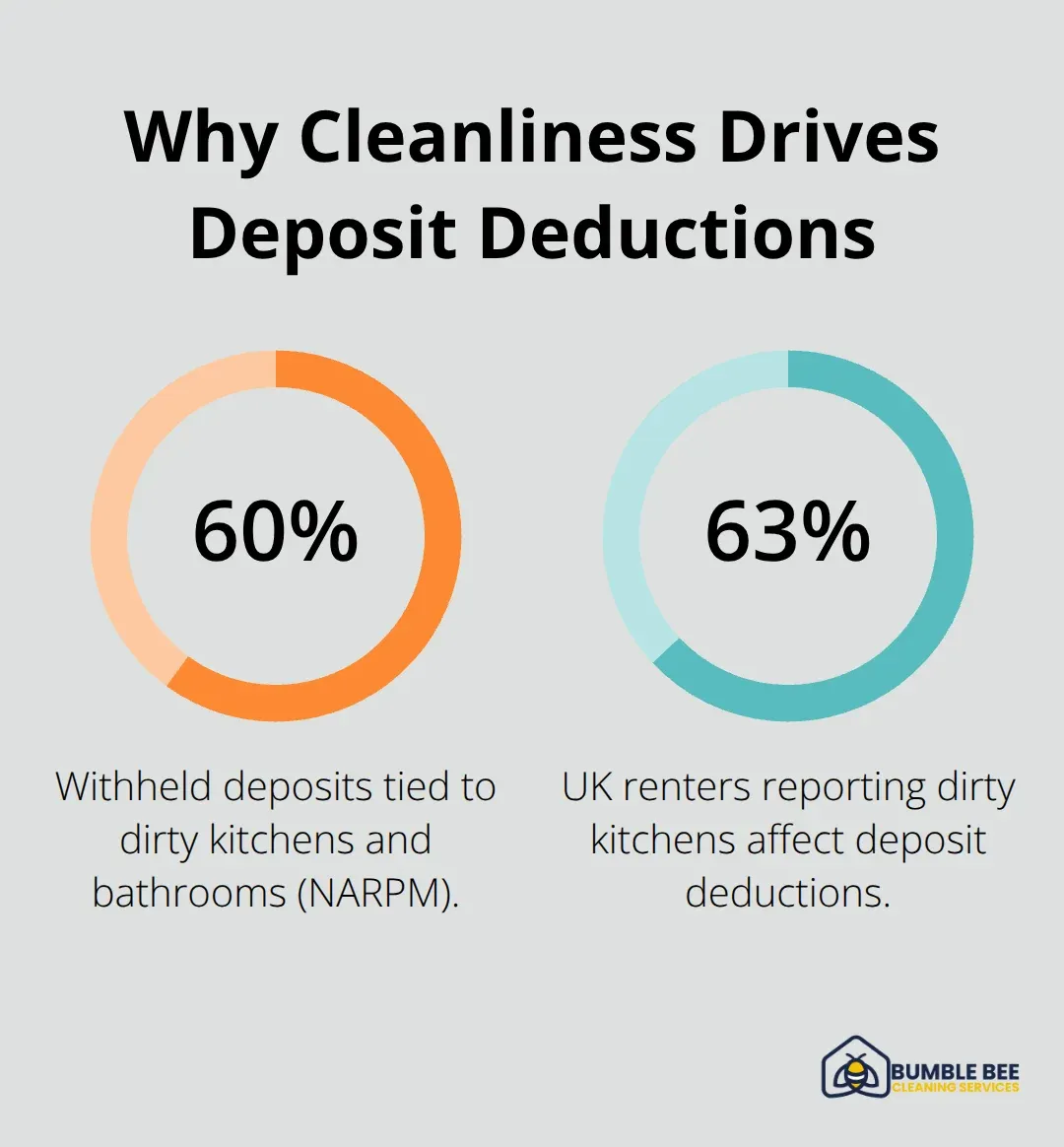
Start by creating a detailed checklist that covers every room and surface your landlord will inspect. Write down the condition of carpets, walls, appliances, fixtures, and flooring in each space rather than relying on memory. According to the National Association of Residential Property Managers, 60% of withheld deposits stem from issues like dirty kitchens and bathrooms, which means your checklist needs to address these high-risk areas specifically.
Include the condition of baseboards, ceiling fans, light fixtures, window screens, door locks, and any repairs the landlord agreed to complete. This checklist becomes your roadmap for both preparation and for comparing what you see on walkthrough day against what was promised in your lease.
Document Everything with Photos and Video
Take photos and videos of every room before you move out, capturing corners, closets, and areas where damage often goes unnoticed. Photograph appliances from multiple angles, run them to show they work, and film the process. Record water pressure at each sink and faucet, flush toilets, and test HVAC systems while filming-this visual proof protects you if your landlord later claims something was broken during your tenancy. Documentation reduces disputes about who caused damage. Your photos and videos serve as your evidence, so take them in good lighting and timestamp them if possible. Store these files in multiple places so you have them even if your phone gets damaged or lost.
Know What Your Lease Actually Says
Pull out your signed lease and read the specific sections about move-out condition, cleaning standards, and what constitutes normal wear and tear. Many leases require broom-swept condition, which means swept but not necessarily professionally cleaned-others demand move-in condition, which is far more demanding. Your lease will also specify which fixtures and appliances you must leave behind. If your lease says the landlord will deduct for carpet cleaning but you’ve kept the carpet spotless, that’s valuable information you can reference if a deduction appears on your deposit accounting. Landlords in Washington have 30 days after you move out to return your security deposit with a written explanation for any deductions, so understanding your lease terms now prevents surprises later.
With your checklist complete, your documentation in place, and your lease requirements clear, you’re ready to understand what landlords actually look for when they walk through your unit.
What Landlords Actually Inspect During Your Walkthrough
Landlords follow a predictable pattern during walkthroughs, and knowing exactly what they examine gives you a massive advantage. Your flooring and carpets rank at the top of their inspection list because damage here costs them real money to repair or replace. Stains that seem minor to you read as tenant negligence to a landlord evaluating whether to withhold deposit funds. Dark spots on carpet, burns, or permanent discoloration will trigger a deduction-landlords accept normal wear but not damage from spills or accidents you failed to address.

Hardwood floors receive the same scrutiny; scratches from furniture movement pass inspection, but gouges or water damage do not. Test your flooring in bright daylight before the walkthrough because landlords will. If you spot anything questionable, tackle it immediately rather than hoping they miss it.
Walls and Paint Condition
Walls present another high-stakes inspection zone because paint covers most wall surfaces and imperfections stand out visually. Holes from picture hangers, nail marks, scuffs, and crayon marks all translate to deductions in a landlord’s mind. Your lease likely specifies that walls must return to their original condition, which usually means neutral paint with no visible damage. Small holes require spackling compound and paint touch-ups, but larger damage demands repainting the entire wall to match. Don’t assume your landlord will overlook wall damage-they won’t.
Kitchen Appliances and Cleanliness
Appliances and their cleanliness matter far more than most tenants realize because a grimy refrigerator or oven suggests you neglected the entire unit. A survey found that almost two thirds (63%) of UK renters experienced dirty kitchens impact deposit deductions-landlords see appliance cleanliness as a direct reflection of your overall care. Your refrigerator needs to be empty, defrosted, and wiped clean inside and out. Your oven requires degreasing inside the cavity and cleaning the racks. The stovetop must shine. These appliances must also function properly-test them during your final walkthrough to prove they work. If an appliance doesn’t turn on or run correctly, your landlord will assume you caused the problem and deduct repair costs from your deposit.
Bathroom Fixtures and Mold Prevention
The bathroom receives intense scrutiny because mold, mineral deposits, and soap scum accumulate in ways that signal negligence to landlords. Scrub your toilet thoroughly, including the base and behind it, because these hidden areas reveal whether you actually cleaned or just surface-wiped. Bathtubs and shower tiles need vinegar treatment to remove mineral buildup-this isn’t optional if you live in an area with hard water. Chrome fixtures must gleam, and exhaust fans require cleaning because dust buildup there indicates poor maintenance throughout your tenancy. Landlords watch for mold and mildew in rental properties because damp climates make these issues common, and they’ll assume you caused any growth they find. Your final walkthrough checklist should include testing water pressure at every faucet, flushing toilets to confirm proper function, and visually confirming no mold growth in corners or under sinks.
Addressing Issues Before Closing
If you discover issues during your walkthrough that you didn’t cause, document them immediately with photos and communicate with your landlord through your real estate agent to resolve them before the 30-day deposit return window closes. Most problems resolve quickly when both parties communicate openly. Taking these steps protects your deposit and demonstrates to your landlord that you treated their property with respect. Now that you understand what landlords inspect, the next step is learning how professional cleaning can transform your results.
Why Professional Cleaning Transforms Your Walkthrough Results
At this point in your move-out process, you’ve documented everything and understand exactly what your landlord will scrutinize. The reality is that DIY cleaning rarely reaches the standard landlords expect, especially in high-impact areas like kitchens and bathrooms. Professional move-out cleaning removes the dirt and stains you cannot reach or remove yourself, addressing the exact issues that trigger deposit deductions.
The Cost-Benefit Reality of Professional Cleaning
Move-out cleaning in Seattle typically costs between $150 and $400 depending on your property size, which is substantially less than the average deposit deduction for cleanliness issues. The National Association of Residential Property Managers reports that 60% of withheld deposits stem from dirty kitchens and bathrooms, meaning your investment in professional cleaning directly protects your security deposit. A typical 2-bedroom apartment requires 6 to 8 hours of cleaning work to reach move-out standards, and professionals complete this faster using industrial-grade equipment and proven processes.
What Professional Cleaners Actually Accomplish
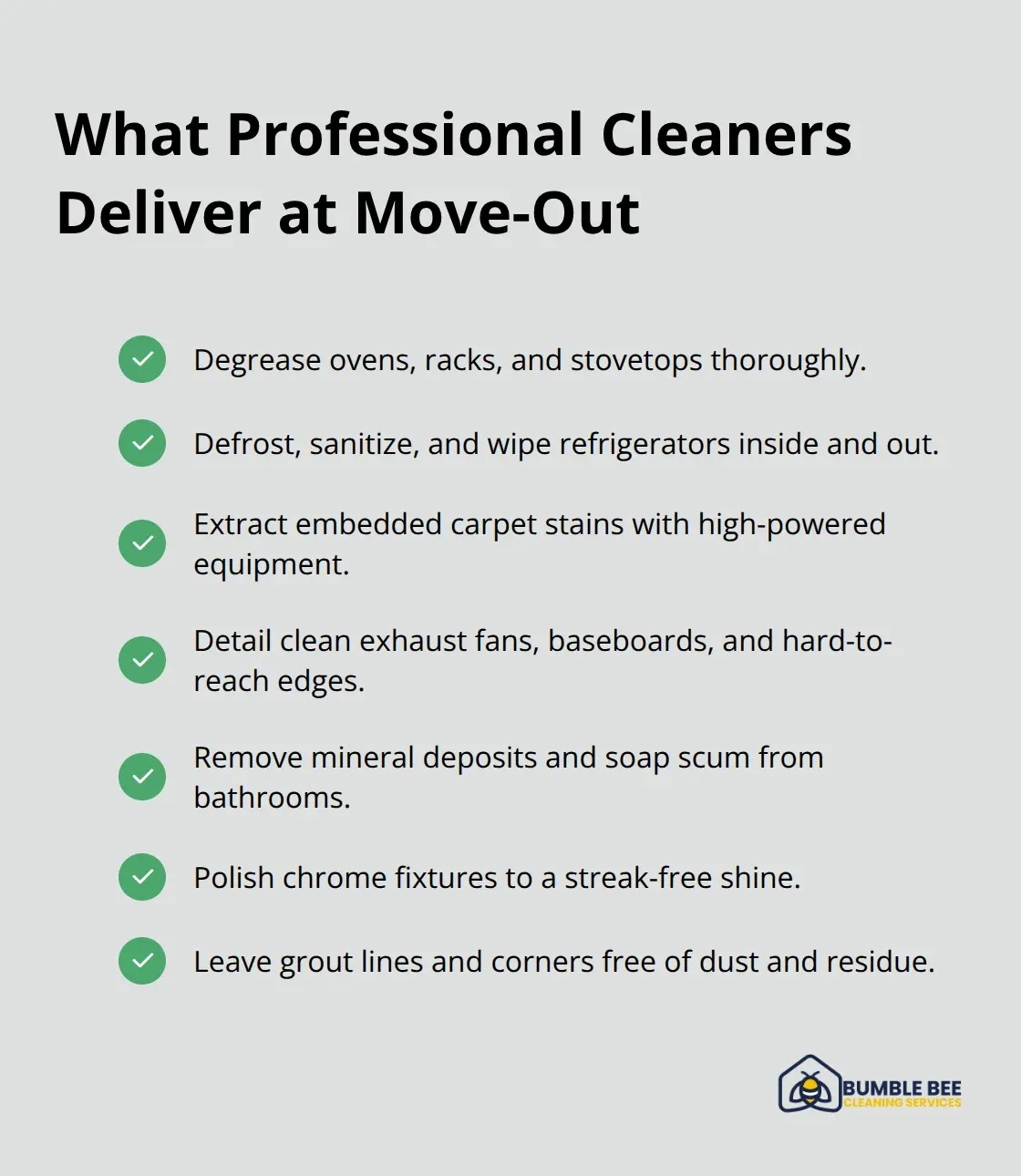
Professional cleaners access tools and techniques you don’t own, including high-powered extractors for carpets, commercial degreasers for kitchen surfaces, and specialized equipment for exhaust fans and baseboards. They handle every detail from degreasing ovens to removing mineral deposits in bathrooms. The difference shows immediately: appliances gleam, grout lines sparkle, and corners reveal no dust or cobwebs. Landlords notice this quality and are far less likely to dispute your deposit return when they walk into a professionally cleaned unit.
Seattle-Specific Cleaning Challenges
Professional cleaners know Seattle’s specific challenges, including mold prevention in damp climates and the stubborn hard-water stains that tenants often overlook. They understand the local rental market standards and what landlords in your area actually expect. This local expertise matters because what passes inspection in one region may not satisfy landlords in another.
Building Your Rental Reputation
Hiring professionals provides documented proof of your care and effort, which matters psychologically when your landlord evaluates deposit deductions. A clean, well-maintained unit communicates respect for the property, making landlords more inclined to give you the benefit of the doubt on minor wear items. Beyond the immediate financial protection, professional cleaning builds your reputation for future rentals in Seattle’s competitive market, where landlord references carry weight. Positive references from satisfied landlords open doors to better units and faster lease approvals with future properties.
Final Thoughts
Your final walkthrough determines whether you walk away with your full security deposit or face unexpected deductions. Everything you’ve learned in this guide-creating detailed checklists, documenting conditions with photos and videos, understanding your lease requirements, and knowing exactly what landlords inspect-gives you the tools to succeed. The preparation work you do now directly translates to money in your pocket when your landlord reviews the unit. Professional cleaning is where preparation becomes reality, and DIY efforts rarely match the standards landlords expect, especially in kitchens and bathrooms where 60% of deposit deductions occur.
When you hire professionals, you receive industrial-grade equipment, specialized techniques for hard-water stains and mold prevention, and the local Seattle expertise that matters in your rental market. The $150 to $400 investment in professional move-out cleaning costs far less than the average deposit deduction for cleanliness issues. We at Bumble Bee Cleaning Services understand exactly what your final walkthrough requires, and our team handles every detail from degreasing ovens to removing mineral deposits in bathrooms.
Your landlord will notice the difference immediately when they walk into a professionally cleaned unit, and that quality directly protects your deposit. Schedule your move-out cleaning with Bumble Bee Cleaning Services before your final walkthrough date and move forward with confidence that your unit meets every standard your landlord expects.
