
Dirty facilities tank employee morale and send customers running. We at Bumble Bee Cleaning Services know that janitorial cleaning for businesses isn’t just about appearances-it directly impacts productivity, health, and your bottom line.
A solid hygiene program prevents costly compliance violations and builds trust with clients. This guide walks you through creating one that actually works.
Why Cleanliness Directly Affects Your Business Success
Clean facilities produce measurable results, and the data backs this up. Employees who work in clean environments report higher productivity levels, fewer sick days, and better morale. When bathrooms are stocked, floors are spotless, and common areas are sanitized, staff experience fewer minor illnesses.
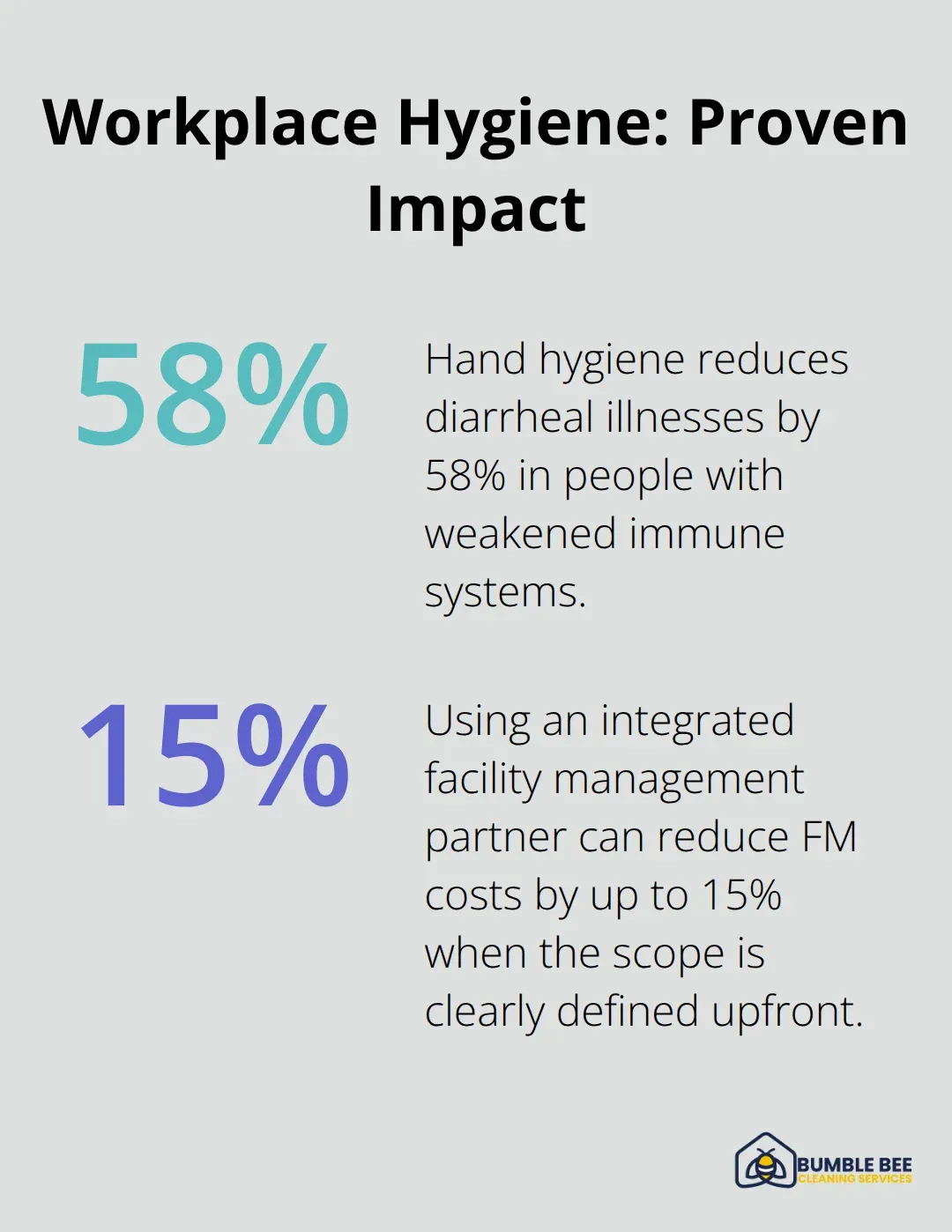
Hand hygiene reduces respiratory illnesses by 16-21 percent and diarrheal illnesses by 58 percent in people with weakened immune systems, according to research supporting workplace hygiene standards. This translates to fewer absences and lower healthcare costs for your business. A well-maintained facility also reduces the mental load on employees-they stop worrying about visible dirt or germs on shared surfaces. This matters because distraction costs productivity.
Customers Form Opinions in Seconds
Your facility’s appearance creates a first impression that’s nearly impossible to reverse. Customers and clients judge your business within seconds of entering, and a dirty space signals negligence or lack of care. This directly affects whether they return or recommend you to others. A visibly clean reception area, restroom, and workspace communicate professionalism and attention to detail. Conversely, dust on surfaces, smudged glass, or cluttered bathrooms damage your brand reputation and can drive business to competitors. For commercial spaces, this perception gap between a clean and dirty facility often decides whether prospects convert into long-term clients.
Compliance Violations Carry Real Penalties
Health and safety regulations exist for specific reasons, and violations carry steep penalties. Different industries face different standards-healthcare facilities must meet stricter disinfection protocols, food service areas require specialized sanitation, and office buildings must comply with local health codes. A failed inspection can result in fines, temporary closure orders, or loss of operating licenses. Beyond penalties, non-compliance creates liability exposure if an employee or customer becomes ill due to poor sanitation. Insurance claims and lawsuits cost far more than maintaining a consistent cleaning program. Outsourcing janitorial services can reduce cleaning costs, while also transferring liability for worker injuries to the contractor. This shifts risk away from your business and reduces workers’ compensation exposure. A documented hygiene program with clear protocols and regular audits protects your business legally and operationally.
What Separates Strong Programs From Weak Ones
The difference between a facility that maintains compliance and one that faces violations comes down to structure. You need clear protocols that define what gets cleaned, when it gets cleaned, and who verifies the work. High-touch surfaces (doorknobs, elevator buttons, handrails) require more frequent attention than low-traffic areas. Staff accountability matters-when employees know their work is measured and reviewed, quality improves. Many businesses struggle because they lack a measurement system; they assume cleaning happens without verifying it. Others fail to adjust their program when facility use changes (seasonal shifts, increased occupancy, or new equipment). The strongest programs adapt to actual conditions rather than following a static checklist.
Your facility’s cleanliness directly impacts how employees perform, how customers perceive your brand, and whether you stay compliant with regulations. The next step is assessing what your specific facility actually needs.
Building Your Cleaning Program From Scratch
Assess Your Facility’s Actual Needs
Walk your facility and document what actually needs cleaning instead of relying on assumptions or generic checklists. Count your restrooms, measure square footage of carpeted versus hard floors, identify high-touch surfaces like elevator buttons and door handles, and note areas where dirt accumulates fastest. A 5,000-square-foot office building has different cleaning demands than a 50,000-square-foot warehouse or a medical clinic. Using an integrated facility management partner can reduce FM costs by up to 15%, but only when the scope is clearly defined upfront. Without this assessment, you’ll either overpay for unnecessary cleaning or underpay and receive poor results.
Document the number of employees or daily visitors, operating hours, and whether your space handles food, chemicals, or biohazards. This data becomes the foundation for your cleaning schedule and helps you evaluate whether in-house staff or a professional contractor makes financial sense.
Set Cleaning Frequency Based on Actual Use
Cleaning frequency depends on foot traffic and function, not on what feels right. A lobby sees dozens of people daily and needs sanitization twice daily. A storage room used twice a week needs attention monthly. The ISSA Clean Standards provide measurable frameworks using ATP testing to verify that surfaces meet cleanliness targets, rather than guessing whether a wipe-down was adequate.
High-touch surfaces in shared spaces require multiple cleanings per day, while baseboards and less-touched areas can operate on weekly or monthly cycles. Many businesses fail here by applying one standard to their entire facility. Set specific protocols for each zone: restrooms require different products and frequencies than break rooms, which differ from warehouse floors.
Create Written Protocols With Clear Accountability
Document your protocols in writing and assign accountability for each area. When staff know exactly which surfaces need attention and how often, compliance improves dramatically. The fragmented janitorial market means over 1.2 million businesses in the United States compete for cleaning contracts, creating pressure to demonstrate measurable results rather than vague promises. A written protocol with clear metrics protects your business and makes it easier to transition between staff or contractors without losing quality.
Your facility assessment and documented protocols now form the backbone of your program. The next step involves selecting the right products, equipment, and team structure to execute these protocols consistently.
Key Elements of a Successful Hygiene Program
High-Touch Surfaces Demand Priority Attention
Doorknobs, elevator buttons, light switches, and shared equipment surfaces determine whether your hygiene program succeeds or fails. These high-touch points accumulate bacteria and viruses faster than any other surface in your facility, yet many businesses treat them identically to low-traffic areas. A doorknob in a busy office entrance requires sanitization multiple times daily, while a conference room used by five people weekly needs far less attention. ATP testing measures bacterial contamination on surfaces and reveals that high-touch zones often exceed acceptable cleanliness ranges within hours of initial cleaning. Map your facility’s highest-traffic zones first, then assign cleaning intervals based on actual foot traffic counts rather than assumptions. A reception area door handle in a 100-person office needs sanitizing at minimum twice daily-morning arrival and midday. Restroom fixtures require attention after each use in high-occupancy facilities. Equipment shared across departments, like copy machines or kitchen appliances, should receive attention before and after peak-use periods. Document these intervals in your protocol and assign specific staff members to verify completion.
Select EPA-Registered Disinfectants for Compliance
Product selection matters more than most businesses realize, and the wrong choice creates liability instead of protection. You need EPA-registered disinfectants that list your specific pathogens on the label-this is non-negotiable for compliance. A product labeled as a cleaner differs fundamentally from one labeled as a disinfectant; cleaners remove dirt, while disinfectants kill microorganisms. For high-touch surfaces, use disinfectants with contact times between 30 seconds and 10 minutes, not ones requiring 20-minute dwell times that prove impractical in active work environments. Green cleaning products work effectively when you select them correctly, but skip products making vague health claims without EPA registration. The wrong product wastes money and leaves surfaces unprotected.
Train Staff on Product Application and Contact Times
Training determines whether your cleaning program actually works or becomes theater. Staff must understand why they clean specific surfaces, how long products need to sit before wiping, and what constitutes completion. A single untrained employee can contaminate your entire program by using expired disinfectant, applying product for insufficient contact time, or skipping high-touch surfaces entirely. Implement monthly spot-checks using ATP testing to measure whether surfaces actually meet cleanliness standards, then adjust training based on results. Accountability without measurement is just hope.
Assign One Person to Own Program Outcomes
Assign one person as the hygiene program manager responsible for audits, protocol updates, and staff feedback. This role prevents the common failure where cleaning happens inconsistently because no single person owns the outcome. The manager tracks completion rates, investigates missed areas, and updates protocols when facility use changes. This person becomes your internal quality control and ensures that standards remain consistent across all shifts and locations.
Final Thoughts
A consistent hygiene program compounds value over months and years, transforming your facility from a liability into a competitive advantage. When you establish clear protocols, measure results with ATP testing, and hold staff accountable, employees stay healthier and more productive while customers form positive impressions that drive repeat business. Compliance violations disappear because your documented program proves due diligence to regulators, and the real cost of inconsistent janitorial cleaning for businesses surfaces in unexpected ways-a single missed high-touch surface during flu season can trigger an outbreak that shuts down operations, a failed health inspection damages reputation and triggers fines, and an employee who gets sick from poor sanitation files a workers’ compensation claim.
Professional janitorial cleaning eliminates the administrative burden of managing in-house staff while transferring liability for worker injuries to the contractor, giving you access to trained teams and standardized protocols without managing hiring, payroll, or performance reviews. The fragmented market with over 1.2 million janitorial businesses means you can find providers who specialize in your facility type and commit to measurable outcomes rather than vague promises. We at Bumble Bee Cleaning Services work with you to define your facility’s specific needs, establish protocols that fit your operations, and deliver consistent results you can measure.
Start by walking your facility today and documenting what actually needs cleaning, then assign one person to own the program. Contact Bumble Bee Cleaning Services to discuss how professional janitorial support can transform your hygiene program from reactive to proactive.
For more information about our cleaning services in Seattle and Atlanta, or to request a cleaning quote, call or text us at 425-786-1360 or email us at info@qbclean.com
