
A biohazard cleanup situation at your Seattle workplace isn’t something you can handle with standard cleaning supplies. Contaminated environments pose serious health risks to your employees and expose your business to regulatory violations.
We at Bumble Bee Cleaning Services understand that professional biohazard cleanup requires certified technicians, specialized equipment, and strict adherence to Washington State regulations. This guide walks you through why professional cleanup matters and how it protects your business.
Why Biohazard Cleanup Protects Your Seattle Workplace
Bloodborne pathogens pose an immediate threat to your employees. OSHA’s Bloodborne Pathogens Standard (29 CFR 1910.1030) exists because exposure to blood and bodily fluids transmits HIV, hepatitis B, and hepatitis C. A single contaminated surface left unaddressed creates ongoing transmission risk. Standard cleaning supplies cannot eliminate these pathogens-you need hospital-grade disinfectants against bacteria, fungi, and viruses. Without professional remediation, contaminated areas remain dangerous long after an incident occurs.
Legal and Regulatory Obligations
Your workplace faces legal exposure under Washington State law. Washington State requires employers to implement comprehensive health policies that include prevention of exposure to blood and bodily fluids, with a clear duty to report incidents to authorities. Failure to comply with these standards triggers OSHA citations, fines, and potential liability claims from affected employees. The financial impact extends beyond penalties-a contaminated workspace damages employee morale and productivity. Workers exposed to biohazards experience trauma and reduced confidence in workplace safety, which directly affects retention and hiring.
How Containment Prevents Cross-Contamination
Improper cleanup spreads contamination across your facility. Cross-contamination occurs when biohazards reach adjacent areas through air circulation, shared surfaces, or foot traffic. Professional teams use physical barriers, negative air pressure, and clearly demarcated zones to contain hazards.
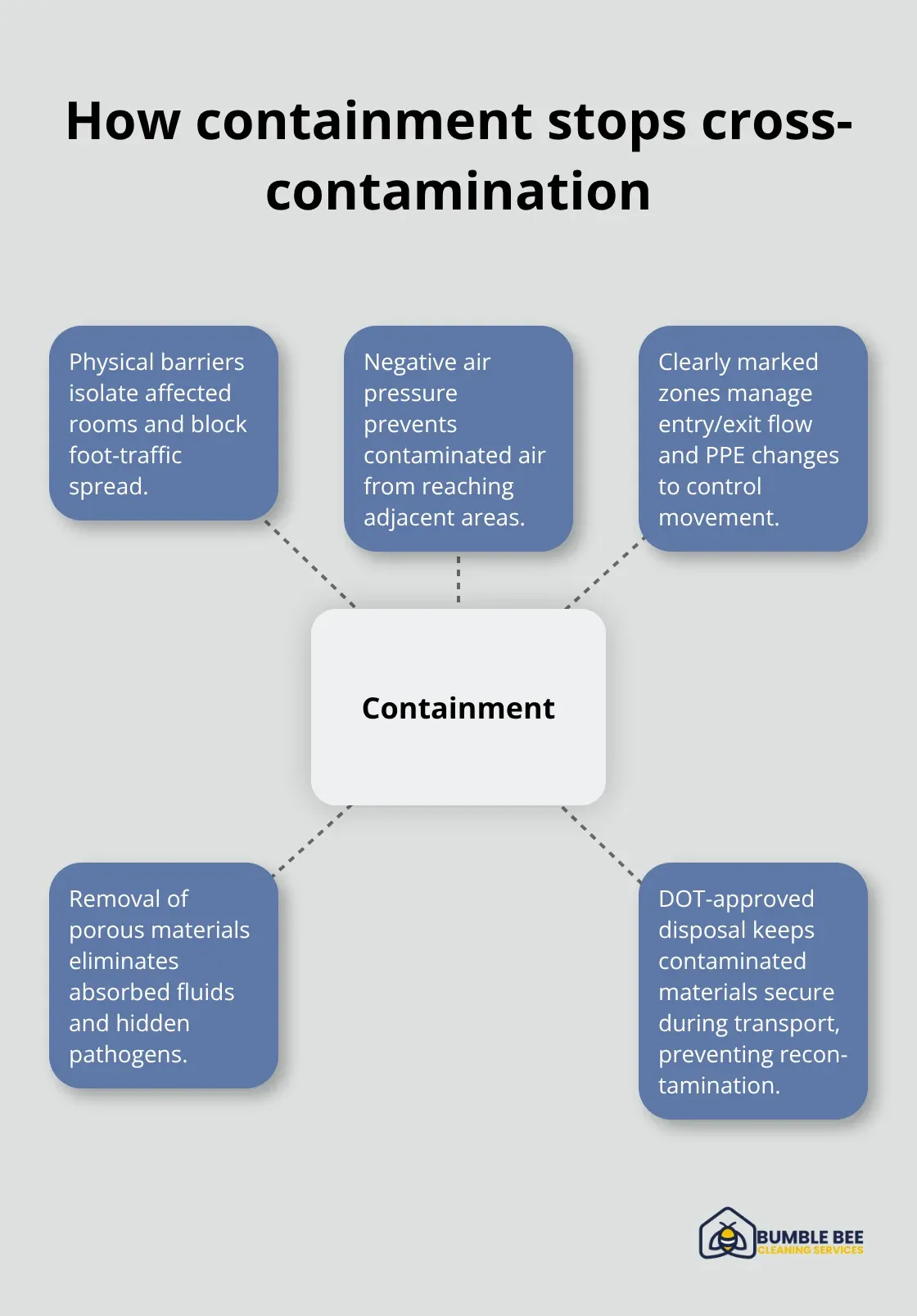
They remove contaminated materials like carpeting and drywall that absorb fluids, then dispose of them in DOT-approved biohazard containers. This containment strategy prevents pathogens from lingering in your building long-term. Your employees return to a genuinely safe environment, not a space that merely appears clean.
Restoring Safety and Operations
Professional biohazard cleanup restores your space to safe occupancy quickly, minimizing operational downtime and protecting your reputation. Washington State regulations mandate this level of remediation for workplace incidents. The next section examines the specific signs that indicate your workplace requires professional biohazard cleanup intervention.
Signs Your Workplace Needs Professional Biohazard Cleanup
Visible Contamination and Persistent Odors
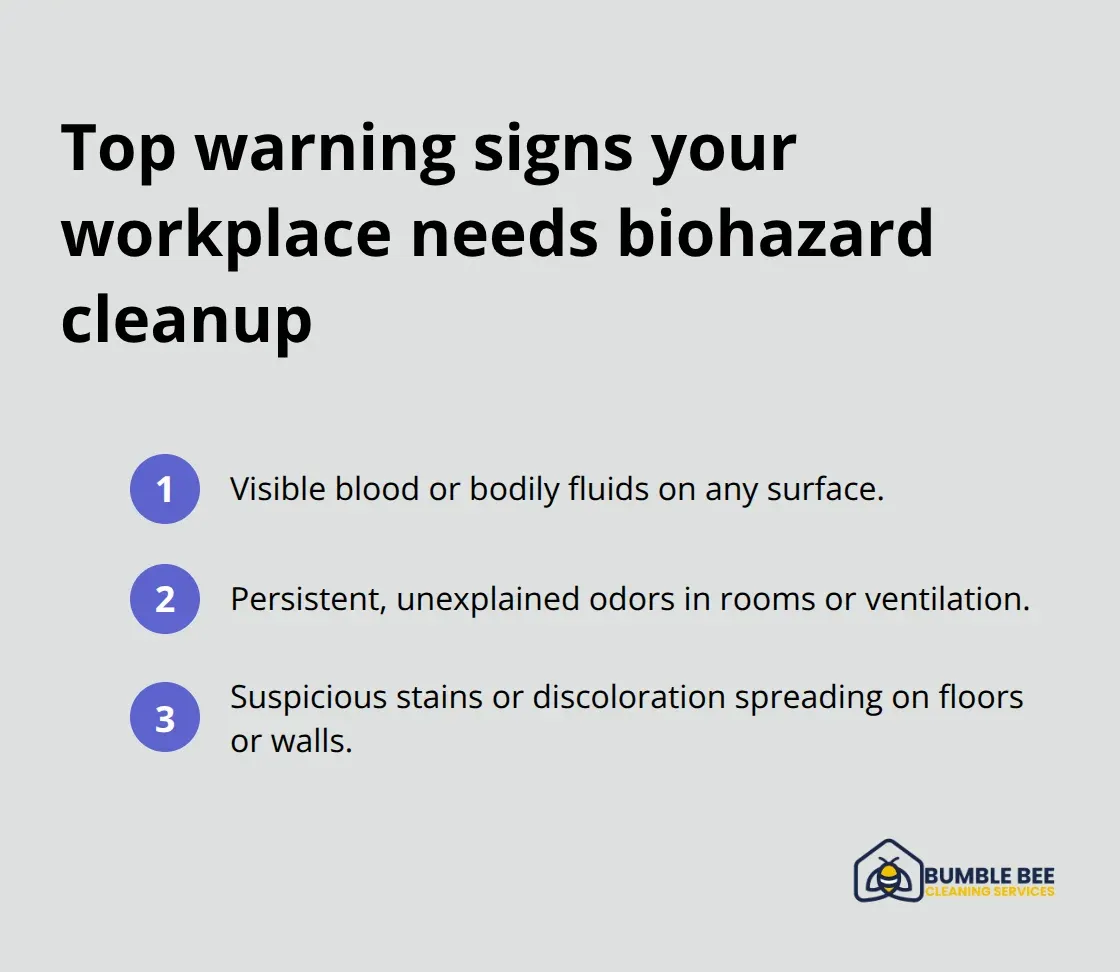
Visible biohazard signs demand immediate professional intervention, not delay or internal management attempts. Bloodstains, bodily fluids, or suspicious discoloration on workplace surfaces indicate active contamination that spreads pathogens through your facility. Persistent odors signal decomposition or biological breakdown occurring behind walls, under flooring, or in ventilation systems-areas standard cleaning cannot reach.
OSHA’s Bloodborne Pathogens Standard requires employers to treat any visible contamination as a potential transmission vector, meaning your facility remains non-compliant until professional remediation occurs. Odors specifically matter because they indicate volatile organic compounds from decomposition; these compounds travel through air systems and contaminate adjacent spaces. A faint smell in one area often means heavy contamination exists elsewhere.
Medical Emergencies and Workplace Incidents
Medical emergencies or sudden deaths at your workplace create immediate biohazard scenarios. When an employee collapses, suffers a traumatic injury, or dies on-site, blood and bodily fluids contaminate surrounding areas instantly. Paramedics and first responders focus on medical intervention, not cleanup-they leave contaminated spaces untouched.
Your workplace then sits exposed to bloodborne pathogens until professional teams arrive. Response timing matters significantly; the longer contamination remains, the more it spreads through HVAC systems, settles on shared surfaces, and creates secondary contamination zones. Professional biohazard cleanup should begin immediately after emergency services depart, not days or weeks later.
Bloodborne Pathogen Exposure and Reporting Requirements
Bloodborne pathogen exposure creates documented health risks that Washington State takes seriously. Any workplace incident involving blood contact, needle sticks, or mucous membrane exposure triggers mandatory reporting under Washington’s occupational disease rules. Your employees have legal rights to know about exposure incidents, and your facility must document everything for workers’ compensation and OSHA records.
Failure to report or remediate creates liability exposure that extends beyond the incident itself. Professional biohazard cleanup teams provide documentation proving your facility met regulatory standards, protecting your business during investigations or claims. This documentation becomes essential when insurance companies evaluate claims or when regulatory agencies inspect your facility.
The distinction between standard cleaning and professional biohazard remediation cannot be overstated-your employees’ health and your business’s legal standing depend on recognizing when professional intervention is mandatory rather than optional. Understanding these warning signs helps you respond appropriately, but knowing what professional cleanup actually accomplishes separates businesses that truly protect their workforce from those that merely appear to address the problem.
How Professional Biohazard Cleanup Protects Your Workplace
Hospital-Grade Disinfection Eliminates Pathogens
Hospital-grade disinfectants eliminate pathogens that standard cleaning products cannot touch. These products achieve a 99.99% kill rate against bacteria, fungi, and viruses according to CDC-aligned decontamination methods, unlike bleach solutions or surface sprays that leave residual contamination. Professional teams apply EPA-registered disinfectants with proper contact times, meaning they follow manufacturer specifications for how long the product must remain wet on a surface to work effectively. This matters because rushing the process or using incorrect products leaves pathogens alive and transmissible. Your workplace only becomes genuinely safe when decontamination follows these strict standards, not when surfaces merely look clean.
Removal of Contaminated Materials Prevents Secondary Spread
Contaminated materials require removal and disposal in DOT-approved biohazard containers. Carpeting, drywall, and porous materials absorb fluids and harbor pathogens indefinitely, so professional teams remove these items entirely rather than attempting to clean them. This approach prevents secondary contamination from spreading through your facility weeks or months after an incident.
Certified Technicians Identify Hidden Contamination
Technicians trained in biohazard remediation identify contamination areas that untrained staff overlook. Blood and bodily fluids settle in crevices, under baseboards, inside ventilation returns, and behind equipment where visual inspection alone fails. Professional teams understand decomposition patterns and how pathogens travel through air systems and shared surfaces. They use specialized equipment like HEPA vacuums and ATP meters to verify that disinfection actually eliminated contaminants rather than just redistributing them. Your workplace receives documentation proving that remediation met regulatory standards, protecting your business during OSHA inspections or worker compensation claims.
Hazardous Waste Disposal Meets Environmental Standards
Technicians handle hazardous waste removal following HAZWOPER guidelines, ensuring that contaminated materials reach licensed disposal facilities rather than ending up in standard trash streams. This compliance prevents environmental contamination and protects your community. Professional biohazard remediation differs fundamentally from commercial janitorial cleaning, requiring specialized training and equipment that standard cleaning teams cannot provide.
Documentation Creates Liability Protection
Every remediation step must be documented with scene photographs, itemized waste descriptions, chain-of-custody forms, and certificates of decontamination. This documentation becomes essential when insurance companies evaluate claims or regulatory agencies investigate incidents. Your facility needs proof that you responded appropriately and met all legal requirements, not just internal records claiming the space is safe.
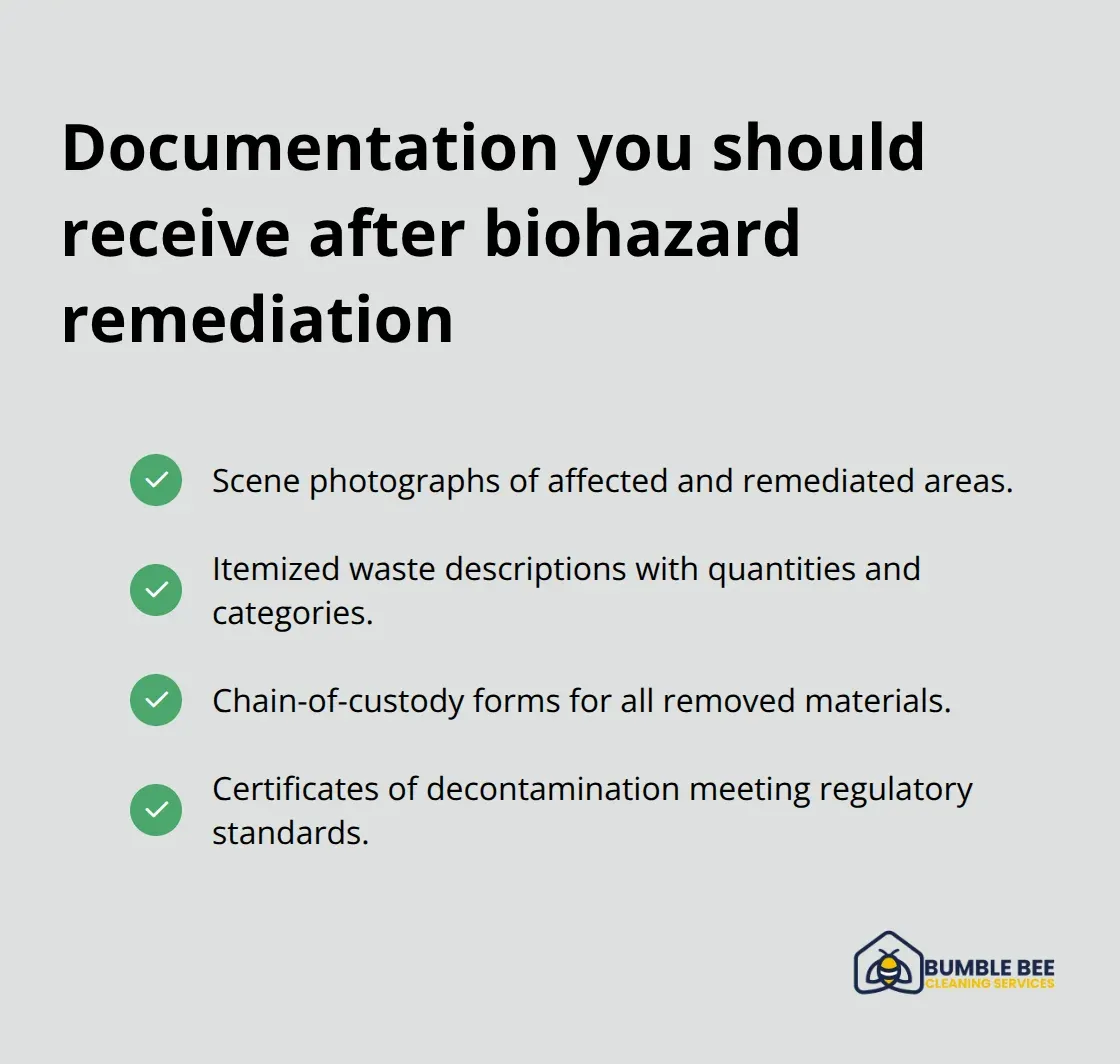
Professional teams provide this documentation automatically as part of their process, creating an audit trail that protects your business from liability exposure. Without proper documentation, you face increased insurance deductibles, denied claims, and regulatory penalties that extend far beyond the initial cleanup cost.
Final Thoughts
Professional biohazard cleanup protects your Seattle workplace in ways that standard commercial cleaning cannot match. Your employees face genuine health risks from bloodborne pathogens, your business faces regulatory penalties under Washington State law, and your facility’s reputation depends on responding appropriately when incidents occur. The difference between attempting internal cleanup and engaging certified professionals determines whether your workplace becomes genuinely safe or merely appears clean.
Biohazard cleanup requires hospital-grade disinfection, removal of contaminated materials, and proper hazardous waste disposal following HAZWOPER guidelines. These steps eliminate pathogens that persist on surfaces for weeks or months, prevent cross-contamination through your facility, and create documentation that protects your business during OSHA inspections or insurance claims. Your employees return to a workspace where they can work without fear of exposure to bloodborne pathogens or decomposition byproducts.
When incidents occur at your Seattle workplace, contact Bumble Bee Cleaning Services for immediate professional intervention. We respond rapidly to contain and remediate biohazard situations, providing complete documentation of all remediation work. Your employees’ health and your business’s legal standing depend on choosing certified professionals who follow regulatory standards.
For more information about our cleaning services in Seattle and Atlanta, or to request a cleaning quote, call or text us at 425-786-1360 or email us at info@qbclean.com
