
Moving into a new Seattle home is exciting, but move-in readiness requires more than just unpacking boxes. Before you settle in, your space needs a thorough cleaning and inspection to make it truly yours.
We at Bumble Bee Cleaning Services know that most homes-even new ones-harbor dust, allergens, and residue from construction or previous occupants. This guide walks you through the essential steps to prepare your home for a fresh, safe, and comfortable start.
What Should You Clean First in Your Empty Home
Your new Seattle home likely contains more than you realize. Dust settles on every surface during construction and vacancy, allergens accumulate in carpets and HVAC systems, and bathrooms and kitchens harbor bacteria from previous occupants or contractors. A professional deep clean before move-in eliminates these hidden problems and protects your family’s health from day one.
Eliminate Dust and Allergens Throughout
Dust doesn’t just sit on visible surfaces-it settles behind baseboards, on ceiling fans, inside light fixtures, and along window sills. The EPA reports that indoor air can be two to five times more polluted than outdoor air, largely due to accumulated dust and allergens. When you move into an empty home, you have a perfect window to tackle these areas before furniture blocks access. Start with ceiling fans, light fixtures, and crown molding, then work downward to avoid redistributing particles.
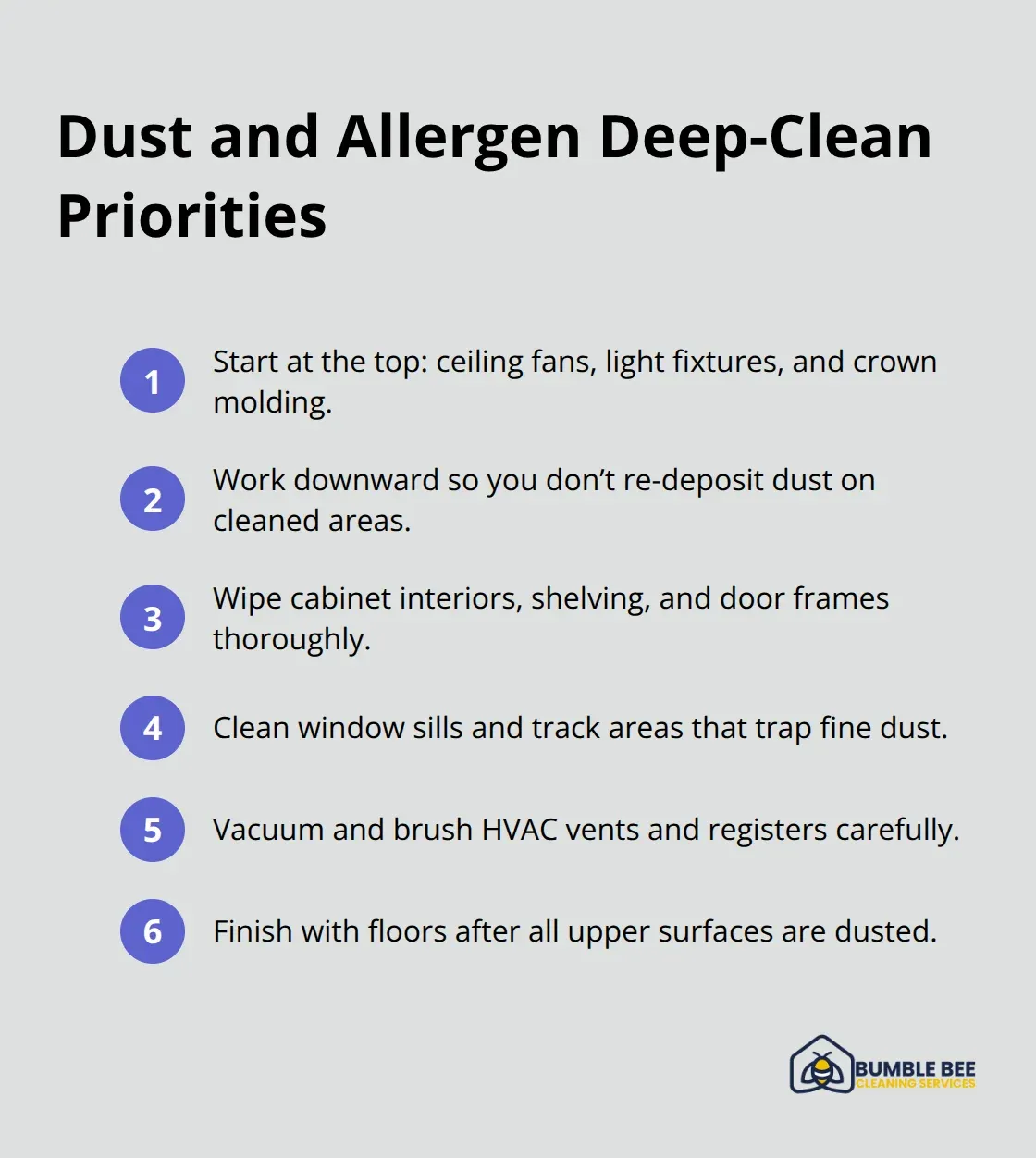
Wipe down all cabinet interiors, shelving, and door frames. Pay special attention to HVAC vents and registers, as these circulate air throughout your home and collect significant dust buildup.
Handle Construction Dust with Proper Equipment
If your home was recently constructed, drywall dust may linger in unexpected places, so vacuum thoroughly with a HEPA filter vacuum rather than a standard model. HEPA filters capture 99.97 percent of particles 0.3 microns or larger, making them essential for new homes. Consider having your ducts professionally inspected and cleaned if the home was vacant for more than a few months or shows visible dust in registers.
Clean Carpets and Hard Flooring Separately
Carpets and hard flooring require different approaches but equally deserve attention before move-in. For carpeted areas, professional steam cleaning removes embedded dirt, dust mites, and allergens that vacuuming alone cannot eliminate. For hard flooring, thoroughly mop with appropriate cleaners for your floor type-wood, tile, vinyl, or laminate each require different products.
Sanitize Bathrooms and Kitchens Thoroughly
In bathrooms, sanitize all surfaces including grout lines, which harbor mold and bacteria. Scrub toilets inside the bowl and around the base where bacteria accumulate. Clean shower tiles and tub surrounds to prevent mold growth, and polish mirrors and fixtures for a fresh appearance. In kitchens, clean inside and behind appliances, degrease stovetop hoods, and sanitize countertops and cabinet interiors. These high-touch areas in kitchens and bathrooms demand particular attention because they directly contact food and personal hygiene items. Once your home passes this deep-cleaning phase, you’ll move on to essential safety checks that protect your family long-term.
Essential Home Preparations and Safety Checks
Safety in your new Seattle home depends on three systems working correctly from day one: smoke and carbon monoxide detection, physical security, and utility infrastructure. These aren’t optional tasks you can postpone until next month. A non-functional smoke detector leaves your family vulnerable to fire hazards, faulty locks invite break-ins, and undetected gas leaks or electrical problems create serious danger.
Test Smoke Detectors and Carbon Monoxide Alarms
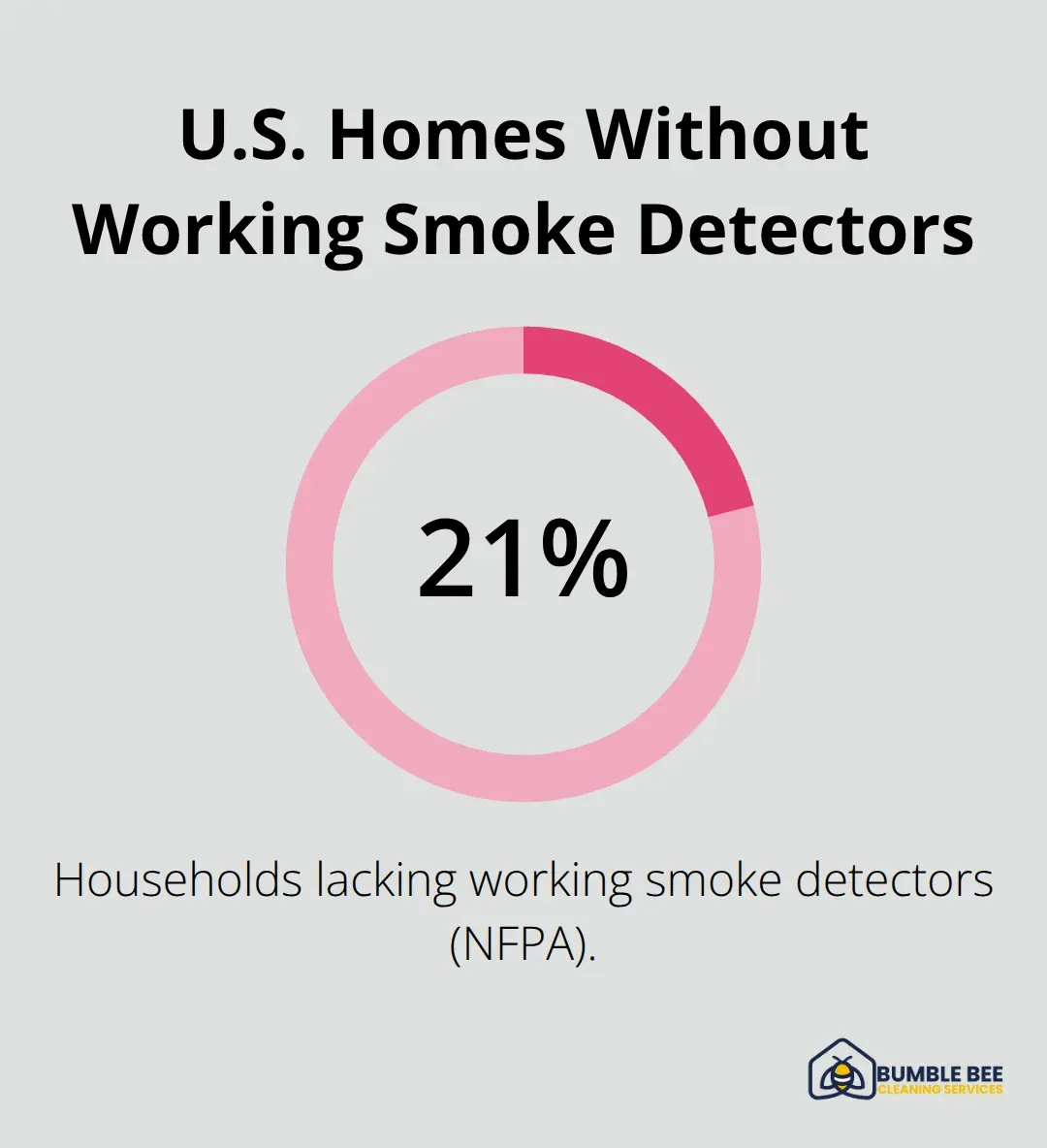
Test every smoke detector and carbon monoxide alarm in your home by pressing the test button until the alarm sounds. The National Fire Protection Association reports that working smoke alarms cut the risk of dying in a reported home fire roughly in half, yet roughly 21 percent of homes have no working smoke detectors. Replace batteries immediately if detectors don’t sound, and if a detector fails the test, replace the entire unit rather than troubleshooting.
Carbon monoxide alarms require the same attention. Install them on each level of your home, especially near bedrooms, since carbon monoxide poisoning can kill silently while you sleep. Test these alarms monthly and replace them every 5 to 7 years, as the sensors degrade over time.
Check Locks and Security Systems
Security systems demand your immediate attention next. Walk through your home and check every exterior lock, including those on windows, sliding glass doors, and garage entries. Test each lock multiple times to confirm it engages smoothly and securely. If any lock sticks, requires excessive force, or doesn’t fully engage, have a locksmith rekey or replace it before you move in your belongings. Many Seattle homeowners skip this step and regret it later when they discover broken locks during their first week. Consider rekeying all locks if you don’t have the previous owner’s keys, eliminating the risk that former owners, contractors, or real estate agents still have access.
Inspect Utilities and HVAC Systems
For utilities and HVAC systems, locate your main water shut-off valve immediately and label it clearly. During an emergency water leak, you won’t have time to search for this valve. Next, find your electrical panel and circuit breaker, testing a few breakers to confirm they control the correct outlets and fixtures. Finally, inspect your HVAC system by turning it on and listening for unusual noises, checking that air flows from all vents, and confirming the thermostat responds when you adjust the temperature (if anything sounds wrong or doesn’t operate smoothly, contact an HVAC technician before winter arrives). These three checks take roughly two hours but prevent costly disasters and give you genuine peace of mind in your new home. With safety systems verified and utilities mapped, you can now focus on transforming your empty space into a comfortable, functional living environment.
Making Your Empty Home Livable
Your home is now clean and safe, but an empty space isn’t a home yet. The next phase transforms your Seattle residence into a functional, comfortable place where you actually want to live. This means creating systems for storage, controlling light and privacy, and strategically positioning furniture so your space works for your daily life rather than against it. The difference between a home that feels chaotic and one that feels organized comes down to decisions you make in these first few days, not months of gradual adjustment.
Storage Systems That Actually Work
Most people underestimate how much storage their home needs until they stand in a bedroom surrounded by boxes with nowhere to put anything. Start by measuring every closet, cabinet, and storage area in your home and document the dimensions. The average bedroom closet in Seattle homes measures roughly 5 feet wide by 2.5 feet deep, which sounds spacious until you try fitting a winter coat collection, off-season clothes, and holiday decorations into it. Invest in vertical storage solutions immediately. Shelf dividers, hanging organizers, and stackable bins transform wasted vertical space into usable storage. For kitchen cabinets, group items by function before unpacking. Plates and bowls go in one cabinet, glasses in another, and cooking tools in a third. This system prevents the frustration of searching three cabinets to find a single item during your first week. Pantry organization matters equally. Install shelf risers to double your pantry capacity and use clear containers for dry goods so you can see when items run low.
Light and Privacy Shape Your Comfort
Window treatments affect both privacy and how your home feels throughout the day. Rooms without window coverings feel exposed and uninviting, especially in Seattle neighborhoods where homes sit relatively close together. Install blackout curtains in bedrooms immediately so you can sleep past dawn without waking to bright light. For living areas, sheer curtains provide daytime privacy while allowing natural light, which matters significantly since Seattle receives only about 152 sunny days per year according to the National Weather Service. Layer sheer and blackout options on the same rod to give you flexibility to adjust light based on time of day and season. Lighting design goes beyond just flipping switches. Identify which rooms lack adequate natural light and plan supplemental lighting accordingly.
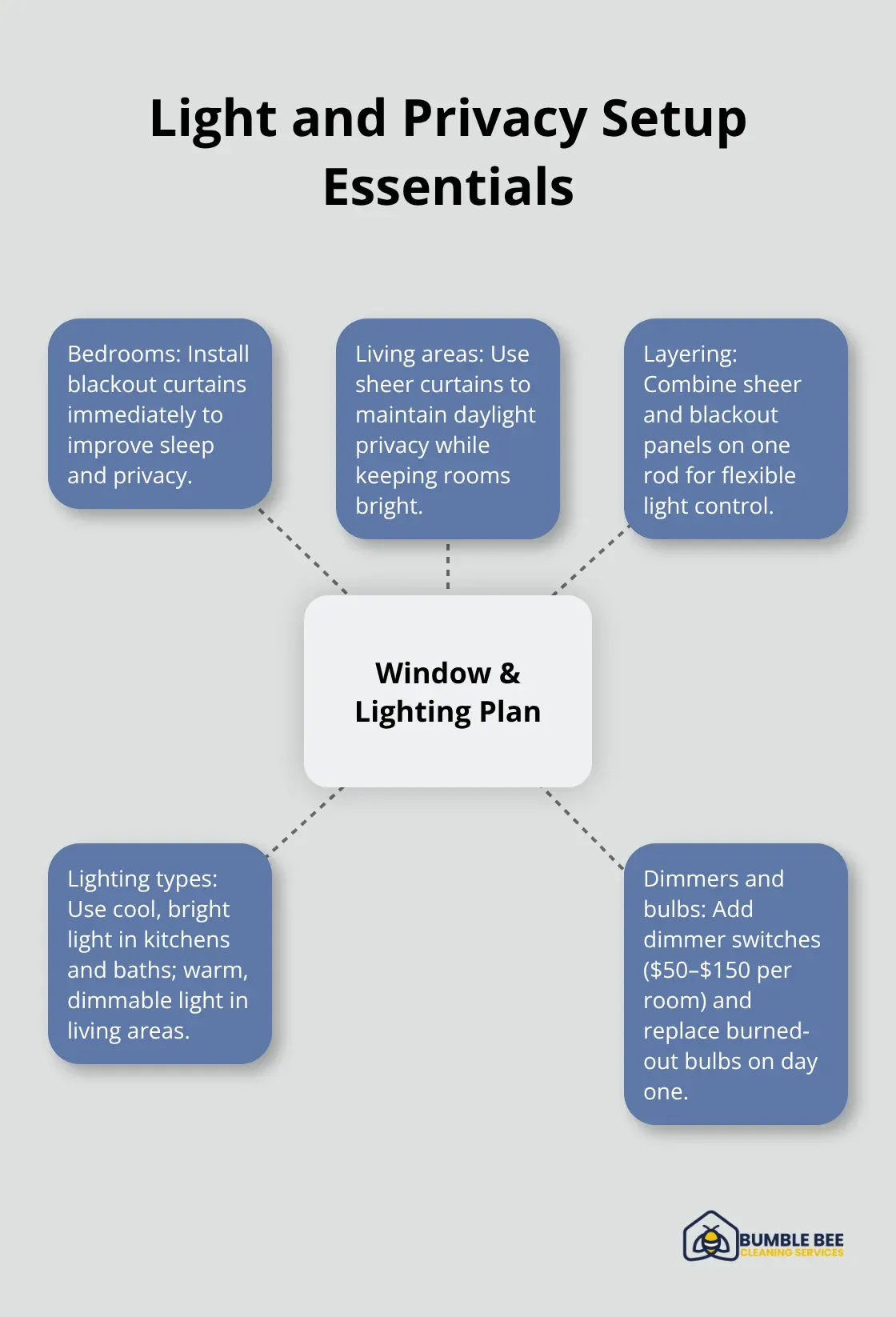
Bathrooms and kitchens need bright, cool-toned lighting for task work, while living areas benefit from warmer, dimmable options. Install dimmer switches in bedrooms and living rooms during your first week if they aren’t already present. This single upgrade costs roughly 50 to 150 dollars per room but dramatically improves how your home feels during evening hours. Test all existing fixtures and replace any burned-out bulbs immediately so every room functions at full capacity when you move in your belongings.
Furniture Placement and Essential Unpacking
Arrange furniture strategically before moving in your belongings, not after. Walk through each room and identify the natural focal point, whether that’s a fireplace, window view, or television wall. Position your largest pieces to face these focal points. A sofa facing away from the room’s main feature wastes both the furniture and the room’s potential. Traffic patterns matter equally. Ensure pathways between doorways remain clear and that you can move through rooms without stepping around furniture corners. The first items you should unpack are those that make your home functional on day one. This means bed frames and mattresses first, followed by at least one complete bathroom setup with towels and toiletries. Kitchen essentials come next, but you don’t need everything unpacked immediately. Unpack only the dishes, glasses, and utensils you actually use daily, leaving specialty items packed until you need them. This approach prevents your kitchen from becoming overwhelming while ensuring you can prepare meals and eat on your first night. Nightstands and bedroom dressers should be assembled and positioned next, as having a place to set down personal items significantly improves how settled you feel in a new space. A study from the Journal of Environmental Psychology found that people feel more at home when they personalize spaces with their belongings within the first 48 hours of occupancy.
Final Thoughts
Preparing your Seattle home for move-in readiness involves three interconnected phases: deep cleaning to eliminate dust and allergens, safety checks to protect your family, and functional setup to make your space livable from day one. Professional deep cleaning before occupancy delivers benefits that DIY efforts simply cannot match, as most homeowners lack the equipment and expertise to properly sanitize bathrooms and kitchens, remove construction dust with HEPA filtration, or deep clean carpets to eliminate embedded allergens. We at Bumble Bee Cleaning Services use eco-friendly products and follow industry standards to ensure your home meets the highest cleanliness and safety standards before you move in your belongings.
Your move-in preparation saves you time during an already stressful moving period and protects your family’s health from day one. Maintaining your new home requires establishing routines that prevent the dust and allergen buildup you just eliminated through professional cleaning. Schedule recurring cleaning services to handle deep cleaning tasks quarterly, change HVAC filters monthly, and test smoke detectors seasonally to preserve the clean, safe environment you’ve created.
These ongoing maintenance steps prevent costly problems from developing and keep your new Seattle home functioning at its best for years to come. Your investment in move-in readiness pays dividends long after you unpack the last box. Contact us today to schedule your pre-move-in deep clean and transform your empty house into a truly healthy home.
For more information about our cleaning services in Seattle and Atlanta, or to request a cleaning quote, call or text us at 425-786-1360 or email us at info@qbclean.com
