
Construction leaves behind more than just finished spaces-it leaves challenges for sealed surface care. Dust, debris, and residue can compromise your newly sealed floors, countertops, and finishes if you don’t know how to maintain them properly.
We at Bumble Bee Cleaning Services have helped Seattle property owners protect their post-construction investments. This guide walks you through the maintenance practices that keep your sealed surfaces looking new and performing well.
Why Sealed Surfaces Demand Immediate Post-Construction Care
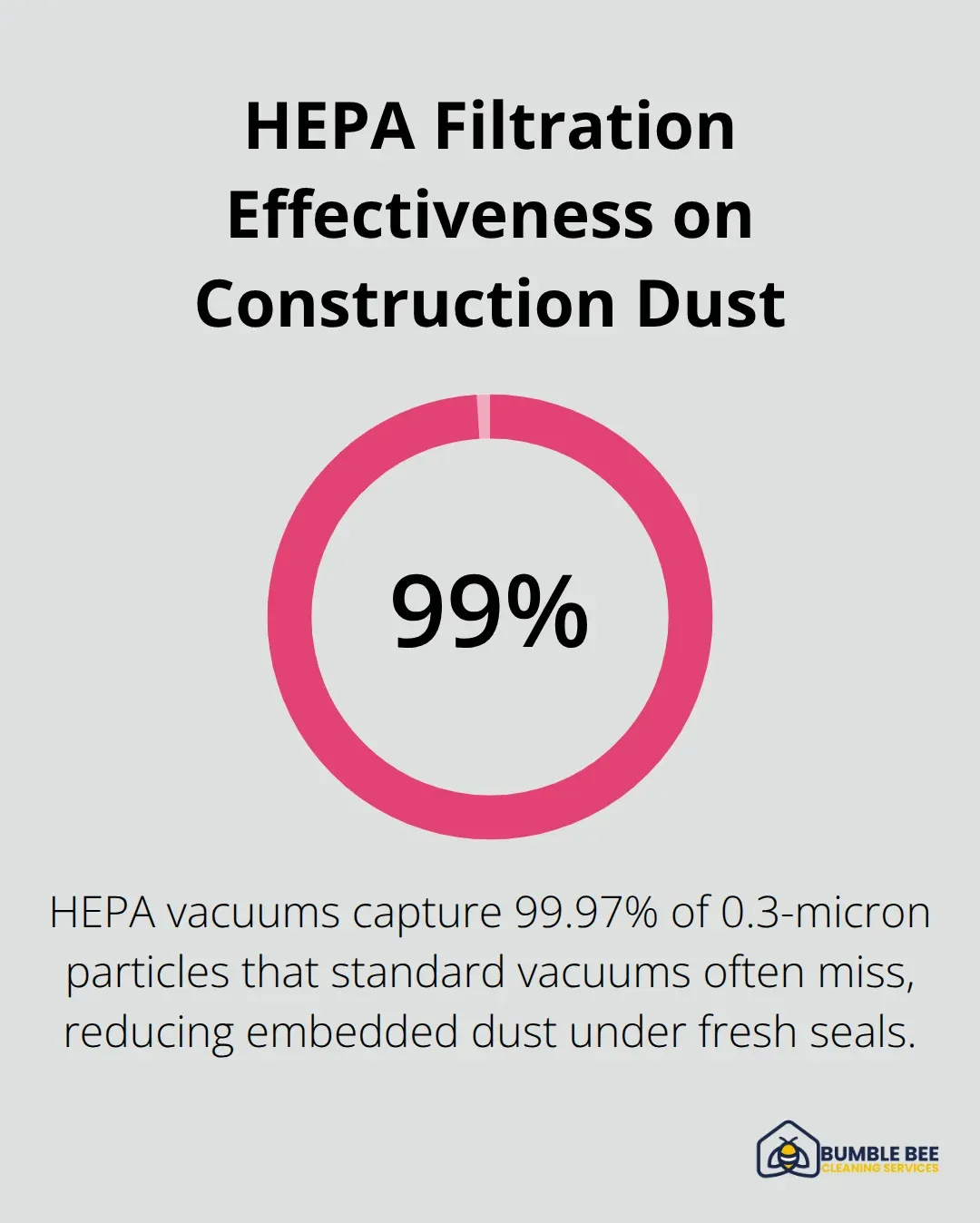
Construction dust particles as small as 0.3 microns embed themselves into fresh sealant layers before they fully cure. HEPA vacuums capture 99.97% of particles this small, but most standard household vacuums miss them entirely, leaving microscopic debris trapped under your seal. This matters because sealed surfaces like concrete floors, granite countertops, and tile grout lines remain vulnerable during the first 48 to 72 hours after application. The sealer hasn’t fully hardened, and any contamination becomes permanent once it cures.
Seattle’s construction dust combines with moisture from weather and humidity, creating a paste-like residue that bonds to unsealed surfaces and can force its way into porous stone like granite and concrete if not removed quickly.
Sealed Surfaces in Seattle Construction Projects
Concrete slabs represent the most common sealed surface in post-construction cleanup. Contractors apply sealers to protect concrete from water, oil, grease, and UV damage, and these sealers form a thin protective layer that keeps the concrete looking finished. Granite countertops and natural stone surfaces also receive sealant because granite is porous and absorbs moisture and oils without a protective barrier. Sealed tile grout lines, vinyl flooring with protective coatings, and terrazzo surfaces all require the same careful maintenance approach. Each surface type has different vulnerabilities-concrete blisters when moisture gets trapped underneath, granite darkens if over-sealed, and vinyl can yellow from harsh chemicals. Construction debris affects all of them by scratching the sealer during cleanup or embedding fine dust that prevents proper curing.
Why Construction Residue Threatens Your Seals
Paint overspray and sealant residue bond directly to glass and sealed stone, requiring plastic scrapers or razor blades at a 45-degree angle to remove without damaging the underlying surface. Hard water mineral deposits (common on Seattle surfaces) stick to sealed finishes and can etch them if left untreated. Construction grit acts like sandpaper when you walk on sealed concrete or wipe sealed countertops, gradually abrading the protective layer. Immediate cleanup within the first 24 hours after sealing prevents these contaminants from bonding permanently to your surfaces. Waiting more than a few days makes removal exponentially harder and risks permanent damage to the seal itself.
How Timing Affects Seal Integrity
The window for safe post-construction maintenance closes quickly. Fresh sealers cure at different rates depending on humidity, temperature, and product type, but most reach initial hardness within 24 to 48 hours. During this period, contaminants settle into the tacky surface and harden along with the sealer itself. After 72 hours, the seal has cured enough that you can clean more aggressively, but construction residue left sitting on the surface for days bonds chemically and becomes nearly impossible to remove without damaging the seal.
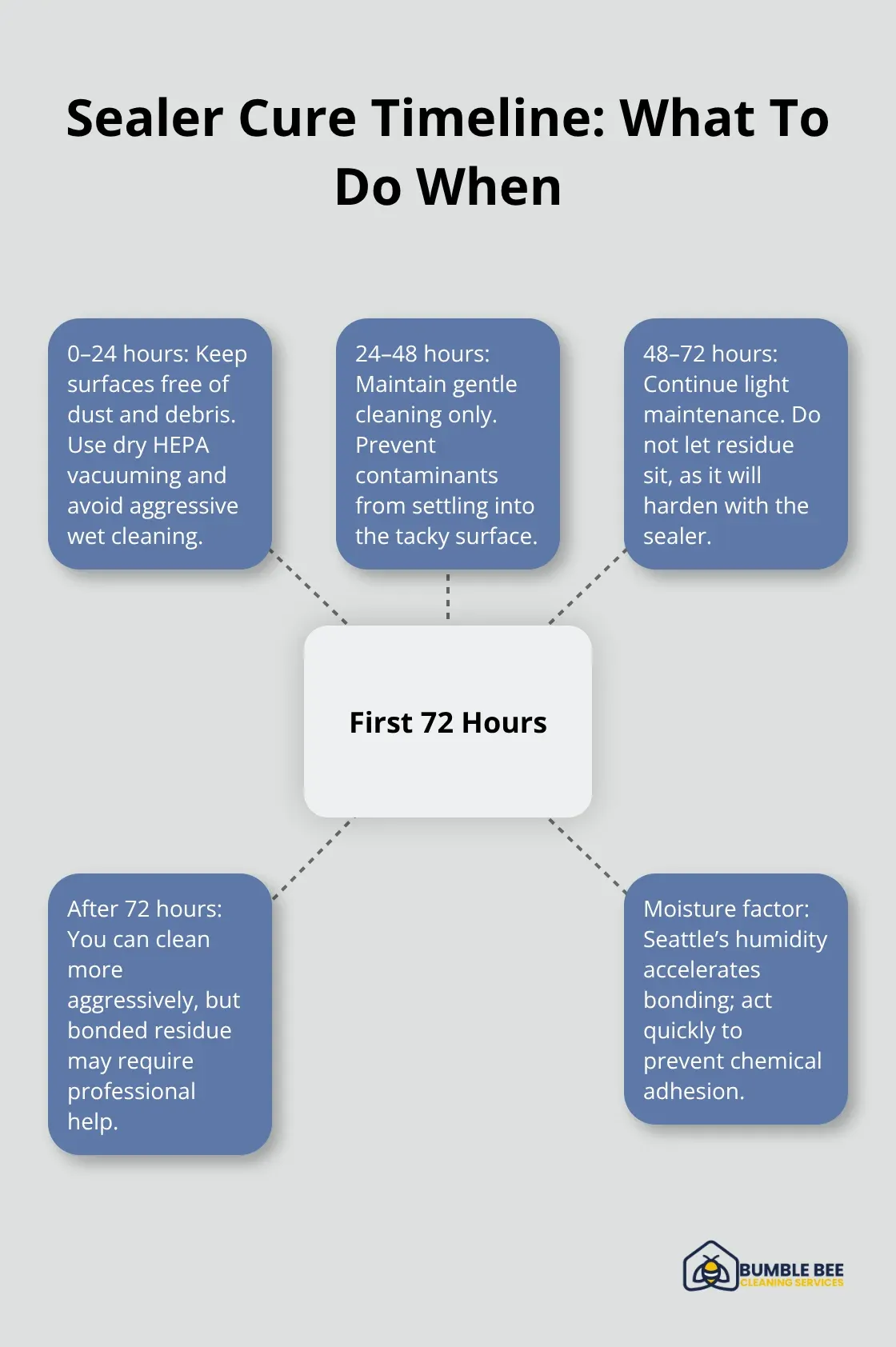
Seattle’s wet climate accelerates this bonding process because moisture activates the adhesive properties of dust and debris. Starting your maintenance routine immediately after construction ends-not days later-determines whether your sealed surfaces stay pristine or develop permanent marks and discoloration.
Keeping Sealed Surfaces Clean Without Causing Damage
Choose the Right Cleaning Products
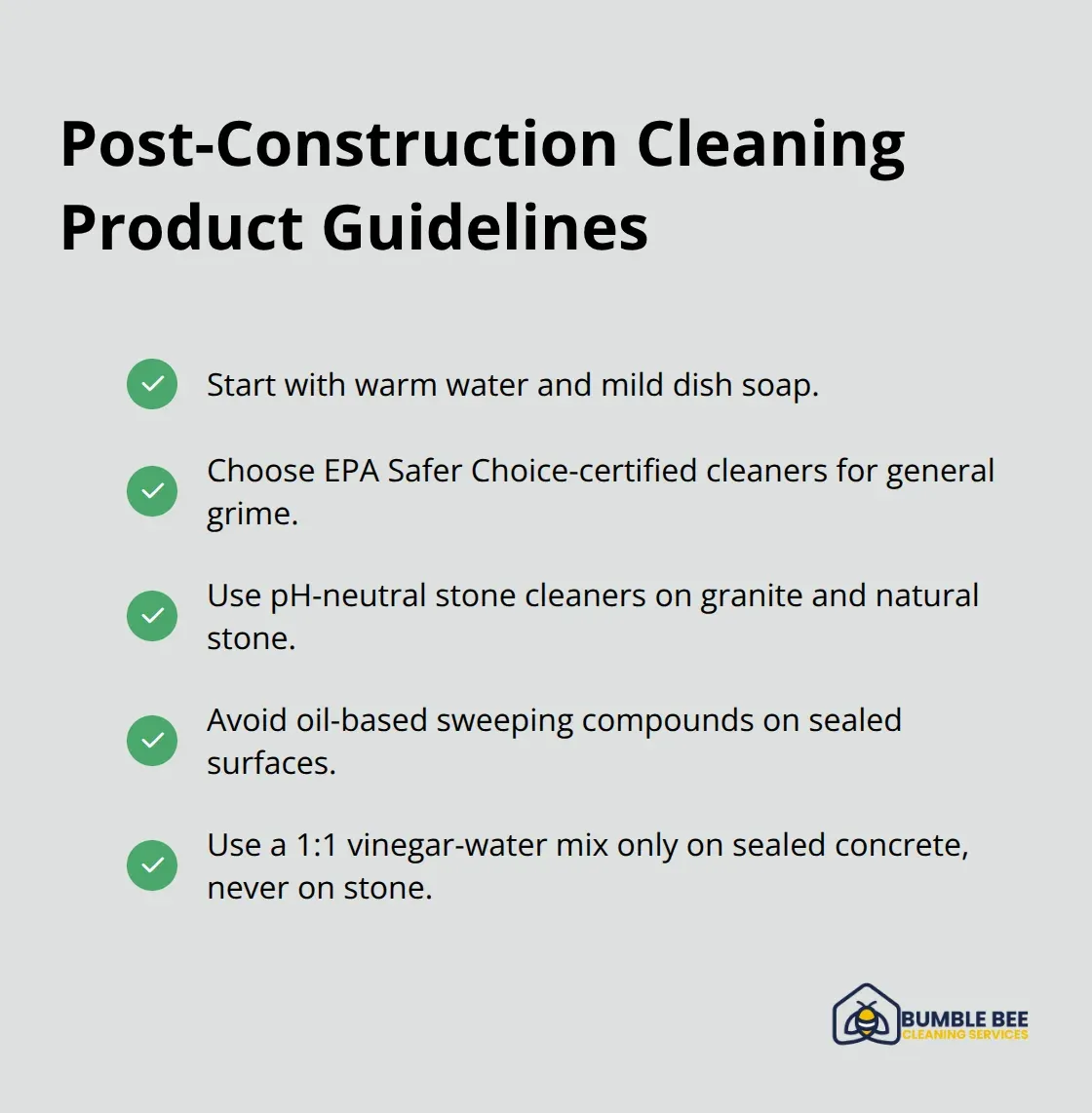
The products you select matter more than how often you clean. Most household cleaners contain acids or alkaline compounds that strip sealers or leave residue that clouds finishes. EPA Safer Choice-certified cleaning solutions break down construction grime without degrading seals or coatings. For concrete sealed floors, warm water and mild dish soap remove daily dust and light residue without compromising the protective layer. For granite countertops and natural stone, use pH-neutral cleaners formulated specifically for stone surfaces-generic all-purpose cleaners can darken granite or etch its surface permanently. Vinegar solutions work for mineral deposits but only at a 1:1 ratio with warm water and only on sealed concrete, never on granite or natural stone.
Avoid oil-based sweeping compounds entirely; they create additional cleaning challenges on sealed surfaces and trap dirt underneath the sealer. Start with the gentlest option first. If warm water and dish soap removes the debris, stop there. Escalate to stronger products only when necessary, because every chemical contact slightly degrades the seal over time.
Apply Proper Cleaning Techniques
Technique matters as much as the product itself. Remove loose debris with a soft-bristled brush or HEPA-filter vacuum before tackling wet cleaning-this prevents fine construction dust from scratching the seal when you wipe the surface. For sealed concrete floors, auto-scrub the slab daily during the first week after construction to remove fine dust and grime before they bond to the surface.
When wiping sealed countertops or smaller surfaces, use microfiber cloths and professional-grade squeegees rather than paper towels or cotton rags. Microfiber traps more dirt and reduces lint and streaks that cloud finishes. Work from top to bottom on vertical surfaces and from one end to the other on horizontal surfaces to prevent drips on already-cleaned areas. For stubborn paint overspray or sealant residue, use a plastic scraper or razor blade at a 45-degree angle while keeping the surface wet with your cleaning solution-the moisture prevents the tool from bonding to the seal.
Inspect and Adjust Your Schedule
Inspect your work with bright light after cleaning, checking corners and edges where residue hides. Frequency depends on construction intensity: heavily dusty projects need daily maintenance for the first two weeks, while lighter renovations require three times weekly for the first week, then shift to standard weekly cleaning. After the first month, sealed surfaces in normal residential use need only weekly or bi-weekly cleaning to maintain the seal’s effectiveness and appearance.
The maintenance rhythm you establish now determines how long your sealed surfaces stay protected. Once you move past the critical post-construction window, your attention shifts to identifying damage that construction may have caused-scratches, scuffs, and areas where the seal itself may need refreshing.
Addressing Common Issues After Construction
Embedded Dust Requires Immediate Action
Construction dust that settles on sealed surfaces during the first 48 to 72 hours creates a permanent problem if you don’t address it immediately. Fine particles embed into the tacky sealant and harden in place, becoming visible as a hazy film or dull spots that no amount of later cleaning removes. The solution is aggressive action in the first week. Use a HEPA-filter vacuum daily on sealed concrete floors during days one through seven after construction ends, then switch to your standard maintenance routine. For sealed stone countertops and smaller surfaces, wipe down with a damp microfiber cloth immediately after construction, then again the next morning before dust settles permanently. If you wait more than three days, professional equipment may be needed to remove embedded dust without scratching the seal.
Removing Paint Overspray and Residue
Construction also leaves paint overspray and sealant residue bonded to sealed surfaces. A plastic scraper or razor blade held at a 45-degree angle while the surface stays wet removes these stubborn residues without damaging the underlying seal. Work slowly and deliberately, applying steady pressure rather than scraping aggressively, because rushing this process scratches the finish. For mineral deposits from Seattle’s hard water, a 1:1 mixture of white vinegar and warm water breaks down the buildup on sealed concrete, but test this solution on a hidden corner first since vinegar can cloud some stone finishes.
Identifying and Addressing Scratches
Scratches and scuffs appear on sealed floors within days of construction as workers move equipment and materials across the surface. Minor surface scratches that don’t penetrate the full sealer thickness fade with regular cleaning and polish application, but deep gouges that expose the unsealed concrete or stone underneath require immediate attention to prevent moisture from penetrating the substrate. Inspect your sealed surfaces under bright light within the first week after construction, documenting any damage with photos for your records. If scratches are extensive or deep, reseal the affected areas within two weeks before moisture damage spreads.
Determining When Resealing Becomes Necessary
Most sealed concrete floors need a complete reseal every two to three years under normal residential use, but heavy construction activity accelerates this timeline. High-traffic commercial spaces may need resealing every 12 to 18 months. The water test determines if your sealed surfaces need refreshing: place a few drops of water on the surface and wait three to four minutes. If the water absorbs into the material rather than beading on the surface, the seal has degraded and you need professional resealing. Schedule a professional assessment within three weeks of construction completion to identify damage that requires sealing repair before it compromises your investment.
Final Thoughts
Sealed surface care after construction isn’t a one-time task-it’s an investment in durability and appearance that pays dividends for years. Properly maintained sealed concrete, granite, and tile surfaces resist water damage, staining, and wear that would otherwise shorten their lifespan significantly. The maintenance practices you implement in the first month after construction determine whether your sealed surfaces remain pristine or develop permanent marks and discoloration that no amount of later cleaning removes.
Your sealed surfaces protect your property’s value and functionality. Concrete floors that stay sealed resist oil and water penetration, granite countertops that receive regular care maintain their natural brilliance, and tile grout lines that are properly maintained prevent moisture from compromising the substrate underneath (this protection compounds over time as surfaces that receive consistent care need resealing less frequently and resist damage more effectively than neglected ones). We at Bumble Bee Cleaning Services understand the complexities of sealed surface care and specialize in post-construction cleaning with methods that remove construction residue without damaging fresh sealers.
The window for protecting your investment closes quickly after construction ends. Starting your maintenance routine immediately, using the right products and techniques, and addressing damage within the first few weeks prevents costly repairs or complete resealing down the road. Professional post-construction cleaning support ensures your sealed surfaces receive the specialized care they need when they’re most vulnerable.
For more information about our cleaning services in Seattle and Atlanta, or to request a cleaning quote, call or text us at 425-786-1360 or email us at info@qbclean.com
