
Ceiling fans are one of those household items we forget about until they’re visibly dusty. Over time, they collect more grime than you’d expect, especially in Seattle’s damp climate.
We at Bumble Bee Cleaning Services know that dirty fans don’t just look bad-they circulate dust and allergens through your home. The good news is that deep cleaning them is straightforward once you know the right approach.
Why Ceiling Fans Collect Dust in Seattle
Seattle’s humidity and moisture create the perfect storm for ceiling fan buildup. When warm, damp air rises toward your ceiling, it carries dust, pollen, and pet hair that stick to fan blades far more aggressively than in drier climates.
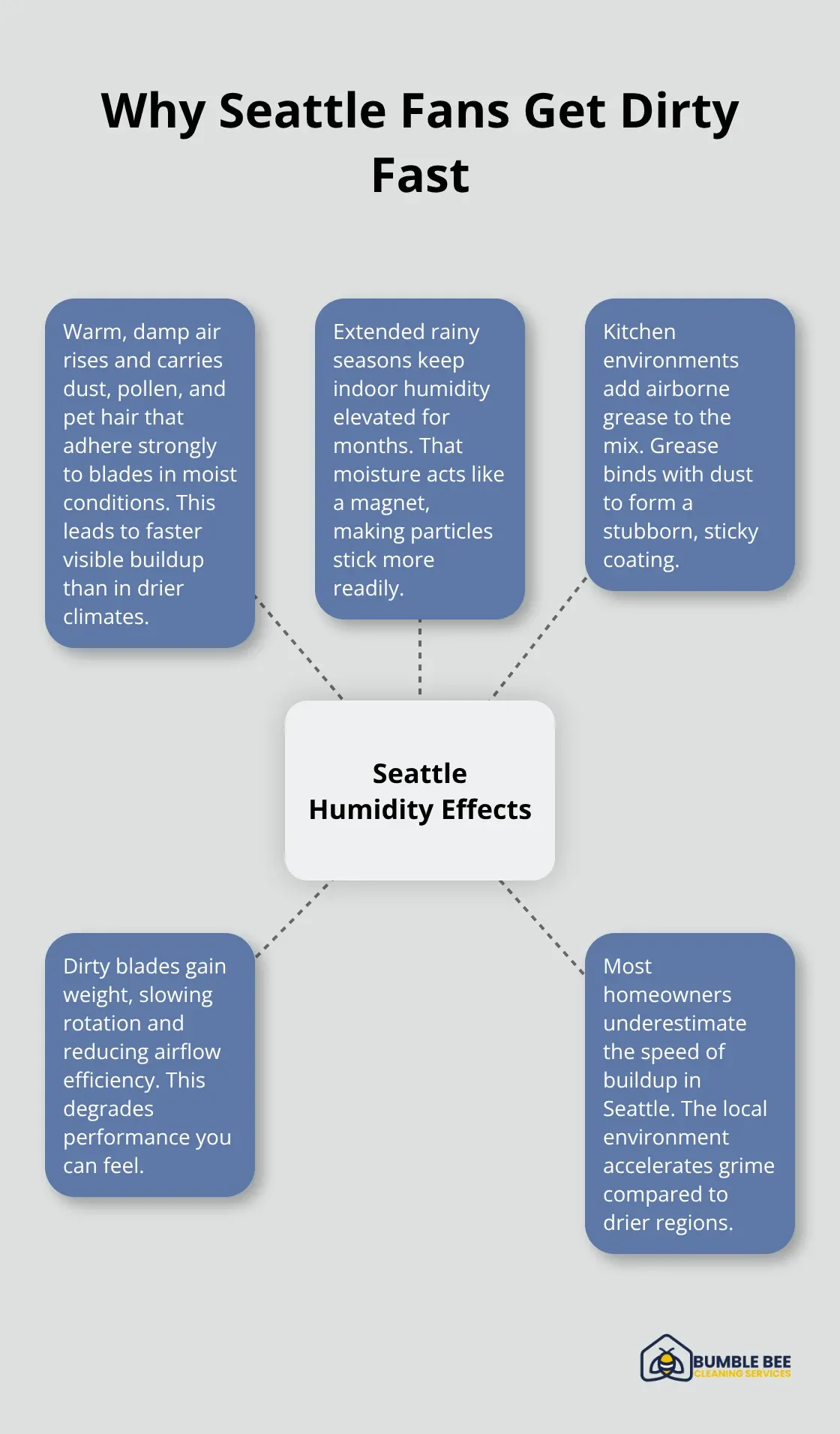
The Pacific Northwest’s rainy season means your home stays humid for months, and that moisture acts like a magnet for particles. Consumer Reports testing confirms that dirty blades add visible weight to the fan, slowing rotation and reducing airflow efficiency by a measurable amount. In kitchens, the problem worsens because grease from cooking combines with dust, creating a stubborn, sticky coating that resists quick wipes. Most homeowners underestimate how fast this happens-Seattle’s environment means you face accelerated grime buildup compared to drier regions.
Health Impacts You Can’t Ignore
When your ceiling fan spins, it recirculates everything sitting on those blades directly into the air you breathe. Dust mites, pollen, mold spores, and bacteria spread throughout your rooms, aggravating allergies and asthma. If anyone in your household struggles with respiratory issues or seasonal allergies, a neglected ceiling fan actively works against you. High humidity levels cause dust to stick to surfaces and accumulate in your home, which spreads allergens every time the fan runs. Deep cleaning removes these irritants before heating season starts, reducing airborne allergens and improving indoor air quality noticeably.
How Often Your Fans Actually Need Cleaning
Weekly dusting works best for Seattle homes to prevent sticky buildup. Your climate demands it. In humid or dusty environments like ours, regular maintenance prevents the sticky buildup that becomes nearly impossible to remove. If you have pets or live near traffic, increase frequency accordingly. Light dusting with an extendable duster prevents debris from accumulating, but that doesn’t replace deep cleaning. Before winter heating season starts, schedule a thorough deep clean to eliminate allergens before you spend months indoors with the heat running.
What You’ll Face Without Regular Maintenance
Neglected fans accumulate layers of sticky residue that harden over time. The combination of dust, grease, and moisture creates buildup that ordinary dusting cannot address. This stubborn coating reduces your fan’s ability to move air efficiently, forcing the motor to work harder and wear out faster. Cleaning frequency matters because each month of delay makes the next cleaning job exponentially more difficult. The longer you wait, the more aggressive your cleaning approach needs to become-and the higher your risk of damaging the fan or its motor. Starting with a deep clean now, then maintaining regularly, keeps the job manageable and protects your investment.
Getting Ready for Deep Cleaning
The right tools and approach make all the difference between a frustrating chore and a straightforward task. Understanding what you’ll encounter (dust, grease, moisture-trapped particles) helps you prepare the right supplies and safety measures. With the proper setup, you can tackle this job efficiently and protect your home from the dust and debris that falls during cleaning.
How to Deep Clean Your Ceiling Fans Safely and Effectively
Prepare Your Space and Fan
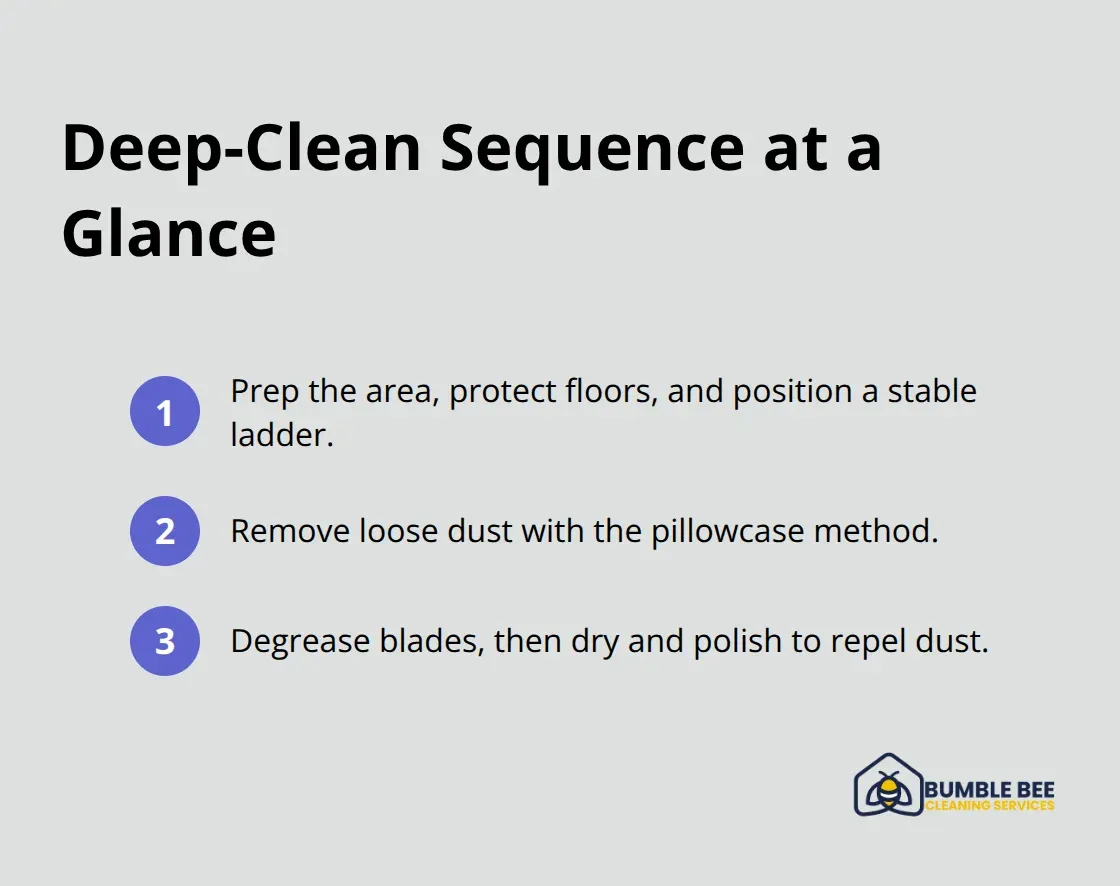
Start with protection before you touch anything. Spread drop cloths or old sheets on the floor beneath the fan, covering an area about twice the full width of the fan to catch dust and debris. Position your ladder so you can see the top of the blades clearly, and remove any light globes before you start. This single step prevents you from scrubbing around fixtures and makes the entire job faster. Turn off the fan at the wall switch and wait a few minutes for the blades to stop completely. Never attempt to clean a spinning fan, even at low speed.
If your home has high ceilings and you lack a sturdy ladder, an extendable duster lets you reach without climbing, though you sacrifice some control over pressure and technique.
Remove Loose Dust with the Pillowcase Method
The pillowcase method works surprisingly well for initial dust removal. Slip an old pillowcase over each blade and pull it back toward the motor. This approach traps dust inside the case instead of letting it scatter across your furniture and floors. The technique handles loose particles efficiently and sets you up for the deeper cleaning work that follows.
Attack Stubborn Buildup with the Right Cleaner
For sticky buildup that the pillowcase won’t address, dampen a professional-grade cotton cloth with an alkaline degreaser designed to work fast and clean heavy grease, dirt and grime. Spray the cleaner onto the cloth, never directly onto the blade, to control overspray and prevent liquid from dripping onto your motor. Wipe each blade thoroughly, applying steady pressure to break through kitchen grease or moisture-trapped particles. Once you finish the blades, use a clean, dry cloth to polish them and repel future dust accumulation.
Clean the Motor Housing and Light Fixtures
For the motor housing, use a dry cloth or soft brush to remove dust gently. Avoid spraying liquid near the motor itself. Clean light fixtures and bulbs separately by hand-washing globes with warm soapy water, drying them completely before reinstalling. Allow all blades to dry thoroughly before turning the fan back on, since damp surfaces attract more dust when the fan operates.
Establish Your Seattle Cleaning Schedule
In Seattle’s humid climate, schedule this deep cleaning monthly during heating season and every two months during other times of year to stay ahead of sticky buildup that becomes exponentially harder to remove the longer you wait. Once your fan is spotless, the right tools and maintenance routine keep it that way-and that’s where selecting the proper supplies makes all the difference.
Tools and Products You’ll Need
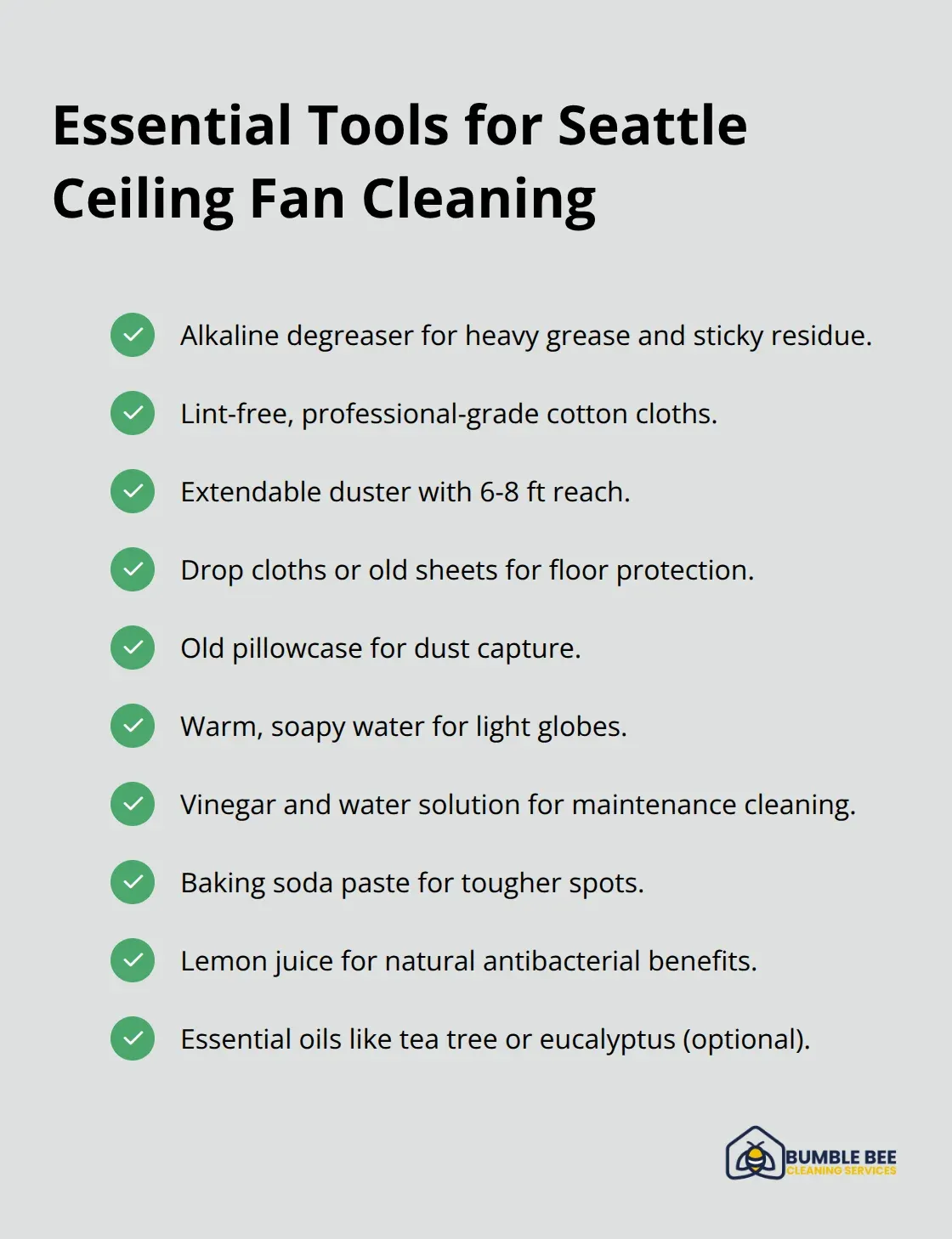
Professional-Grade Degreasers Work Faster on Seattle’s Sticky Buildup
An alkaline degreaser beats generic all-purpose cleaners when you fight Seattle’s sticky residue. Professional-grade degreasers handle stubborn kitchen residue without requiring aggressive scrubbing that risks damaging blade finishes. The key is applying the cleaner to a cloth rather than spraying directly on the blade, which prevents overspray and keeps liquid away from the motor. This approach protects your fan’s electrical components while delivering superior cleaning power.
Cotton Cloths and Extendable Dusters Make the Job Manageable
Cotton cloths matter more than you’d think because lint-free, professional-grade options won’t shed fibers across your freshly cleaned blades. Reusable cotton cloths cost less over time than disposable alternatives and work equally well for both initial cleaning and final polishing. An extendable duster with a reach of six to eight feet eliminates the need for a ladder during regular maintenance, which means you’ll actually stick to your weekly dusting routine instead of postponing it because climbing feels like a hassle.
This single tool reduces cleaning time significantly and increases safety by keeping you off ladders whenever possible.
Natural Alternatives Work Well for Ongoing Maintenance
Eco-friendly cleaning works just as effectively as harsh chemicals for ceiling fan maintenance. Vinegar diluted with water handles light dust and mineral deposits without toxic fumes or residue left on surfaces. Baking soda mixed into a paste tackles grease buildup when combined with elbow grease and a damp cloth, though it requires more effort than alkaline degreasers on heavy kitchen grime. Lemon juice provides natural antibacterial properties and a fresh scent without artificial fragrances that linger in your home. Essential oils like tea tree or eucalyptus add antimicrobial benefits to vinegar solutions if you prefer scent.
Choosing Between Chemical and Natural Solutions
The trade-off is clear: natural solutions work slower on heavy buildup and demand more physical effort, making them ideal for regular maintenance rather than initial deep cleaning after months of neglect. For your first deep clean in Seattle’s humid environment, an alkaline degreaser gets the job done in half the time. After that, switching to vinegar or baking soda solutions maintains cleanliness with less chemical exposure over the long term. Start with professional-grade products for the initial deep clean, then transition to eco-friendly alternatives for ongoing maintenance once buildup is eliminated.
Final Thoughts
Deep cleaning your ceiling fans in Seattle requires three straightforward steps: prep your space, remove loose dust with the pillowcase method, then tackle stubborn buildup with an alkaline degreaser and professional-grade cotton cloths. Once you complete that initial deep clean, maintaining your fans becomes manageable through weekly dusting with an extendable duster and monthly deep cleaning during heating season. This routine prevents the sticky residue that makes future cleaning exponentially harder and keeps your fans running efficiently while improving your home’s indoor air quality.
Clean ceiling fans reduce airborne allergens and dust mites that aggravate respiratory issues, lower your fan’s motor strain by removing weight from the blades, and help your HVAC system work more effectively. You’ll notice better air circulation throughout your rooms and reduced dust settling on furniture and surfaces. In Seattle’s humid climate, staying ahead of buildup saves you time and frustration compared to letting months pass between cleanings.
If you’re dealing with high ceilings, heavy kitchen grease buildup, or simply lack the time to tackle this yourself, professional cleaners handle the job faster and more thoroughly. We at Bumble Bee Cleaning Services bring specialized attention to ceiling fans and fixtures throughout your home, using eco-friendly products to deliver exceptional results. Contact us at Bumble Bee Cleaning Services to schedule your deep cleaning today.
