
Construction projects leave your fireplace filled with dust, debris, and materials that can pose serious safety risks. Seattle’s unique climate adds moisture challenges that make thorough fireplace cleanup even more important.
We at Bumble Bee Cleaning Services know that proper post-construction cleaning protects your family and restores your fireplace’s functionality. This guide walks you through each step of the cleaning process.
Post-Construction Debris Removal from Fireplaces
Construction projects scatter drywall dust, sawdust, paint chips, and concrete particles throughout your fireplace system. These materials settle deep into the firebox, damper, and flue areas where they create fire hazards and block proper ventilation. Renovation dust differs significantly from regular household dust because it contains heavier particles that standard methods cannot remove effectively.
Identify Common Construction Materials
Start your inspection with a powerful flashlight to examine every surface inside the firebox and chimney opening. Look for thick dust layers on the damper mechanism, chunks of drywall or plaster that stick to brick surfaces, and metal shavings near gas connections. Paint flakes often accumulate in corners where they mix with adhesive residues to form stubborn deposits. Construction dust typically appears grayish-white and feels gritty when you touch it (unlike the softer texture of regular household dust that accumulates over time).
Remove Large Debris Safely
Use a HEPA-filter vacuum cleaner to extract fine particles before you attempt manual removal of larger debris pieces.
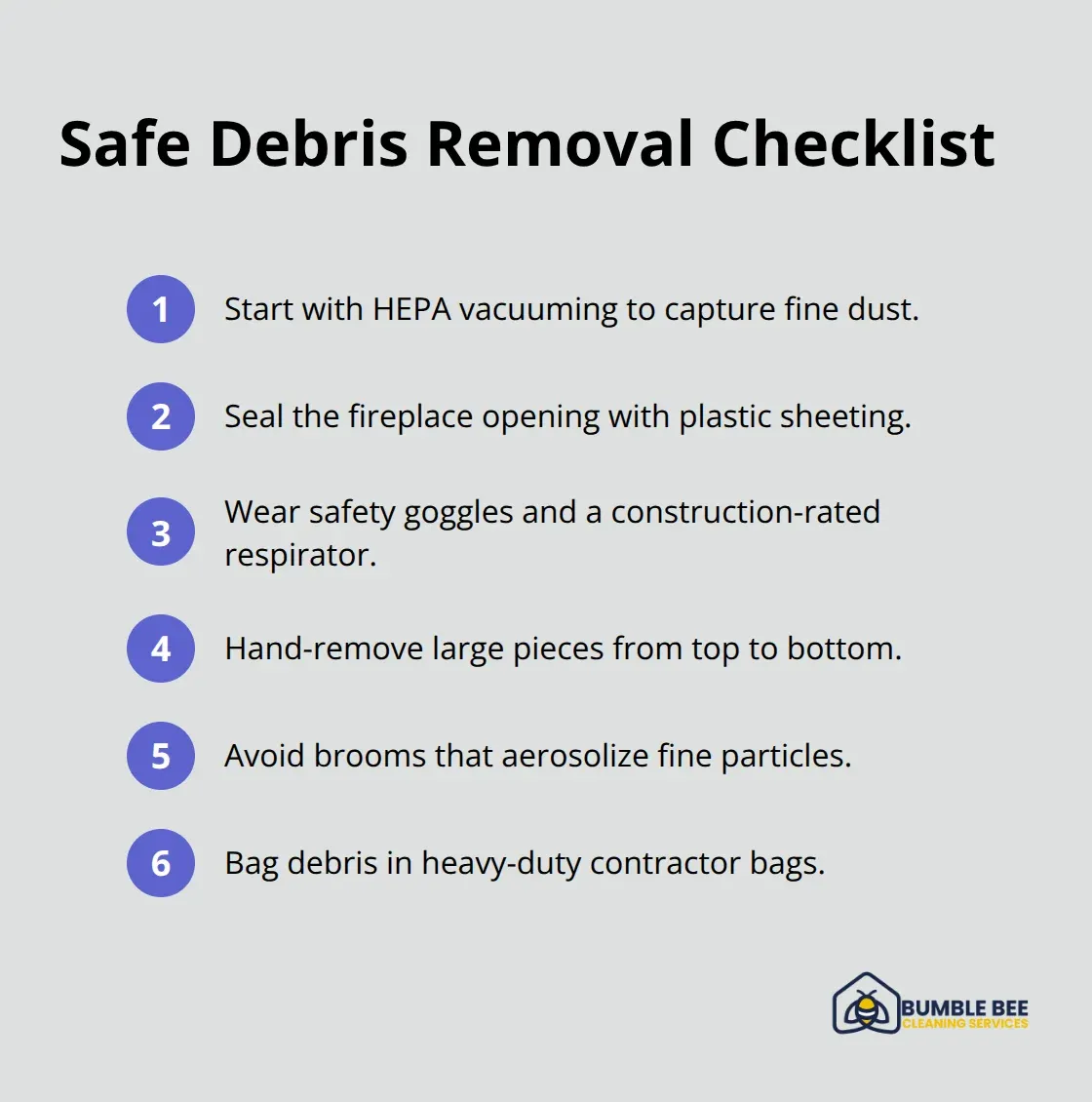
These filters capture at least 99.7% of particles as small as 0.3 microns. Seal the fireplace opening with plastic sheeting to prevent dust from spread into your living space during the process. Wear safety goggles and a dust mask rated for construction particles, as these materials can irritate respiratory systems and cause health problems. Remove chunks of materials by hand, work from top to bottom to prevent debris from fall onto already cleaned surfaces. Never use regular brooms for this task because they scatter fine particles into the air where they resettle on surfaces you have already cleaned.
Dispose of Construction Waste Properly
Construction debris requires different disposal methods than regular household waste. Contact Seattle Public Utilities to learn about construction waste disposal requirements in your area (as some materials need special handling). Bag all dust and small debris in heavy-duty contractor bags before you place them in your regular garbage pickup. Larger pieces of drywall, wood, or metal should go to designated construction waste facilities rather than standard recycling centers.
With debris removed and waste properly disposed of, you can now focus on the detailed interior cleaning that restores your fireplace to safe operating condition.
Deep Cleaning Your Seattle Fireplace Interior
Your fireplace interior needs systematic cleaning to remove embedded construction particles and restore safe operation. Start with the firebox walls and use a stiff-bristled brush to scrub brick or stone surfaces where dust has penetrated into porous materials. Mix warm water with mild detergent for brick surfaces, but use pH-neutral cleaners on natural stone to prevent damage. An estimated 48,530 home heating fires occur annually in the United States, based on the National Fire Protection Association’s latest statistics.
Apply cleaning solution with a sponge, scrub vigorously, then rinse with clean water and dry completely. For stubborn soot stains mixed with construction residue, create a paste with baking soda and water, let it sit for 15 minutes, then scrub and rinse thoroughly.
Clean the Firebox and Stone Surfaces
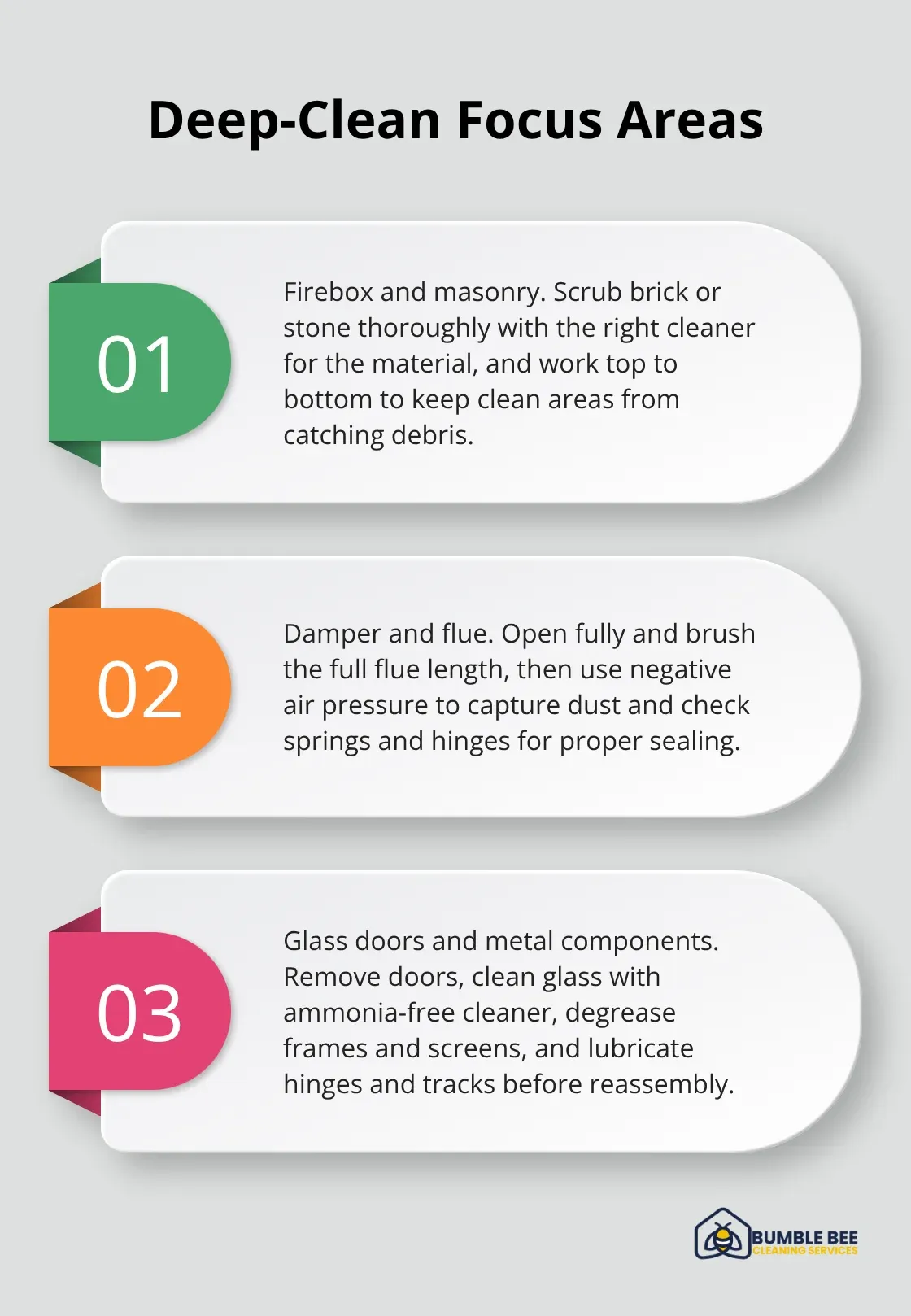
Focus on brick and stone surfaces where construction dust embeds deeply into porous materials. Test cleaning products on small, hidden areas first to avoid damage to natural stone surfaces. Scrub each section methodically and work from top to bottom to prevent clean areas from collecting falling debris. Pay special attention to mortar joints where fine particles accumulate and create fire hazards.
Target the Damper and Flue System
Construction dust settles heavily in the damper mechanism and flue walls where it blocks airflow and creates fire hazards. Open the damper fully and use a chimney brush attached to flexible rods to scrub the entire flue length. The professional sweep typically starts by inserting the chimney brush into the flue from the top or bottom, depending on accessibility.
Use negative air pressure devices or air scrubbers during this process to capture airborne dust. Check the damper springs and hinges for dust buildup that prevents proper sealing. Clean metal surfaces with degreasing agents to remove construction adhesives and paint residue that interfere with operation.
Restore Glass Doors and Metal Components
Glass fireplace doors trap construction dust between panels and frames where standard cleaning cannot reach. Remove doors completely from their tracks, disassemble if possible, and clean each glass panel with ammonia-free glass cleaner. Metal door frames and fireplace screens need degreasing solutions to remove construction adhesives and paint overspray.
Steel wool works effectively on stubborn spots (but test on hidden areas first). Inspect door gaskets for embedded particles that prevent proper sealing and replace if necessary. Lubricate hinges and tracks with high-temperature grease rated for fireplace use before reassembly.
Seattle’s Pacific Northwest climate presents unique challenges that require special attention during the cleaning process. Consider professional deep cleaning services for complex fireplace systems, especially when dealing with extensive construction debris that requires specialized equipment and expertise.
Addressing Seattle-Specific Challenges
Seattle’s unique climate creates challenges when you clean post-construction fireplace debris. Pacific Northwest moisture penetrates deep into construction dust and forms paste-like residues that standard methods cannot remove. The region receives approximately 37 inches of rainfall annually, which means moisture seeps into fireplace systems through damaged chimney caps or compromised flashing during construction projects. This moisture combines with drywall dust and sawdust to create stubborn deposits that harden against brick and stone surfaces.
Combat Moisture-Related Issues
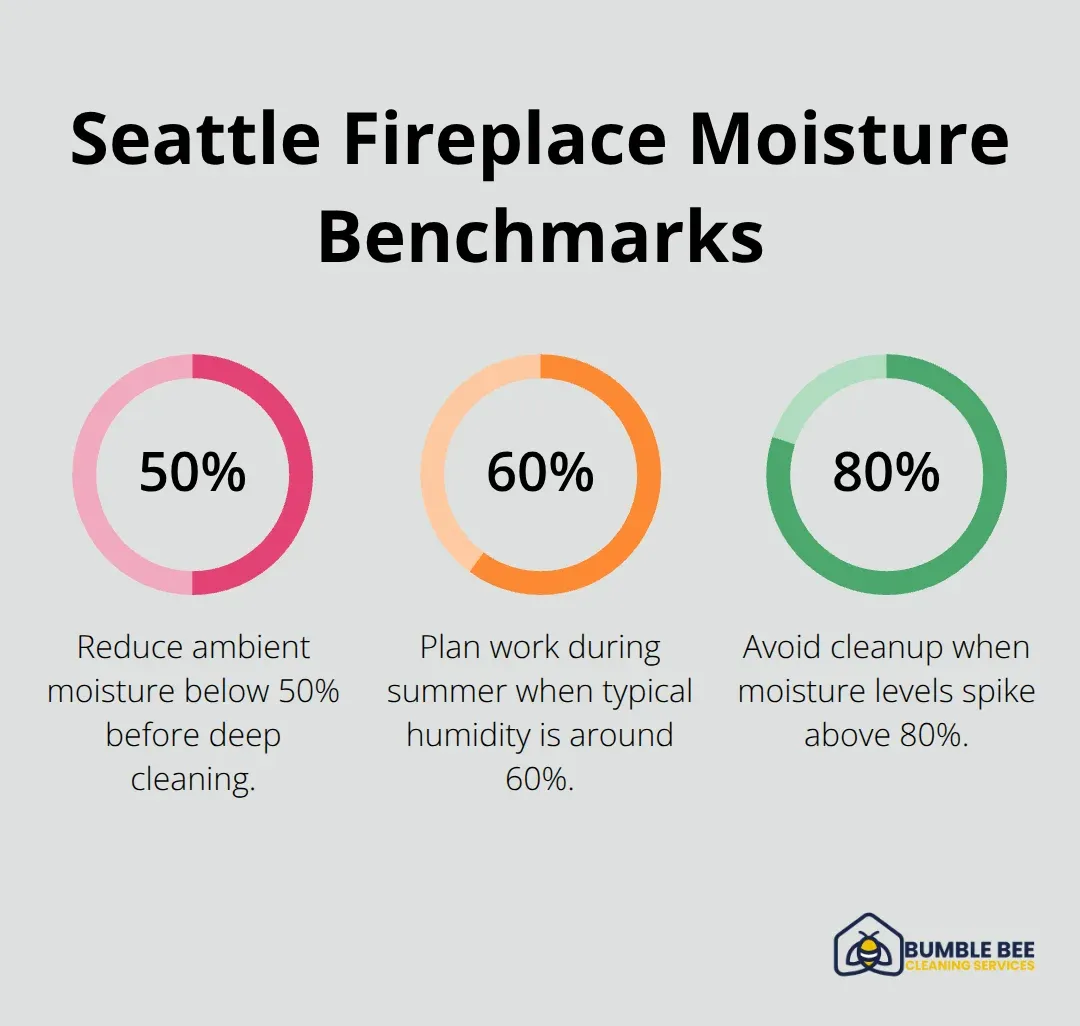
Use dehumidifiers in the fireplace area for 24 hours before you start deep cleanup to reduce ambient moisture levels below 50%. Seattle’s wet climate requires extended drying times between steps, so plan for twice the normal duration compared to drier climates. Apply fans and open windows on dry days to increase air circulation and prevent mold growth on damp surfaces.
Test moisture levels in brick and stone with a moisture meter before you apply solutions (as wet masonry can trap chemicals and cause permanent stains).
Manage Indoor Air Quality During Extended Projects
Seattle homes stay closed during long rainy seasons, which concentrates airborne construction particles during cleanup. Install temporary air scrubbers rated for at least 400 cubic feet per minute to maintain breathable air quality throughout the multi-day process. The Environmental Protection Agency reports that indoor air can be two to five times more polluted than outdoor air during construction activities. Position HEPA air purifiers in adjacent rooms to prevent dust migration, and change filters every two hours during active phases.
Time Your Project With Weather Patterns
Schedule fireplace cleanup during Seattle’s dry summer months between July and September when humidity drops to 60% and rainfall decreases significantly. Avoid work during winter storms when moisture levels spike above 80% and prevent proper drying of cleaned surfaces. Check weather forecasts for three consecutive dry days before you start the project (as Seattle’s unpredictable rain patterns can interrupt work and cause water damage to exposed fireplace components). Post-construction cleaning challenges require careful timing to ensure successful completion.
Final Thoughts
Complex post-construction fireplace cleanup demands specialized equipment and expertise that most homeowners lack. Professional services handle hazardous materials safely and complete thorough work in half the time. We at Bumble Bee Cleaning Services tackle Seattle’s unique moisture challenges during fireplace restoration projects with years of experience.
Regular maintenance prevents construction-level debris accumulation in your fireplace system. Schedule annual chimney inspections before renovation projects begin, and cover fireplace openings with plastic sheeting during any home improvement work. Clean your firebox monthly during heating season to prevent dust buildup that complicates future construction cleanup.
Call experts when you encounter structural damage, extensive soot penetration, or moisture problems that standard methods cannot resolve. Professional fireplace cleanup becomes necessary when construction dust has hardened into paste-like deposits or when Seattle’s humidity has caused mold growth in your chimney system (especially after major renovations). Bumble Bee Cleaning Services offers post-construction cleaning with eco-friendly products, making us your trusted partner for safe fireplace restoration after any renovation project.
