
Office construction creates a mess that goes far beyond what you can see. Dust, debris, and harmful particles settle into every corner, your HVAC system, and the air your team breathes every day.
We at Bumble Bee Cleaning Services know that standard cleaning won’t cut it after construction work. You need professional post-construction cleaning to restore your workspace and protect your employees’ health.
What Construction Actually Leaves Behind
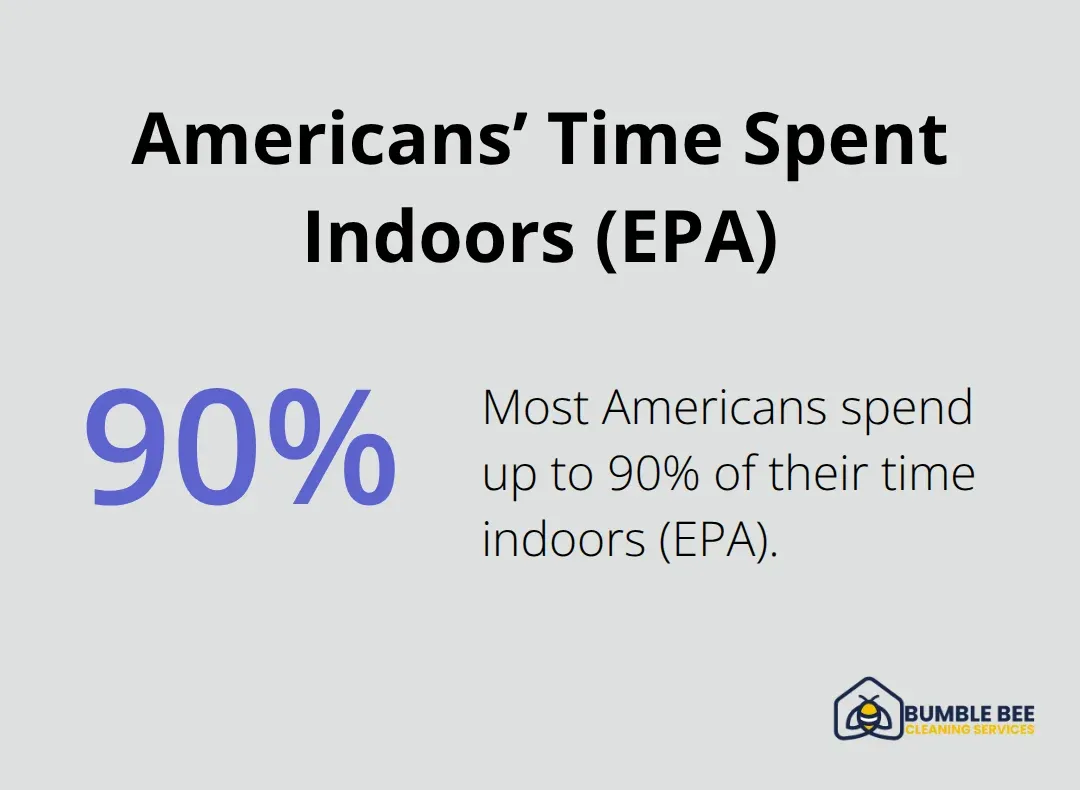
Office construction releases a cocktail of particles that standard vacuuming will never touch. Silica dust from cutting concrete and bricks ranks as one of the most dangerous, especially since drilling, grinding, and cutting operations produce it throughout most construction projects. Wood dust emerges from framing and finishing work, while cement dust settles on every surface. These particles range from 0.5 to 10 microns in size-small enough to inflame your nose and throat immediately and small enough to penetrate deep into lung tissue over time. The EPA notes that most Americans spend up to 90 percent of their time indoors, which means your team will breathe air contaminated by these particles long after the construction crew leaves. Indoor pollutant levels frequently exceed outdoor levels even in well-maintained buildings, according to EPA guidance, and post-construction spaces are particularly vulnerable because dust does not simply disappear.
Hazardous Particles That Linger
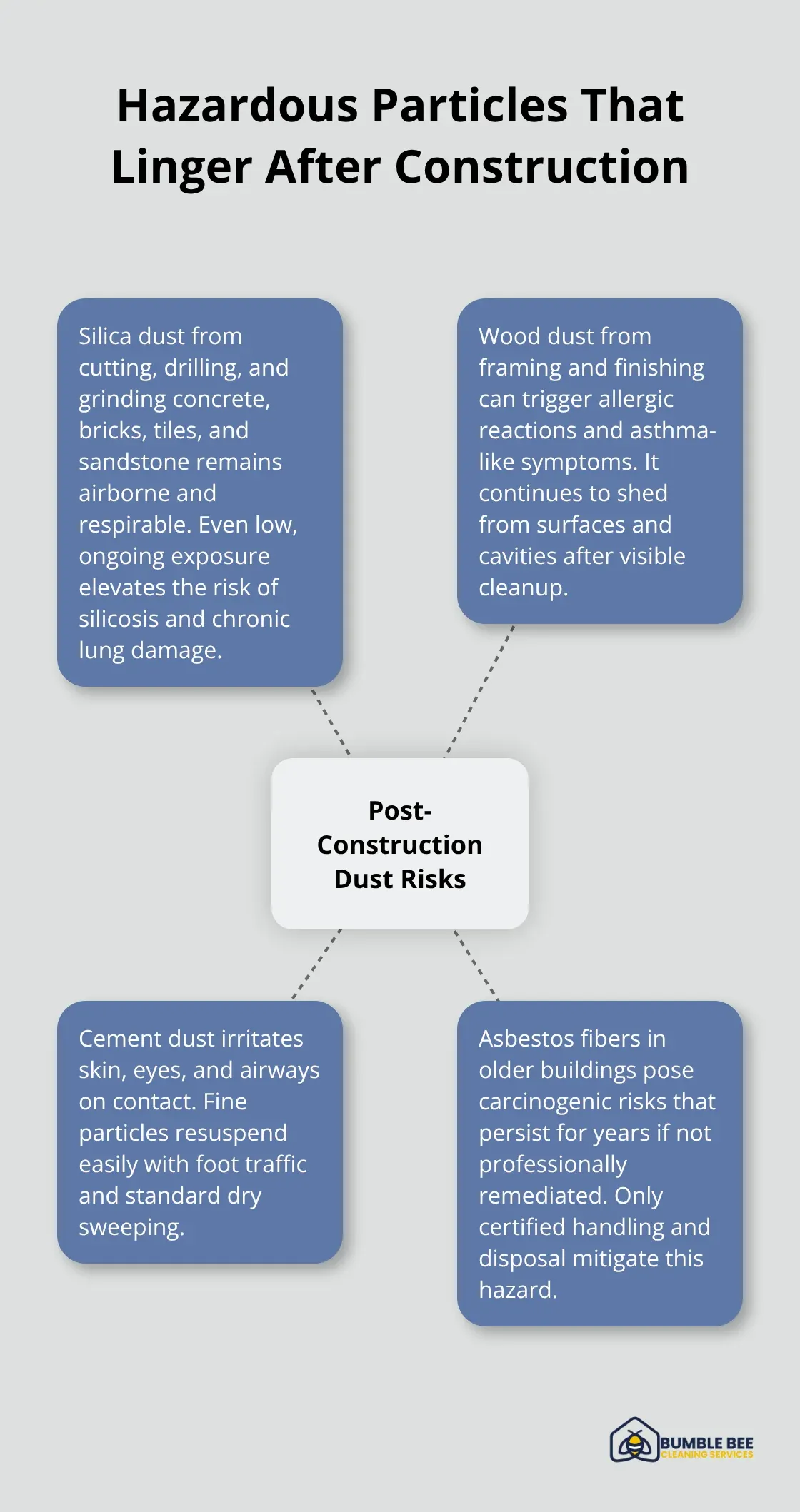
Silica dust poses the greatest threat during construction. Cutting, drilling, or grinding concrete, bricks, tiles, and sandstone all generate silica particles that workers and office staff inhale. Wood dust from framing and finishing work triggers allergic reactions and asthma-like symptoms in anyone exposed to the space. Cement dust and other particles irritate skin on contact and trigger dermatitis. Asbestos fibers, common in older buildings undergoing renovation, present an additional carcinogenic risk that persists long after visible cleanup ends.
The Health Timeline Nobody Expects
Silicosis develops from repeated silica inhalation and causes lung scarring that impairs breathing. Asbestos fibers trigger asbestosis with symptoms including chronic cough, chest pain, and shortness of breath that can take decades to appear. The latency period for these conditions makes them particularly insidious-your employees might not connect respiratory problems emerging months or years later to construction work that happened in their office. Health surveillance with periodic checks catches early respiratory issues before they become severe, which is why post-construction air quality testing matters far more than most office managers realize.
Why Dust Settles Slower Than You Think
Dust settles gradually over weeks, not days, meaning contamination persists well beyond the visible cleanup phase. Particles suspended in your HVAC system continue circulating through your workspace long after construction ends. Professional testing using HEPA filtration and air quality assessments identifies what standard cleaning misses, revealing whether silica, asbestos, or other hazardous particles remain in your space. Understanding what actually lingers in your office determines whether your next cleaning step will truly protect your team’s health.
Cleaning Away What You Cannot See
Surface Cleaning That Actually Works
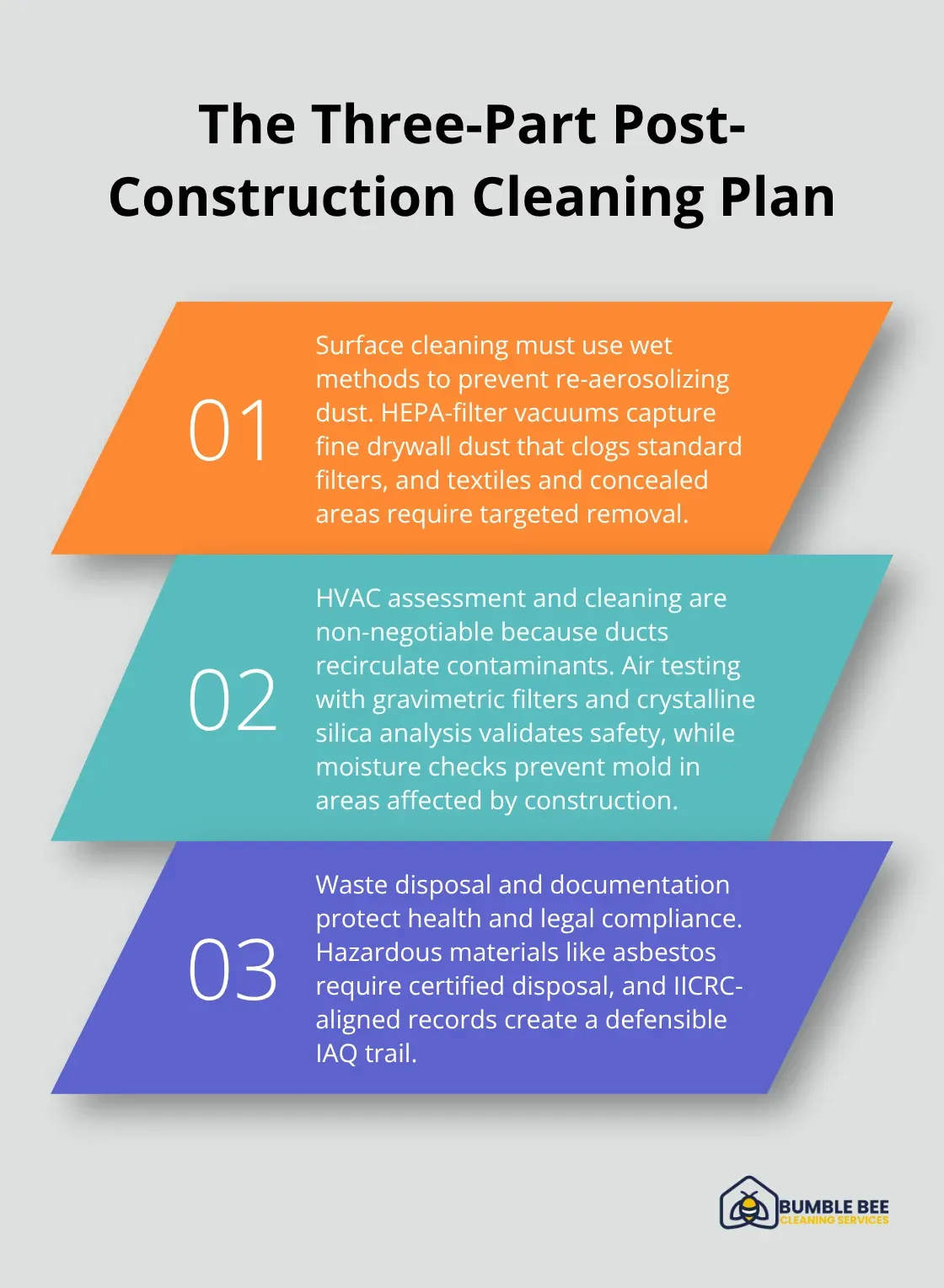
Professional post-construction cleaning demands a three-pronged approach that standard office cleaning completely misses. Surface cleaning alone leaves hazardous particles circulating through your HVAC system and settling into fabrics, which is why the IICRC S400 Standard for Professional Cleaning of the Commercial Built Environment specifically addresses post-construction environments. Hard surfaces require wet-cleaning methods rather than dry sweeping, since dry methods release settled particles back into the air where your team inhales them. Drywall dust particularly demands attention because it cakes onto surfaces and clogs standard vacuum filters, necessitating HEPA-filter vacuums that capture 99.97 percent of particles at 0.3 microns. Textile floor coverings, upholstery, and concealed areas like ceiling plenums and equipment ledges trap construction dust that continues releasing particles weeks after work ends.
HVAC System Assessment and Cleaning
HVAC system cleaning stands as non-negotiable because air handling units circulate contaminated air throughout your entire office, and the IICRC S590 Standard specifically covers post-construction HVAC assessment and cleaning. Air quality testing uses gravimetric filters and respirable dust analysis to reveal whether silica, asbestos, or cement dust remains at levels exceeding occupational exposure limits, giving you concrete data rather than assumptions about safety. Testing typically measures crystalline silica using X-ray diffraction analysis, which definitively identifies whether dangerous particles persist in your workspace. Moisture assessment guided by the IICRC S500 Standard prevents mold growth in areas where construction created water damage or humidity spikes, a step most office managers overlook.
Waste Disposal and Documentation
Construction waste disposal matters legally and practically because improperly handled materials can release additional contaminants, and hazardous substances like asbestos require certified disposal through licensed facilities rather than standard waste removal. Professional cleaning firms following IICRC standards provide documentation of their work, creating a defensible record that your office meets industry-recognized IAQ standards. This matters when employees later report respiratory issues because you can demonstrate that professional remediation occurred rather than relying on informal cleanup efforts. The EPA estimates that poor indoor air quality costs tens of billions annually in lost productivity and medical expenses, making the investment in professional post-construction cleaning financially sound beyond the obvious health benefits.
Timing Your Post-Construction Response
The timeline for post-construction cleaning should start immediately after construction ends, not weeks later when particles have thoroughly infiltrated your systems. Waiting allows dust to settle deeper into HVAC components, fabrics, and concealed spaces where removal becomes exponentially more difficult. Professional teams that follow IICRC standards complete the work systematically, addressing surfaces, air systems, and waste in the correct sequence to prevent recontamination. Your office can then transition to establishing maintenance protocols that preserve the clean environment your team now breathes.
Turning Post-Construction Cleaning Into Long-Term Health Protection
Establish Maintenance Protocols Immediately After Professional Cleaning
Professional post-construction cleaning transforms your office from a contamination zone into a genuinely safe workspace, but only if you maintain what that cleaning accomplished. The EPA reports that most Americans spend up to 90 percent of their time indoors, and your employees will occupy this office for years after construction ends.
A single deep cleaning solves the immediate problem, yet without maintenance protocols, construction particles that settled into HVAC components, textile surfaces, and concealed spaces will gradually re-enter your breathing air. You should establish a post-construction maintenance schedule starting immediately after professional remediation completes. This schedule should include monthly HVAC filter inspections during the first three months following construction, since lingering dust continues circulating through your system even after initial cleaning.
Adjust Cleaning Methods for the First Six Months
Hard surface floors require wet-mopping rather than dry sweeping for at least six months post-construction because construction dust particles remain trapped in floor finishes and release when disturbed by standard cleaning methods. Textile floor coverings and upholstery need professional cleaning again at the three-month mark if your office has heavy foot traffic, as dust migrates from air circulation and settles continuously. Air quality testing should occur at the one-month and three-month intervals post-construction to verify that particle levels remain below occupational exposure limits established by OSHA, giving you concrete data rather than assumptions about safety.
Track Health Improvements and Productivity Gains
Employee health improvements from thorough post-construction cleaning manifest within weeks as respiratory irritation decreases and absenteeism drops. Studies show that poor indoor air quality costs American businesses tens of billions annually in lost productivity and medical expenses according to EPA data, meaning your investment in professional cleaning directly impacts your bottom line through reduced sick days and improved focus. Employees with asthma or allergies experience immediate relief when silica dust, wood dust, and cement particles no longer trigger symptoms during their workday. The IICRC S400 Standard for Professional Cleaning of the Commercial Built Environment specifically addresses post-construction environments because industry experts recognize that standard janitorial services cannot remove the hazardous particles construction work introduces.
Meet Industry Standards and Legal Benchmarks
Implementing the IICRC S400 Standard through certified professionals means your office meets defensible industry benchmarks, protecting both employee health and your company legally if respiratory issues emerge later. Workers breathing clean air demonstrate measurably higher productivity and engagement, and this benefit compounds over months as your team adapts to an environment free from construction-related irritation and contamination.
Final Thoughts
Professional post-construction cleaning protects your employees from silica dust, wood particles, cement residue, and other hazardous contaminants that standard janitorial services cannot remove. Particles penetrate deep into lung tissue, trigger respiratory conditions that may take years to develop, and cost your business productivity through increased sick days and reduced employee focus. Waiting weeks to address post-construction contamination allows particles to settle deeper into your HVAC system, textile surfaces, and concealed spaces where removal becomes exponentially harder and more expensive.
Start your post-construction response immediately after work ends by scheduling professional cleaning that follows IICRC standards. This means surface cleaning using wet methods rather than dry sweeping, HVAC maintenance and air quality testing to verify particle levels meet occupational exposure limits, and proper disposal of construction waste through certified facilities. Your team should conduct air quality testing at one-month and three-month intervals to confirm that contamination has been eliminated rather than simply hidden.
Contact Bumble Bee Cleaning Services to schedule your post-construction cleaning and establish the maintenance protocols that preserve your results long-term. We bring experience and professional certification to post-construction cleaning, ensuring your office meets defensible industry standards while protecting your team’s health. Your employees will breathe air free from construction-related irritation, your productivity improves measurably, and your business avoids the tens of billions in costs that poor indoor air quality inflicts annually across American workplaces.
For more information about our cleaning services in Seattle and Atlanta, or to request a cleaning quote, call or text us at 425-786-1360 or email us at info@qbclean.com
