
Seattle’s damp climate creates unique cleaning challenges that standard methods often fail to address. Microfiber technology offers a proven solution that outperforms traditional cleaning cloths in removing dust, allergens, and moisture from your home’s surfaces.
We at Bumble Bee Cleaning Services have seen firsthand how microfiber transforms deep cleaning results for Seattle homeowners. This guide explains why this technology matters for your home and how it fits into a comprehensive cleaning strategy.
What Microfiber Actually Is
The Structure That Makes Microfiber Superior
Microfiber consists of ultra-fine polyester split-strand fibers that are roughly 100 times thinner than human hair. This structure creates dramatically more surface area per square inch compared to traditional cotton or synthetic cloths, which is why microfiber outperforms older materials in nearly every cleaning scenario. Premium microfiber typically measures around 320 GSM (grams per square meter), while bargain microfiber drops to 200 GSM or less-a 33% difference in dirt-grabbing capacity that directly impacts your cleaning results.
How Microfiber Traps Dirt and Allergens
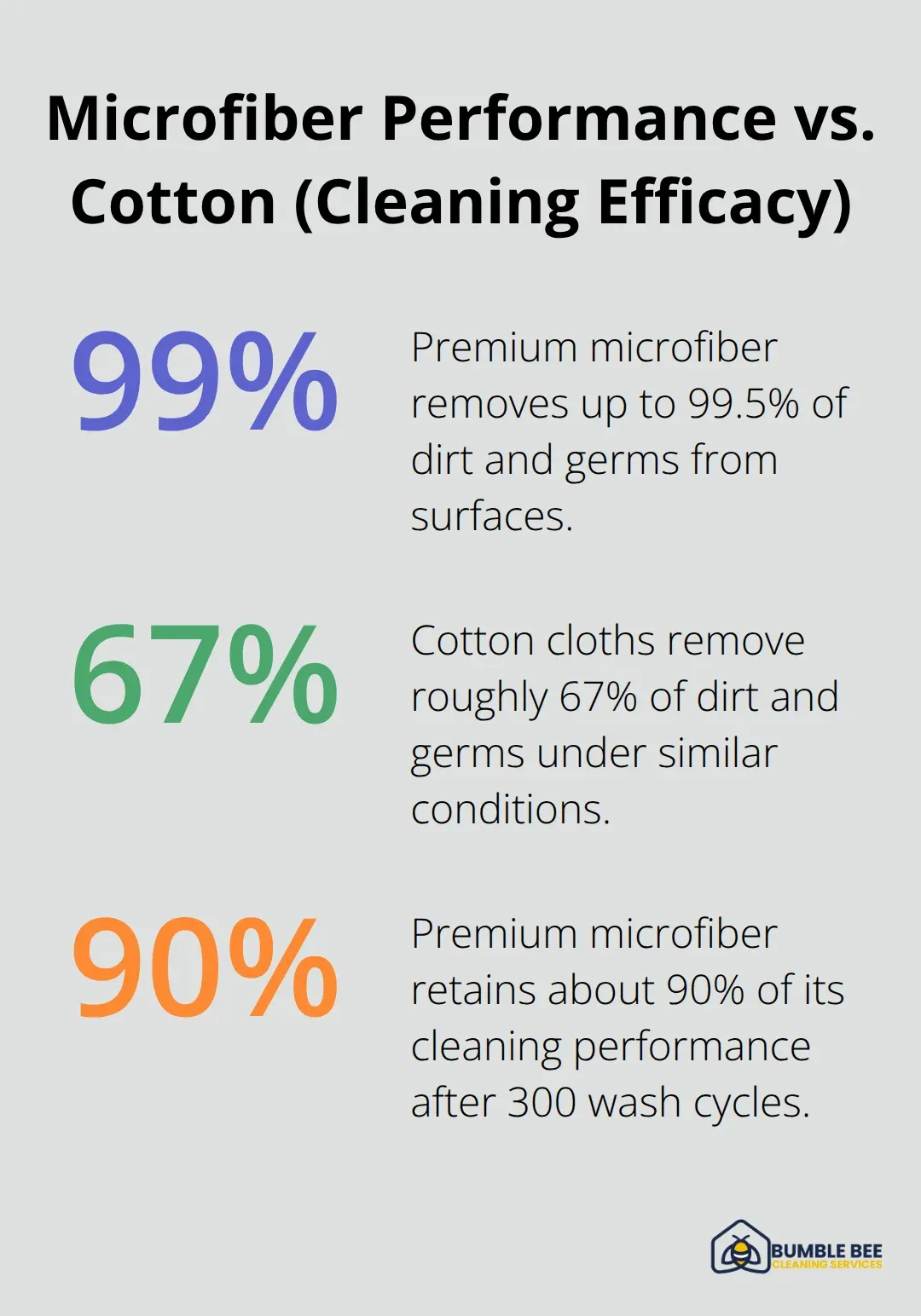
The split-strand design generates what researchers call charged friction, a physical force that holds dirt, dust, and allergens in place rather than just pushing them around. When you wipe a surface with microfiber, those ultra-fine fibers trap particles at a microscopic level-premium microfiber removes up to 99.5% of dirt and germs, compared to roughly 67% with cotton cloths. This isn’t theoretical performance; it’s measurable, documented efficiency that changes how effectively you can clean your home.
Moisture Absorption and Drying Speed
A University of Washington study found that microfiber fabrics can absorb 7 to 8 times their weight in water, which explains why Seattle homeowners see dramatically faster drying times and fewer streaks on windows, countertops, and mirrors. For Seattle homes specifically, microfiber excels at moisture control-a critical advantage in our damp climate where traditional cloths leave surfaces wet and prone to mildew growth. Microfiber’s ability to lift and hold moisture prevents the water spots and residue that plague standard cleaning methods on our region’s glass, tile, and stainless steel surfaces.
Premium vs. Budget Microfiber Performance
The practical difference between premium and budget microfiber matters far more than most people realize. Low-quality microfiber often causes streaking and underperforms because the fibers are thicker and the density is lower, meaning fewer fibers per inch to actually grab dirt. Premium microfiber retains about 90% of its cleaning performance after 300 wash cycles, so your investment pays off over years of use rather than months. This durability advantage means that selecting quality microfiber tools directly affects both your cleaning outcomes and your long-term costs-a distinction that becomes clear when you compare results across multiple deep cleaning projects in your home.
Why Microfiber Delivers Real Results for Seattle Deep Cleaning
The Mechanical Power That Replaces Harsh Chemicals
Premium microfiber eliminates the need for aggressive chemical cleaners because the fibers themselves perform the heavy lifting through mechanical action rather than relying on harsh solvents. When you use high-quality microfiber with proper technique, you remove dirt and germs more effectively compared to cotton, which means fewer passes over surfaces and less chemical residue left behind. This matters in Seattle homes where moisture already lingers in the air-fewer chemicals mean faster drying times and healthier indoor air quality for your family. Microfiber cloths absorb 7 to 8 times their weight in water, so you physically remove moisture from surfaces rather than just spreading it around. For kitchen countertops, bathroom tiles, and mirrors, this translates to streak-free results without chemical odors or buildup that accumulates over time. Premium microfiber with a 320 GSM density standard gives you 33% more dirt-grabbing capacity per wipe than budget alternatives, reducing the effort and time required for deep cleaning tasks throughout your home.
Long-Term Durability Cuts Your Real Costs
Premium microfiber retains strong cleaning performance through extended use, which means a quality microfiber cloth lasts roughly 6 to 12 months with regular weekly use before performance noticeably declines. This durability advantage eliminates the false economy of buying cheap microfiber repeatedly-you invest more upfront but replace cloths far less often, which compounds savings across multiple deep cleaning projects annually. The charged friction mechanism that makes microfiber effective doesn’t degrade quickly with proper laundering, so your investment maintains its value through hundreds of uses. For Seattle homeowners managing moisture-heavy environments, this reliability prevents the frustration of tools failing mid-project when you tackle seasonal deep cleaning tasks.
Where Microfiber Stops and Disinfection Begins
Microfiber physically traps dirt and allergens but cannot disinfect surfaces by itself-it requires approved germicidal chemicals for actual sanitation on high-touch areas. For bathrooms and kitchens where cross-contamination risk exists, premium microfiber works best as part of a two-step approach: use microfiber to lift soil effectively, then follow with a proven disinfectant compatible with microfiber surfaces to complete sanitation.
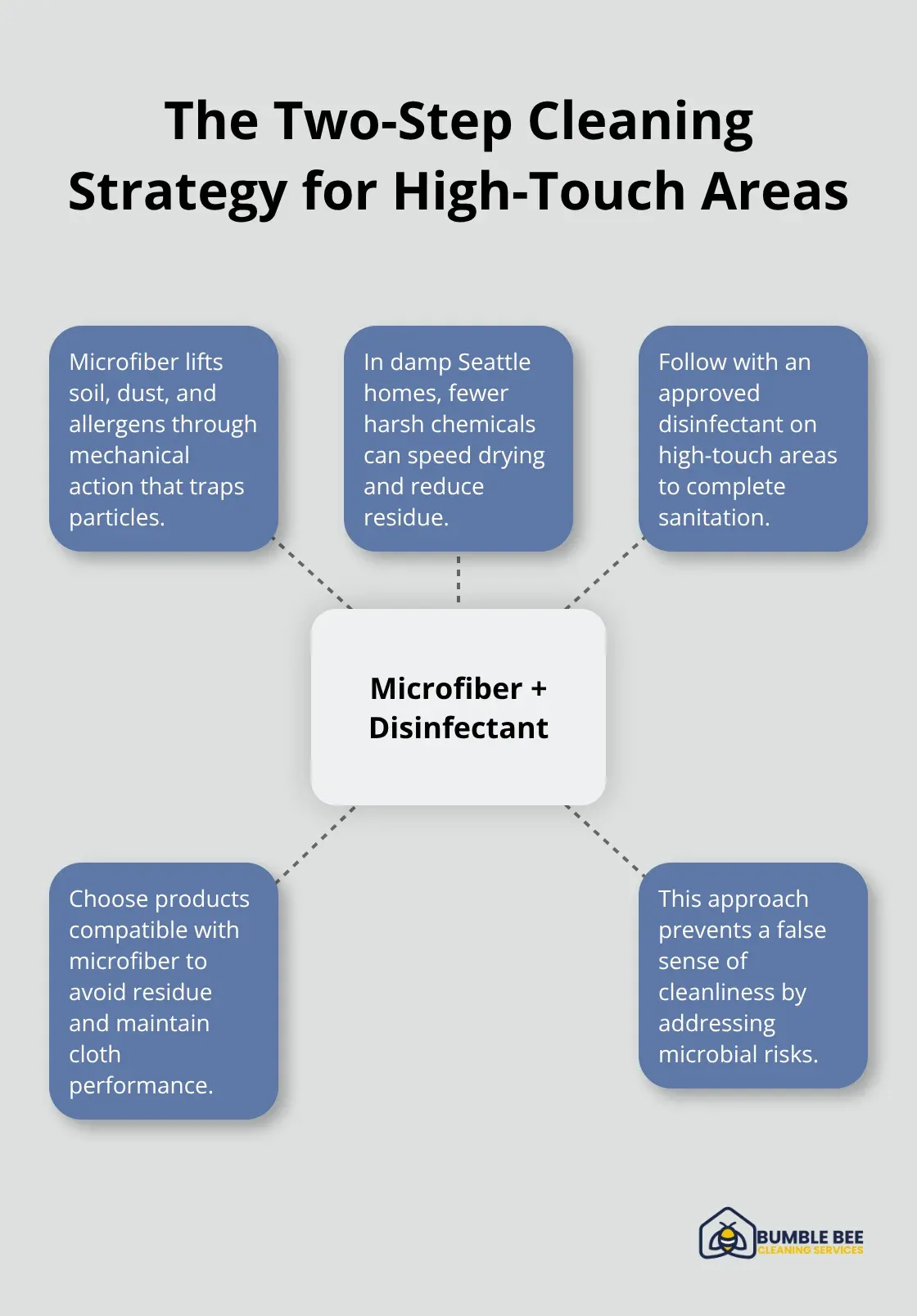
This distinction matters because relying solely on microfiber without proper disinfection creates a false sense of cleanliness in areas where bacteria and viruses pose genuine health risks. Understanding this limitation helps you build a cleaning strategy that addresses both visible dirt and invisible microbial threats-a combination that becomes especially important when you move into the specific surfaces and spaces that demand the most attention in your Seattle home.
Why Microfiber Works Better in Seattle’s Climate
Seattle’s persistent moisture exposes the weaknesses of traditional cleaning tools. Standard cotton cloths absorb water but release it slowly, leaving surfaces damp and vulnerable to mildew growth-a genuine problem in homes where humidity regularly exceeds 60%. Microfiber eliminates this vulnerability because its fiber structure absorbs 7 to 8 times its weight in water while releasing moisture rapidly, which means your windows, mirrors, and tile stay dry instead of developing that characteristic dampness that plagues Seattle bathrooms and kitchens. When you clean with microfiber in our climate, surfaces actually dry faster and stay cleaner longer because the cloth removes both dirt and excess moisture in a single pass.
Moisture Control Prevents Mold and Mildew
This matters tremendously for bathrooms where mold and mildew thrive in damp conditions-microfiber’s moisture-wicking capacity directly reduces the environment where these problems start. For kitchens with stainless steel appliances and marble countertops, microfiber polishes and dries simultaneously, preventing the water spots that become permanent fixtures when you rely on cotton or paper towels. The mechanical action of microfiber’s ultra-fine fibers grabs mineral deposits that Seattle’s water leaves behind, so you achieve streak-free results without the chemical buildup that accumulates when you use harsh cleaners repeatedly on the same surfaces.
Microfiber Handles Seattle’s Most Stubborn Surfaces
Glass and tile surfaces throughout Seattle homes benefit specifically from microfiber’s charged friction mechanism. Windows that face the Sound or mountains accumulate salt spray and mineral deposits that standard methods struggle to remove-microfiber addresses this directly because the fibers physically trap these particles rather than just spreading them around.
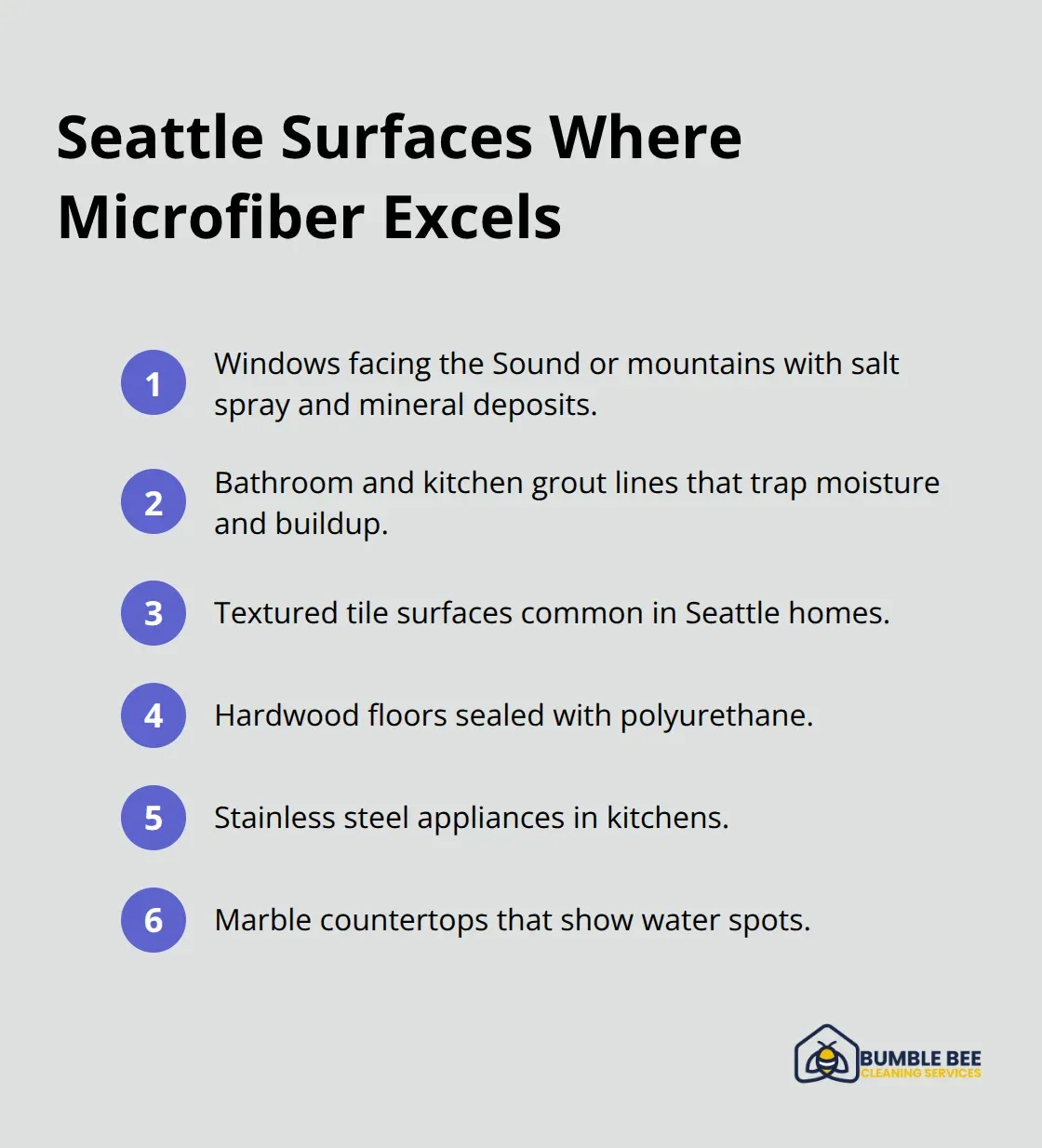
Grout lines in bathrooms and kitchens collect moisture, mold spores, and mineral buildup that create visible discoloration; microfiber with proper technique reaches into these crevices and lifts contaminants that flat cloths cannot access. The 320 GSM density standard of premium microfiber provides 33% more fiber per square inch than budget alternatives, which translates to superior performance on textured surfaces common in Seattle homes. Hardwood floors sealed with polyurethane respond exceptionally well to microfiber because the cloth doesn’t leave lint or residue that dulls the finish over time. For deep cleaning projects where you move beyond weekly maintenance, microfiber’s durability becomes apparent-premium microfiber retains 90% of its cleaning performance through 300 wash cycles, meaning a single quality cloth handles multiple seasonal deep cleaning projects before replacement becomes necessary.
Environmental Impact Matters in the Pacific Northwest
Our region’s commitment to environmental responsibility makes microfiber’s sustainability profile increasingly important. Using high-quality microfiber reduces your chemical consumption dramatically because the mechanical cleaning power eliminates the need for aggressive solvents, which means fewer toxic substances enter Seattle’s water systems through household drainage. The durability advantage compounds this benefit-replacing a quality microfiber cloth every 6 to 12 months instead of purchasing budget alternatives monthly prevents unnecessary textile waste from accumulating in landfills. Microfiber does shed microplastics when laundered, with research indicating synthetic textiles contribute significantly to aquatic microplastic pollution, so responsible Seattle homeowners should launder microfiber separately from cotton and avoid full washer loads to minimize fiber shedding. This limitation doesn’t eliminate microfiber’s environmental advantage because one durable cloth replaces dozens of disposable paper towels or cotton rags over its lifespan-the net reduction in waste substantially outweighs the microplastic concern when you choose quality over quantity. For Seattle homes where environmental values influence purchasing decisions, microfiber represents a practical compromise between cleaning performance and ecological responsibility, especially when paired with eco-friendly cleaning solutions that work effectively with microfiber’s mechanical action.
Final Thoughts
Microfiber technology delivers measurable advantages for Seattle homeowners tackling deep cleaning projects in our region’s challenging moisture-heavy environment. Premium microfiber removes up to 99.5% of dirt and allergens compared to 67% with cotton, absorbs 7 to 8 times its weight in water, and retains 90% of its cleaning performance through 300 wash cycles. These aren’t marginal improvements-they represent fundamental differences in how effectively you can clean your home while reducing chemical consumption and long-term replacement costs.
The practical reality is that microfiber works best as part of a comprehensive cleaning strategy rather than a standalone solution. Use microfiber to physically lift dirt, dust, and moisture from surfaces throughout your home, then follow with approved disinfectants on high-touch areas where bacteria and viruses pose genuine health risks. This two-step approach addresses both visible soil and invisible microbial threats, which matters especially in bathrooms and kitchens where cross-contamination risk exists.
We at Bumble Bee Cleaning Services understand that deep cleaning requires more than just quality tools-it demands proper technique, appropriate products, and a systematic approach tailored to your home’s specific surfaces and challenges. Whether you’re managing seasonal deep cleaning projects yourself or prefer professional support, microfiber technology provides the foundation for results that actually last in our region’s unique climate.
For more information about our cleaning services in Seattle and Atlanta, or to request a cleaning quote, call or text us at 425-786-1360 or email us at info@qbclean.com
