
Seattle restaurant kitchens face relentless grease buildup from constant cooking operations. Health inspectors enforce strict Washington State codes, and any violations can shut down your business fast.
We at Bumble Bee Cleaning Services know that standard cleaning routines simply don’t cut it in commercial kitchen environments. Professional janitorial services tackle the deep cleaning your kitchen needs to stay compliant and operational.
What Makes Seattle Restaurant Kitchens Uniquely Demanding
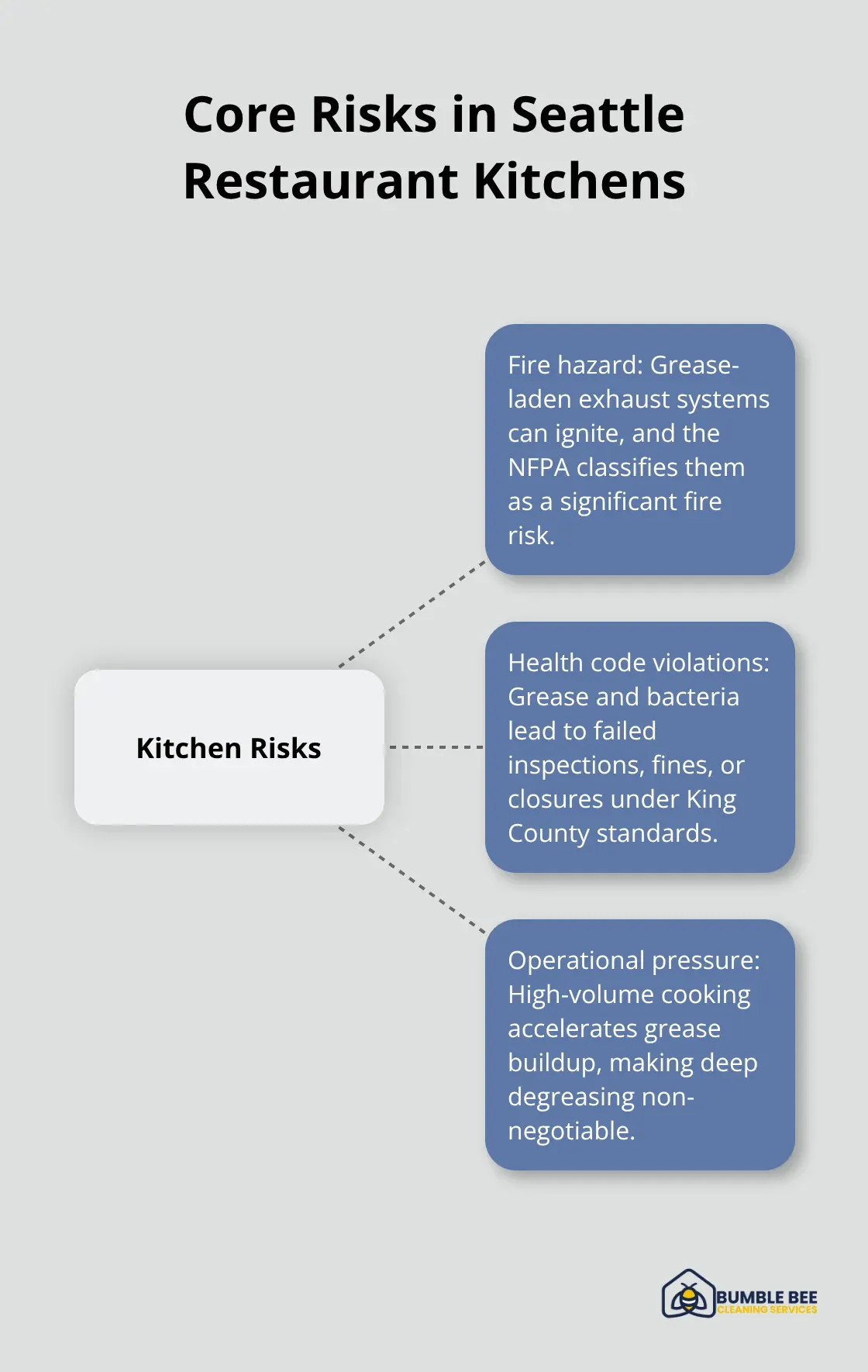
Grease accumulates in Seattle restaurant kitchens faster than most facility managers anticipate. King County Public Health standards mandate that exhaust hoods, ventilation systems, and cooking equipment remain free of dangerous grease buildup, yet commercial kitchens generate grease at rates that standard daily wiping cannot manage. A busy restaurant operating fryers, grills, and flat-top ranges continuously produces airborne grease particles that settle on surfaces, inside ductwork, and behind equipment where they harden into stubborn deposits. This buildup creates two serious problems: fire hazard and health code violations. The National Fire Protection Association classifies grease-laden exhaust systems as a significant fire risk, making regular deep degreasing non-negotiable rather than optional maintenance.
Navigating Washington State Food Safety Regulations
Washington State’s food safety framework, enforced through King County Public Health, sets strict cleanliness standards that directly impact your operational license. Inspectors examine evidence of cross-contamination prevention, proper sanitization of food-contact surfaces, and elimination of bacteria and pathogens throughout the kitchen. Any inspection failure results in corrective action notices, fines, or temporary closure. The regulations require sanitizing all food prep surfaces with approved food-safe disinfectants, maintaining cold storage at 41°F or below, and reaching specific cooking temperatures like 165°F for poultry. Inspectors also evaluate your cleaning logs, staff hygiene practices, and the physical condition of equipment and floors. Many restaurants underestimate how thoroughly inspectors assess areas behind and under equipment, light fixtures, and drainage systems-spaces where bacteria and grease accumulate unnoticed.
The Reality of Cleaning During Business Hours
Fast-paced restaurant environments demand cleaning schedules that minimize disruption to food service operations. You cannot close your kitchen for eight hours while deep cleaning occurs. Professional janitorial teams work with your operational schedule to complete thorough degreasing and sanitization between service periods, during off-hours, or through strategic staging that keeps critical areas accessible. Equipment cleaning requires technical knowledge about manufacturer specifications and safe disassembly procedures. Fryer baskets, hood filters, and vent ducts need specialized degreasing products that dissolve grease without damaging equipment surfaces. Floor treatment in kitchens involves more than mopping; it addresses grease-laden floor drains and slip-hazard conditions that can injure staff and create liability exposure. The combination of health code pressure, fire safety requirements, and operational continuity means Seattle restaurants need cleaning partners who understand the full scope of commercial kitchen demands.
Commercial Kitchen Deep Cleaning Done Right
Exhaust Hood Degreasing: Fire Safety and Compliance
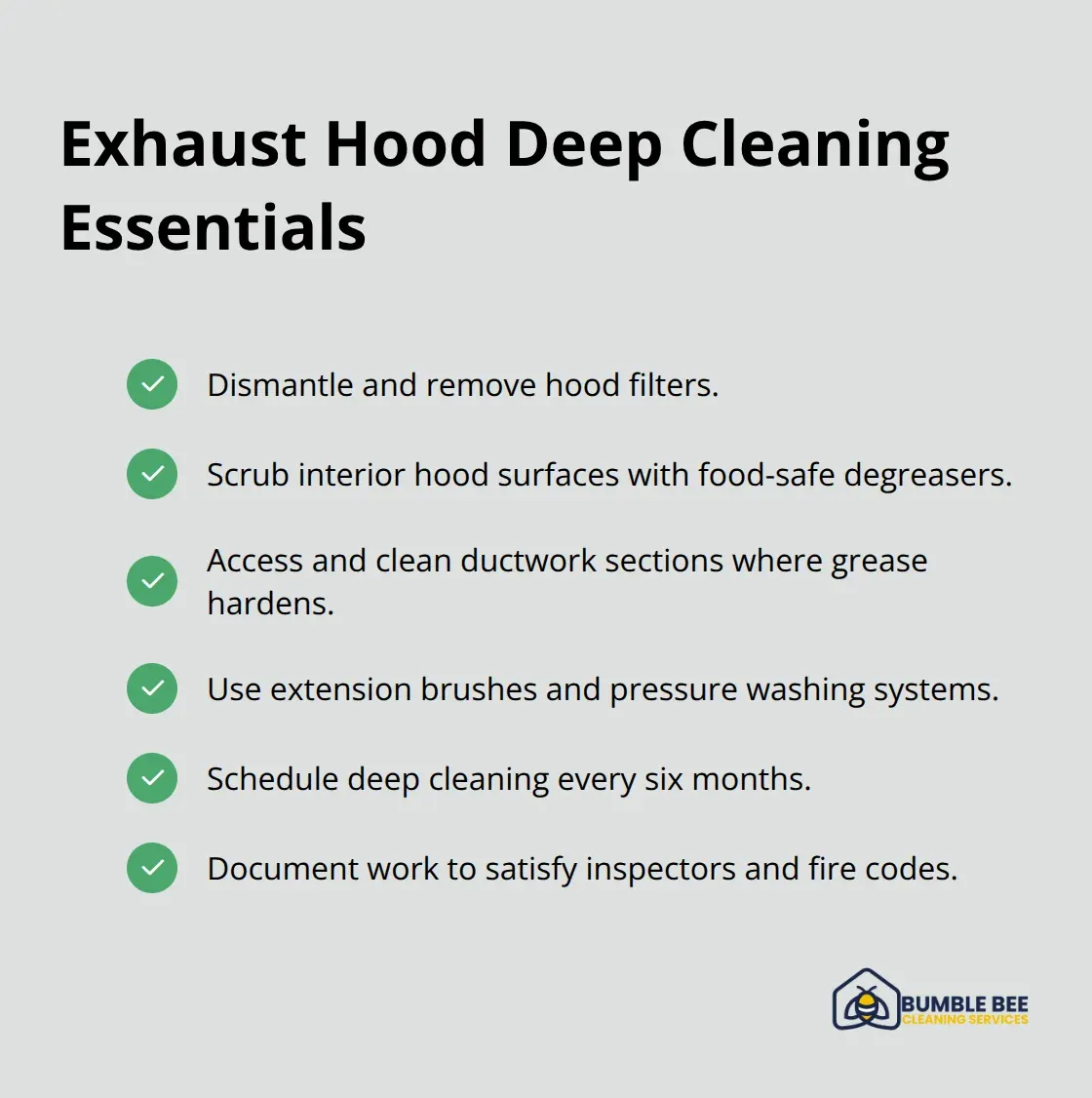
Effective exhaust hood degreasing separates professional janitorial work from surface-level cleaning. Seattle restaurants operating high-volume cooking equipment accumulate grease inside hood cavities, ductwork, and filter systems at rates that daily wiping cannot address. The National Fire Protection Association classifies grease-laden exhaust systems as a documented fire hazard that requires systematic removal, not occasional spot cleaning. Professional deep cleaning of exhaust hoods involves dismantling filters, scrubbing interior surfaces with food-safe degreasers, and accessing ductwork sections where grease hardens into flammable deposits. This process takes hours and demands specialized equipment like extension brushes and pressure washing systems designed for commercial kitchen use. Most restaurant operators wait until grease visibly accumulates or until an inspector flags the issue, but at that point, the buildup has already created serious fire risk. Scheduling exhaust hood deep cleaning every six months prevents dangerous accumulation and maintains compliance with King County fire codes.
Food Prep Surface Sanitization
Food prep surface sanitization requires understanding which disinfectants actually eliminate pathogens. King County Public Health standards mandate that all food-contact surfaces receive sanitization with approved food-safe products, yet many restaurants use general-purpose cleaners that do not meet pathogen elimination standards. Professional janitorial teams apply sanitizers with documented efficacy against foodborne illness organisms, allowing proper contact time for the chemical to work before rinsing. Cutting boards, prep tables, slicer blades, and refrigerator shelves need this level of attention because cross-contamination from raw proteins to ready-to-eat foods causes serious health violations.
Equipment Cleaning and Grease Removal
Equipment cleaning extends beyond sanitizing surfaces; it includes degreasing the exterior and interior of fryers, grills, and flat-top ranges where grease buildup impairs performance and creates fire hazard. Fryer baskets, hood filters, and vent ducts need specialized degreasing products that dissolve grease without damaging equipment surfaces. Manufacturer specifications guide safe disassembly procedures, ensuring that cleaning does not void warranties or compromise equipment integrity.
Floor Treatment and Drainage System Maintenance
Deep cleaning floors and drainage systems in commercial kitchens addresses the grease-laden water that flows into floor drains daily. Standard mopping leaves grease residue that solidifies in drain lines, creating blockages and foul odors that indicate bacterial growth. Professional floor treatment involves degreasing the entire floor surface, then addressing drain systems with specialized products that dissolve grease buildup inside pipes. Slip hazards from residual grease pose liability exposure for staff injuries, making thorough floor degreasing a safety priority, not optional maintenance.
These protocols work together to eliminate fire hazards and prevent health code violations. The next step involves understanding why professional janitorial services deliver results that in-house cleaning teams struggle to achieve, even with the best intentions and effort.
Why Professional Janitorial Services Outperform In-House Cleaning
The Equipment and Knowledge Gap
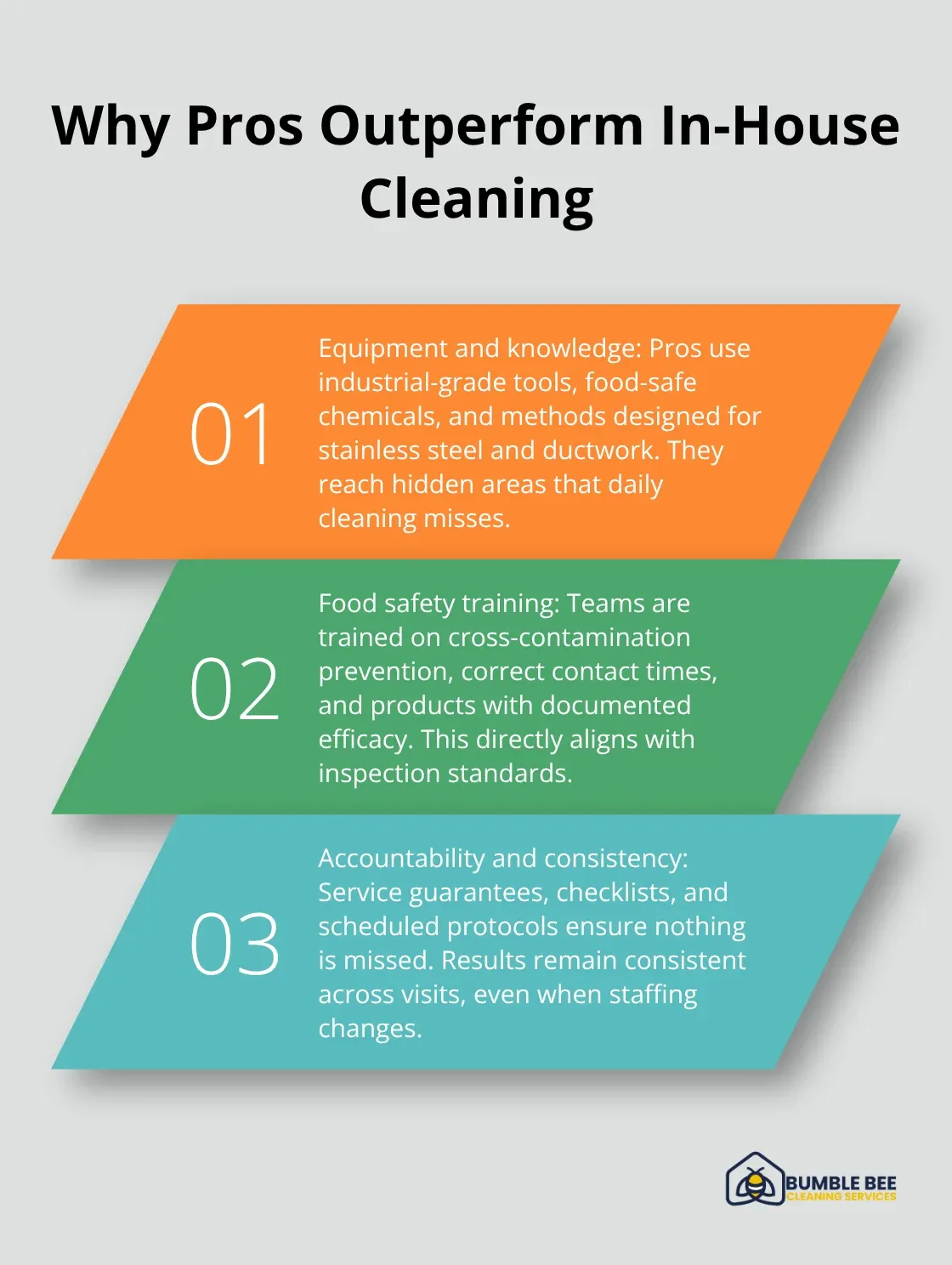
In-house cleaning teams lack the specialized equipment, chemical knowledge, and training that commercial kitchen sanitation demands. Restaurant staff focus on food preparation and service, not cleaning science. They apply general-purpose sanitizers instead of food-safe disinfectants, skip hard-to-reach areas behind equipment where bacteria thrive, and lack training on proper contact times for sanitizers to actually eliminate pathogens. Professional janitorial teams bring industrial-grade equipment formulated to dissolve grease without damaging stainless steel or other kitchen surfaces, pressure washing systems that reach inside ductwork and exhaust hood cavities, and extension tools designed specifically for areas standard cleaning equipment cannot access. A fryer basket cleaned with dish soap and hot water does not meet food safety standards, whereas proper degreasing with approved products followed by sanitization actually removes the bacteria that causes foodborne illness.
Food Safety Training That Matters
Staff at professional cleaning companies receive food safety training that covers cross-contamination prevention, proper sanitization procedures, and the specific pathogen-elimination standards King County Public Health enforces during inspections. This training transforms how teams approach each surface and piece of equipment. Restaurant operators who switched from in-house cleaning to professional janitorial services report fewer health code violations, reduced equipment breakdowns from grease accumulation, and lower liability exposure from staff injuries caused by slippery floors. The difference stems from understanding that sanitization requires specific contact times, proper dilution ratios, and documented efficacy against foodborne illness organisms-knowledge that general staff training does not provide.
Accountability Through Service Guarantees
When your staff member misses degreasing the exhaust hood interior during a busy shift, you discover the problem during a health inspection or when a grease fire starts in your ductwork. Professional janitorial services operate under service guarantees that hold them accountable for specific cleaning standards. This accountability structure forces professional teams to develop systems, checklists, and training that prevent missed areas and ensure consistent results across every service visit. Your restaurant operates on a schedule where consistency matters; customers expect the same food quality and kitchen safety standards every day.
Consistency That In-House Teams Cannot Match
In-house cleaning cannot match consistency because staff turnover, schedule conflicts, and competing priorities interrupt regular deep cleaning routines. Professional janitorial services maintain the same protocols regardless of which team member shows up, ensuring that exhaust hood degreasing happens on schedule, food prep surfaces receive proper sanitization, and floor drains get treated before grease buildup creates blockages. The investment in professional cleaning protects your operational license, reduces fire hazard, and demonstrates to health inspectors that your restaurant takes food safety seriously. We at Bumble Bee Cleaning Services provide a 100% quality service guarantee, meaning if cleaning does not meet the standards we commit to, we address it immediately.
Final Thoughts
Seattle restaurants operate in an environment where health code violations carry serious consequences and grease buildup creates genuine fire hazard. Professional janitorial services protect your business by eliminating both risks through systematic deep cleaning that in-house teams cannot sustain. Inspectors specifically examine areas where bacteria thrive and grease accumulates behind equipment, inside ductwork, and along drainage systems-spaces your staff may overlook during routine shifts.
The financial case for professional janitorial services extends beyond avoiding fines and closures. Regular deep cleaning extends equipment lifespan by preventing grease-related breakdowns, reduces emergency repair costs, and maintains the kitchen environment that attracts quality staff. Restaurants that switched from in-house cleaning to professional services report fewer health code violations and lower operational disruptions.
We at Bumble Bee Cleaning Services understand the specific demands of Seattle commercial kitchens and bring certified expertise in food safety standards, specialized equipment for exhaust hood degreasing and floor treatment, and accountability through service guarantees. Contact us today to schedule professional janitorial cleaning that protects your health code compliance, reduces fire hazard, and supports long-term business success.
For more information about our cleaning services in Seattle and Atlanta, or to request a cleaning quote, call or text us at 425-786-1360 or email us at info@qbclean.com
