
Grease trap cleaning isn’t optional for Seattle restaurants-it’s a legal requirement. King County Health Department enforces strict standards, and restaurants that skip maintenance face hefty fines and potential shutdowns.
We at Bumble Bee Cleaning Services know that many restaurant owners underestimate how quickly grease accumulates and the real costs of ignoring it. This post walks you through what compliance actually looks like and how to protect your business.
Why Seattle’s Grease Trap Rules Demand Action
The Legal Limits That King County Enforces
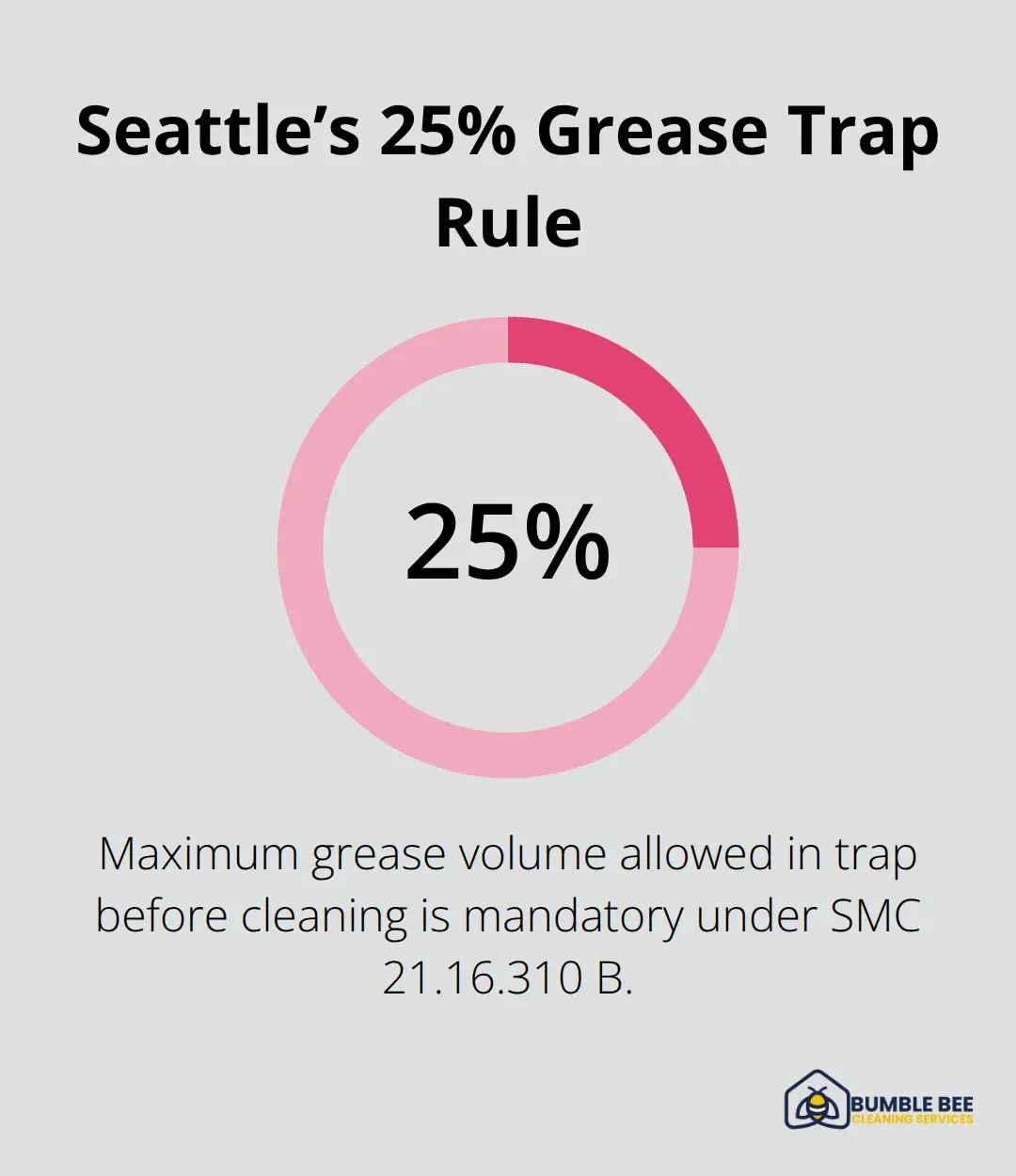
Seattle Municipal Code SMC 21.16.300 prohibits wastewater containing more than 100 parts per million of fats, oils, and grease. King County Health Department inspectors enforce this hard legal limit during unannounced visits, and violations carry real consequences. Visual evidence of grease accumulation in your sewer line triggers a citation on its own-you don’t need to exceed the ppm threshold to face enforcement action. The 25% Rule (SMC 21.16.310 B) adds another requirement: grease in your trap cannot exceed 25% of the tank’s capacity. Once you hit that mark, cleaning becomes mandatory. Many restaurant owners stretch maintenance schedules and hope inspectors miss violations, but King County catches them quickly.
Penalties start at hundreds of dollars and climb fast for repeat offenses. Noncompliance can result in indefinite business shutdowns, which means lost revenue, damaged reputation, and potential legal liability.
Grease Buildup Destroys Your Plumbing and Wallet
Grease hardens in your trap and drain lines, restricting flow and creating backups that damage pipes and equipment. When grease accumulates, pressure builds until wastewater backs up into your kitchen, creating sanitation hazards and operational chaos. Replacing a damaged hood and filter system costs between $5,000 and $15,000 according to industry data. Professional grease trap cleaning costs a fraction of that-typically between $200 and $500 per service depending on trap size and buildup severity. High-volume kitchens with fryers and charbroilers need cleaning every one to three months because heat above 350°F accelerates grease accumulation. Moderate-volume operations can extend intervals to six to twelve months, but skipping even one scheduled cleaning risks clogs that force emergency repairs at premium rates. Preventative maintenance costs far less than emergency plumbing work or equipment replacement.
How Grease Reaches Local Waterways and Creates Legal Exposure
Grease discharged into Seattle’s sewer system flows to treatment plants, but excessive FOG loads overwhelm processing capacity and contaminate waterways. Once in the pipes these oils and fats solidify, causing blockages which can then cause wastewater from sewers to back up and contaminate rivers and oceans. Your restaurant shares liability for environmental remediation costs and potential fines when your grease contributes to that contamination. King County tracks FOG violations by business, and repeated offenders face escalating penalties plus mandatory compliance audits. Some restaurants have paid tens of thousands of dollars in environmental fines after grease from their kitchens contaminated local water systems. Environmental violations damage your business reputation in a city where sustainability matters to customers and investors. Professional cleaning services keep your grease trap compliant and your discharge within legal limits, protecting both your bottom line and Seattle’s waterways.
What Happens Next: Taking Control of Your Compliance
The consequences of ignoring grease trap maintenance extend beyond fines and shutdowns. Health code violations create a paper trail that follows your restaurant through inspections and potential legal disputes. Understanding these risks sets the stage for exploring what noncompliance actually costs your operation and how to prevent it.
What Noncompliance Actually Costs Your Restaurant
King County’s Documentation Creates a Permanent Record
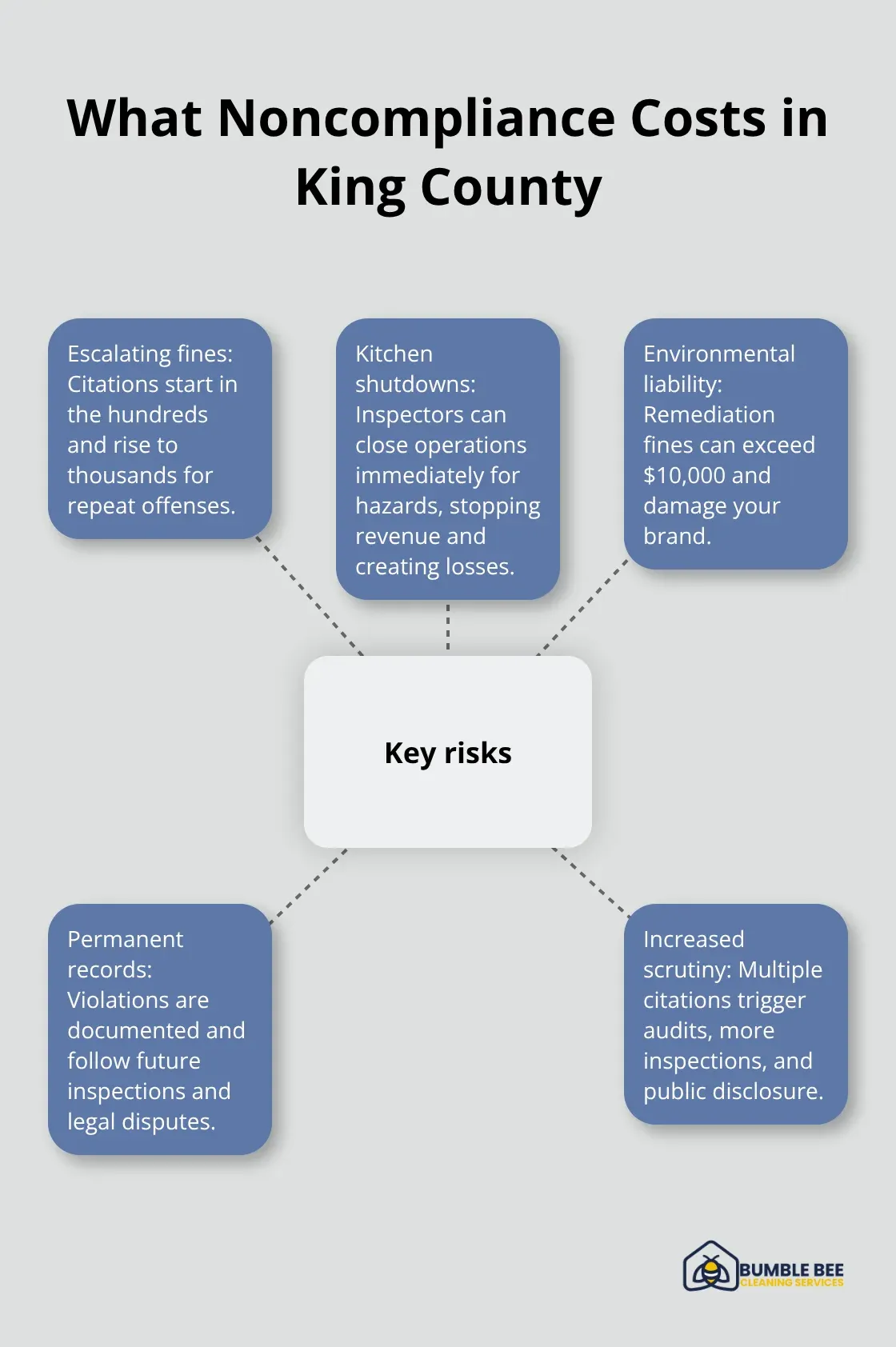
King County Health Department inspectors document every violation they find, and that paper trail follows your restaurant through every future inspection and potential legal dispute. A single citation for exceeding the 100 ppm threshold or violating the 25% Rule starts at hundreds of dollars, but repeat offenses escalate quickly into thousands. Seattle Municipal Code enforcement has been active since 1968, meaning King County takes these violations seriously and maintains detailed records on every business. Restaurants that receive multiple citations within a year face mandatory compliance audits, increased inspection frequency, and public disclosure of violations that damage customer trust and online reputation.
Kitchen Shutdowns Stop Revenue Cold
Health code violations create operational chaos that hits your bottom line immediately. Inspectors shut down kitchens without warning when they discover grease accumulation that poses an immediate sanitation or fire hazard. Even a temporary closure costs restaurants thousands in lost revenue, spoiled inventory, and staff downtime. One Seattle-area restaurant owner faced a two-week shutdown after grease backed up into the kitchen, requiring emergency plumbing repairs and professional remediation-that closure alone cost more than a year’s worth of preventative grease trap cleaning.
Environmental Liability Exposure Threatens Your Business
When your grease reaches Seattle’s sewer system and contributes to waterway contamination, King County can pursue your restaurant for remediation costs and fines that exceed $10,000. Environmental violations create a permanent record that affects your ability to secure permits, obtain financing, or sell the business. Insurance companies flag restaurants with environmental violations, raising premiums or denying coverage altogether. Some restaurant owners have discovered too late that their liability insurance doesn’t cover FOG-related environmental damage, leaving them personally responsible for cleanup costs that drain company reserves.
The Real Cost of Waiting Until Problems Appear
Grease trap maintenance isn’t just about avoiding fines-it’s about protecting your business from operational disruptions, legal liability, and financial exposure that can threaten your survival. Professional grease trap cleaning typically ranges from $1,200 to $5,500 depending on service level and buildup severity. Preventative maintenance costs far less than emergency plumbing work, equipment replacement, or environmental fines. High-volume kitchens with fryers and charbroilers need cleaning every one to three months because heat above 350°F accelerates grease accumulation, while moderate-volume operations can extend intervals to six to twelve months. Understanding what noncompliance costs your operation makes the case for establishing a maintenance schedule that keeps your system compliant before violations occur-and that’s where knowing your options for professional support becomes essential.
How Often to Clean Your Grease Trap and Why Timing Matters
High-Volume Kitchens Need Frequent Cleaning
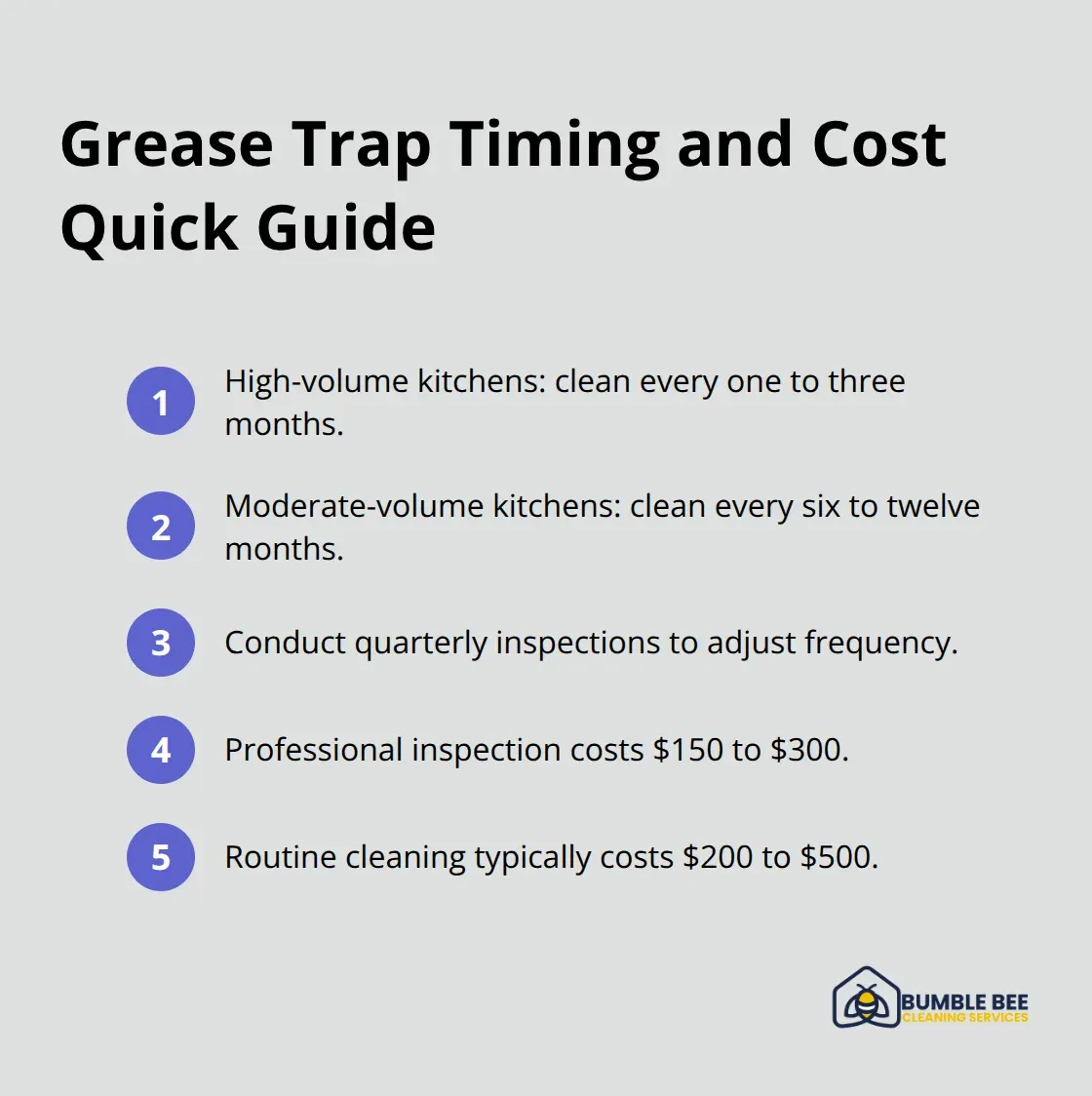
High-volume kitchens with fryers, charbroilers, and wok stations operating above 350°F accumulate grease at rates that catch most restaurant owners off guard. Heat accelerates grease accumulation, which means you need professional cleaning every one to three months to stay compliant. The 25% Rule under Seattle Municipal Code SMC 21.16.310 B sets the hard limit: once grease reaches 25% of your trap’s capacity, cleaning becomes mandatory. Waiting until you hit that threshold risks violations and emergency repairs that cost far more than preventative maintenance.
Moderate and Low-Volume Operations Can Extend Intervals
Moderate-volume operations using ovens and griddles can extend cleaning intervals to six to twelve months, while low-volume kitchens might operate on semi-annual schedules. The difference comes down to how much grease your kitchen actually produces, not guesswork or industry averages. Many restaurant owners guess at cleaning frequency instead of tracking actual buildup, which means they either overspend on unnecessary services or risk violations by waiting too long.
The only accurate way to determine your cleaning schedule is to measure trap capacity and document how quickly you accumulate grease, then schedule cleanings before you hit that 25% threshold.
Professional Assessment Prevents Costly Mistakes
Professional cleaning services assess your operation’s specific volume and grease production, then recommend a cleaning schedule tailored to your kitchen rather than a generic interval that may not fit your business. A professional inspection typically costs $150 to $300 and takes thirty minutes, but the data you gain prevents overpaying for unnecessary cleanings or underpaying and facing violations. Once you establish your actual cleaning schedule based on your kitchen’s output, professional grease trap cleaning becomes a predictable line item in your budget rather than an emergency expense that disrupts operations and costs premium rates.
Staff Training Reduces Grease at the Source
Your staff’s daily habits determine how much grease reaches your trap in the first place, which directly impacts how often you need professional cleaning and how much you spend on maintenance. Train employees to scrape plates into trash containers before washing, never pour fryer oil or cooking fat down drains, and dispose of bacon grease and rendered fats in designated containers for recycling rather than the sink. Post clear signage at every drain point reminding staff that grease belongs in the trash or a separate collection container, not down pipes. Many restaurants lose money because staff discard grease improperly out of habit or lack of understanding about the cost impact.
Quarterly Inspections Track Your Actual Accumulation Rate
Conduct quarterly grease trap inspections to track accumulation rates and adjust cleaning frequency as kitchen operations change. These inspections reveal whether your current schedule matches your actual grease production or whether you need to adjust based on seasonal demand shifts (winter and summer peaks can double grease production). A professional inspection typically costs $150 to $300 and takes thirty minutes, but the data you gain prevents overpaying for unnecessary cleanings or underpaying and facing violations. Once you establish your actual cleaning schedule based on your kitchen’s output, professional grease trap cleaning becomes a predictable line item in your budget rather than an emergency expense that disrupts operations and costs premium rates.
Final Thoughts
Seattle’s grease trap regulations protect your business, your customers, and your community-and King County enforces them consistently. Professional grease trap cleaning costs between $200 and $500 per service for most operations, while equipment replacement runs $5,000 to $15,000 and environmental fines can exceed $10,000. High-volume kitchens spending $2,400 to $6,000 annually on quarterly cleaning still spend far less than a single emergency repair or regulatory violation.
A professional grease trap assessment determines your actual cleaning frequency based on your kitchen’s specific grease production and typically costs $150 to $300 for thirty minutes of work. This assessment prevents you from overpaying for unnecessary services or underpaying and facing violations that disrupt operations and damage your reputation. Quarterly inspections track accumulation rates and help you adjust your schedule as kitchen operations change with seasonal demand shifts.
We at Bumble Bee Cleaning Services understand the standards that King County enforces and can help you establish a maintenance plan that keeps your restaurant compliant. Contact us to schedule your grease trap assessment and protect your revenue while demonstrating environmental responsibility to your customers and the city.
For more information about our cleaning services in Seattle and Atlanta, or to request a cleaning quote, call or text us at 425-786-1360 or email us at info@qbclean.com
