
Your basement is one of the most overlooked assets in your Seattle home. A finished basement can add thousands to your property value, but only if it’s clean, dry, and well-maintained.
Basement deep cleaning isn’t just about appearances. We at Bumble Bee Cleaning Services know that Seattle’s wet climate creates unique challenges-mold, mildew, and moisture damage can hide beneath the surface and turn away serious buyers.
Why Seattle Basements Command Buyer Attention
Basements in Seattle homes represent far more than storage space-they function as living areas that buyers actively evaluate during showings. When a finished basement is clean and well-maintained, it directly influences purchasing decisions. According to the National Association of Realtors’ 2022 Remodeling Impact Report, finished basements recoup approximately 86% of renovation costs at resale, making them one of the strongest home improvements available. This return materializes only when the space appears move-in ready and free from moisture damage or mold. Buyers in Seattle’s competitive real estate market scrutinize basements because they understand the region’s moisture challenges-a damp or moldy basement signals expensive remediation ahead, often causing qualified buyers to walk away entirely.
The Square Footage Buyers Actually Want
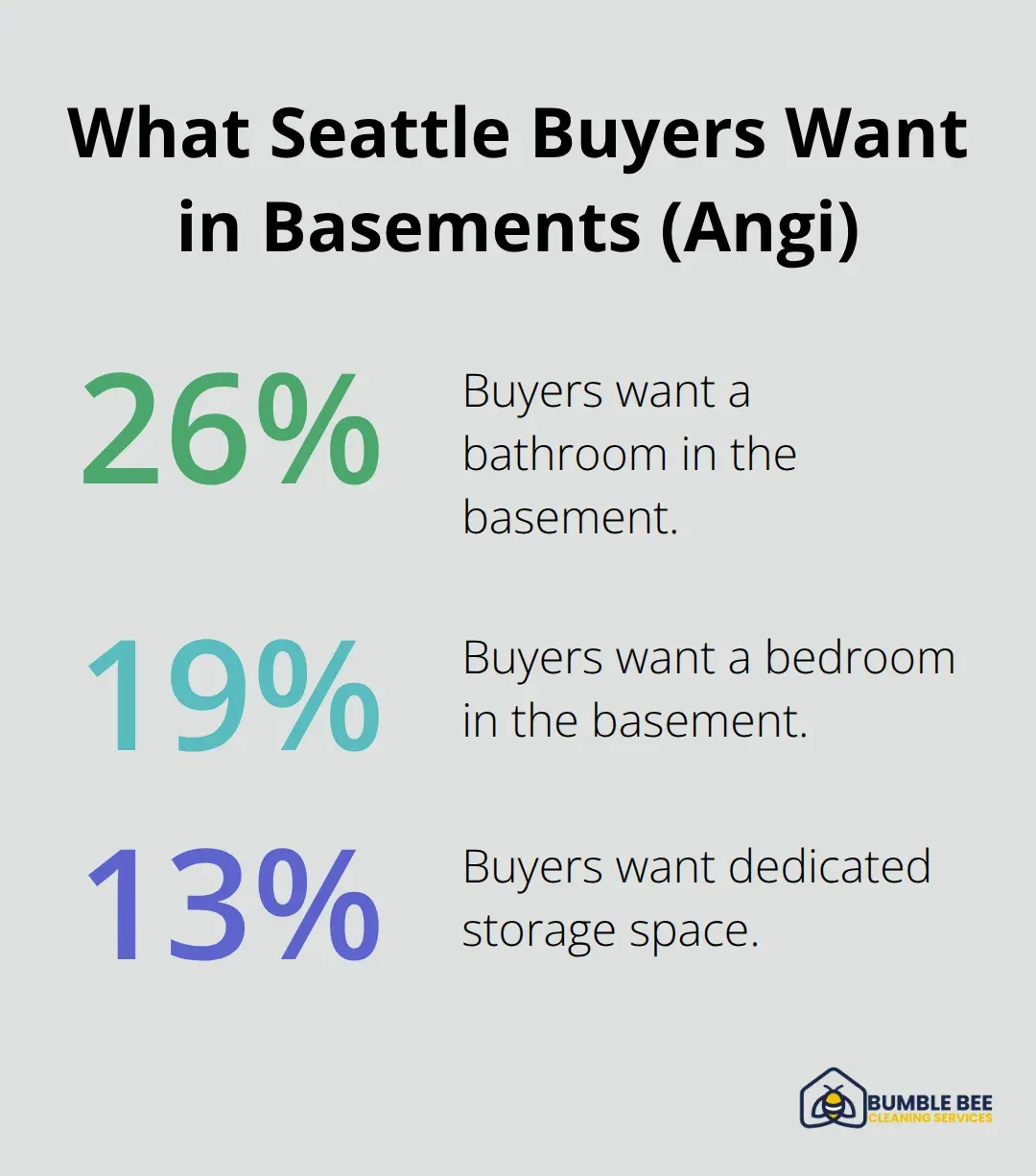
Finished basement space adds genuine living area that appraisers value at 50–75% of above-ground square footage pricing, depending on light access and finishes. Buyers specifically seek basements with these features: 26% want a bathroom, 19% want a bedroom, and 13% want dedicated storage space, according to Angi’s research.
In Seattle, where lot sizes are often smaller and above-ground expansion is limited, basements solve the space problem without the cost of ground-level additions. A visibly clean and professionally maintained basement transforms from a liability into a selling point that justifies higher listing prices and attracts multiple offers.
Moisture Becomes the Deal-Killer
Seattle’s climate creates basement problems that buyers fear most. Approximately 60% of homeowners with basements deal with moisture issues annually, according to the Home Inspection Census. A buyer walking into a basement that smells musty or shows visible condensation will immediately request a moisture inspection and often reduce their offer or withdraw entirely. Deep cleaning removes the visible signs of moisture damage-mold, mildew, water stains-that trigger red flags during inspections. More importantly, it reveals whether the underlying moisture problem is cosmetic surface buildup or structural water intrusion requiring expensive waterproofing solutions.
What Deep Cleaning Actually Reveals
This transparency matters because buyers would rather know the true condition upfront than discover problems after closing. Professional deep cleaning exposes hidden damage that casual inspections miss, allowing buyers to make informed decisions. When moisture damage appears minor and surface-level, confidence in the property increases significantly. Conversely, when deep cleaning uncovers serious structural issues, buyers can negotiate repairs or walk away before investing in a problematic purchase. Either way, the basement’s true condition becomes clear-and that clarity drives fair pricing and faster sales in Seattle’s competitive market.
What Deep Cleaning Actually Removes from Seattle Basements
Deep cleaning a Seattle basement isn’t cosmetic work-it’s structural diagnosis disguised as sanitation. Professional deep cleaning systematically removes the visible evidence of moisture damage that masks serious problems underneath. Mold colonies in corners, mildew stains on drywall, and water rings on concrete all vanish during the process, but more importantly, their removal exposes what caused them in the first place. A basement that smells musty typically contains mold species like Stachybotrys, Aspergillus, or Cladosporium-organisms that thrive in Seattle’s damp environment and cause respiratory issues for occupants. The EPA recommends using a bleach solution of one cup bleach per gallon of water on non-porous surfaces, but extensive mold requires professional remediation to prevent spreading contaminated spores throughout the home.
Deep cleaning with HEPA-filter vacuums and proper containment removes mold-laden dust that regular vacuums simply redistribute. After removal, the true condition of walls, floors, and foundations becomes visible-whether you’re dealing with surface condensation or hydrostatic pressure forcing water through foundation cracks.
Identifying Water Intrusion Before It Becomes Catastrophic
The difference between condensation and water intrusion determines whether a basement is salvageable or requires expensive waterproofing. Condensation appears as beads of moisture on cooler surfaces when humid air meets foundation walls, while water intrusion shows wet drywall, water stains on concrete, and visible seepage at cold joints. Deep cleaning reveals these patterns clearly-wet floors and sagging drywall indicate active water problems, while rust on metal fixtures and wood rot signal prolonged moisture exposure.
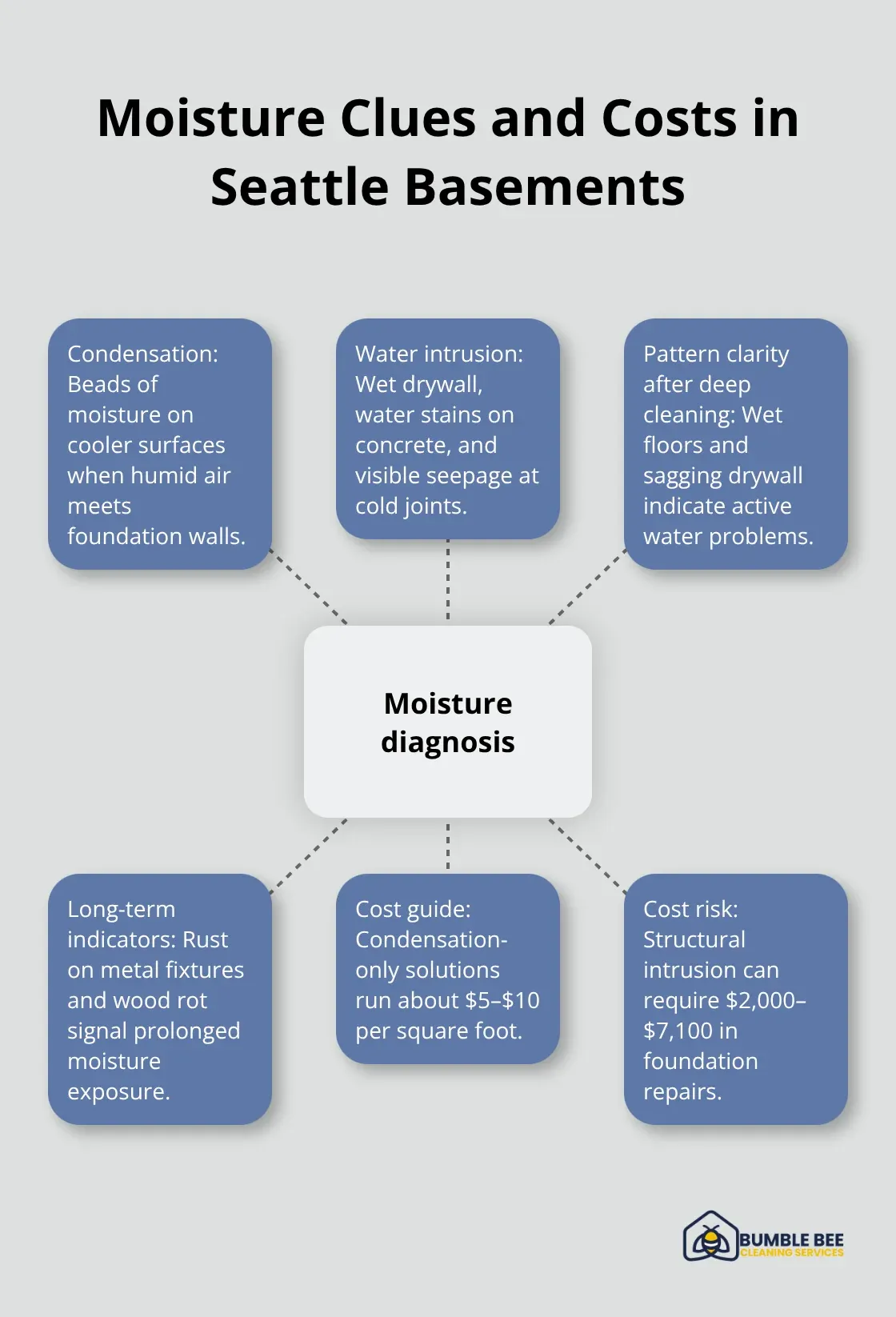
A basement with condensation alone costs roughly $5 to $10 per square foot for waterproofing solutions, whereas structural water intrusion can escalate to $2,000 to $7,100 for foundation repairs. Buyers in Seattle understand this distinction and will request a moisture inspection immediately upon detecting dampness. Professional deep cleaning demonstrates whether the basement has been properly maintained or neglected, directly influencing inspection results and appraisals.
Why Surface Cleanliness Transforms Buyer Perception
A clean basement fundamentally changes how buyers respond during showings. Dust accumulation in corners, cobwebs on ceilings, and storage clutter make even structurally sound basements feel like unfinished spaces. Deep cleaning removes these elements, transforming the basement into a functional room that buyers mentally occupy as living space. This psychological shift directly affects offer competitiveness-a clean, dry basement in Seattle’s market justifies higher pricing because buyers see fewer red flags requiring post-purchase remediation.
Buyers expect moisture problems in basements. When your basement presents clean and well-maintained, you’re already ahead of the majority of listings. A spotless basement creates a stronger first impression for buyers, potentially speeding up sales and attracting more competitive offers in Seattle’s real estate market.
What Professional Teams Accomplish That DIY Approaches Miss
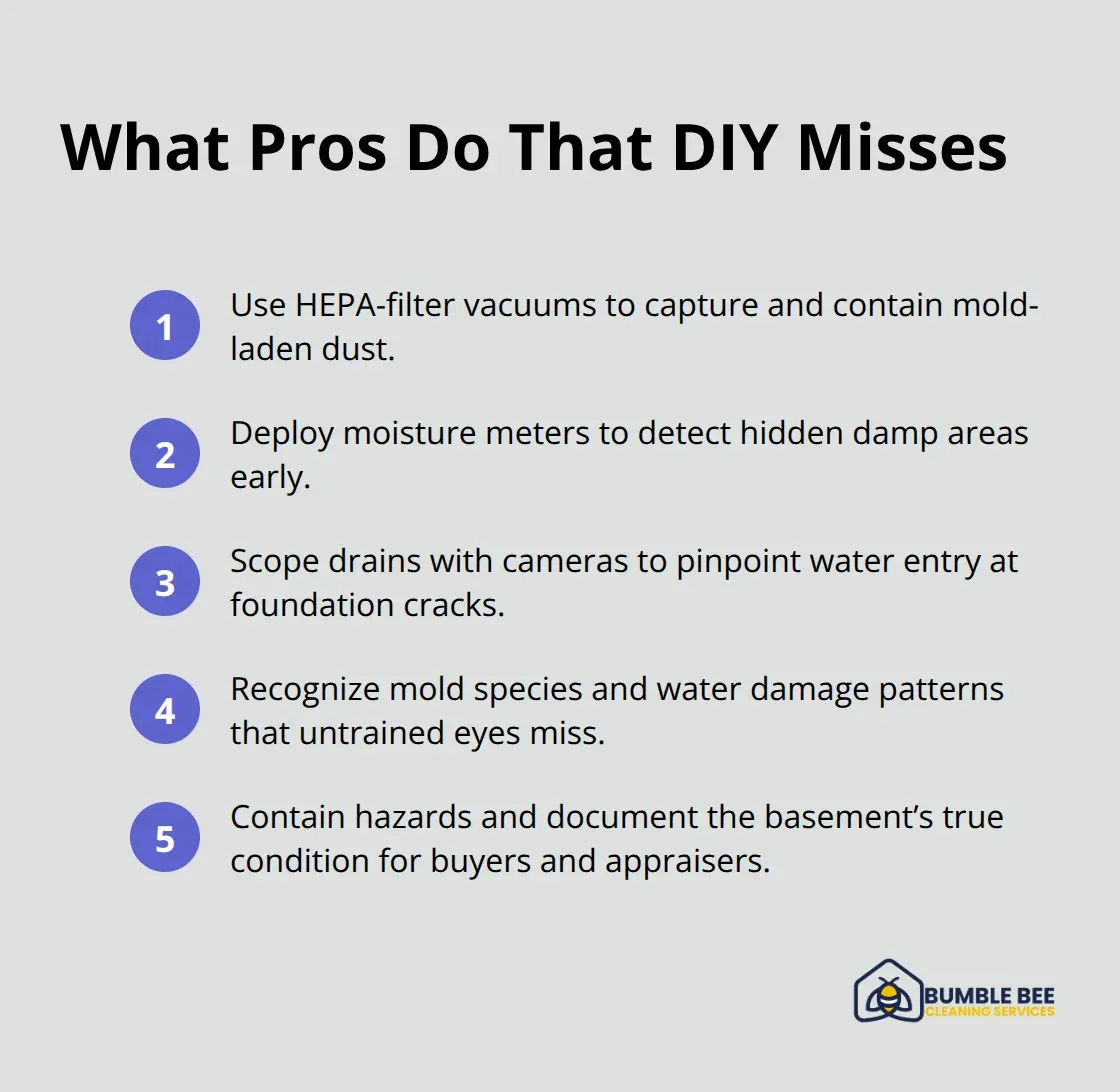
Professional deep cleaning teams access specialized equipment and training that homeowners typically lack. HEPA-filter vacuums, moisture meters, and drainage camera scoping identify hidden damp areas early, reducing remediation costs and preventing mold growth. Certified technicians recognize mold species and water damage patterns that untrained eyes overlook, catching problems before they escalate into structural failures.
This expertise matters because a basement that appears clean on the surface may still harbor moisture problems that inspectors will find during the appraisal process.
The difference between a surface clean and a professional deep clean determines whether buyers feel confident or cautious about the property. Professional teams handle hazardous materials safely, contain mold spores during removal, and document the basement’s true condition-information that strengthens your negotiating position when serious buyers emerge.
Why Professional Basement Deep Cleaning Outperforms DIY Approaches
Equipment Separates Professional Results from Surface Cleaning
Homeowners often underestimate what basement deep cleaning requires. A standard household vacuum redistributes mold spores rather than capturing them, while professional HEPA-filter vacuums remove at least 99.97% of dust, pollen, mold, bacteria, and other airborne particles with a size of 0.3 microns and prevent contamination from spreading through your home’s ventilation system. Moisture meters detect hidden damp areas that eyes cannot see, revealing whether condensation is surface-level or indicates deeper water intrusion. Drainage camera scoping pinpoints exactly where water enters foundation cracks, eliminating guesswork before waterproofing decisions.
Rental equipment costs $150 to $300 for a single day, yet homeowners still lack the technical knowledge to interpret what the readings mean. Professional teams certified by the IICRC understand moisture patterns and distinguish between condensation (requiring dehumidification) and structural water intrusion (requiring foundation repairs costing $2,000 to $7,100). This distinction determines whether your basement sells as a functional living space or triggers inspection contingencies that tank offers.
Hazardous Material Handling Requires Professional Expertise
Mold species like Stachybotrys produce mycotoxins that cause respiratory damage when disturbed improperly, and bleach-based cleanup without containment protocols spreads spores throughout your home. Professional teams follow EPA guidance, contain contaminated areas, and use proper PPE to prevent exposure. Certified technicians also identify asbestos in older Seattle homes-a material homeowners cannot legally remove themselves and which requires specialized abatement costing approximately $2,100 on average.
When buyers request moisture inspections after showings, professional deep cleaning documentation proves the basement was properly maintained and hazards were addressed systematically. This credibility directly influences appraisals and buyer confidence in ways DIY cleaning cannot achieve.
Why Moisture Diagnosis Demands Professional Knowledge
Seattle’s basement moisture problems demand precision diagnosis, not assumptions. A DIY approach with rental equipment still leaves homeowners guessing about what their readings actually mean. Professional teams recognize moisture patterns that untrained eyes overlook, catching problems before they escalate into structural failures. The difference between surface condensation and active water intrusion determines whether remediation costs hundreds or thousands of dollars-and buyers will discover this distinction during their own inspections regardless.
Final Thoughts
Basement deep cleaning directly impacts your home’s resale value in Seattle’s competitive market. When buyers walk into a clean, dry basement, they see functional living space worth 50–75% of above-ground square footage pricing. More importantly, they avoid the inspection contingencies and renegotiations that kill deals.
Seattle homeowners benefit significantly from professional basement deep cleaning because the region’s wet climate creates moisture problems that DIY approaches cannot adequately address. Certified technicians identify mold species, water intrusion patterns, and structural issues that untrained eyes miss entirely. They use HEPA-filter equipment and proper containment protocols to remove hazardous materials safely, protecting your family and future buyers from respiratory risks.
The investment in basement maintenance pays off long-term through faster sales, higher offers, and avoided post-purchase disputes. We at Bumble Bee Cleaning Services understand these regional challenges and deliver the specialized deep cleaning that transforms basements into selling assets. Contact us for a professional assessment of your basement’s true condition and discover how basement deep cleaning services protect your home’s value.
For more information about our cleaning services in Seattle and Atlanta, or to request a cleaning quote, call or text us at 425-786-1360 or email us at info@qbclean.com
