
High rise cleaning in Seattle presents unique challenges that most standard cleaning services simply can’t handle. From safety protocols to weather-related complications, maintaining pristine exteriors on tall buildings demands specialized knowledge and equipment.
We at Bumble Bee Cleaning Services understand these complexities firsthand. This guide walks you through what makes high rise cleaning Seattle different, the best practices that actually work, and how to overcome the obstacles building managers face daily.
Why High Rise Cleaning Requires Specialized Expertise
Safety Challenges Demand Certified Personnel
High rise cleaning in Seattle isn’t something you can approach with standard residential techniques and equipment. The moment a building exceeds four stories, the complexity shifts dramatically. OSHA regulations kick in, fall-protection systems become mandatory, and one mistake can result in serious injury or property damage. Buildings over mid-rise height demand personnel trained in rope access, water-fed pole systems, and aerial lift operation.
A water-fed pole can safely reach up to 60 feet from ground level using purified water, which eliminates streaking on delicate glass surfaces without the risks of pressure washing (which can crack seals and damage glass). For taller structures, rope access with certified anchors and harnesses becomes the standard approach. This isn’t just about having the right tools-it’s about having crews who understand fall-protection equipment, weight distribution, and emergency protocols.
Equipment and Certification Standards
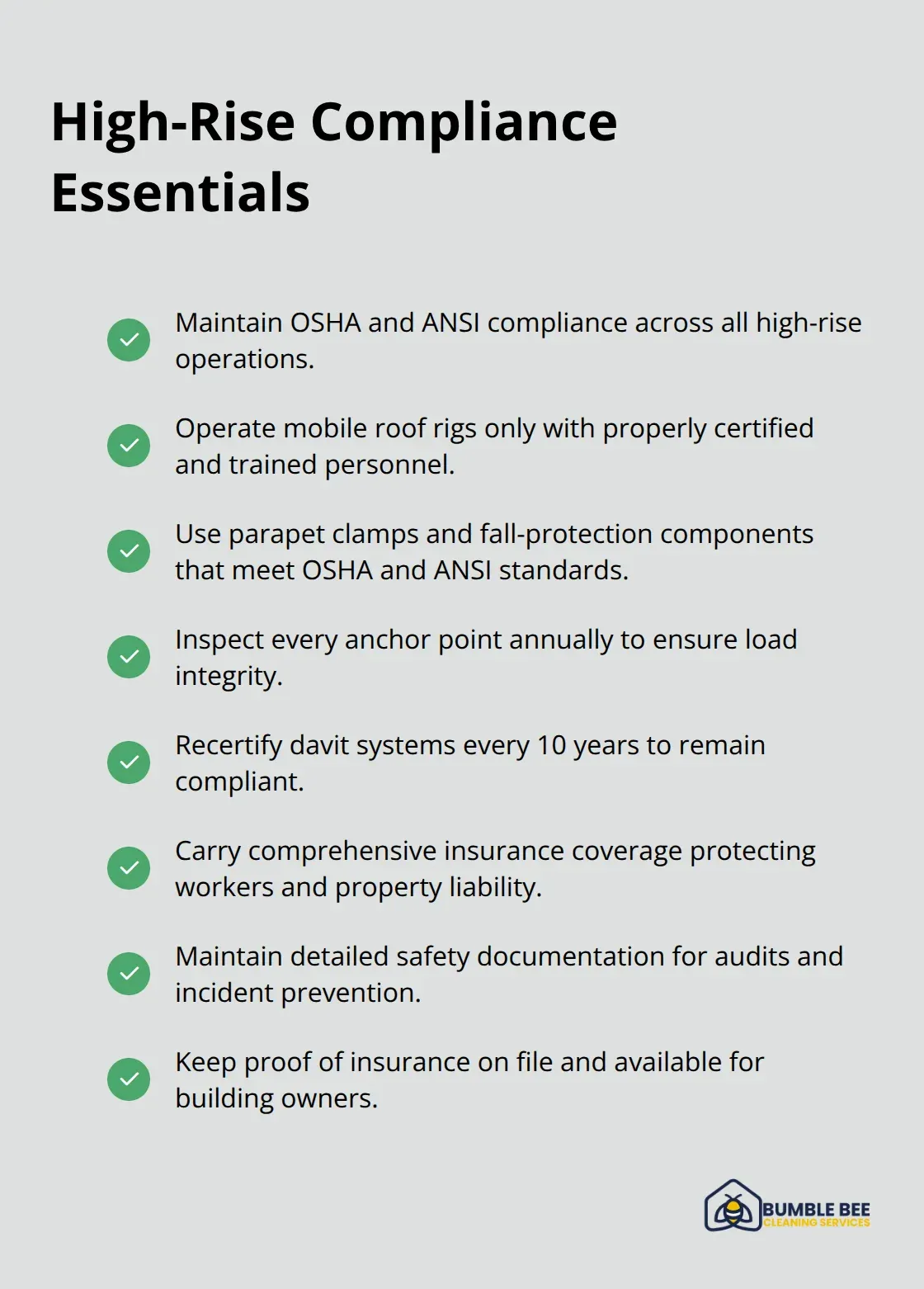
OSHA and ANSI standards govern every aspect of high-rise work, and crews must maintain annual training and certifications. Mobile roof rigs used in Seattle typically feature an outreach arm extending 2–3 feet with counterweights ranging from 400–800 pounds, all requiring proper certification and operator training. Buildings with limited roof anchors rely on parapet clamps, which must meet OSHA and ANSI fall-protection standards.
Every anchor point requires annual inspection, and davit systems need 10-year recertification. Proof of insurance is non-negotiable-commercial building owners face liability exposure if workers get injured on their property without proper coverage. Professional teams carry comprehensive insurance and maintain detailed safety documentation.
Seattle’s Weather Compounds Operational Complexity
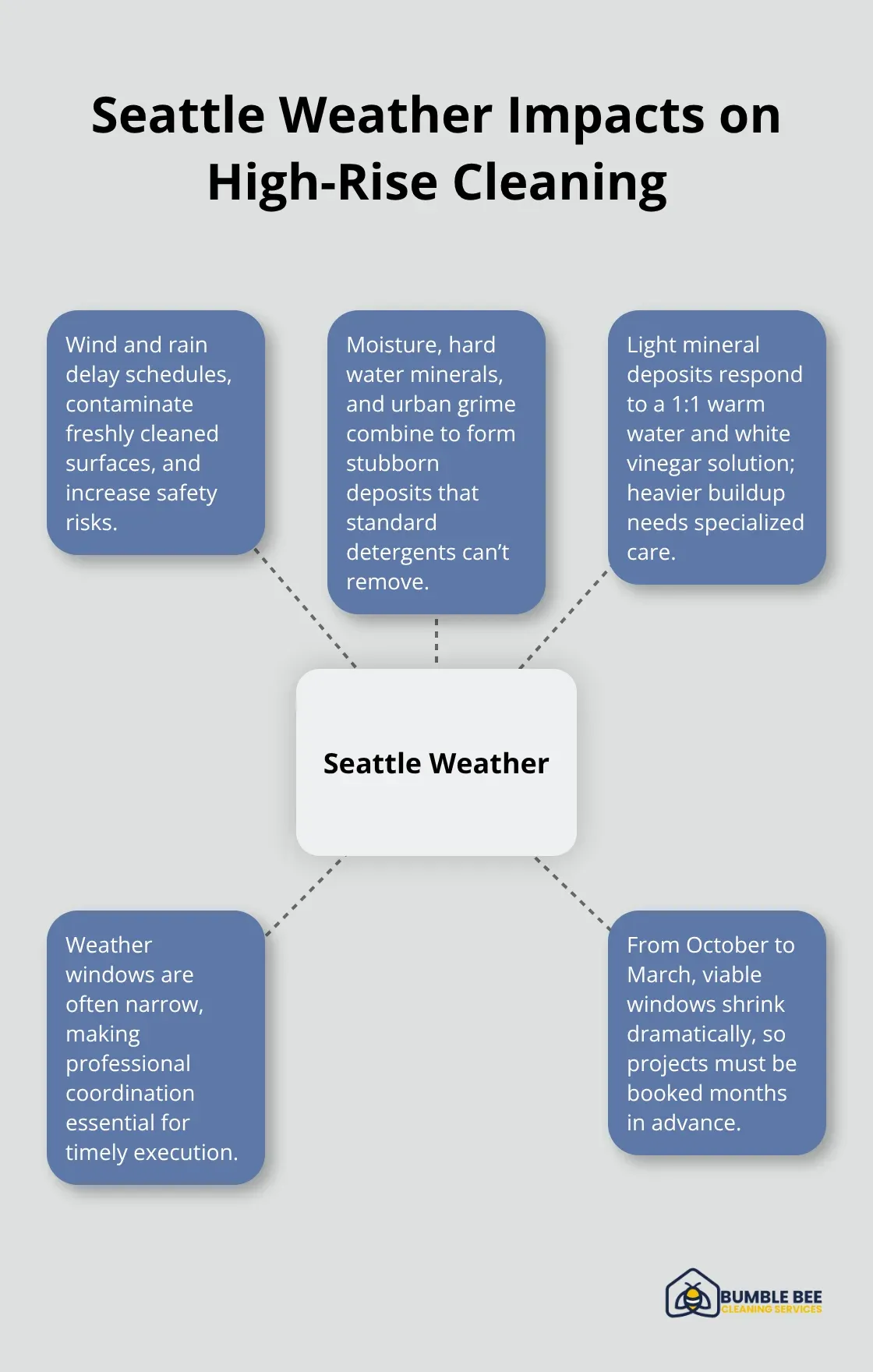
Seattle’s weather significantly complicates high-rise cleaning operations. Wind and rain are the most common weather conditions that negatively impact window cleaning results and can disrupt schedules. The combination of moisture, hard water minerals, and urban grime creates stubborn deposits that regular detergents won’t remove. Hard water causes mineral buildup that requires specialized solutions like a 1:1 mixture of warm water and white vinegar.
Rain and wind delay schedules, contaminate freshly cleaned surfaces, and make working at height far more dangerous. Building managers must coordinate cleanings during weather windows, which in Seattle often means narrow scheduling opportunities. These constraints make professional coordination essential rather than optional.
Regulatory Compliance Protects Your Building
Regulatory compliance adds another layer of complexity that separates professional operators from DIY attempts. Attempting high-rise cleaning without proper certifications, equipment, and insurance exposes building owners to fines, worker injuries, and potential lawsuits. The investment in professional high-rise cleaning services isn’t an expense-it’s risk management and asset protection that directly impacts your bottom line.
Understanding these safety and regulatory requirements sets the foundation for what actually works in Seattle’s high-rise environment. The next section explores the specific practices that professional teams implement to maintain building shine while meeting these demanding standards.
Best Practices for High Rise Cleaning in Seattle
Schedule Cleanings During Off-Peak Hours
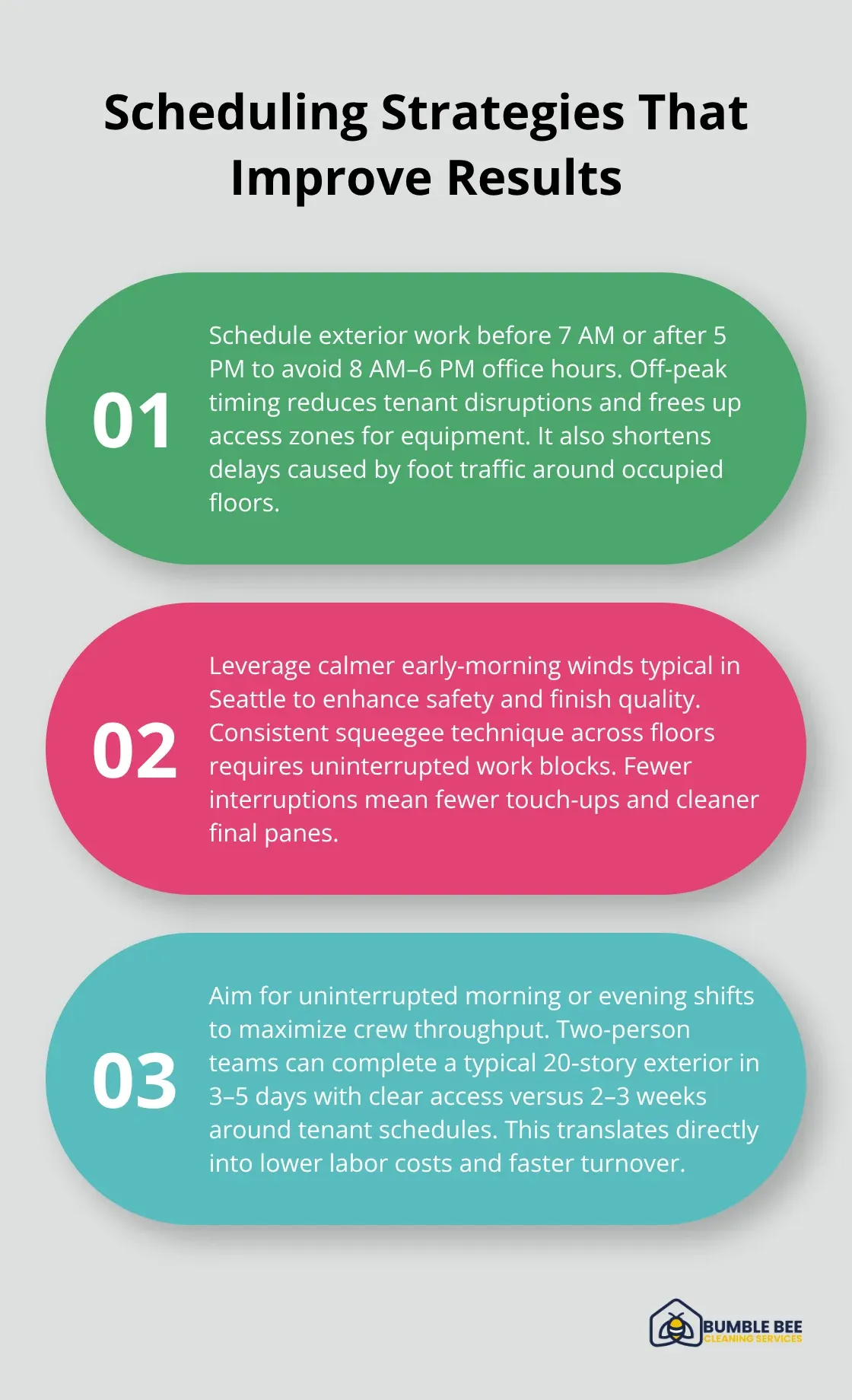
Scheduling high-rise cleaning during off-peak hours isn’t just convenient-it’s operationally critical. Most Seattle office buildings operate between 8 AM and 6 PM, meaning your best window for cleaning is early morning (before 7 AM) or after 5 PM. This approach minimizes tenant disruption, reduces foot traffic that interferes with equipment placement, and allows crews to work without coordinating around occupied floors. Building managers who schedule cleanings during peak hours face constant interruptions, safety complications from unexpected occupant movement, and longer job timelines that drive costs up.
Early morning cleanings take advantage of lower wind speeds typical in Seattle before afternoon thermal currents develop, which directly improves results and crew safety. The National Association of Home Builders recommends squeegee techniques for streak-free finishes on large exterior windows, and consistent technique across multiple floors requires crews working without interruption. Two-person teams can clean a typical 20-story building’s exterior in 3–5 days when scheduling allows uninterrupted morning or evening shifts, versus 2–3 weeks when forced to work around tenant schedules.
Apply Eco-Friendly Solutions for Hard Water Deposits
Eco-friendly cleaning solutions aren’t just environmental preference-they’re performance necessity for Seattle’s hard water environment. Products certified by the EPA’s Safer Choice program break down construction grime without harsh chemicals that can damage window seals. This approach protects window seals that harsh chemicals can degrade over time.
Water-fed pole systems using purified water eliminate streaking on mid-rise facades, and this method reaches 60 feet safely without pressure washing risks. For rope access work on taller buildings, microfiber cloths trap 99.54% of dirt and bacteria better than traditional cotton, meaning fewer passes needed and faster completion.
Equip Teams with Specialized Tools and Training
Professional teams equipped with HEPA-filtered vacuums capture 99.97% of particles as small as 0.3 microns during interior post-construction cleanup, protecting your HVAC systems and occupant health. Rope access techniques demand certified operators with annual training, proper anchor inspection per OSHA standards, and comprehensive insurance coverage that protects both workers and your property liability.
These best practices form the foundation of reliable high-rise cleaning, but even the most skilled teams encounter obstacles that require strategic problem-solving. The next section addresses the specific challenges that building managers face and the solutions that professional operators use to overcome them.
Common High Rise Cleaning Challenges and Solutions
Maintaining Consistency Across Multiple Floors
Maintaining uniform results across multiple floors demands systematic coordination that most building managers underestimate. One crew cleaning floors 1–10 may finish before another crew reaches floors 11–20, creating inconsistent results where lower floors show streaks while upper floors gleam. Weather shifts mid-project, and afternoon wind speeds increase dramatically in Seattle, affecting how quickly purified water dries on glass. The best practices for high-rise cleaning note that squeegee technique consistency is critical for streak-free results, yet crews rotating between floors struggle to maintain identical pressure and angle.
Real-time communication about wind conditions, water quality, and progress checkpoints prevents duplicate work and missed sections. Without this coordination, crews apply inconsistent pressure that leaves visible banding patterns across the building.
Hard Water Stains Require Targeted Solutions
Hard water mineral deposits accumulation rates building orientation sun exposure differently. South-facing glass collects minerals faster than north-facing surfaces because heat accelerates evaporation and mineral concentration. This means a one-size-fits-all cleaning schedule fails. Buildings requiring full exterior cleaning every 90 days may need south-facing sections cleaned every 60 days to prevent crusted deposits that damage seals and shorten window lifespan.
Hard water stains require different treatment than urban grime or pollen, yet many building managers assume one cleaning solution handles everything. Seattle’s water contains elevated mineral concentrations that standard detergents cannot break down effectively. White vinegar solutions work for light deposits, but crusted mineral buildup demands specialized chelating agents that dissolve calcium and magnesium without damaging seals. Testing solutions on inconspicuous glass sections first prevents costly seal damage that can cost $5,000–$15,000 per floor to repair.
Coordinating with Building Management and Tenants
Tenant cooperation determines whether a high-rise project stays on schedule or slips weeks behind. Building managers who announce cleaning 48 hours in advance face locked exterior doors, equipment access delays, and tenants opening windows mid-cleaning that contaminate freshly washed glass. Professional operators establish 10–14 day notice requirements and require written tenant acknowledgment of access points and equipment placement zones. This protects against liability claims when tenants block access or report damage they caused themselves.
Weather windows in Seattle narrow dramatically between October and March, when rain and wind dominate conditions. Building managers must book professional teams months in advance during peak seasons, or accept longer gaps between cleanings. Professional cleaning services work with building managers to establish maintenance schedules aligned with Seattle’s actual weather patterns and your building’s specific exposure levels, preventing the reactive scrambling that costs time and money.
Final Thoughts
High-rise cleaning in Seattle demands expertise, equipment, and coordination that standard cleaning approaches cannot provide. The safety protocols, regulatory compliance, and specialized techniques outlined throughout this guide protect your building, your tenants, and your liability exposure. Buildings that skip professional high-rise cleaning in Seattle face accelerated window seal degradation, mineral buildup that becomes increasingly difficult to remove, and the constant risk of worker injury that exposes owners to fines and lawsuits.
Professional services matter in Seattle specifically because our weather patterns, hard water conditions, and dense urban environment create cleaning challenges that demand local expertise. A team familiar with Seattle’s afternoon wind patterns, mineral deposit accumulation rates, and seasonal weather windows schedules work strategically and delivers consistent results. They understand that south-facing glass requires different maintenance intervals than north-facing surfaces and coordinate with building management to establish realistic cleaning schedules that work within our climate constraints.
Finding the right cleaning partner means verifying OSHA and ANSI certifications, confirming comprehensive insurance coverage, and reviewing experience with buildings similar to yours. We at Bumble Bee Cleaning Services combine eco-friendly products with advanced techniques that protect your windows while delivering the shine your building deserves. Contact us today to establish a maintenance schedule that keeps your building looking sharp year-round.
For more information about our cleaning services in Seattle and Atlanta, or to request a cleaning quote, call or text us at 425-786-1360 or email us at info@qbclean.com
