
Most Seattle homeowners think eco-friendly cleaning products cost more and work less effectively. That’s simply not true.
We at Bumble Bee Cleaning Services have seen firsthand how switching to genuine green products saves money while protecting your family and pets. This guide shows you exactly how to spot real eco-friendly cleaning solutions and avoid the marketing tricks that trap you into buying products that aren’t actually green.
Why Green Cleaning Actually Works for Seattle Homes
Indoor Air Quality and Your Family’s Health
The EPA reports indoor air can be two to five times more polluted than outdoor air, and conventional cleaners contribute ammonia, bleach, and VOCs that linger after use. When you spray a standard bathroom cleaner, those fumes don’t disappear when the surface dries-they hang in your home’s air for hours, especially in Seattle’s typically sealed homes during winter months. Your family breathes them in while cooking, sleeping, and playing.
Children and pets face even higher exposure because they spend more time on floors and touch surfaces more frequently. Green cleaning eliminates this constant low-level chemical exposure, which matters far more than most homeowners realize.
Real Cost Savings Add Up Quickly
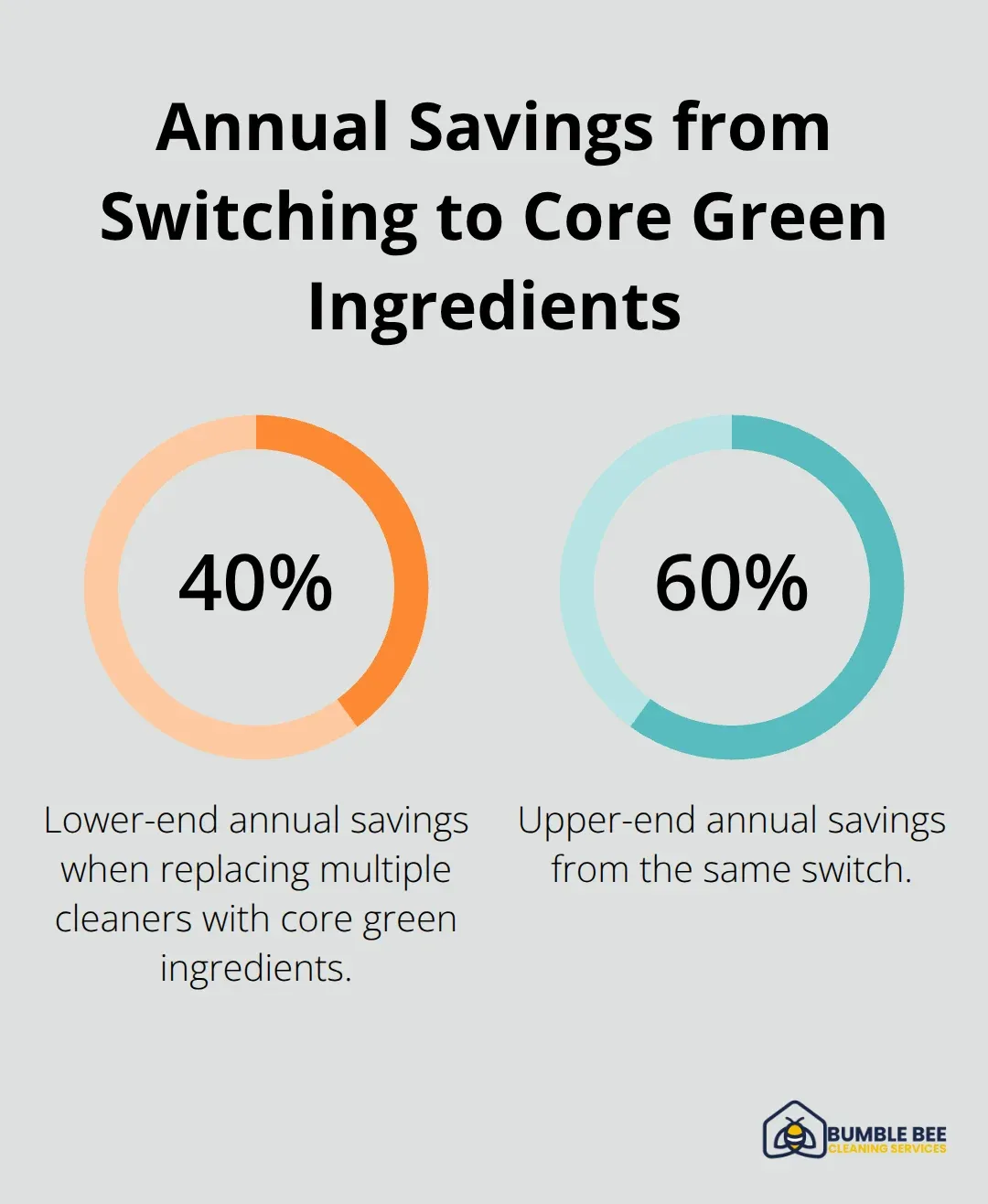
Traditional cleaning products drain your wallet faster than people think. Replacing multiple cleaners with core green ingredients like vinegar (about $3 per gallon) and baking soda (pennies per use) yields 40–60% annual cost savings. You save on product cost, but the financial benefits extend further.
Green cleaning uses plant-based, biodegradable ingredients that break down naturally, so you avoid the hidden expenses of disposing hazardous waste properly. Conventional cleaners contribute to water pollution through manufacturing and disposal, adding environmental cleanup costs that get passed back to communities through taxes. When you choose green products certified by Green Seal or EPA Safer Choice, you support local waterways that Seattle residents depend on.
Why Genuine Green Products Outperform Cheap Alternatives
The financial case is straightforward: genuine eco-friendly products cost less to buy, less to dispose of, and less to replace when you actually finish the bottle instead of throwing half of it away because you bought the wrong cleaner for the job. Plant-based surfactants remove grease without ammonia fumes, showing comparable cleaning power when applied with proper technique and adequate contact time.
Green products achieve strong results through mechanical action and time rather than chemical strength. This approach reaches hidden buildup in ovens, under coils, grout lines, baseboards, and behind appliances-the spots that matter most. Regular cleaning every 2–4 weeks prevents buildup, allowing gentler products to maintain surfaces and keep indoor air cleaner throughout the year.
Now that you understand why green products work and save money, the next challenge is identifying which products actually deliver on their promises.
How to Spot Real Eco-Friendly Products
The problem with green cleaning products is that marketing language obscures the truth. Labels claiming natural, eco-friendly, or green mean almost nothing without third-party verification. The Federal Trade Commission greenwashing crackdowns have targeted companies that exploit consumer confusion deliberately.
Certifications That Actually Matter
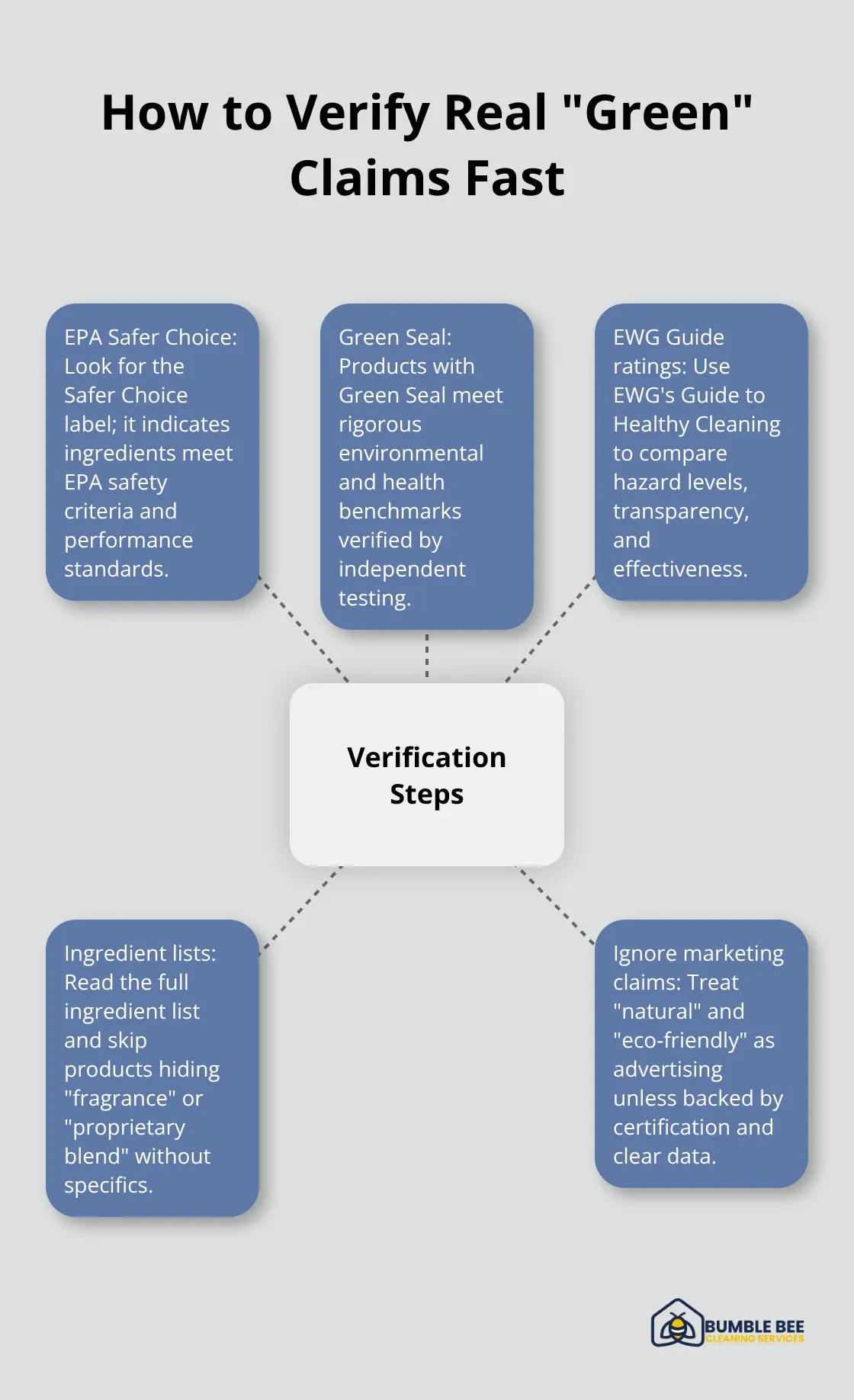
EPA Safer Choice and Green Seal certifications are third-party endorsements showing that cleaning products meet strict environmental and health standards. When you see these labels, a third party has verified the ingredient list and confirmed the product actually works. Without certification, you read marketing copy, not facts.
Start your shopping by checking EWG’s Guide to Healthy Cleaning to compare safety ratings and performance data on specific products. EWG rates cleaners on hazard level, ingredient transparency, and effectiveness, giving you concrete comparisons instead of vague claims.
What to Look for on the Label
Avoid any product that lists ingredients as proprietary blend or fragrance without specifying what that fragrance contains. Synthetic fragrances often hide volatile organic compounds that contribute to indoor air pollution. Read the full ingredient list and reject anything containing ammonia, chlorine bleach, phosphates, or butyl cellosolve. These chemicals are common in traditional cleaners and directly harm indoor air quality.
Plant-based surfactants, citric acid, and hydrogen peroxide are legitimate green alternatives that perform effectively. Test any new product on a small, hidden area first because even certified green cleaners can discolor certain stone surfaces or specific tile types.
Application Techniques That Maximize Results
Contact time matters more than chemical strength with green products. Spray the surface, wait five to ten minutes, and then wipe. This simple technique dramatically improves results and costs nothing extra. Avoid mixing different cleaners because combining products can create dangerous fumes, even when each individual cleaner is safe.
Building Your Core Cleaning Kit
Build your core kit with three items: a certified all-purpose cleaner, a bathroom-specific green cleaner, and white vinegar for glass and mineral deposits. These three products handle roughly 80% of household cleaning tasks without cluttering your cabinet with unnecessary bottles. When comparing products, ignore marketing language entirely and focus only on certifications, ingredient lists, and third-party ratings.
With the right products selected and your core kit assembled, you’re ready to transition your home to green cleaning without disrupting your routine or budget.
How to Switch to Green Cleaning Without Disrupting Your Routine
Start in your kitchen and bathroom, the two rooms where you use cleaning products most frequently and where your family spends the most time. These high-traffic areas show results fastest, which builds confidence for expanding to other rooms. Replace your standard all-purpose cleaner and bathroom spray with certified green alternatives first, keeping everything else the same for now. This narrow focus prevents overwhelm and lets you test performance on real surfaces without overhauling your entire cleaning cabinet at once. Most Seattle homeowners find that swapping just these two products immediately reduces chemical smell in their homes and costs about the same or less than what they were already spending.
Test on Problem Surfaces Before Full Commitment
Granite, marble, and certain tile types react badly to acidic cleaners like vinegar, so test your chosen green products on a hidden corner or inconspicuous area before applying them everywhere. Wait 24 hours to check for discoloration or damage. This single step prevents costly mistakes and eliminates the risk of stripping finishes or etching stone surfaces. Keep detailed notes on which products work well on specific surfaces in your home, since results vary based on your Seattle home’s unique materials and water hardness.
Replace Products Over Eight Weeks
Introduce one product category every two weeks rather than switching everything simultaneously. Week one brings your all-purpose cleaner and bathroom cleaner. Week three introduces a floor cleaner for your specific flooring type. Week five adds a glass cleaner. Week seven covers any specialty products you use regularly.
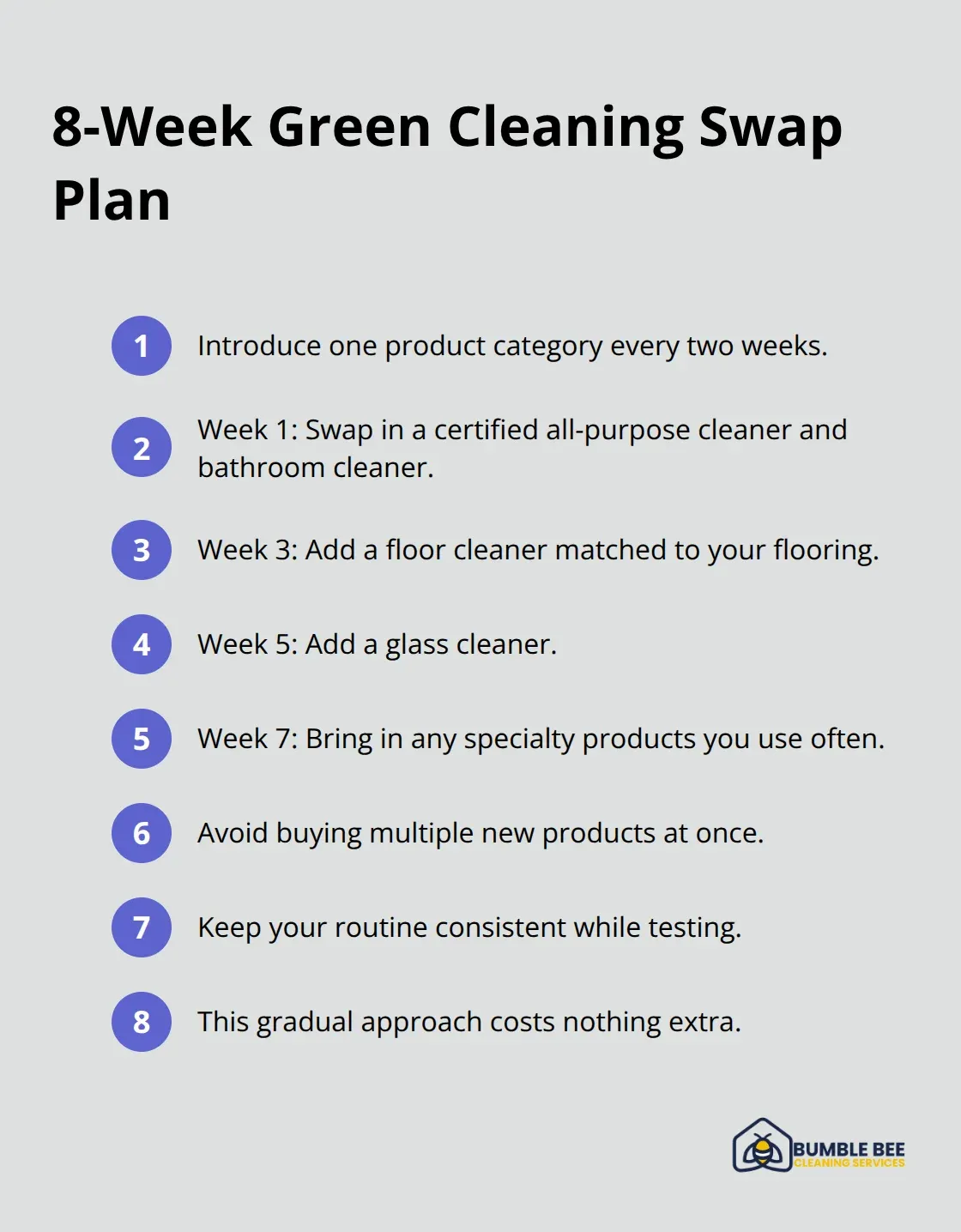
This gradual approach costs nothing extra and prevents the frustration of discovering a product doesn’t work after you’ve already purchased multiple bottles. Your cleaning routine stays consistent throughout the transition, and you avoid the common mistake of abandoning green cleaning because early choices didn’t perform well.
Track Your Spending and Adjust
Monitor your spending during this eight-week period to document actual savings. Most households report monthly reductions in cleaning supply costs within two months, though your specific savings depend on which products you replace and how frequently you clean. If a product underperforms during testing, don’t force it into your routine. Switch to a different certified option rather than reverting to conventional chemicals. The goal is finding genuine green products that work in your specific home, not proving that all green products work equally well everywhere.
Final Thoughts
Selecting genuine eco-friendly cleaning products comes down to three non-negotiable rules: verify third-party certifications like EPA Safer Choice or Green Seal, read complete ingredient lists to spot harmful chemicals, and ignore marketing language entirely. These steps take minutes but protect your family, pets, and Seattle’s waterways from unnecessary chemical exposure. You now have the knowledge to distinguish real green products from greenwashing tactics that waste your money on ineffective alternatives.
Your eight-week transition plan removes the guesswork from switching to eco-friendly cleaning that Seattle homes actually need. Start with high-traffic areas, test on problem surfaces, and replace products gradually to find solutions that work in your specific home without disruption or financial strain. Most households see measurable cost savings within two months while breathing cleaner air and reducing their environmental footprint.
Professional green cleaning services accelerate this transition significantly-Bumble Bee Cleaning Services brings experience applying certified eco-friendly products to residential and commercial spaces throughout Seattle. Contact us for a professional green cleaning that demonstrates what genuine eco-friendly cleaning actually achieves, or start this week with your core three-product kit and test them in your kitchen and bathroom.
For more information about our cleaning services in Seattle and Atlanta, or to request a cleaning quote, call or text us at 425-786-1360 or email us at info@qbclean.com
