
Seattle’s construction boom brings exciting new developments, but unprotected floors face serious damage from dust, debris, and the city’s notorious moisture levels.
Floor sealing after construction acts as a protective barrier that can save property owners thousands in replacement costs. We at Bumble Bee Cleaning Services see firsthand how proper sealing transforms vulnerable surfaces into durable, long-lasting investments.
Why Seattle Construction Leaves Floors Vulnerable
Construction projects in Seattle create a perfect storm of floor damage through concrete dust penetration, debris accumulation, and moisture exposure that can cost property owners $15,000 to $30,000 in replacement expenses. Construction sites face significant challenges with unprotected floors during building phases, with hardwood floors showing the highest vulnerability rates.
Construction Debris Creates Permanent Damage
Construction dust contains abrasive particles that scratch surfaces and embed deep into porous materials like concrete and natural stone. This dust acts like sandpaper on unprotected surfaces and creates microscopic scratches that trap dirt and bacteria permanently. Concrete floors absorb construction chemicals and oils that penetrate up to 3 inches deep without proper sealing, which makes restoration nearly impossible.
Seattle Moisture Amplifies Floor Deterioration
Seattle receives 37.49 inches of annual rainfall and creates humidity levels that reach 89% during construction months. This moisture combines with construction dust to form paste-like substances that stain concrete permanently and warp hardwood floors beyond repair. The National Association of Home Builders found that moisture-related floor damage increases repair costs by 340% compared to dry climate construction projects.
Unsealed Floors Face Rapid Deterioration
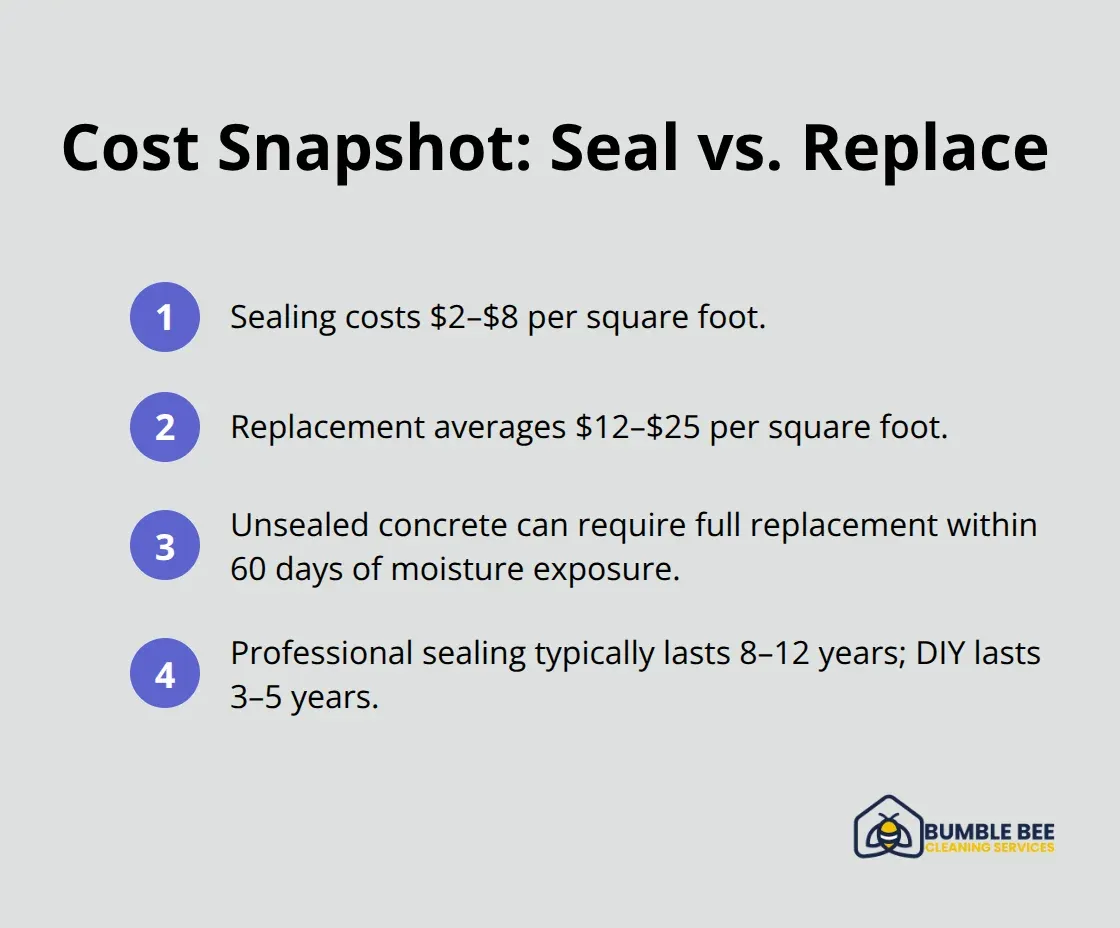
Unsealed concrete develops efflorescence and mold growth within 60 days of moisture exposure, which requires complete floor replacement rather than surface restoration. Professional sealing costs between $2 to $8 per square foot, while floor replacement averages $12 to $25 per square foot. These cost differences make sealing the financially smart choice for Seattle property owners who want to protect their investment before damage occurs.
The next step involves understanding which specific sealing solutions work best for different floor types in Seattle’s unique climate conditions.
Which Sealing Method Protects Your Floors Best
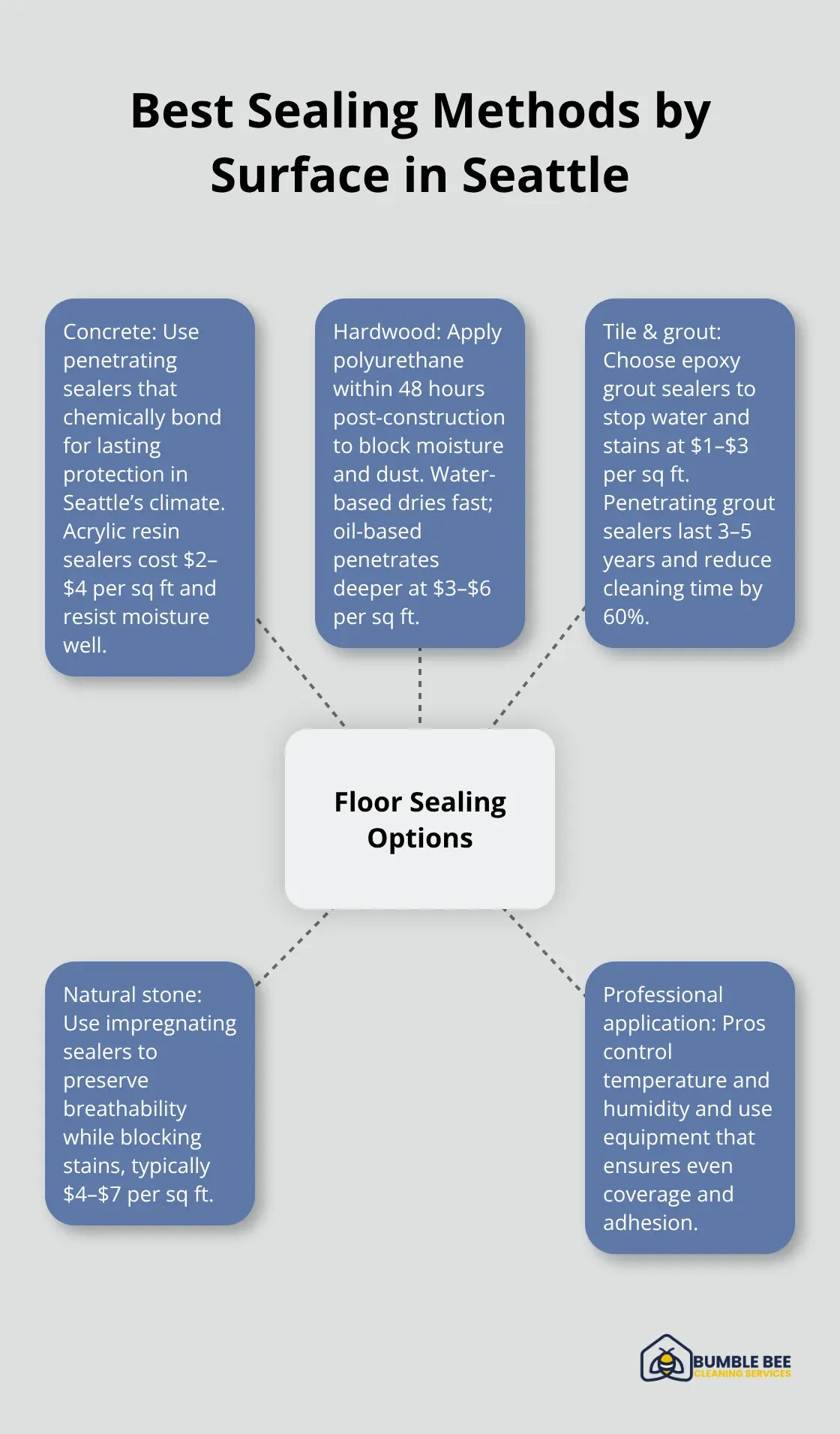
Concrete surfaces demand penetrating sealers that bond chemically with the substrate and create protection that lasts in Seattle’s climate. Acrylic resin-based sealers cost $2 to $4 per square foot and provide excellent moisture resistance for residential concrete floors. Polyurethane topcoats offer superior durability for high-traffic commercial areas, with installation costs that range from $4 to $8 per square foot but last without reapplication.
Hardwood Demands Immediate Protection
Hardwood floors need polyurethane protective coatings applied within 48 hours of construction completion to prevent moisture penetration and construction dust from embedding. Water-based polyurethane finishes dry faster and emit fewer VOCs, which makes them ideal for occupied buildings during post-construction sealing. Oil-based polyurethane provides deeper penetration and costs $3 to $6 per square foot, while water-based options range from $2 to $5 per square foot. Seattle’s humidity levels make aluminum oxide-enhanced polyurethane the top choice for maximum scratch resistance.
Tile and Grout Need Specialized Treatment
Tile surfaces require epoxy-based grout sealers that prevent water infiltration and stains, with professional application that costs $1 to $3 per square foot. Penetrating grout sealers last 3 to 5 years and reduce cleaning time by 60% compared to unsealed grout lines. Natural stone tiles need impregnating sealers that preserve the stone’s breathability while they block stains (with costs that average $4 to $7 per square foot).
Professional application guarantees proper coverage and eliminates common DIY mistakes like over-application that creates cloudy surfaces or under-application that leaves vulnerable spots.
Professional Application Makes the Difference
Professional sealers apply products at optimal temperatures and humidity levels that maximize adhesion and longevity. Contractors use specialized equipment that creates even coverage patterns and eliminates streaks or missed areas that compromise protection. The quality difference between professional and DIY application becomes apparent when you compare the equipment requirements and expertise needed for proper results.
Should You DIY Floor Sealing or Hire Professionals
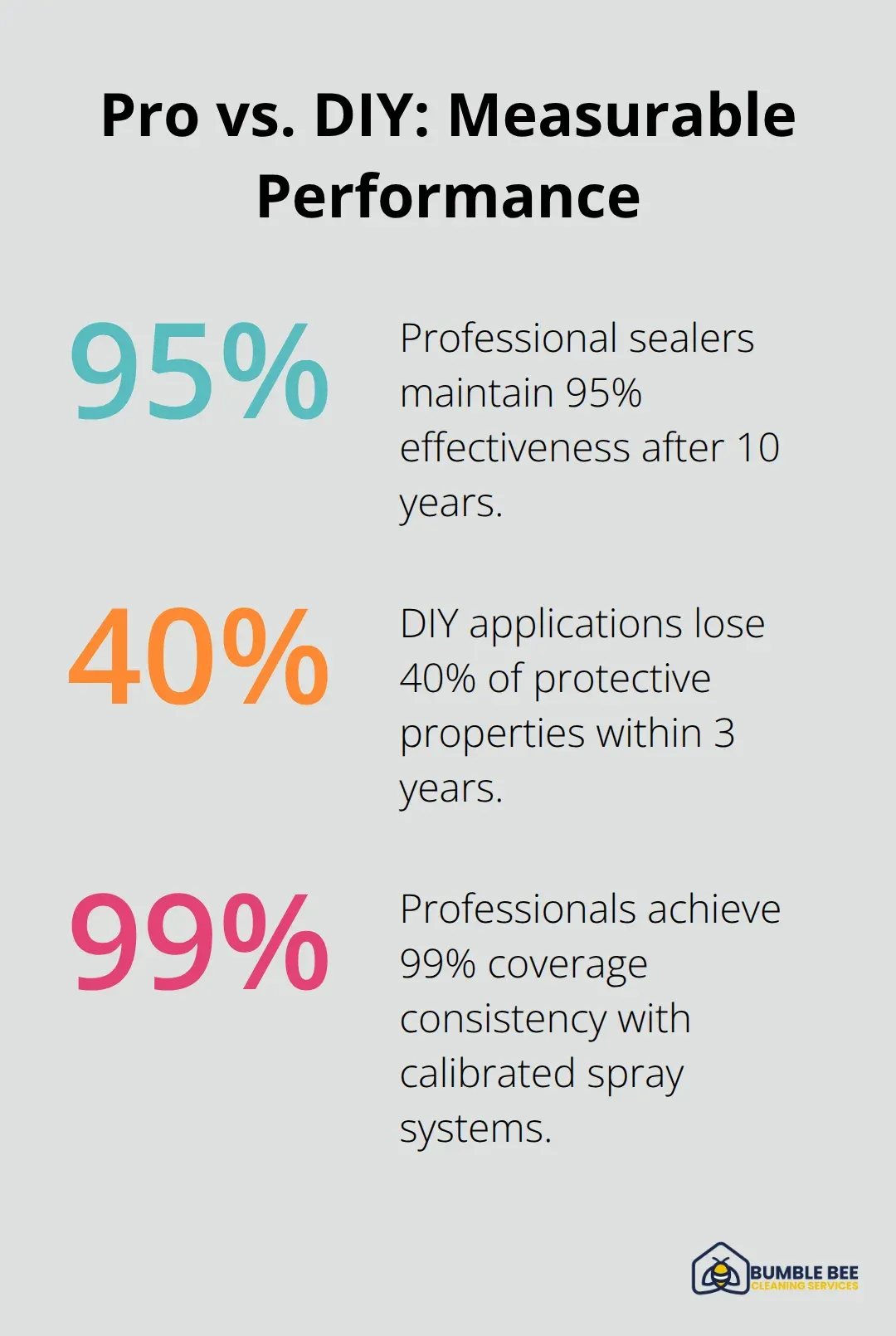
Professional floor sealing requires specialized equipment for commercial-grade sprayers, moisture meters, and surface preparation tools that most homeowners cannot justify purchasing. DIY approaches with consumer-grade equipment create uneven coverage patterns and miss critical spots that leave floors vulnerable to damage, while professional contractors achieve 99% coverage consistency with calibrated spray systems and infrared temperature guns. Professional sealers apply products at optimal temperatures with 35-55% humidity levels (conditions that DIY projects rarely achieve without climate control equipment).
Time Investment Reality Check
Professional teams complete 1,000 square feet of concrete sealing in 4-6 hours, while DIY projects require 16-24 hours spread across multiple days due to surface preparation learning curves and application mistakes. Seattle homeowners typically spend $1,200 to $2,400 on professional sealing versus $800 to $1,400 for DIY materials, but professional work lasts 8-12 years compared to 3-5 years for DIY applications. The National Association of Home Builders found that DIY floor sealing failures require complete re-sealing within 18 months, which doubles the total project cost and creates more disruption than initial professional installation.
Equipment and Expertise Requirements
Professional contractors own commercial-grade surface grinders that remove construction residue and create proper adhesion profiles for sealers. These machines cost $3,000 to $8,000 and require specialized training to operate safely without damaging floors. Professional moisture meters detect substrate moisture levels below 4% (the maximum for proper sealer adhesion), while consumer-grade tools provide inaccurate readings that lead to sealer failure. Contractors also use HVAC equipment to control temperature and humidity during application, which prevents common problems like blushing and poor curing.
Long-Term Performance Differences
Professional sealers bond chemically with substrates and maintain 95% effectiveness after 10 years, while DIY applications lose 40% of their protective properties within 3 years due to improper surface preparation and product mixing ratios. Commercial-grade sealers used by professionals resist Seattle’s freeze-thaw cycles and maintain flexibility that prevents cracking, while consumer products become brittle and fail during temperature fluctuations. Professional warranties cover material and labor defects for 5-10 years, providing financial protection that DIY projects cannot match when sealing failures occur.
Final Thoughts
Floor sealing after construction provides Seattle property owners with measurable protection that saves thousands in replacement costs while it extends floor lifespan by decades. Professional sealing creates barriers that resist moisture penetration, prevent construction dust from embedding, and maintain surface integrity through Seattle’s challenging climate conditions. The investment protection value becomes clear when you compare sealing costs of $2 to $8 per square foot against floor replacement expenses that range from $12 to $25 per square foot.
Professional applications maintain 95% effectiveness after 10 years, while unsealed floors deteriorate rapidly under Seattle’s 37.49 inches of annual rainfall and high humidity levels. Property owners should schedule professional assessments within 48 hours of construction completion to prevent permanent damage. This timeline prevents moisture and debris from penetrating surfaces beyond the point where sealing can provide effective protection.
We at Bumble Bee Cleaning Services provide post-construction cleaning that prepares surfaces for optimal sealer adhesion. Our team helps Seattle property owners protect their investments through comprehensive cleaning solutions and expert surface preparation. Professional floor sealing transforms vulnerable construction surfaces into durable assets that withstand Seattle’s environmental challenges while they maintain their value and appearance for years to come.
