
Seattle offices face constant pressure to keep workplaces healthy and safe. Traditional cleaning alone leaves gaps where bacteria and viruses hide, especially on high-touch surfaces that staff use throughout the day.
UV sanitizing technology offers a powerful solution to fill those gaps. We at Bumble Bee Cleaning Services have seen firsthand how this approach transforms office hygiene when paired with standard cleaning methods.
How UV-C Light Destroys Pathogens
UV-C light operates at wavelengths between 100 and 280 nanometers, a range that damages the DNA, RNA, and proteins of bacteria, viruses, and mold. Most microorganisms have no natural defense against this radiation, which is why UV-C works so effectively for sterilization in commercial spaces. The FDA confirms UV cleaning’s effectiveness in neutralizing SARS-CoV-2, underscoring its relevance for post-pandemic office care. When UV-C light strikes a pathogen’s genetic material, it disrupts the bonds that hold the organism together, rendering it inactive and unable to replicate or cause infection. This chemical-free approach works without toxic residue, making it ideal for offices where staff spend hours daily breathing the air and touching surfaces.
Distance and Exposure Time Control Real Results
Effectiveness depends entirely on two factors: exposure time and distance from the UV source. A surface must receive direct exposure to UV light for treatment to work; dust, soil, and obstructions block the radiation and reduce efficacy dramatically. This is why surfaces must be clean and dust-free before UV treatment begins. If you skip manual cleaning first, you waste UV capacity on areas hidden beneath grime. Most UV-C devices claim coverage for spaces roughly 600 to 1,000 square feet, and typical handheld units require 5 to 10 minutes of direct exposure per surface to achieve sanitization. Larger room systems take longer, sometimes 30 minutes or more, depending on room size and layout. The relationship is straightforward: increase distance from the UV source, and effectiveness drops sharply. A device that works at one meter away loses power quickly at two meters, which is why placement and room configuration determine real-world results in your Seattle office.
Hard surfaces respond best to UV Treatment
UV-C excels on hard, non-porous surfaces like smartphones, tablets, keyboards, mice, remotes, and doorknobs. These high-touch items rank among the dirtiest things staff handle daily, making them prime targets for sanitization. Porous materials like fabric, carpet, and upholstered furniture present a challenge because UV light penetrates poorly into their structure. Shadows and crevices prevent light from reaching pathogens, leaving them untouched. This reality means UV works best as part of a comprehensive cleaning routine, not as a standalone solution. Applied after traditional cleaning, UV targets remaining pathogens that manual methods miss, creating a layered defense that protects your team’s health and productivity.
Why UV Sanitizing Slashes Illness and Absenteeism in Seattle Offices
UV sanitizing addresses a real problem that traditional cleaning misses. When surfaces stay contaminated between manual cleanings, viruses and bacteria accumulate on high-touch areas, spreading illness through your office. Research from Grand View Research shows the global UV disinfection market reached 4.1 billion dollars in 2024 and is projected to grow at 7.1% annually through 2033, driven largely by commercial offices seeking to reduce infection transmission. This growth reflects a fundamental shift in how workplaces approach health, moving beyond surface wipes to systematic pathogen elimination. The commercial office segment specifically expects the fastest growth, with hygiene expectations now standard in Seattle workplaces rather than optional extras.
How UV-C Interrupts the Contamination Cycle
When UV-C systems target high-touch surfaces like doorknobs, elevator buttons, and keyboard areas before staff arrives, they interrupt the contamination cycle that leads to sick days. Surfaces treated with UV-C cannot re-contaminate themselves between cleanings the way manually cleaned surfaces can if pathogens settle back onto them within hours. This distinction matters because it creates a protective barrier that lasts until the next treatment cycle. Staff members who work in offices with regular UV treatment experience fewer illness outbreaks, translating directly to lower absenteeism rates and higher productivity.
The Hard-to-Reach Problem UV Actually Solves
Traditional cleaning leaves gaps in spaces with complex geometry. Keyboard crevices, phone screen edges, under desk surfaces, and spaces between furniture collect pathogens that cleaning cloths cannot reach effectively. UV-C light penetrates these areas when the device has direct line-of-sight, eliminating pathogens that manual labor simply cannot access. Healthcare settings using UV alongside manual cleaning see measurable reductions in healthcare-associated infections when the two methods work together. For Seattle offices, this means restrooms, break rooms, and shared conference tables benefit dramatically from UV treatment after staff leaves each day. The FDA’s confirmation that UV-C neutralizes SARS-CoV-2 provides regulatory backing for this approach in post-pandemic facility care. Healthcare facilities now use UV as standard practice in operating rooms and patient areas, not as an experimental option, which demonstrates the technology’s maturity and proven track record. Your office gets the same pathogen-elimination capability without the chemical residue that comes from spray disinfectants, which create indoor air quality concerns when used repeatedly throughout the day.
Why Clean Surfaces Matter Before UV Treatment
UV sanitizing only works when paired with clean surfaces. Dust and soil block UV-C radiation, rendering expensive equipment ineffective if surfaces remain dirty. This means UV cannot replace manual cleaning; it extends and amplifies it. The equipment works fastest on hard surfaces, so focus UV capacity on smartphones, remotes, door handles, and desk surfaces rather than wasting time on carpeted areas where penetration fails. Most commercial UV systems cover 600 to 1,000 square feet per treatment cycle, so a typical Seattle office requires multiple units or multiple passes to treat all spaces.
The Financial Case for UV Integration
The investment pays dividends when you measure reduced absenteeism against equipment and treatment costs, especially if your office experiences seasonal illness patterns. Energy-efficient LED-based UV systems, which are gaining market traction according to Grand View Research, reduce operating costs by 20 to 30 percent compared to older lamp-based units, making long-term adoption more financially viable for office managers monitoring bottom-line impact. These cost savings compound over time, particularly in larger facilities where multiple treatment zones operate daily. The next step involves assessing which specific areas in your Seattle workplace benefit most from UV treatment and how to integrate these systems into your existing cleaning schedule without disrupting daily operations.
Implementing UV Sanitizing in Your Seattle Workplace
Start with High-Touch Surfaces in Priority Zones
High-touch surfaces in restrooms, break rooms, and conference tables concentrate pathogen transmission risk and should receive UV treatment first. Doorknobs, faucet handles, toilet flush buttons, and light switches in restrooms experience dozens of hand contacts daily, making them prime targets for UV treatment before staff arrives. Break room tables and refrigerator handles accumulate bacteria from multiple users throughout the day, and conference room tables host back-to-back meetings where attendees touch surfaces continuously. These three zones should receive UV treatment at minimum, ideally every evening after occupancy ends. Secondary priority areas include elevator buttons, reception desk surfaces, and shared keyboards in open office layouts. Avoid wasting UV capacity on carpeted areas, upholstered furniture, or spaces with heavy dust accumulation, since UV light cannot penetrate porous materials effectively.
A 5,000-square-foot Seattle office typically needs UV treatment in roughly 800 to 1,200 square feet of actual surface area when you focus on high-touch hard surfaces rather than attempting to treat entire rooms. This targeted approach maximizes pathogen elimination per dollar spent on equipment and treatment time. Calculate your specific treatment area by measuring doorknob height surfaces, desk work zones, and shared equipment locations, then size your UV system capacity accordingly. Most commercial-grade UV systems cover 600 to 1,000 square feet per 30-minute cycle, so a typical office requires one to two units running nightly to adequately treat priority zones.
Schedule UV Treatment After Manual Cleaning Completes
Integrate UV treatment into your existing cleaning schedule by running systems after your janitorial team completes manual cleaning and all staff have left the building. This sequence matters because manual cleaning removes dust and debris that would otherwise block UV-C radiation, ensuring maximum effectiveness for your investment. Schedule UV treatment for 6 PM to 8 PM on weekdays, allowing the system to run while your building is unoccupied and before security or evening staff arrive. The equipment requires no supervision during operation, so your cleaning team can move to other tasks or depart once surfaces are prepared. Pair UV treatment with your recurring commercial cleaning service to create a seamless workflow rather than adding it as an isolated task.
Calculate ROI Based on Reduced Absenteeism
Cost considerations favor this integration because equipment runs on a fixed schedule, reducing per-treatment labor costs compared to sporadic or reactive sanitization. A typical commercial UV system costs between 2,000 and 5,000 dollars upfront, with annual operating costs around 800 to 1,200 dollars for electricity and bulb replacement.
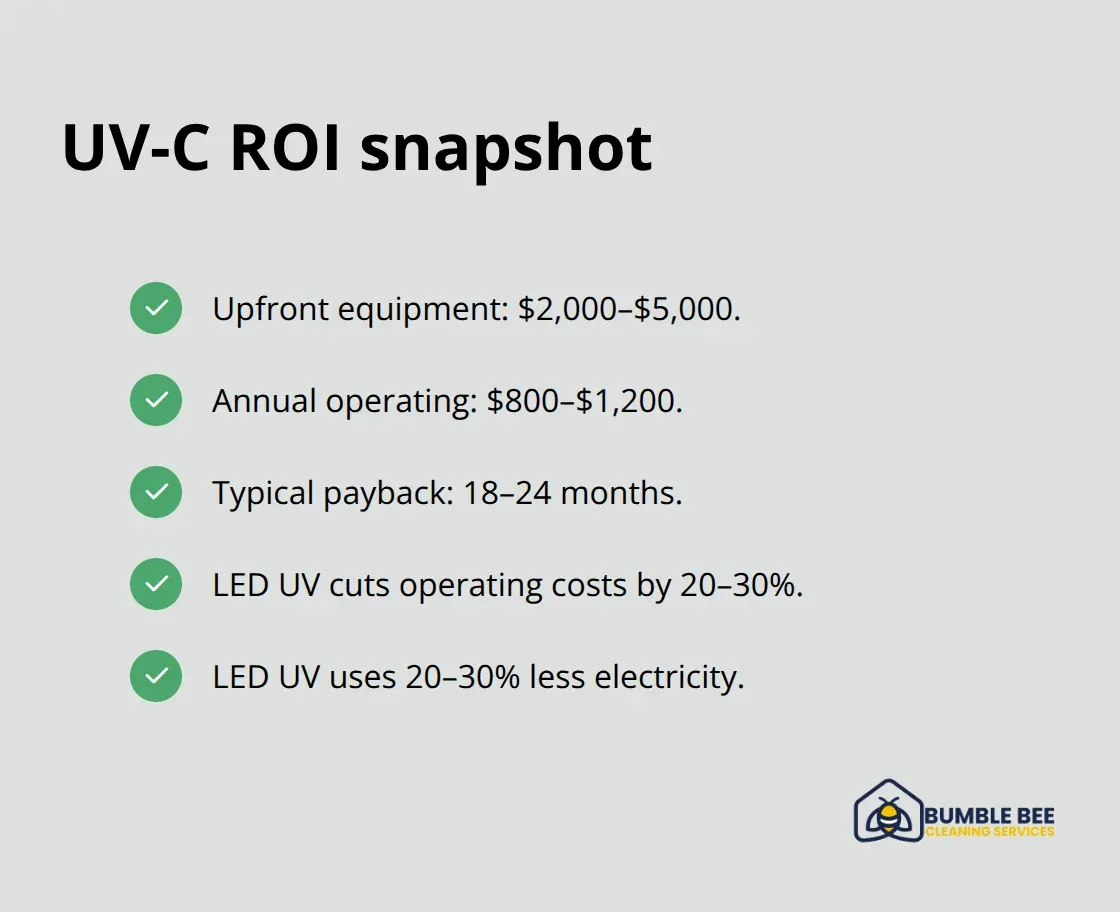
Return on investment appears within 18 to 24 months when you measure reduced absenteeism against treatment costs, particularly in offices with 50 or more employees where illness outbreaks significantly impact productivity. Energy-efficient LED-based UV systems consume 20 to 30 percent less electricity than older lamp-based units, accelerating ROI timelines.
Calculate your specific payback period by estimating current sick days per year, multiplying by average employee salary cost divided by working hours, then comparing that figure against equipment and treatment expenses. Most Seattle offices discover that preventing even two to three illness-related absences monthly covers the full cost of UV treatment, making the financial case straightforward for decision-makers focused on bottom-line impact and workplace health. Energy-efficient systems reduce operating costs significantly over time, particularly in larger facilities where multiple treatment zones operate daily.
Final Thoughts
UV sanitizing technology fills a gap that traditional cleaning cannot address, and the science backs this approach completely. Pathogens hide in hard-to-reach areas, surfaces re-contaminate between manual cleanings, and staff illness drains productivity through lost work hours. UV-C systems interrupt this cycle by treating high-touch zones after your team leaves each day, creating a protective layer that lasts until the next treatment cycle begins.
We at Bumble Bee Cleaning Services integrate UV treatment into your existing cleaning schedule as part of a comprehensive program, not as a standalone solution. Our team handles equipment placement, treatment timing, and surface preparation so your office stays protected without disrupting daily operations. Contact Bumble Bee Cleaning Services to assess your Seattle office layout, identify high-touch zones, and determine which areas benefit most from UV sanitizing technology.
For more information about our cleaning services in Seattle and Atlanta, or to request a cleaning quote, call or text us at 425-786-1360 or email us at info@qbclean.com
