
A clean workplace isn’t optional-it’s a business requirement. Dirty floors, cluttered restrooms, and dusty surfaces drive away customers and tank employee morale.
We at Bumble Bee Cleaning Services know that business janitorial services in Seattle need to fit your schedule, not the other way around. The right cleaning partner handles the mess so you can focus on what actually makes money.
Why Your Business Needs a Clean Workspace
Health Risks Hide on Every Surface
Office desks harbor more than 400 times the bacteria found on a typical toilet seat, according to the University of Arizona. Your employees touch contaminated surfaces throughout the day, spreading germs across keyboards, phones, and shared equipment. This reality makes health code compliance non-negotiable in Seattle, where CDC guidance requires regular disinfection of high-touch surfaces like door handles, elevator buttons, and light switches. Regulatory fines and liability claims follow when you ignore these standards-and the costs multiply if an employee or customer falls ill. Professional janitorial services eliminate this risk by prioritizing the surfaces that matter most.
Cleanliness Directly Impacts Your Bottom Line
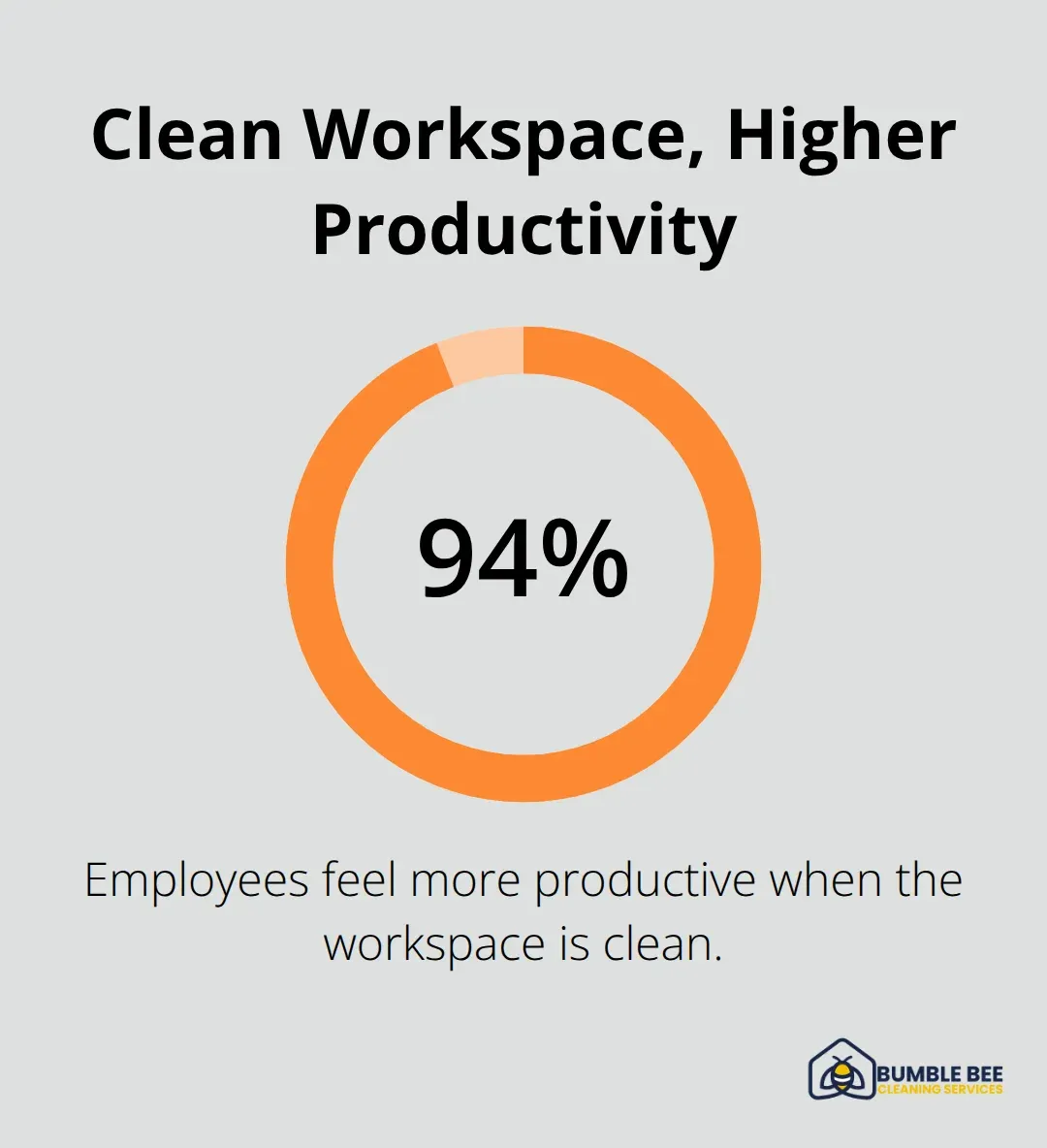
94% of employees feel more productive in a clean workspace. The Journal of Occupational and Environmental Medicine links cleaner environments to fewer illness symptoms (coughing, headaches, fatigue), which means your team spends less time sick and distracted. When employees stay healthy and focused, you retain talent and reduce turnover costs. Harvard University research demonstrates that employees perform significantly better on cognitive tasks in environments with better air quality-something professional janitorial services support through regular HVAC vent cleaning and filter replacement.
A structured hygiene schedule transforms workplace health into measurable business results.
First Impressions Shape Client Loyalty
Your clients and customers notice cleanliness immediately. A dirty reception area, grimy restrooms, or cluttered break room signals poor business management, regardless of how strong your actual products or services are. BYU research in the Journal of Organizational Behavior confirms that cleanliness shapes external perception and influences repeat business. In Seattle’s competitive market, a facility that stays consistently maintained builds trust and encourages customers to return. Daily restroom sanitation, weekly deep cleaning of break rooms and kitchen equipment, and monthly hard floor waxing or polishing demonstrate professional standards. High-traffic areas like entryways require daily sweeping and mopping to curb dirt entry, especially in Seattle’s wet climate where moisture accelerates grime buildup.
Building Your Competitive Advantage
A structured hygiene schedule isn’t a luxury-it’s the foundation of a healthy workplace that attracts and keeps both employees and customers. The question isn’t whether you can afford professional janitorial services; it’s whether you can afford the productivity loss, health risks, and damaged reputation that come without them. Your next step involves assessing exactly what your facility needs to maintain these standards consistently.
How to Build a Cleaning Schedule That Fits Your Operations
Map Your Facility Before You Commit
Start with a facility walkthrough before committing to any cleaning frequency. Walk through your entire space and document square footage, surface types, high-traffic zones, and moisture hotspots. A medium-sized office typically requires 2–3 hours for a thorough assessment. This walkthrough reveals which areas demand daily attention and which benefit from weekly or monthly care. You’ll identify patterns that generic cleaning plans miss.
Establish Your Daily Cleaning Foundation
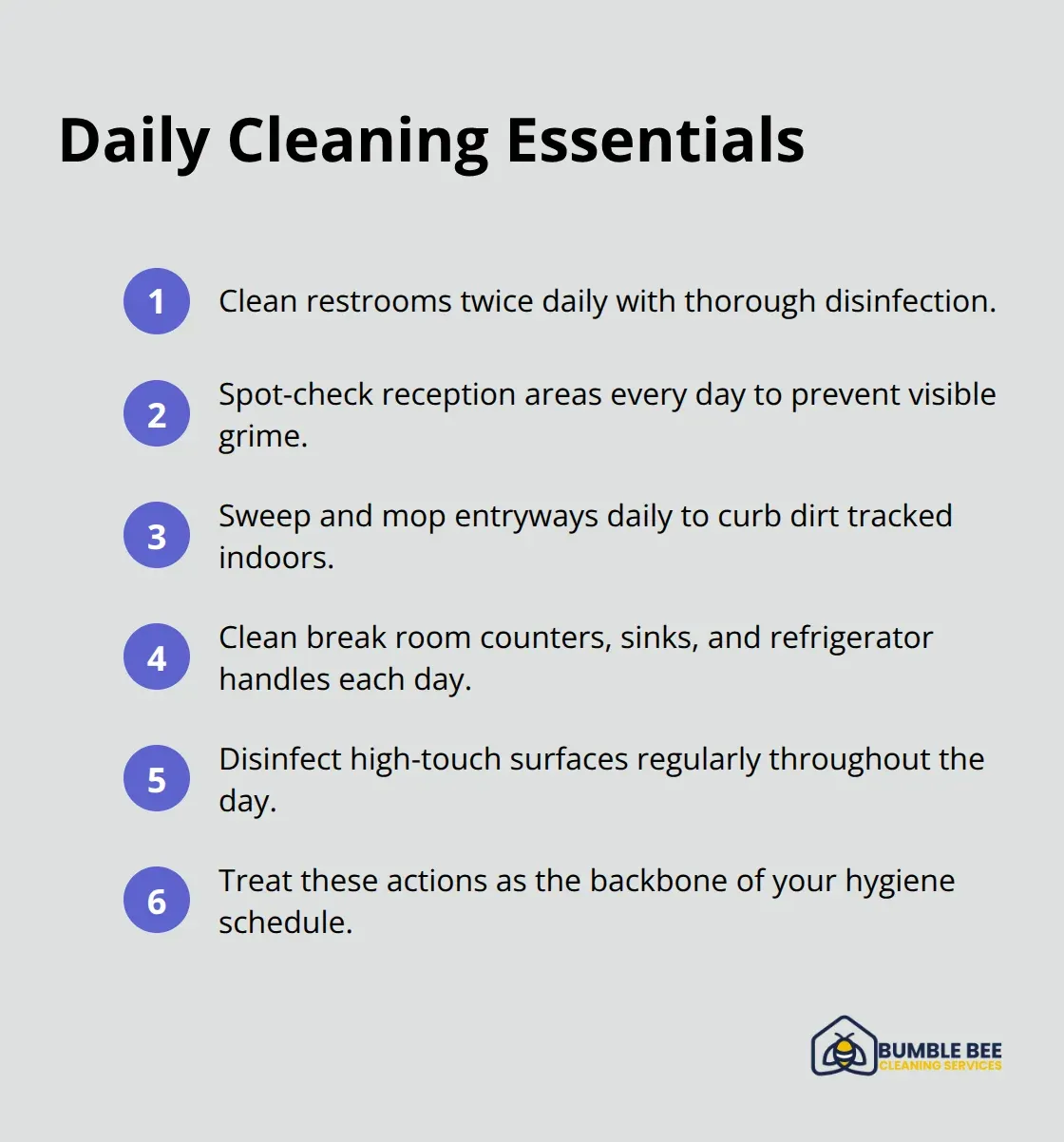
Restrooms need cleaning at least twice daily with thorough disinfection of toilets, sinks, and dispensers. Reception areas require daily spot checks to prevent visible grime. Entryways should receive daily sweeping and mopping to curb dirt entry, especially critical in Seattle’s wet climate where moisture accelerates buildup. Break rooms need daily cleaning of counters, sinks, and refrigerator handles to minimize food contamination. High-touch surfaces like door handles, elevator buttons, light switches, and shared desks require regular disinfection. These daily tasks form the backbone of any effective hygiene schedule.
Layer in Weekly and Monthly Tasks
Once you map daily priorities, add weekly deep-cleaning work: sanitize kitchen equipment like refrigerators and microwaves, disinfect office equipment including keyboards and phones, wipe glass surfaces and blinds, vacuum carpets and upholstered furniture to remove embedded dirt and allergens, clean HVAC vents to maintain air quality, and sanitize garbage and recycling bins. Monthly work includes hard floor waxing or polishing, HVAC filter replacement, and interior window washing. Mold and mildew inspections are critical during winter in bathrooms near exterior walls and basements, particularly given Seattle’s damp climate and the importance of drying structures within 24 to 48 hours to prevent microbial growth. Seasonal adjustments matter too: winter moisture, spring pollen, and summer peak traffic call for quarterly schedule tweaks.
Coordinate Cleaning Around Your Business Hours
Coordinate your cleaning schedule directly with your actual business operations. A hybrid approach works best for most Seattle businesses: your in-house staff handle daily maintenance and quick cleanups, while professional services manage weekly deep cleans and monthly specialized tasks for consistency and scale. Schedule cleaning around your team’s workflow-early mornings, lunch breaks, or evenings-and document times, staff assignments, and area checklists to ensure accountability. Clear communication prevents bottlenecks and disruption. If your office operates 8 a.m. to 5 p.m., arrange janitorial services before 8 a.m. or after 5 p.m. to keep your team focused.
Address Industry-Specific Requirements
Manufacturing facilities and food handling spaces require specialized attention to comply with FDA standards and prevent contamination. These industries benefit most from professional partnerships that understand regulatory demands. Your facility’s unique operational needs shape the cleaning schedule that actually works. The right janitorial partner listens to your constraints and builds a plan around them, not the other way around.
Key Features to Look for in a Seattle Janitorial Service Provider
Eco-Friendly Products That Protect Your Workspace
A janitorial service that uses Green Seal-certified products and cleaners that reduce volatile organic compounds improves indoor air quality, protecting both your employees and your facility’s long-term condition. Ask your potential provider what products they use and request Safety Data Sheets for each one. Eco-friendly doesn’t mean weak; properly formulated green cleaners outperform harsh chemicals while supporting OSHA compliance. Your team breathes the air in your facility every day, so the products your janitorial partner applies matter directly to their health and focus.
Transparent Pricing and Documented Accountability
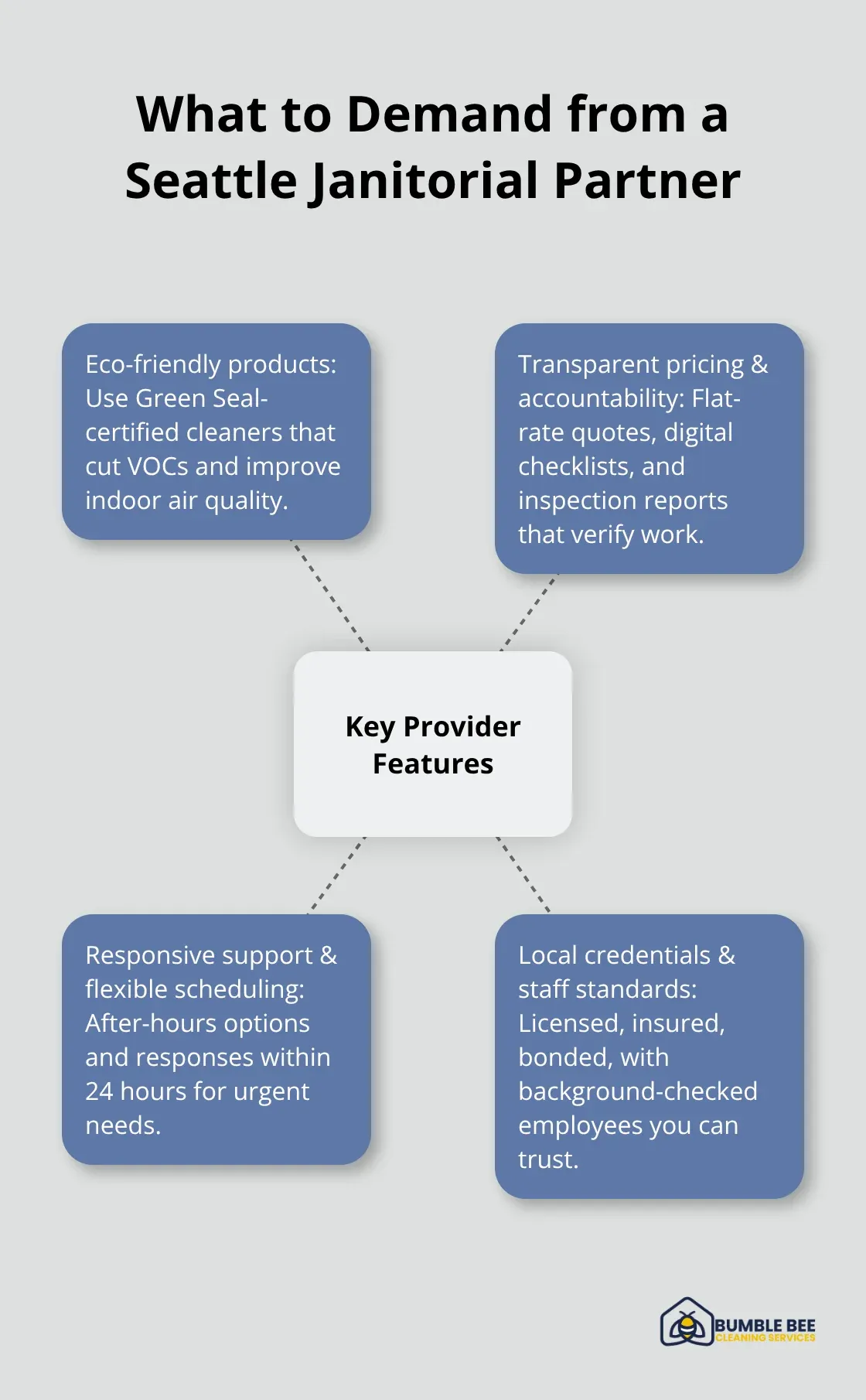
Reject vague pricing. Transparent, flat-rate pricing prevents surprise invoices and hidden fees that derail your budget. Your provider should offer a free on-site walkthrough, provide a no-obligation quote based on your actual facility, and clearly explain what’s included in each service tier. A professional janitorial partner provides digital checklists and inspection reports that prove work completion, not vague promises. You should receive regular communication about what was cleaned, when problems arise, and how they were solved. This documentation creates accountability and gives you confidence that your investment produces real results.
Responsive Support and Flexible Scheduling
Scheduling flexibility separates reliable partners from mediocre contractors. Your business operates on a specific rhythm, and cleaning should adapt to it, not interrupt it. Demand after-hours or early-morning service options, and verify that your provider accommodates last-minute adjustments without penalty. Responsive customer support means someone answers your call or email within 24 hours, not days. When an issue surfaces-a spill that needs immediate attention or a schedule conflict-your janitorial partner should respond quickly and solve the problem without excuses.
Local Credentials and Staff Standards
Verify that your provider is locally licensed, insured, bonded, and employs background-checked staff. This protects your business from liability if something goes wrong and signals that the company takes professionalism seriously. A janitorial service that cuts corners on credentials will cut corners on cleaning too. Your facility and your employees deserve a partner that meets these baseline standards without question.
Final Thoughts
A reliable hygiene schedule protects your business and your people. The investment in consistent business janitorial services in Seattle pays dividends through healthier employees, stronger client relationships, and reduced liability. When your facility stays clean, your team stays focused, and your reputation stays intact.
Selecting the right partner for long-term cleanliness matters more than finding the cheapest option. Your janitorial service provider should understand Seattle’s specific climate challenges, respect your operational schedule, and deliver transparent results through documented accountability. Look for a company that uses eco-friendly products, employs background-checked staff, and responds quickly when issues arise.
We at Bumble Bee Cleaning Services offer a free on-site walkthrough and no-obligation quote to assess your facility and build a schedule that fits your operations without disruption. Contact us today to stop managing cleanliness yourself and start partnering with a team that delivers results.
For more information about our cleaning services in Seattle and Atlanta, or to request a cleaning quote, call or text us at 425-786-1360 or email us at info@qbclean.com
