
Construction dust settles on every surface, and fine particles linger in the air long after the final nail is driven. After construction cleaning in Seattle requires specialized knowledge and equipment that most property owners simply don’t have.
We at Bumble Bee Cleaning Services know that skipping this step leaves you with health hazards, regulatory violations, and a property that’s far from move-in ready. The difference between a construction site and a finished space comes down to professional cleanup.
Why Post-Construction Cleanup Matters
Health Hazards From Construction Residue
Construction debris contains silica dust, asbestos fibers, and lead particles and chemical residues that pose serious respiratory and neurological hazards. The EPA reports that fine dust particles under 10 microns bypass natural lung defenses and lodge deep in respiratory tissue, increasing the risk of silicosis and chronic obstructive pulmonary disease. Seattle’s humid climate compounds this problem: moisture interacts with construction residues, promoting mold growth in damp conditions.
Regulatory Compliance and Legal Liability
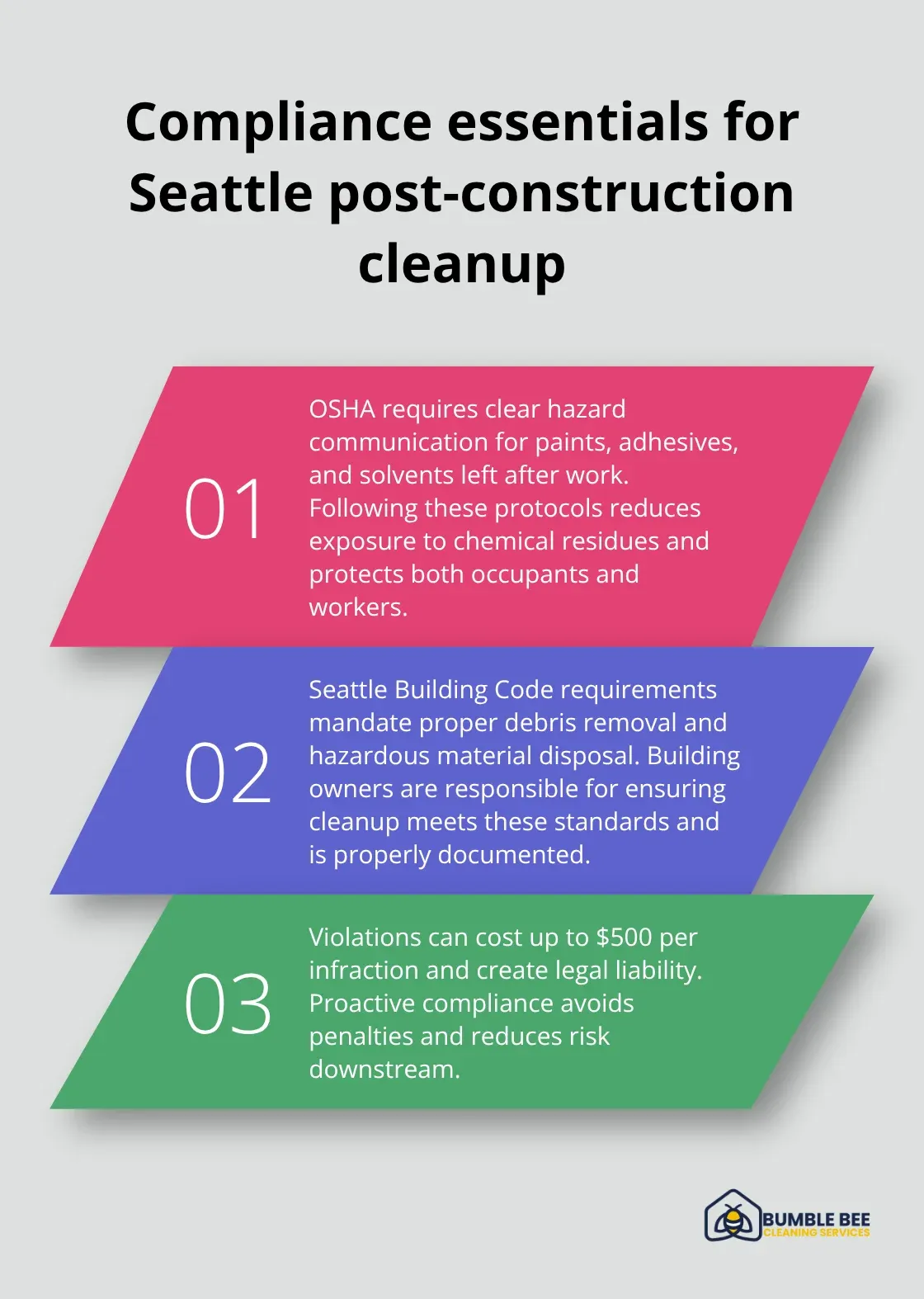
OSHA requires proper hazard communication for all chemical residues, including paints, adhesives, and solvents left behind after work concludes. Skipping professional cleanup exposes occupants to these contaminants and creates liability for building owners who fail to meet Seattle Building Code requirements, which demand proper debris removal and hazardous material disposal. Violations carry penalties up to $500 per infraction, making compliance non-negotiable from both a health and legal standpoint.
Property Value and Market Readiness
First impressions determine whether a property sells quickly or sits on the market. Visible dust, construction debris, and residual odors signal poor maintenance to potential buyers and tenants, directly reducing perceived value and rental rates. Professional teams address critical details like HVAC duct contamination, light fixture residue, and behind-appliance buildup using industrial HEPA vacuums and EPA-registered disinfectants.
Professional post-construction cleaning transforms a debris-filled space into a move-in-ready environment that commands premium pricing. Cutting corners on cleanup jeopardizes your investment and delays occupancy, costing far more than professional remediation would have cost upfront. Understanding what professional post-construction cleaning actually includes helps property owners make informed decisions about their cleanup strategy.
What Professional Post-Construction Cleaning Actually Covers
Industrial Equipment Makes the Difference
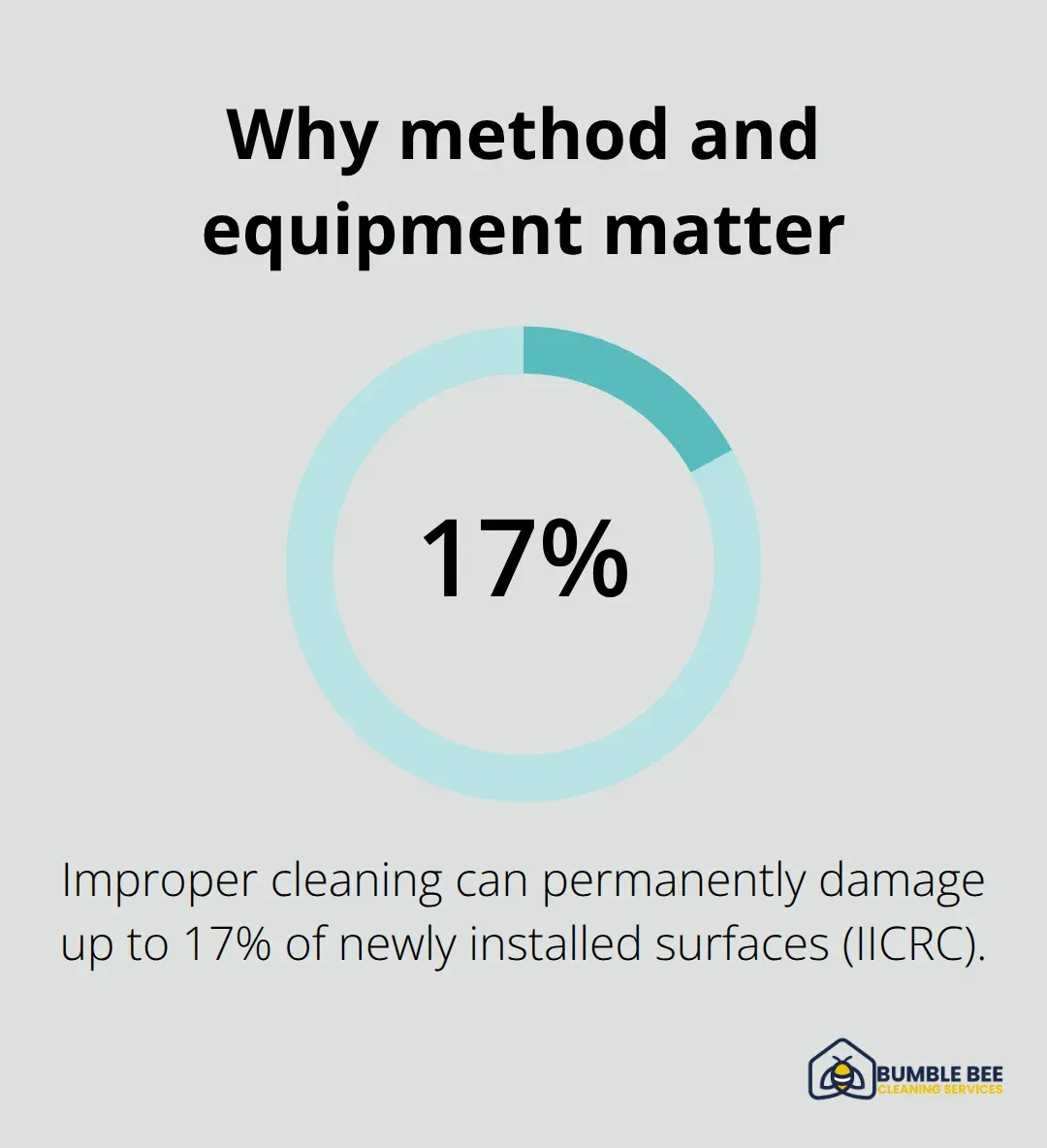
HEPA vacuums remove 99.97% of particles down to 0.3 microns, which is the industry standard for post-construction work. Standard household vacuums recirculate fine dust back into the air, defeating the purpose of cleanup entirely. The IICRC warns that improper cleaning techniques can permanently damage up to 17% of newly installed surfaces, so the equipment matters as much as the method.
The Top-to-Bottom Approach
Dust settles on ceiling fans, inside light fixtures, on HVAC registers, and behind baseboards where occupants won’t see it until it circulates through the space. Professional teams start from the ceiling down, capturing particles before they resettle on cleaned surfaces below. This systematic approach prevents recontamination and ensures thorough removal of hidden debris.
Floor Finishing by Material Type
The approach varies significantly by surface material. Hardwood requires pH-neutral cleaners applied sparingly to avoid water damage, while tile demands warm water with mild detergent and grout cleaning to remove construction residue. Carpets need thorough vacuuming followed by hot water extraction to lift embedded particles effectively.
Paint and Adhesive Removal Techniques
Fresh paint drips and adhesive residues require specific removal methods depending on whether surfaces are sealed or porous. Sealed surfaces respond to warm water and dish soap, while dried paint on delicate finishes needs a plastic scraper followed by a citrus-based remover to avoid surface damage. Each material demands a tailored approach to prevent harm to new installations.
Fixtures, Disinfection, and Moisture Control
Fixtures and fittings collect construction dust inside electrical outlets, on cabinet hardware, and within door frames where standard wiping misses contamination. EPA-registered products eliminate bacteria, viruses, and mold spores on contact. Seattle’s humidity means moisture can promote mold growth within 24 to 48 hours if residual dampness remains, so moisture-prone areas like bathrooms and kitchens require dehumidifiers and antimicrobial treatments. The National Association of Home Builders reports that professional teams typically complete thorough post-construction sanitization in 4 to 6 hours using industrial equipment, while DIY cleanup often takes 20+ hours and still misses hidden contamination. Selecting the right cleaning partner determines whether your property truly meets move-in-ready standards.
How to Choose the Right Post-Construction Cleaning Partner
Verify Certifications and Industry Standards
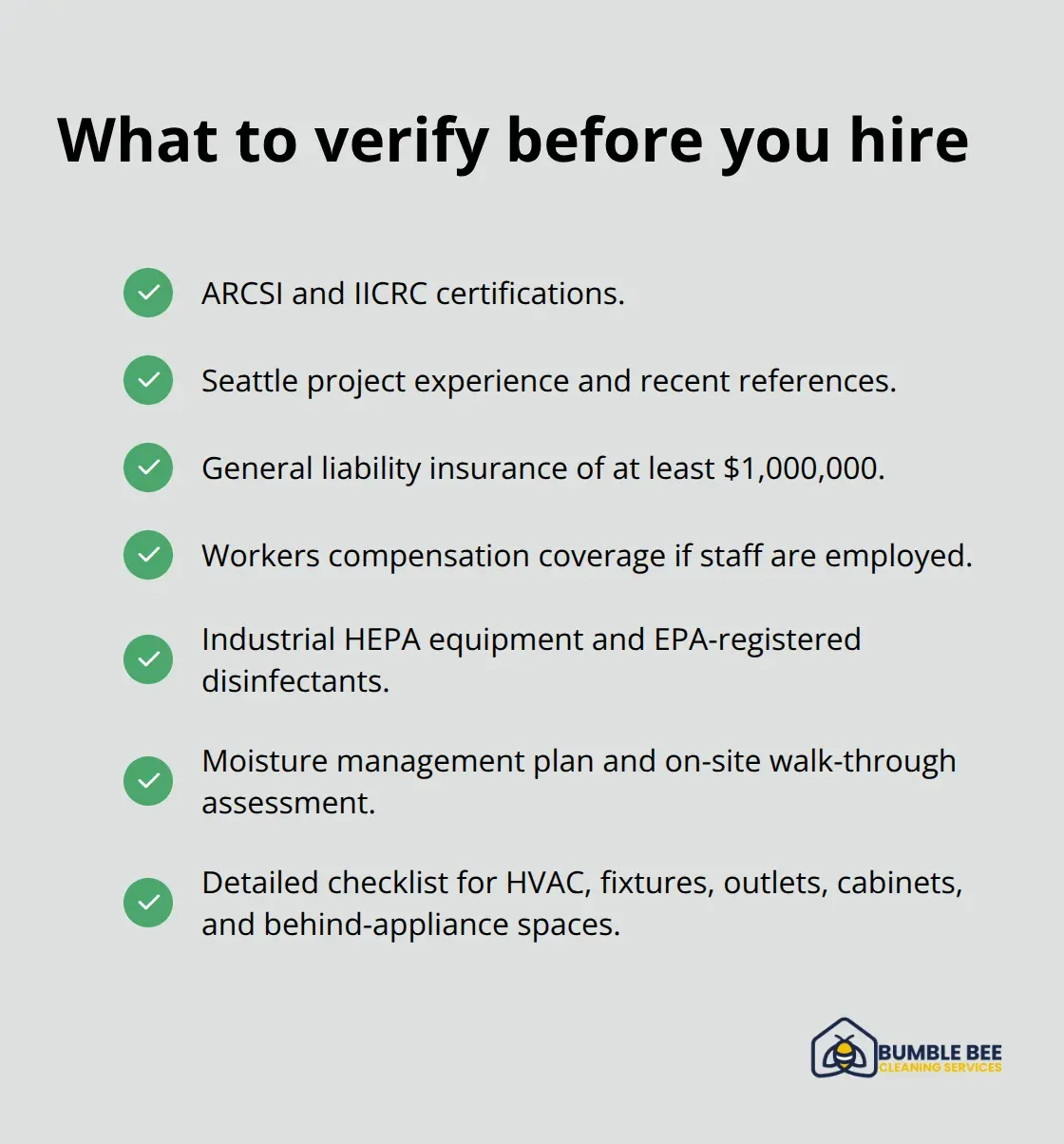
Selecting a post-construction cleaning partner requires more than finding the lowest quote. The team you hire either protects your investment or creates hidden problems that surface months later. Start with certifications from recognized industry bodies like ARCSI or IICRC, which validate that methods follow established standards for contamination removal and surface protection. These certifications matter because post-construction cleaning involves hazardous materials and equipment that demand specialized training. We at Bumble Bee Cleaning Services hold certifications from ARCSI and IICRC, meaning our team understands the technical standards and Seattle-specific challenges that affect post-construction results.
Assess Local Experience and References
Ask directly whether the company has completed projects in Seattle specifically, since local experience means understanding how our climate and building codes affect cleanup protocols. Request references from three recent projects of similar scope and contact those clients to ask about dust residue after occupancy, whether moisture problems emerged, and whether the team met the promised timeline. These conversations reveal whether a company truly delivers move-in-ready results or simply completes surface-level work.
Confirm Insurance and Equipment Standards
Insurance and liability coverage are non-negotiable. Request proof of general liability insurance with minimum coverage of 1 million dollars and workers compensation if they employ staff. A company without proper insurance transfers all risk to you if equipment damages new finishes or a worker gets injured on your property. Examine whether a company uses industrial HEPA equipment and EPA-registered disinfectants, since these tools directly determine whether fine particles and chemical residues actually get removed versus pushed around.
Evaluate Moisture Management and Assessment Practices
Ask about the approach to moisture management in bathrooms and kitchens, since Seattle’s humidity creates conditions where mold can establish within 24 to 48 hours if residual dampness remains after cleanup. Avoid companies that quote flat rates without seeing your space, because project scope varies dramatically based on construction type, square footage, and material finishes. A thorough walk-through assessment determines realistic pricing and prevents surprise charges later.
Demand Detailed Checklists for Hidden Contamination
The company you select should provide a detailed checklist covering HVAC ducts, light fixtures, outlet covers, cabinet interiors, and behind-appliance spaces where hidden dust accumulates. This level of specificity separates professionals who understand what move-in ready actually means from those who simply sweep surfaces and call it done.
Final Thoughts
After construction cleaning in Seattle transforms a debris-filled property into a space ready for immediate occupancy. The difference between cutting corners and investing in professional cleanup determines whether your property commands premium value or sits on the market with lingering dust and hidden contamination. Construction residue does not disappear on its own, and the health hazards, regulatory violations, and property damage that result from inadequate cleanup far exceed the cost of doing it right from the start.
Professional post-construction cleaning protects your investment by removing silica dust, chemical residues, and moisture that compromise indoor air quality and surface longevity. Industrial HEPA equipment, EPA-registered disinfectants, and systematic top-to-bottom protocols eliminate the hidden contamination that DIY efforts consistently miss. The IICRC data showing that improper cleaning damages up to 17% of newly installed surfaces underscores why method and equipment matter as much as effort.
We at Bumble Bee Cleaning Services bring specialized expertise and industry certifications to every post-construction project in Seattle. Our team understands how local humidity, building codes, and material finishes affect cleanup outcomes, and we deliver move-in-ready results that protect occupants and preserve your investment from day one.
For more information about our cleaning services in Seattle and Atlanta, or to request a cleaning quote, call or text us at 425-786-1360 or email us at info@qbclean.com
