
Moving out of your Lynnwood rental? Your security deposit depends on passing that final inspection. We at Bumble Bee Cleaning Services know landlords scrutinize every corner, and one missed detail can cost you hundreds.
This guide walks you through essential move out inspection tips so you catch problems before your landlord does. You’ll learn what to document, what to clean, and when professional help actually saves you money.
What to Document Before Your Landlord Inspects
Capture Every Room with Photos and Video
Start your walk-through on move-out day with your phone camera ready. Take photos and video of every room in natural daylight, capturing corners, baseboards, closets, and appliance interiors. This documentation protects you if your landlord later claims damage you didn’t cause. Focus on areas that typically show wear: light switches, door frames, carpet edges, and cabinet interiors. Many Lynnwood landlords photograph units before tenants move in, so compare those original photos to your current ones. If damage existed when you arrived, you have proof.
Test All Systems and Fixtures
Test every appliance, faucet, and light switch while recording. Turn on the oven, dishwasher, and washing machine to confirm they work. Run water in every sink and shower to check for leaks or drainage problems. Open and close all windows and doors to verify they operate smoothly. Document thermostat settings and take photos of the meter readings if applicable. This video evidence matters because landlords in Washington state must return security deposits within 30 days, and documented proof of your property’s condition strengthens your case if disputes arise.
Distinguish Normal Wear from Damage
Normal wear and tear differs from damage landlords can deduct from deposits. Faded paint, minor scuffs on walls, and light carpet wear fall into normal wear territory. Holes larger than a nail hole, deep carpet stains, broken fixtures, and missing appliance components do not. If you spot genuine damage that’s your responsibility, address it immediately rather than hoping your landlord overlooks it. Lynnwood rentals often have older carpet that shows wear quickly, so photograph carpet condition thoroughly, including any stains or burns. Missing blinds, damaged door handles, or cracked tiles warrant close-up photos showing the full extent.
Your video walk-through serves as your strongest defense against unfair deductions, so invest 20 to 30 minutes capturing every detail before you hand over keys. Once you’ve documented the current state, you’ll know exactly which areas need attention before inspection day arrives.
What Landlords Actually Inspect During Move-Out
Lynnwood landlords follow a predictable inspection pattern, and carpet condition tops their list. Stains from food, beverages, or pet accidents trigger deposit deductions faster than any other issue. Burns from cigarettes or cooking rank second, particularly in older units where carpet replacement costs landlords significant money. Odors present a trickier problem because they’re subjective, yet many Washington landlords document them as grounds for deduction.
Pet Odors and Carpet Treatment
Pet odors especially concern landlords since they indicate damage requiring professional remediation. If you own pets, address carpet smells aggressively before inspection day. Steam cleaning removes surface odors but rarely eliminates deep-set pet smells trapped in carpet padding, so enzymatic treatments specifically designed for pet urine work better. Test the carpet by pressing a white cloth against suspect areas and holding it for 30 seconds to detect hidden odors your nose has become accustomed to.
Wall Damage and Paint Condition
Walls reveal how carefully you maintained the rental. Nail holes larger than a quarter-inch diameter fall outside normal wear and represent damage landlords deduct for. Scuffs from furniture, marks from tape, and light crayon marks from children typically qualify as normal wear, but gouges or dents do not. Paint chipping from age is normal wear, but paint damage you caused is your responsibility.
If walls show marks, use a magic eraser to test removal before inspection. For holes, fill them with spackling compound matching your wall color, sand smooth, and paint over with matching paint from a hardware store. Lynnwood rental units often have flat or eggshell finish paint, which you can purchase in sample quarts for under $10. Wall damage deductions average $150 to $400 per room depending on repair scope, so investing an hour in wall repairs saves significantly.
Appliance and Fixture Standards
Landlords expect appliances to function as they did when you moved in. A dishwasher that won’t drain, an oven that doesn’t heat evenly, or a refrigerator that leaks all trigger deductions. Clean inside appliances thoroughly, removing food debris, grease buildup, and rust. The oven interior should be spotless, microwave vents clear, and refrigerator coils dust-free.
Faucets must flow without leaks, and fixtures shouldn’t show hard water stains or corrosion. Test everything twice before your landlord arrives because a $20 repair during your tenancy costs far less than a $300 deduction from your deposit. Bathroom fixtures particularly matter since water damage claims can exceed $1,000 if landlords suspect you caused leaks. Once you’ve addressed these three critical areas, you’ll move into the deep cleaning phase that actually removes what inspectors find most objectionable.
Deep Cleaning That Actually Removes What Inspectors Find
Attack Baseboards and High-Traffic Areas
Baseboards and corners collect dust, pet hair, and grime that casual cleaning misses entirely, and landlords inspect these areas specifically because they reveal how thoroughly you maintained the unit. Vacuum baseboards with a crevice attachment, then wipe them with a damp microfiber cloth to remove dust buildup. High-traffic hallways, entryways, and kitchen areas show the most wear, so spend extra time there vacuuming in multiple directions to lift embedded dirt from carpet fibers.
Treat Carpet Stains and Odors Aggressively
Use a carpet stain remover on visible marks, applying it, letting it sit for 10 minutes, then blotting repeatedly rather than rubbing, which damages fibers further. For stubborn stains, rent a carpet cleaning machine from a hardware store for around $50 to $75 per day-far less than the $200 to $400 landlords typically deduct for carpet damage. Focus the machine on high-traffic zones, pet accident areas, and anywhere you notice discoloration.
Pet odors require aggressive treatment since enzymatic cleaners for pet urine break down the compounds that cause persistent smells, unlike standard cleaners that only mask odors temporarily. Apply enzymatic treatment to any area where accidents occurred, saturate the carpet thoroughly, wait 24 hours, then vacuum.
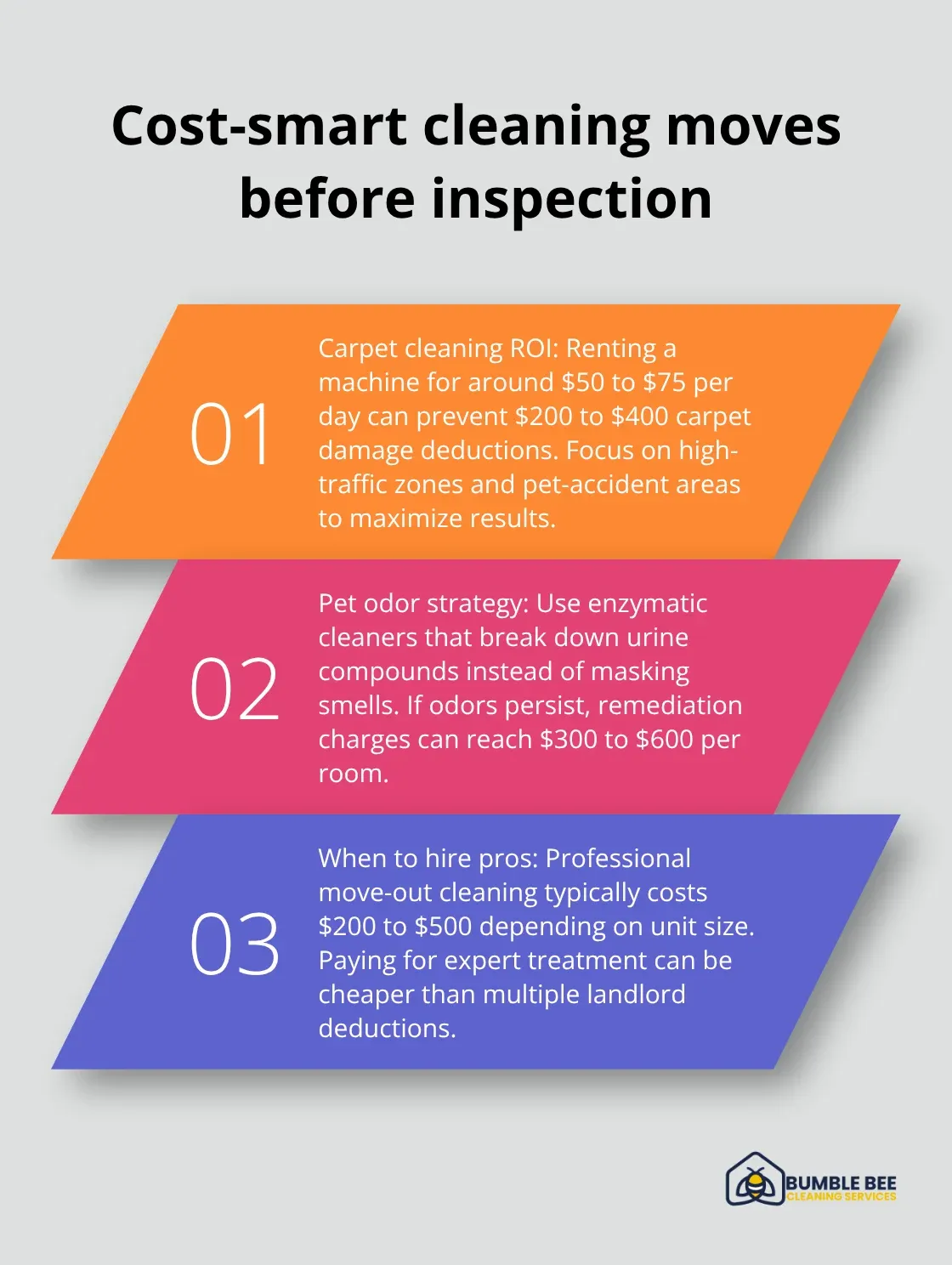
If your rental has a pet odor problem, professional deep cleaning becomes financially sensible since landlords in Washington can deduct for odor remediation, which costs $300 to $600 per room.
Clean Inside Appliances and Cabinets Thoroughly
Inside appliances and cabinets matter tremendously because landlords open every door and drawer during inspection. Clean oven interiors completely, removing baked-on food and grease with a commercial oven cleaner, then wipe thoroughly to eliminate chemical residue. Wipe down refrigerator coils underneath or behind the unit since dust accumulation indicates poor maintenance.
Inside cabinets should be empty and wiped clean of crumbs, grease splatters, and shelf liner residue. Dishwasher filters need cleaning and the spray arms should be checked for clogs. These details take time but represent the difference between recovering your full deposit and losing hundreds.
Polish Fixtures and Windows
Hard water stains on fixtures need removal with white vinegar and a scrub brush, and grout lines benefit from a toothbrush and oxygen-based cleaner. Light switches and door handles accumulate fingerprints and grime, so wipe them down with a disinfectant cloth. Windows should be spotless inside and out since landlords notice streaks and accumulated dust immediately.
Schedule your deep cleaning for three to five days before inspection, giving time for any lingering chemical smells to dissipate and for you to address any spots you missed. When pet damage or heavy grime requires professional equipment and expertise, Bumble Bee Cleaning Services handles move-out cleaning for situations like these. Professional cleaning typically costs $200 to $500 depending on unit size, which protects your security deposit far more effectively than attempting complex treatments yourself.
Final Thoughts
You’ve now walked through the move-out inspection tips that protect your security deposit in Lynnwood. The foundation is documentation-those photos and videos you capture on move-out day become your strongest defense if your landlord later disputes deductions. Carpet stains, wall damage, and appliance condition represent the three areas where landlords most frequently deduct money, so addressing these before inspection day matters far more than general tidying.
Investing a few hours in deep cleaning, treating pet odors with enzymatic products, and filling wall holes costs you nothing beyond supplies under $50. A landlord deduction for carpet damage alone runs $200 to $400, and wall repairs add another $150 to $400 per room. Pet odor remediation that landlords charge for reaches $300 to $600 per room-your time spent cleaning returns real money to your pocket.
Professional move-out cleaning makes financial sense when pet damage is extensive, carpet stains resist home treatment, or you lack time before inspection. We at Bumble Bee Cleaning Services specialize in move-out cleaning services with 11 years of experience and a 100% quality service guarantee. Professional cleaning typically costs $200 to $500 depending on unit size-money well spent when it prevents larger deductions.
For more information about our cleaning services in Seattle and Atlanta, or to request a cleaning quote, call or text us at 425-786-1360 or email us at info@qbclean.com
