
Moving out of your Seattle home comes with a long checklist, and cleaning often gets pushed to the bottom. The reality is that Seattle move out cleaning can make or break your security deposit return and set the tone for the next occupants.
We at Bumble Bee Cleaning Services know that moving is stressful enough without worrying about whether you’ve cleaned every corner properly. This guide walks you through what matters most, what mistakes to avoid, and when it makes sense to bring in professionals.
Why Your Move-Out Cleaning Directly Impacts Your Money and Next Steps
Security Deposits and Washington State Law
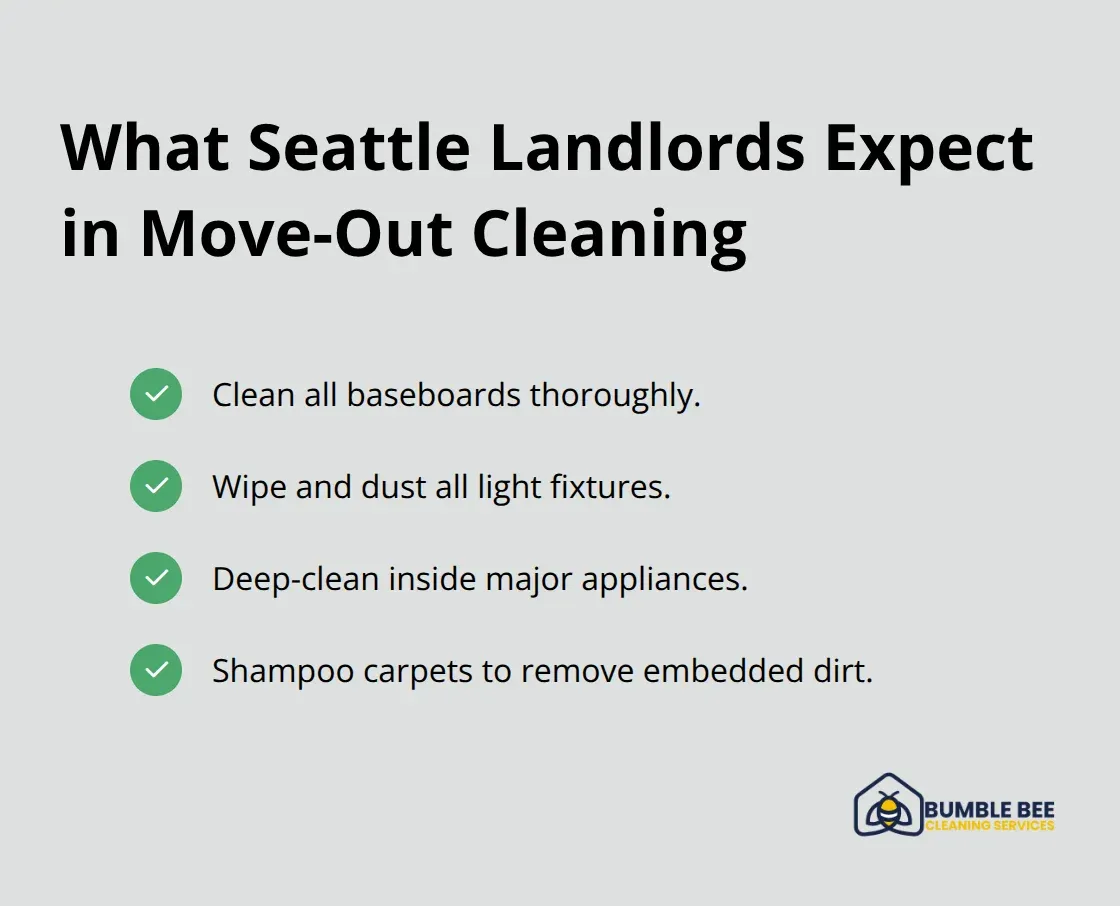
Your security deposit in Washington State sits in a trust account and landlords must return it within 30 days of move-out, minus only documented damages and cleaning costs that exceed normal wear and tear. The Washington Residential Tenancy Act limits deductions to situations where the unit is not left in reasonably clean condition. This means professional-grade cleaning isn’t optional if you want your full deposit back-it’s a financial necessity. Most Seattle landlords expect move-out cleaning to include baseboards, light fixtures, inside appliances, and carpet shampooing. If you leave these undone, expect deductions of $300 to $800 from your deposit, which costs far more than what professional cleaning runs upfront.
The Real Cost of Incomplete Cleaning
The difference between DIY cleaning and professional results often determines whether you recover $1,200 or $1,500 from a $1,500 deposit. Landlords scrutinize every corner, and missed spots give them justification to withhold money. Stains on carpets, grime buildup on appliances, and dust in vents signal neglect and trigger deductions that add up quickly. One overlooked area-like the inside of the refrigerator or behind kitchen cabinets-can cost you $150 to $300 in deductions alone.
Health, Reputation, and Home Sales
Homes that aren’t properly cleaned after move-out harbor dust mites, allergens, and bacteria that affect indoor air quality for incoming residents. If you’re selling rather than renting, a thoroughly cleaned home sells faster. Move-in ready homes spend about 50 days on the market. When you hand over your keys, you leave behind evidence of how you maintained the property. Future buyers and landlords notice everything, and that first impression shapes their willingness to move forward.
What Professional Cleaning Protects
The investment in proper cleaning pays for itself the moment your landlord approves the return of your full deposit or a buyer decides your home is the one they want. Professional cleaners know which products work on specific surfaces without causing damage (a mistake that can cost you more in deductions). They reach areas most people miss during a rushed DIY effort. This protection extends beyond money-it safeguards your rental reference and your reputation as a tenant or seller.
What Actually Needs to Happen in Every Room
Kitchen Cleaning That Protects Your Deposit
Start with the kitchen because it determines whether your landlord approves your deposit return or withholds $400 to $600. Remove all refrigerator shelves and wipe down every surface, including the walls and the back panel where dust settles.
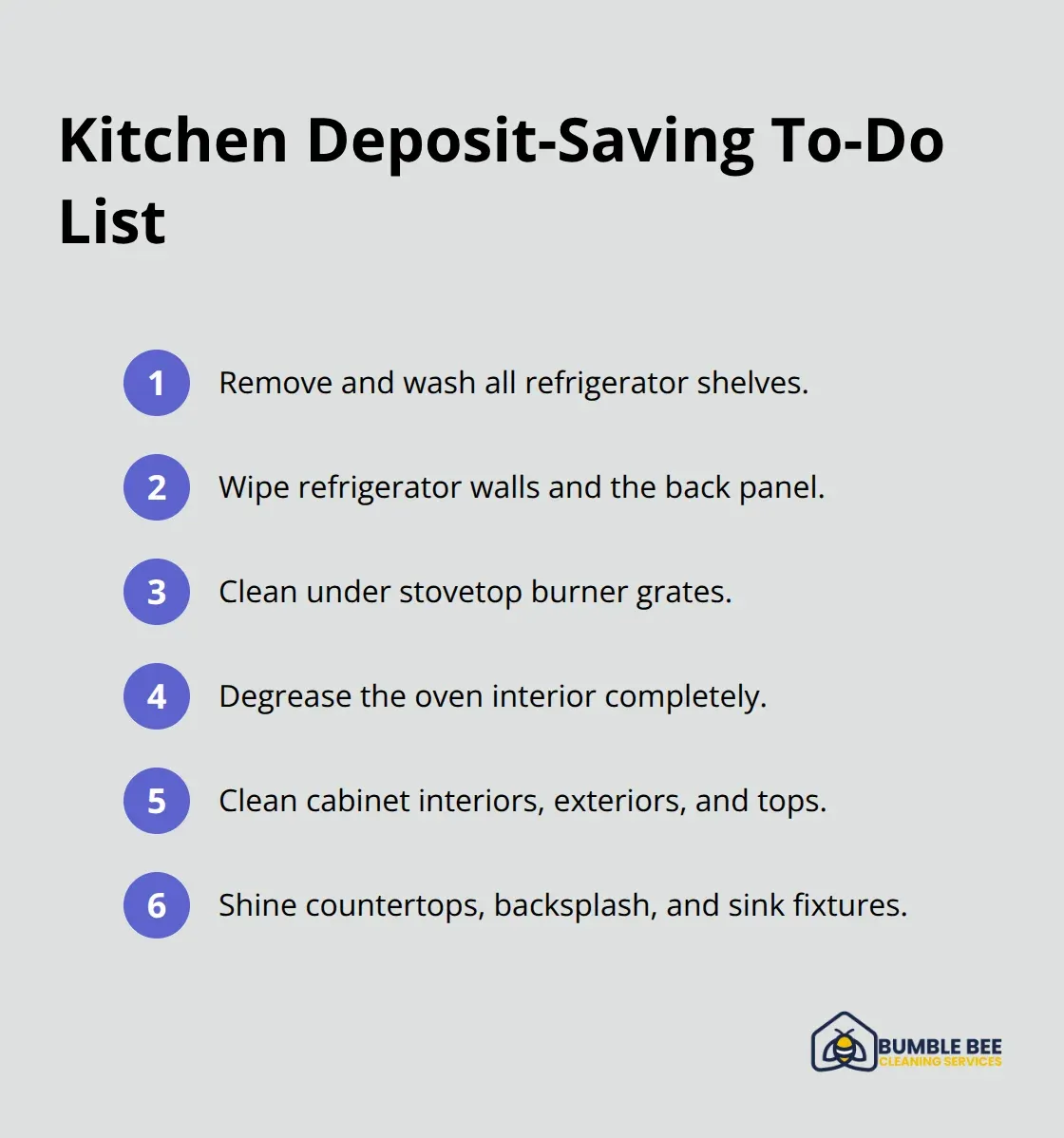
Take out burner grates from the stovetop and clean underneath them, where grease and food particles accumulate over months or years. Degrease oven interiors completely, not just wipe them down. Clean cabinet interiors and exteriors, especially the tops where dust layers thick enough to trigger landlord complaints. Wipe countertops, backsplash, and sink fixtures until they shine without streaks or mineral deposits. Landlords inspect these areas intensely because they signal whether you maintained the property or let it deteriorate.
Bathrooms and Living Spaces
Scrub tile grout, clean behind and under the toilet, and remove soap scum from shower walls and doors. Vacuum under furniture in bedrooms and living areas where dust bunnies hide, wipe down light switches and door handles, and clean inside closets from top to bottom. Windows inside and out, windowsills, and frames matter more than most people realize, especially in Seattle where rain leaves mineral deposits and grime buildup. Wipe baseboards throughout the entire home because they accumulate dust that catches every landlord’s eye during their final walkthrough. Skip baseboards and expect a $200 to $400 deduction justified by landlord photos documenting neglect.
Floors, Appliances, and Fixtures
Carpet shampooing removes embedded dirt that vacuuming alone cannot touch, and most landlords expect this as standard move-out practice. Remove stains from pets, spills, or traffic patterns using professional-grade stain removal because store-bought products often set stains permanently into fibers. Deep clean hard floors, whether laminate or tile, to remove grime from grout lines and floor edges where mop water never reaches during regular cleaning. Clean appliance interiors like the dishwasher, microwave vents, and washing machine drums because food particles and mold grow in these hidden spaces. Wipe light fixtures, ceiling fans, and vents to remove dust layers that make the home look poorly maintained. Clean door frames and doors themselves because fingerprints and dust create a negative first impression. These details (baseboards along floors, appliance interiors, and fixture cleaning) determine whether landlords approve your deposit return or find justification for deductions totaling $300 to $800.
Time and Effort Reality
Professional deep cleaning for move-outs typically takes 3 to 4 hours for a standard home, and most people underestimate this dramatically. The financial return justifies the expense when you recover your full deposit instead of losing hundreds in deductions from incomplete cleaning. Hidden areas like behind appliances, inside vents, and under baseboards demand attention that rushed DIY efforts miss. These overlooked spots (often photographed by landlords during final inspections) become the basis for deposit withholding that exceeds what professional cleaning would have cost upfront. Understanding what landlords actually look for during move-out inspections reveals why some tenants recover their full deposit while others lose $500 or more.
Where Seattle Move-Out Cleaning Actually Goes Wrong
Hidden Areas That Landlords Photograph
Most Seattle homeowners fail at move-out cleaning not because they lack effort but because they focus on visible surfaces while ignoring the areas landlords photograph during final inspections. Baseboards collect months of dust and pet hair that vacuuming never reaches, yet landlords document these with photos as justification for $200 to $400 deposit deductions. Vents, ceiling fan blades, and the tops of door frames accumulate thick dust layers that signal poor maintenance to anyone inspecting the property.
Behind and underneath refrigerators, stoves, and dishwashers hide grease buildup and food debris that professional inspectors specifically look for because these spots reveal whether you actually cleaned or simply wiped down visible areas. Light switch plates, door handles, and window tracks get overlooked despite being the first things new occupants touch and notice. The inside of kitchen cabinets, bathroom medicine cabinets, and closet shelves matter far more than most people realize because landlords open every cabinet during move-out walkthroughs.
Seattle’s humidity means mold and mildew grow in shower corners, around toilet bases, and inside sink cabinets if moisture is not controlled, and landlords photograph these areas specifically. One missed baseboard section or one grimy vent can trigger a $300 deduction that exceeds what professional cleaning would have cost.
Time Estimates and Realistic Effort
Time estimates prove wildly inaccurate for most DIY move-out cleaners because they underestimate how long proper cleaning actually takes. A standard Seattle home requires 3 to 4 hours of focused cleaning work, yet most people allocate 4 to 6 hours total while juggling packing, utility transfers, and final walkthroughs. This mismatch between estimated and actual time leads to incomplete work and missed deposit recovery.
Product Mistakes That Cost Hundreds
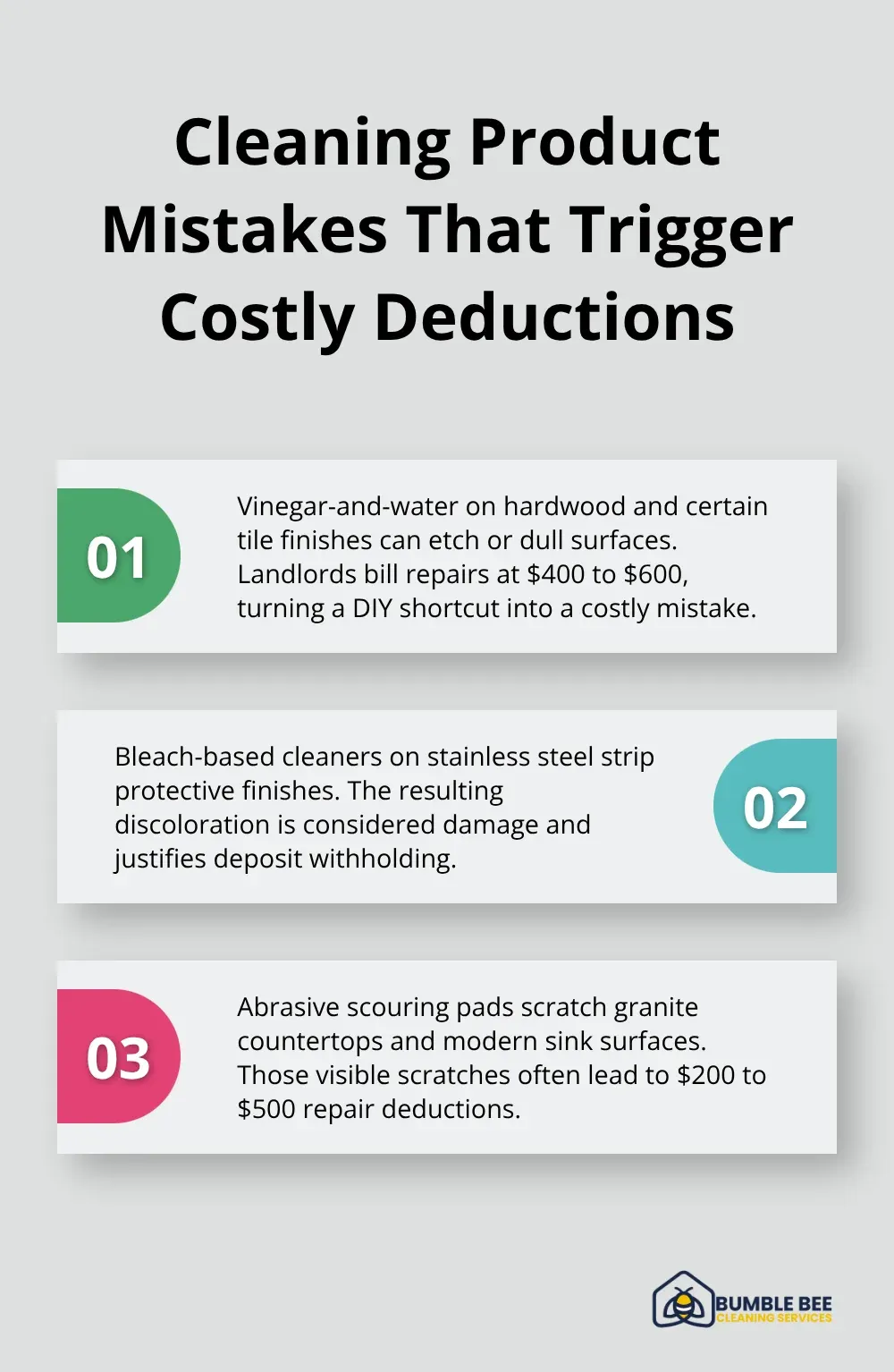
Wrong cleaning products create permanent damage that landlords charge for rather than overlook. Vinegar and water solutions damage hardwood floors and certain tile finishes, costing $400 to $600 to repair. Bleach-based cleaners strip finishes from stainless steel appliances and leave permanent discoloration. Abrasive scouring pads scratch granite countertops and modern sink surfaces, resulting in $200 to $500 repair deductions.
Using the wrong product on grout lines, laminate flooring, or painted walls means landlords document damage with photos and withhold deposit money for repairs. Professional cleaners understand which products work on specific surfaces without causing damage, and this knowledge alone prevents costly mistakes. The financial protection from using correct products and reaching hidden areas often exceeds the upfront cost of professional move-out cleaning by hundreds of dollars when you calculate avoided deposit deductions and repair charges.
Final Thoughts
Moving out demands attention to details that most people miss, and the financial stakes are too high to leave Seattle move out cleaning to chance. Your time during a move fractures between packing, coordinating utilities, scheduling inspections, and managing logistics that demand your attention. Professional cleaning removes one major stressor from an already overwhelming transition while protecting your deposit through thorough work that DIY efforts consistently fail to complete.
Landlords photograph baseboards, vents, appliance interiors, and cabinet corners specifically because these areas reveal whether cleaning was thorough or rushed. Missing even one of these spots gives landlords documented justification to withhold $200 to $400 from your deposit, which costs far more than professional cleaning upfront. We at Bumble Bee Cleaning Services have spent 11 years helping Seattle homeowners recover their full security deposits by handling the work that rushed DIY efforts miss.
We use eco-friendly products and professional equipment that reach areas standard household tools cannot touch, eliminating the risk of product damage that costs you hundreds in repair deductions. The investment in professional move-out cleaning pays for itself the moment your landlord approves your deposit return instead of withholding money for incomplete work. Contact Bumble Bee Cleaning Services to schedule your move-out cleaning and protect your deposit while simplifying your transition.
For more information about our cleaning services in Seattle and Atlanta, or to request a cleaning quote, call or text us at 425-786-1360 or email us at info@qbclean.com
