
Paint overspray and splatter left behind during move-outs can cost you hundreds in security deposit deductions. Most renters don’t realize that improper removal attempts often damage walls, making the problem worse.
We at Bumble Bee Cleaning Services have removed paint splatter from hundreds of Seattle rental properties. This guide shows you exactly what professional crews do to restore your space and protect your deposit.
What Makes Paint Splatter So Hard to Remove
Paint Type and Surface Complexity
Paint splatter that lands on walls, trim, baseboards, and flooring during move-outs comes in two main forms: latex-based and oil-based paints. Latex paint splatter appears more frequently in residential settings and reacts differently to solvents than oil-based varieties. The real difficulty lies not just in identifying paint type-it requires understanding that each surface material demands a completely different removal strategy. Drywall absorbs paint differently than vinyl, metal trim, or concrete floors. Water alone cannot touch dried latex paint, and aggressive chemicals like acetone permanently damage vinyl windows or plastic baseboards. Many renters attempt removal with whatever cleaner sits under their sink, unknowingly creating gouges, discoloration, or stripped finishes that worsen the damage.
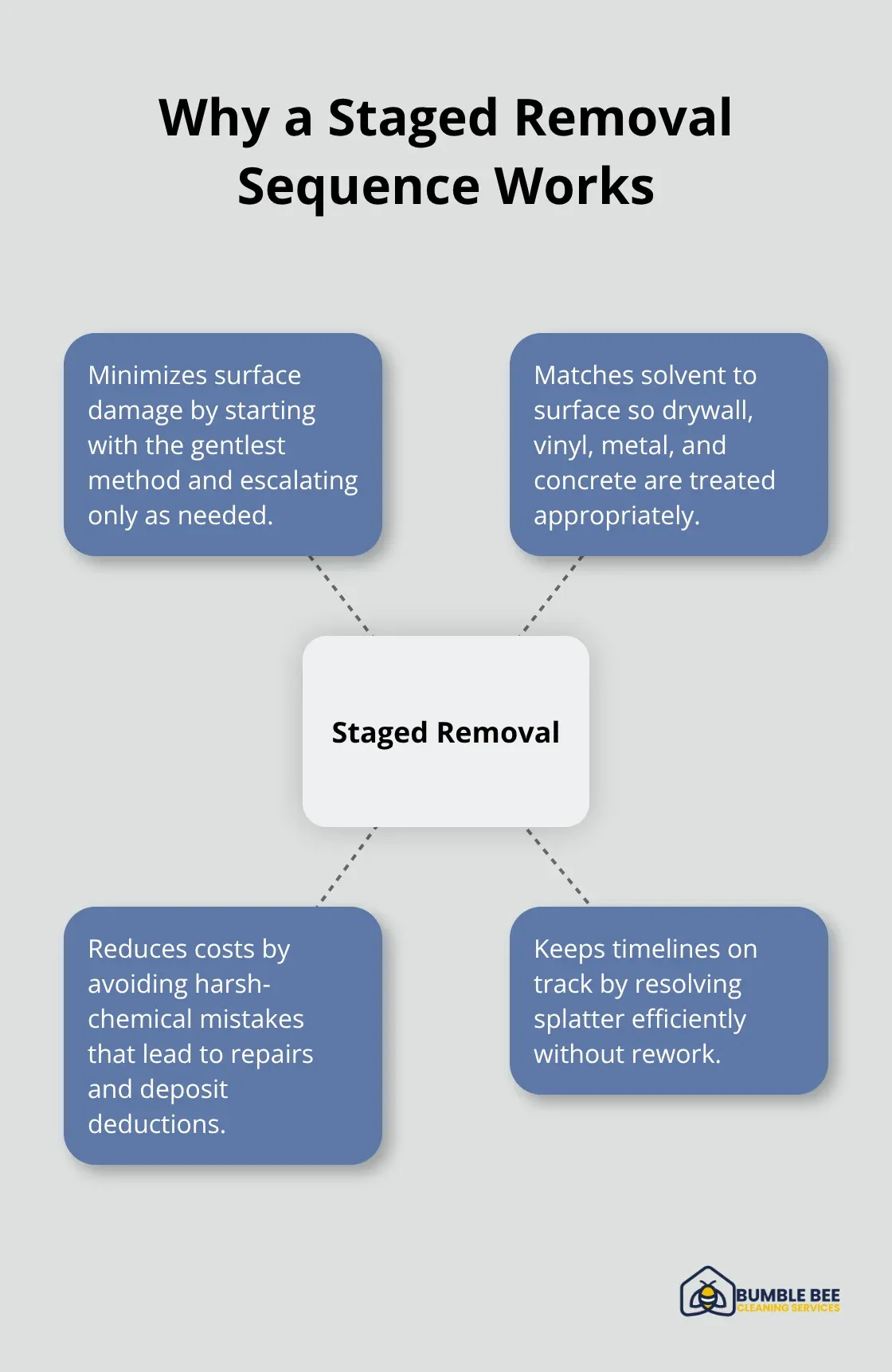
Professional crews follow a staged approach that prevents surface destruction. They start with water and soap, then progress to milder cleaners like Krud Kutter before moving to rubbing alcohol or denatured alcohol. Skipping these steps or jumping straight to harsh solvents causes DIY attempts to fail repeatedly. The surface type dictates solvent choice-latex paint removal strategies differ significantly between vinyl, metal, and concrete surfaces.
Financial Impact on Your Security Deposit
Paint splatter creates substantial financial consequences in Seattle move-outs. Landlords routinely deduct paint-related cleaning from security deposits when damage exceeds normal wear and tear. Washington State law requires landlords to deduct money from security deposits to cover damage to the unit beyond normal wear and tear and excessive cleaning costs. Washington State law requires landlords to provide itemized accounting of all deductions, but you must document pre-existing conditions and dispute unreasonable charges. Normal wear and tear should never be charged, yet distinguishing splatter from normal wear requires photographic evidence from both move-in and move-out inspections. Taking close-up photos during your pre-move-out inspection establishes what damage actually exists and protects your deposit claim.
Timeline Delays and Walkthrough Issues
Moving timelines suffer equally when paint splatter remains unaddressed. If splatter isn’t properly removed before the final walkthrough, landlords may withhold your entire deposit pending professional repainting. This delay can hold your deposit return hostage for weeks or months. Professional removal crews complete the job in hours, not days, ensuring your final walkthrough happens on schedule and your deposit dispute never begins. Understanding these removal challenges explains why professional intervention becomes the most cost-effective choice for Seattle renters facing paint splatter during move-outs.
How Professional Crews Identify and Remove Paint Splatter
Assessing Paint Type and Surface Material
Professional paint splatter removal starts with identifying exactly what you’re dealing with. Latex paint dominates residential move-outs, and it behaves completely differently than oil-based paint when exposed to solvents. Latex paint splatter on drywall requires a gentler approach than the same splatter on vinyl trim or concrete floors. Surface material matters more than most people realize. Vinyl windows and plastic baseboards suffer permanent damage from acetone, yet drywall can tolerate stronger solvents. Metal trim responds better to rubbing alcohol, while concrete floors handle mechanical removal with a wire brush on a drill at low speed. Professional crews physically inspect the splatter under natural light to determine paint type and surface composition before selecting any removal method. This assessment takes minutes but prevents hours of wasted effort and surface damage.
The Staged Removal Sequence
Professional crews follow a rigid removal sequence that prevents surface destruction. They start with water and soap, allowing time for the mixture to soften the paint. If that fails, they apply Krud Kutter and let it sit for approximately 15 minutes before wiping. Many splatter spots dissolve at this stage, eliminating the need for stronger chemicals. Rubbing alcohol (isopropyl) removes latex paint completely and quickly on most surfaces when applied and allowed to sit briefly.
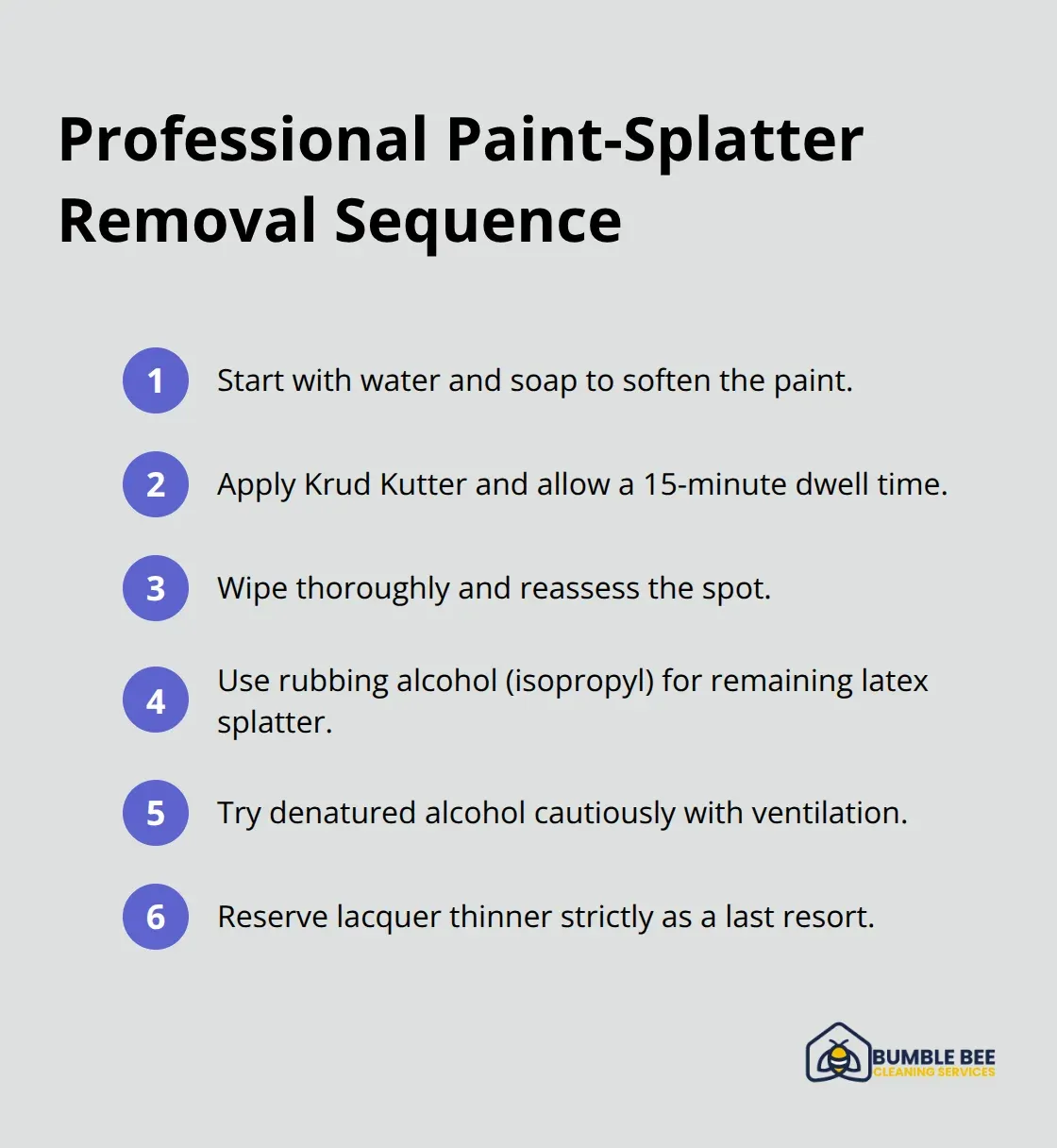
Denatured alcohol works similarly but carries stronger fumes and health risks. Professional crews reserve these options for stubborn spots only. Lacquer thinner remains a last resort because it damages surfaces and poses significant health hazards.
Combining Solvents with Mechanical Action
Mechanical action paired with solvents produces better results than solvents alone. A magic eraser works effectively on painted drywall surfaces for smaller splatter spots. On concrete, a low-speed wire wheel on a drill physically lifts dried paint without gouging the floor. Professional crews never skip the early-stage methods and jump straight to harsh solvents. They test their chosen solvent on a hidden area first, verifying it won’t strip paint or discolor the surface. This staged approach protects your walls while removing the splatter completely, which is why DIY attempts so often fail and create additional damage that costs far more to repair than professional removal would have cost initially. Understanding these removal techniques explains why professional intervention becomes necessary when paint splatter threatens your security deposit and move-out timeline.
Why Professional Removal Prevents Expensive Mistakes
The Cost of DIY Solvent Errors
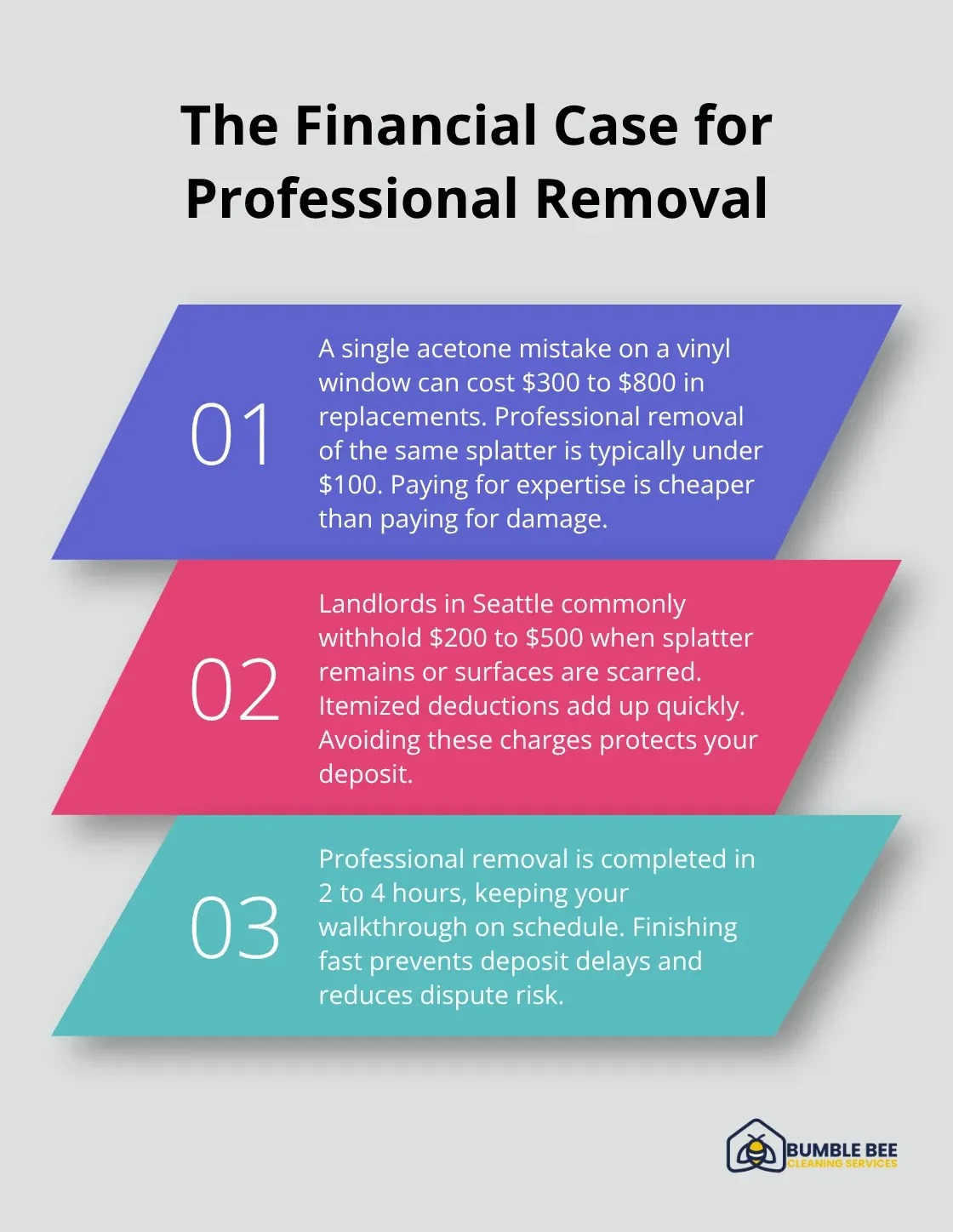
DIY paint splatter removal creates financial disasters that far exceed the cost of hiring professionals. When renters use improper solvents or aggressive mechanical methods, they strip paint from walls, leave permanent discoloration on trim, or damage vinyl surfaces beyond repair. A single mistake with acetone on a vinyl window costs $300 to $800 in replacement expenses, yet professional removal of that same splatter costs under $100. Seattle landlords document these additional damages during move-out walkthroughs and deduct repair costs from your security deposit. Washington State law permits landlords to withhold deposit funds for damage beyond normal wear and tear, and incorrectly removed paint splatter qualifies as tenant-caused damage. You end up paying twice: once for the failed removal attempt and again for the repairs your mistake created.
Why Professional Assessment Protects Your Surfaces
Professional crews eliminate this risk entirely because they know exactly which solvent works on which surface without causing secondary damage. They test solutions on hidden areas before full application, ensuring your walls emerge clean and unharmed. This assessment phase (which takes only minutes) prevents hours of wasted effort and surface damage that compounds your financial liability. Professionals understand that latex paint on drywall requires different treatment than the same splatter on vinyl trim or concrete floors. They identify paint type and surface composition before selecting any removal method, a step that DIY attempts skip entirely. This knowledge separates successful removal from costly mistakes that landlords later document and charge against your deposit.
Deposit Protection Through Professional Documentation
Getting your full security deposit back depends entirely on presenting walls that meet move-out standards without splatter or removal damage. Landlords in Seattle routinely withhold $200 to $500 when paint splatter remains visible or when removal attempts have scarred surfaces. Professional removal completes the job in 2 to 4 hours, allowing you to schedule your final walkthrough on time without deposit-delaying disputes. When your landlord inspects the unit and finds no splatter and no damage, they have zero justification for withholding funds.
Professional crews provide before and after photographs that document the splatter removal, creating an undeniable record that justifies your deposit claim if disputes arise. This documentation proves the splatter was addressed properly and prevents landlords from claiming damage occurred during your tenancy.
Final Thoughts
Paint overspray and splatter removal during Seattle move-outs demands professional expertise to protect both your walls and your security deposit. The staged approach starting with water and progressing through mild cleaners to stronger solvents prevents the surface damage that DIY attempts create. Identifying paint type and surface material before applying any solvent separates successful removal from costly mistakes that landlords later document and charge against your deposit.
We at Bumble Bee Cleaning Services have handled paint splatter removal across hundreds of Seattle rental properties. Our team understands exactly which removal methods work on drywall, vinyl trim, baseboards, and concrete floors without causing secondary damage. We follow the staged removal sequence that protects your surfaces while eliminating splatter completely, and our before and after documentation proves the work was done properly if your landlord questions any deductions.
Scheduling your move-out cleaning with us eliminates the financial risk of DIY removal attempts and keeps your final walkthrough on schedule. Contact Bumble Bee Cleaning Services today to book your move-out cleaning and protect your deposit.
For more information about our cleaning services in Seattle and Atlanta, or to request a cleaning quote, call or text us at 425-786-1360 or email us at info@qbclean.com
